
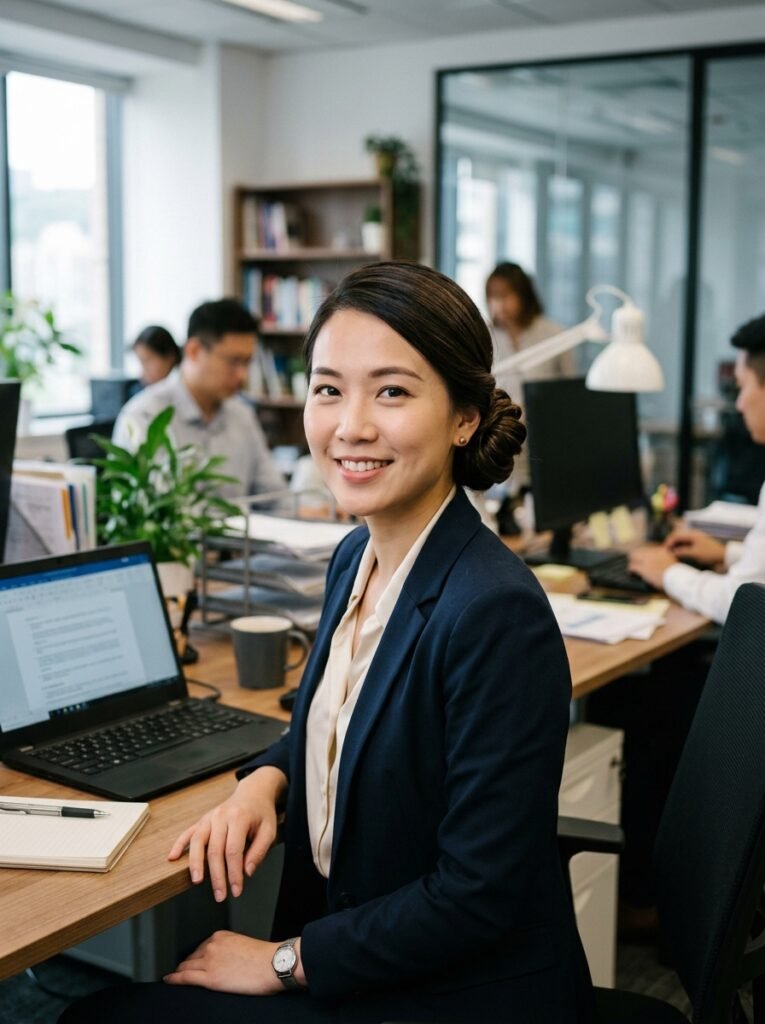
The bun earns its place in office rotations for a straightforward reason. It survives a full working day better than almost anything else. It keeps hair off the face during back-to-back meetings, and it reads as deliberate even when the morning ran short.
What separates a bun that works at nine in the morning from one that still works at six in the evening is rarely the technique. It is duration. A bun worn for a few hours behaves differently from one worn nine hours a day, five days a week. That difference shapes almost every decision below — where the bun sits, how tightly it is secured, and how often the placement should change. This guide covers five office-appropriate styles with step-by-step instructions, along with the adjustments each hair type needs.

Why Buns Work So Well for Office Style
Buns hold their shape across a long day in a way loose styles cannot. Curls drop, straightened hair reverts, and a blow-dry loses its lift by mid-afternoon. A secured bun changes very little between the first meeting and the last.
The time cost is also low. Two or three minutes in the morning buys a style that needs no attention afterwards, which matters more on a working day than on any other. Nothing has to be carried, reapplied, or checked between appointments.
Range is the third advantage. The same basic technique produces a formal presentation look and a relaxed Friday one. The difference comes down to how tightly the hair is smoothed and how much is left loose at the temples. Learning one method covers the whole week.
There is a trade-off worth naming early. Because an office bun gets worn repeatedly rather than occasionally, tension accumulates. Researchers at Johns Hopkins have linked scalp-pulling hairstyles to traction alopecia — gradual hair loss caused by damage to the follicle from prolonged or repeated tension on the hair root. The operative words are prolonged and repeated. A tight bun once is unremarkable; the same tight bun every weekday for years is the pattern that causes trouble.

What You’ll Need Before You Start
Office buns need a short tool list, which is part of why they suit a rushed routine. Nothing here requires heat or more than a minute of setup.
A few essentials worth having on hand include:
- Sturdy hair elastics that won’t slip
- Bobby pins in a shade close to the hair colour
- A fine tooth or paddle brush for a smooth base
- A light hold hairspray or smoothing serum
- A hair donut for extra fullness, if desired
Two details matter more than the list suggests. Bobby pins matched to hair colour disappear into the style rather than decorating it. That is the cheapest way to make a bun look professionally done. Elastics should be fabric-covered rather than bare rubber. A bare band cuts into the same point every day and that repetition is where breakage concentrates. Keeping a spare set in a desk drawer removes the need to plan ahead at all.
Professional Bun Styles to Try
These five run from formal to relaxed. Placement matters as much as appearance. A bun’s position determines what it collides with during the day — a chair back, a headset band, a car headrest on the commute.

Sleek Low Bun
Brush the hair back smoothly and gather it into a low ponytail at the nape, securing with an elastic. Smooth flyaways by running a little serum over the brush rather than the hands. That distributes it evenly instead of concentrating it in one patch. Twist the ponytail and wrap it around the base, then pin around the perimeter.
Pin angle decides whether this holds. Pins pushed straight into the bun slide out under the weight; pins angled back against the direction of the twist grip properly. Three or four placed around the edge beat six crammed into the centre. The low position also sits flat against a chair back, which makes it the most comfortable option for a desk-based day.

Classic High Bun
Gather the hair into a high ponytail at the crown, brushing throughout so no bumps carry through. Tipping the head forward while gathering brings everything up to the crown, which is difficult to achieve looking straight into a mirror. Secure, twist the length, and wrap it into a rounded shape, tucking the ends underneath.
The high position reads sharpest and carries the most tension, since all the weight pulls upward from the hairline. It also clashes with headset bands and high chair backs. Anyone on calls for much of the day will find a mid or low placement more practical. Anyone prone to headaches should treat this as an occasional rather than daily option.

Side Parted Bun
Create a deep side part, then gather into a low bun at the nape using the same twist-and-wrap method. The part is the whole difference, and precision matters. Running a comb tail from the arch of the eyebrow straight back gives a cleaner line than parting by eye.
A side part has a practical benefit beyond appearance. Alternating between a side part and a centre part shifts where the hair is gathered. Across the week moves the tension to different points along the hairline. That rotation is one of the simplest ways to reduce the repeated stress a daily bun creates.
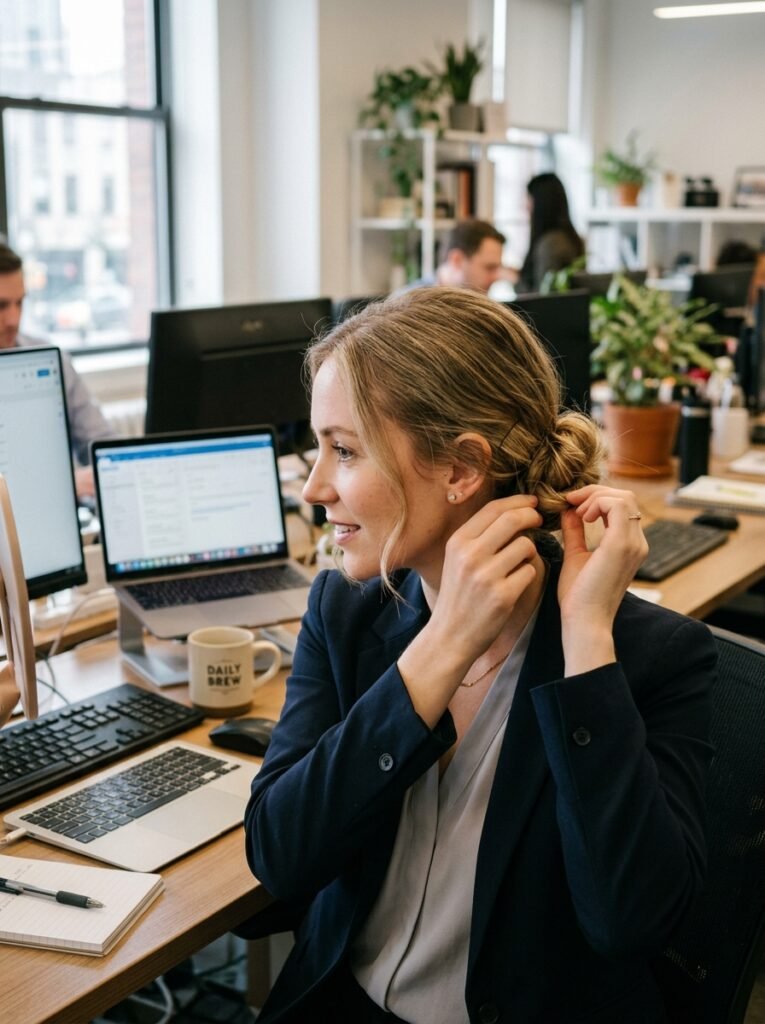
Braided Low Bun
Gather the hair into a low ponytail and secure it. Braid the full length in a standard three-strand braid, keeping the tension even rather than tight. Coil the braid around the base and pin around the edges.
Braiding first solves a problem that defeats plain buns on thick or long hair. The braid compresses the volume, so the shape sits neat instead of bulky. It also gives pins something structured to grip rather than a loose coil. Pin counts scale with length, and the adjustments long hair needs are covered in this guide to long hair styles.

Twisted Chignon
Gather into a low ponytail and split it into two even sections. Twist each section individually in the same direction. Wrap the two around each other in the opposite direction before coiling the whole thing around the base and pinning.
That opposing direction is the step people miss. Twisting both sections and the rope itself the same way produces a coil that unwinds within the hour. Twisting individually one way and wrapping the other locks the tension against itself, which is why a properly built chignon holds all day without extra pins.

Adjusting Your Bun for a More Polished, Office-Ready Look
Hair type changes how easily a bun forms and how it looks by late afternoon. The adjustments below are small, and each targets the specific way a given texture tends to fail.
Straight Hair
Straight hair smooths easily and slips just as easily, which is the trade-off. Freshly washed hair is the worst case, since clean strands have almost no grip and the bun works loose by mid-morning.
Day-old hair holds without any product at all. Where a wash is unavoidable, a light mist of texture spray supplies the grip that clean hair lacks, and a few more pins than feel necessary covers the rest.

Wavy Hair
Wavy hair carries enough natural texture to hold a bun securely, so the challenge is smoothness rather than grip. The wave pattern shows as slight unevenness across the gathered section.
Brushing from the ends upward rather than the roots down removes tangles without dragging them toward the gather point. A smoothing serum applied to the brush rather than the hands then flattens the surface evenly. Both steps take seconds and make the difference between a bun that reads relaxed and one that reads unfinished.

Curly Hair
Curly hair gathers more evenly while slightly damp, since dry curls resist being pulled into a uniform base. Working on damp hair also means less mechanical force is needed, which reduces the strain on the strands.
A lightweight gel along the hairline controls flyaways and produces the clean edge that reads as polished. A soft fabric tie compresses curls far less than a standard elastic at the gather point. That is where curl definition flattens first and where breakage tends to start.

Fine or Thin Hair
Fine hair produces a small bun, and the instinct is to compensate with tension. That is the wrong lever, and on fine hair it is also the riskiest, since finer strands break under less force than coarse ones.
Volume should come from structure instead. Light backcombing at the ponytail before twisting adds body, and a hair donut creates a fuller shape without any extra pulling. Both let the bun be secured comfortably rather than tightly, which matters most for the hair type least able to tolerate daily strain.
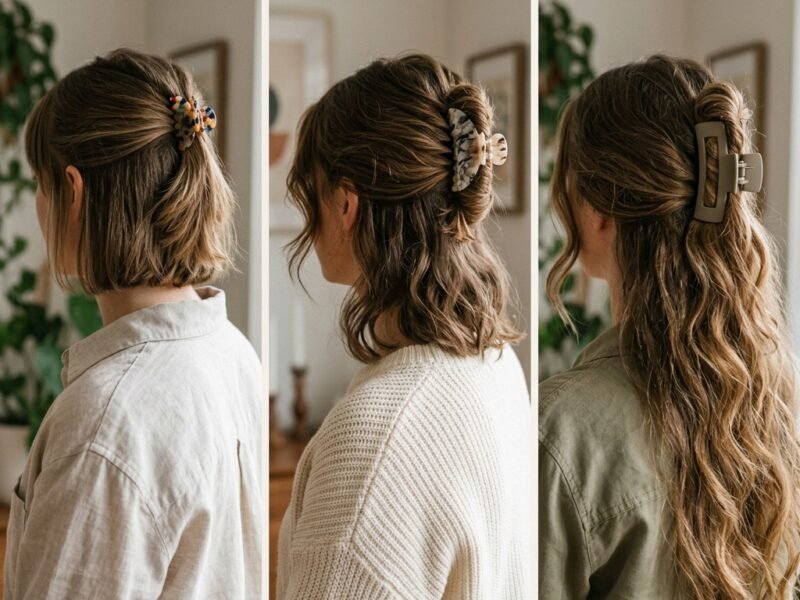
Tips for Making Your Bun Last Through a Full Work Day
Most buns loosen at predictable points rather than gradually. Knowing where they give way makes them easy to prevent.
Pin placement does most of the work. Crossing two pins in an X at the stress points around the base holds far better than single straight pins, because the crossed pair grips hair travelling in two directions rather than one. Hairspray misted over the whole bun rather than only the surface keeps the interior in place, and the interior is where movement starts.
Timing is the overlooked factor. Buns loosen most in the first hour, as the hair settles into the shape. Building the bun ten minutes before leaving works well. Adding one or two pins where it has already slipped produces something far more stable than a bun pinned once and left. A few spare pins in a drawer covers whatever the afternoon does.
Common Mistakes to Avoid
Four errors account for most disappointing office buns, and none of them involve the technique itself.
Skipping the brush-through comes first. Bumps at the base carry through the whole style and cannot be corrected once the hair is gathered. The extra ten seconds is always worth spending.
Using too few pins is second, and it is usually a morning time-saving decision that costs more time later in adjustments. Three or four around the perimeter is the working minimum for most hair.
Matching the style to the wrong occasion is third. A relaxed bun suits an ordinary desk day; a client presentation calls for the smoother version. The technique is identical, and only the finish changes.
The fourth is tightening rather than restructuring. When a bun keeps slipping, the instinct is to pull harder, but tension is the one variable that should not be increased. Pain is the signal that it has gone too far. A style that hurts in the morning has been too tight since the moment it was secured. More pins, drier hair, or a braided base all solve the problem without adding strain.
Expert Insights: Tips from Stylists
The most common professional recommendation concerns wash timing. Freshly washed hair is slippery and hard to control, so stylists routinely suggest styling on day-old hair for the sleekest result. That single adjustment removes the need for most of the product people reach for instead.
Building in stages is the second recurring tip. Securing the ponytail, smoothing the flyaways, then twisting and pinning as separate steps produces a neater shape than attempting all of it in one motion. Rushing tends to trap unevenness that only becomes visible later.
The third is rotation, and it is the one with lasting consequences. The identical bun in the identical position every day concentrates stress on the same points along the hairline, which is precisely the repeated pattern that causes damage over time. Alternating between low and mid placements, switching the part, and wearing hair down on some days spreads the load. A few faster alternatives for the days a bun is not the answer appear in this collection of quick morning styles.
Frequently Asked Questions
Which bun style is the most professional for the office? A sleek low bun or a classic high bun read as the most polished. The low version is more comfortable across a full day, since the weight rests against the neck rather than pulling from the crown.
How can a bun be kept from loosening during a busy workday? Cross pins in an X shape at the base rather than using single straight pins, and mist hairspray over the whole bun rather than just the surface. Building the style ten minutes before leaving also allows a correction once the hair has settled.
Does a bun suit curly hair in a formal office setting? Yes. Gathering while slightly damp produces a more even base, and a lightweight gel along the hairline gives the clean edge that reads as polished. A soft fabric tie protects the curl pattern at the gather point.
Are special tools needed for a professional-looking bun? No. Elastics, colour-matched bobby pins, and a light hold spray cover every style here. A hair donut helps fine hair achieve fullness without extra tension, which is the one addition genuinely worth making.
Is a messy bun ever appropriate for the office? It depends on the workplace. A softer bun suits an ordinary desk day, while a smoother version is the safer choice for client meetings. The difference is finish rather than technique, so switching between them costs nothing.
Conclusion
A well-built bun stays the most dependable office hairstyle because it holds its shape for as long as the day lasts. The five styles above run from a formal sleek low bun to a softer twisted chignon. All five rely on the same handful of mechanics: a smooth base, pins angled against the twist, and hair with enough grip to hold.
The point worth carrying beyond the technique is that an office bun is a repeated style rather than an occasional one. Comfort is the measure that matters. A bun secured with enough pins never needs to be tight. Rotating the placement across the week keeps the same section of hairline from taking the strain every day. Get those two things right and the bun stops being a daily decision and becomes a reliable habit.


Leave a Reply