
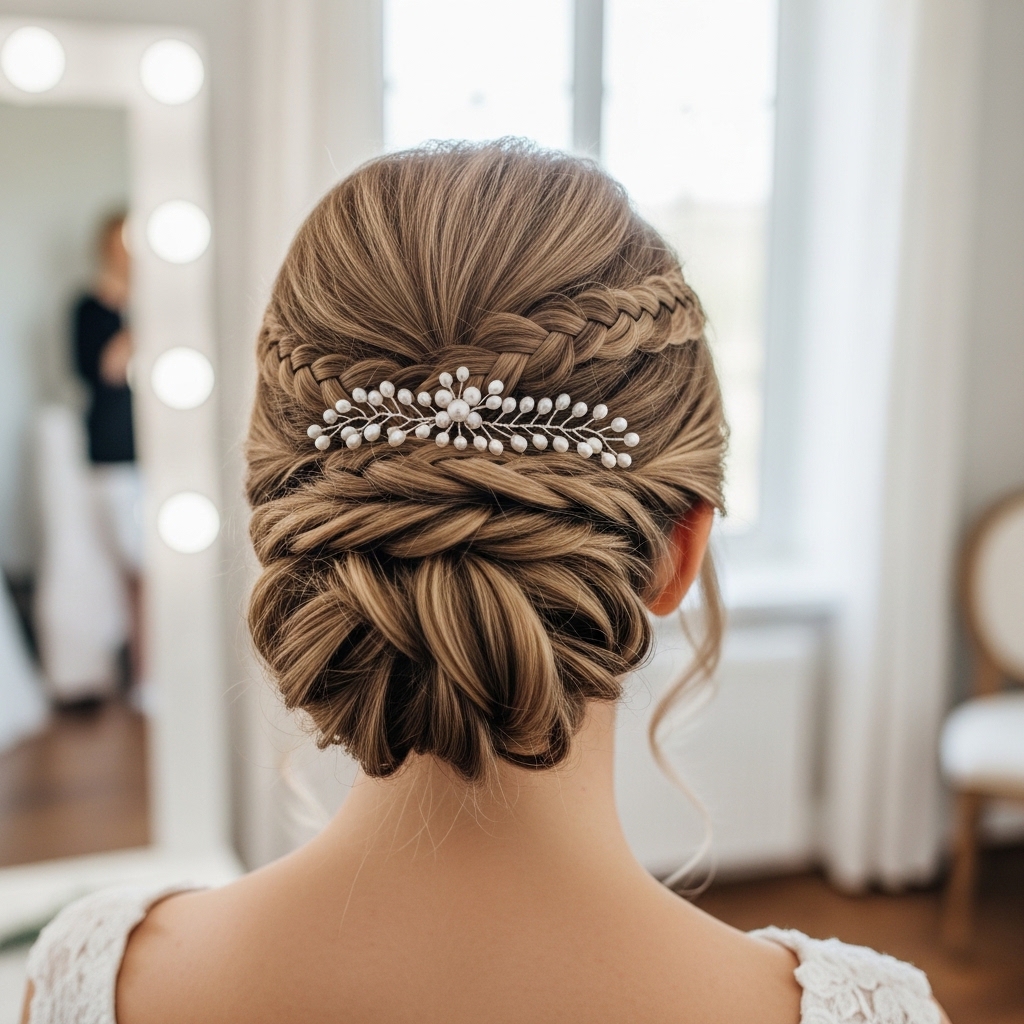
A wedding hairstyle has to survive eight to fourteen hours. It also has to survive a veil going on and coming off, an outdoor photograph session, and a dance floor. That is a far harder brief than any other styling decision, and it is why the trial appointment matters more than the inspiration photo. Two questions decide most of it. Where does the veil attach, and can the style change between ceremony and reception without a stylist present? The 28 styles below cover updos, half-ups, braids, and worn-down looks. Each carries the practical detail: pin counts, veil compatibility, trial requirements, and behaviour in humidity. Booking the trial with the same products and the same hair-wash timing planned for the day is what makes it predictive rather than decorative.
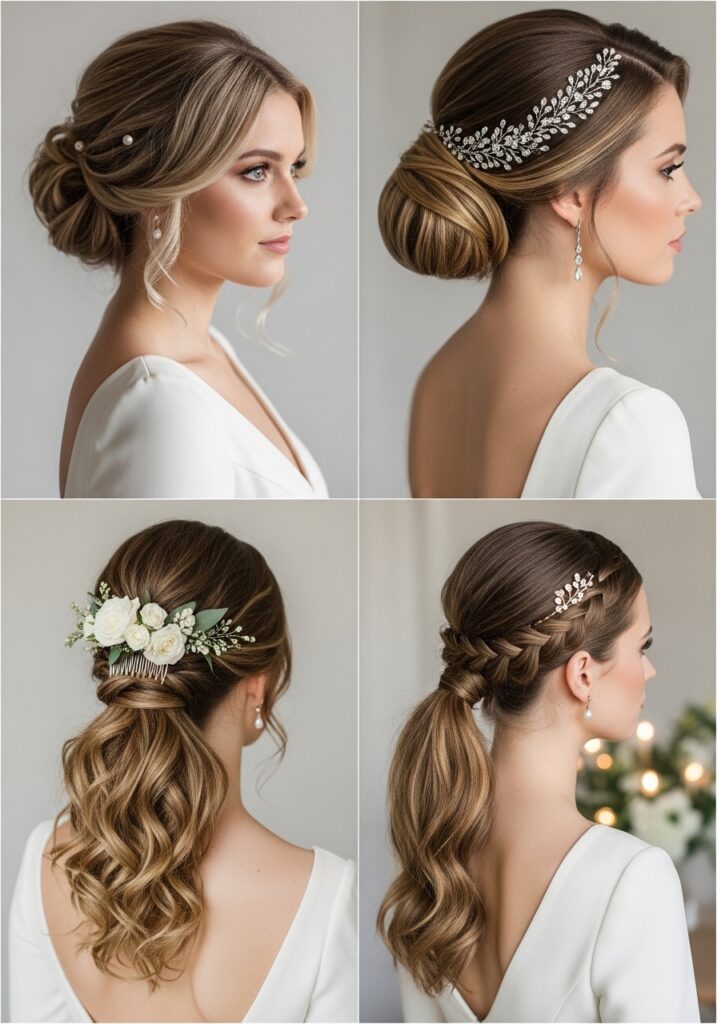
1. Romantic Low Chignon
The low chignon sits at the nape, which is the most secure position available for a full-day updo. Weight rests against the neck rather than pulling from the crown.
It also handles veils better than almost anything else. A comb slides in above the chignon and the bulk of the hair holds it. The veil then comes off after the ceremony without disturbing the shape underneath.
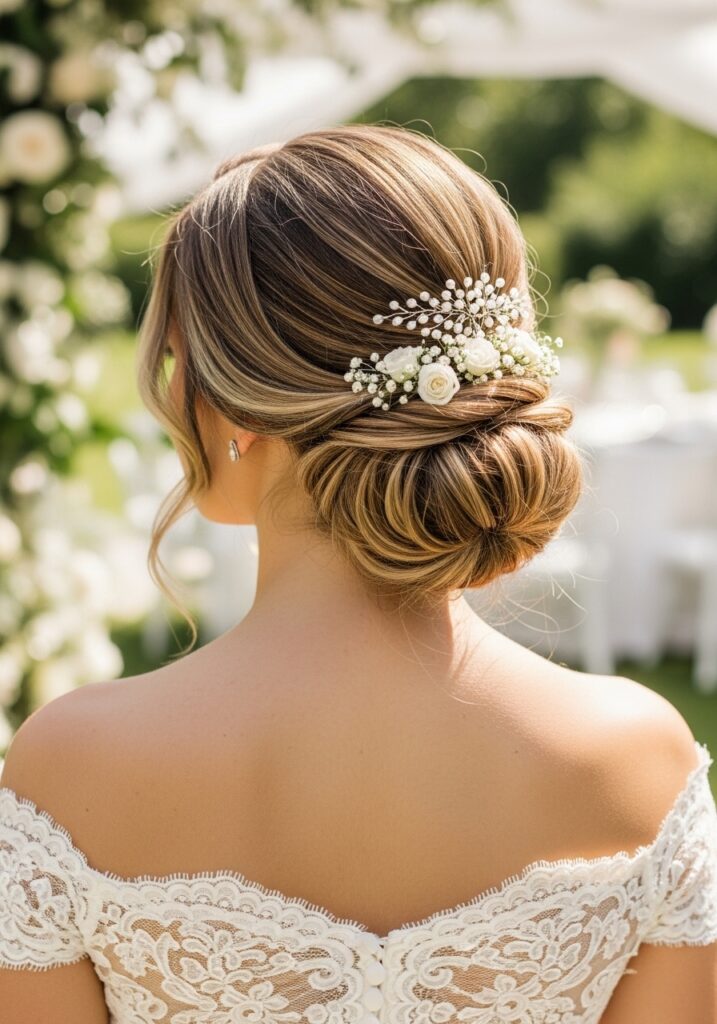
2. Soft Hollywood Waves
Hollywood waves are set and pinned rather than curled and released. Each section winds in the same direction, cools clipped flat, then gets brushed out at the end.
Brushing is the step brides worry about and the one that makes it work. Unbrushed, the result is ringlets rather than a continuous S-wave. This style also drops fastest of any here in humidity. An outdoor summer ceremony is a genuine risk, and this guide to styles that survive a full wedding day covers what holds and what does not.
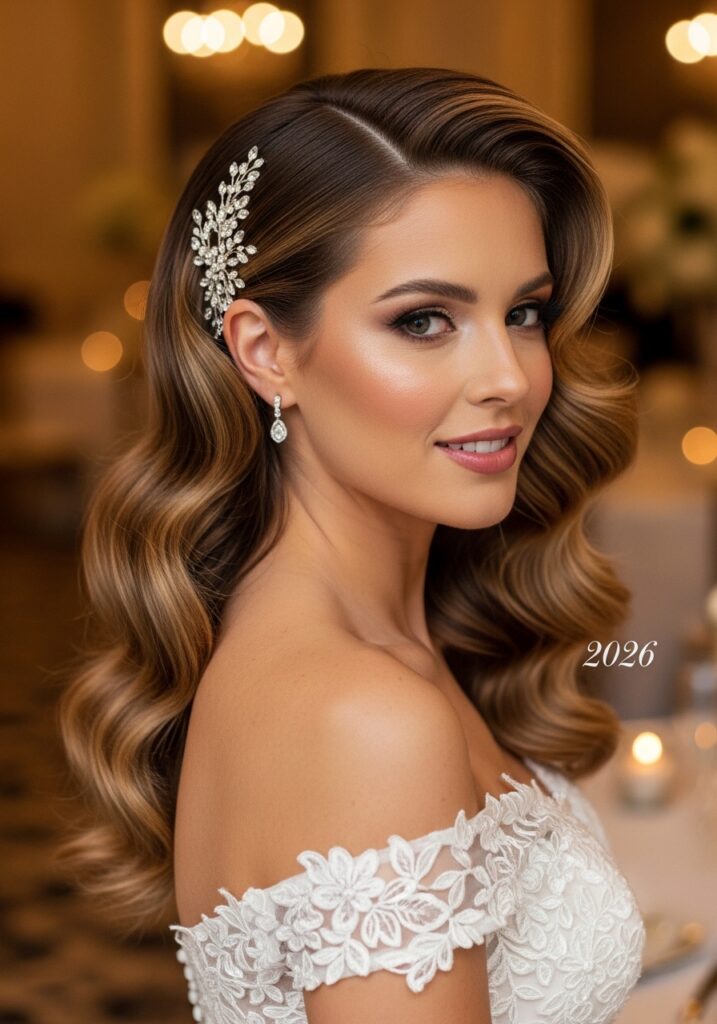
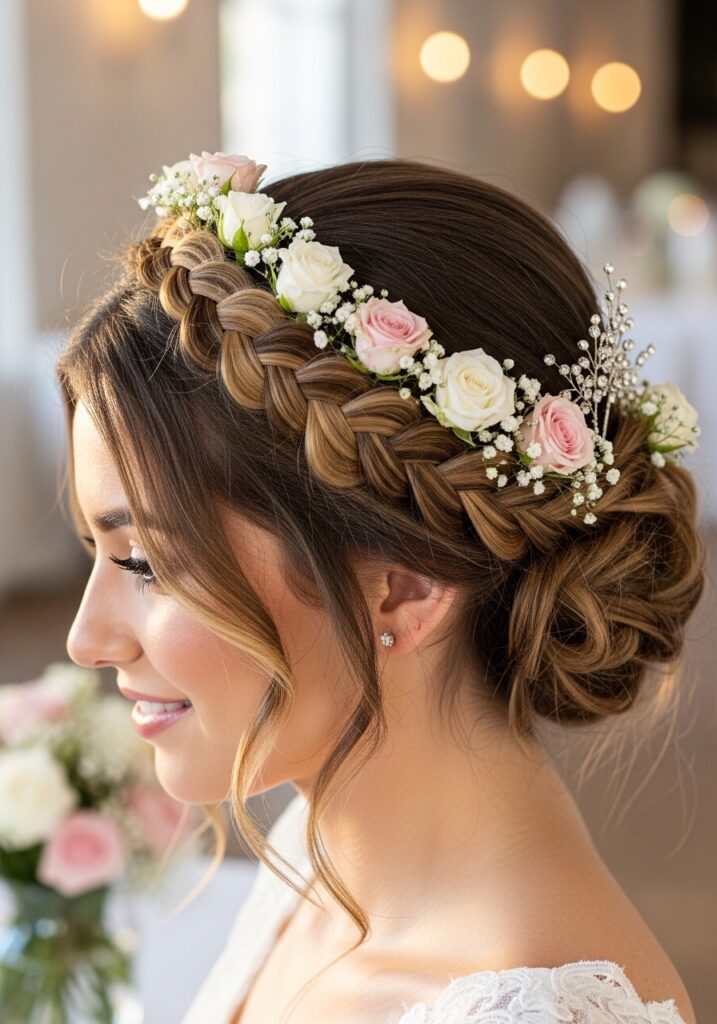
3. Braided Crown
A braid wrapping the head reads as a natural tiara and holds firmly for hours. Length is the constraint — hair shorter than the shoulders rarely reaches around.
Pinning at five or six points rather than two stops it drifting through the reception. The braid also needs thinning before it wraps, since a thick one sits proud of the head and reads bulky rather than delicate.
4. Classic Bridal Bun
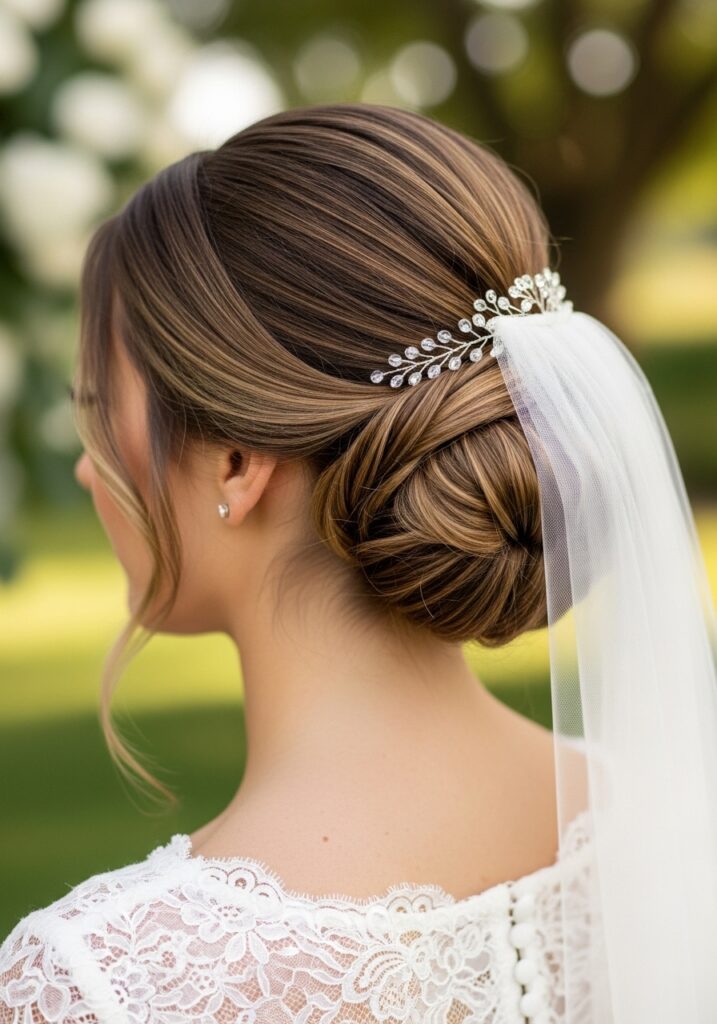
The classic bun is the most veil-friendly style on this list. A comb anchors underneath it, above it, or through the base, which gives the stylist options on the morning.
Very thick or very long hair produces a bun too bulky to sit neatly. Braiding or roping the length before coiling it compresses the volume and keeps the shape deliberate rather than oversized.
5. Textured Low Ponytail
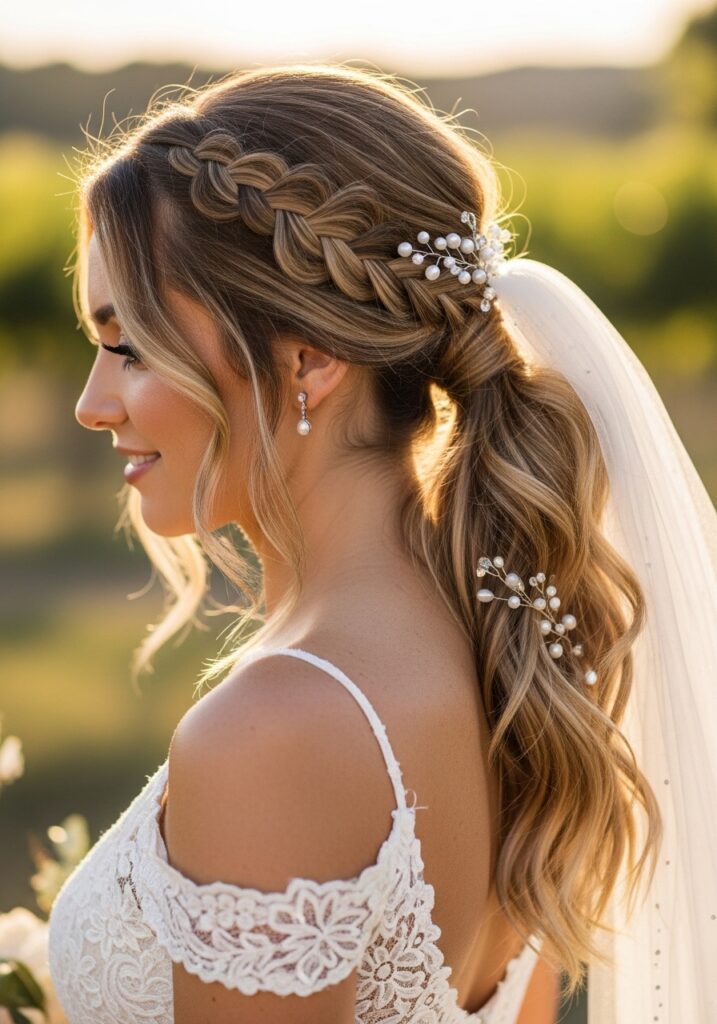
A low ponytail suits minimalist gowns and takes far less chair time than an updo. That matters when the morning schedule is tight.
The weakness is the elastic. A full day of movement drops a heavy ponytail noticeably, so two stacked elastics rather than one is the fix. Wrapping a strand of hair over the base hides both and looks finished in close-up photographs.
6. Loose Boho Waves
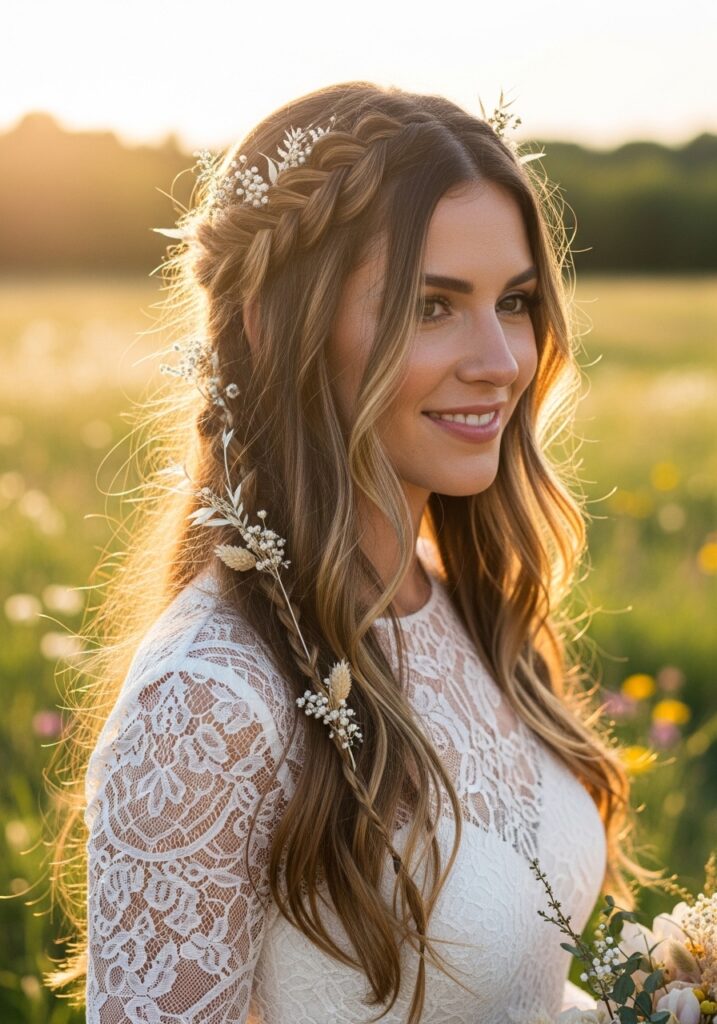
Worn-down hair is the highest-risk choice for a long wedding day. Nothing holds it in place as the hours pass.
Outdoor and coastal venues make that worse. A few hidden pins at the back, invisible under the top layer, stop the hair migrating forward every time the wind moves. Flower crowns and hair vines also need securing to actual pins rather than resting on the hair.
7. Half Up Twisted Crown
The half-up twisted crown is the most adaptable option here. It works with a veil for the ceremony and without one afterwards, with no restyling needed.
Securing each twist with a small clear elastic before joining them keeps both from slipping. Doing it in one motion, which is quicker, usually means one side loosens before the speeches.
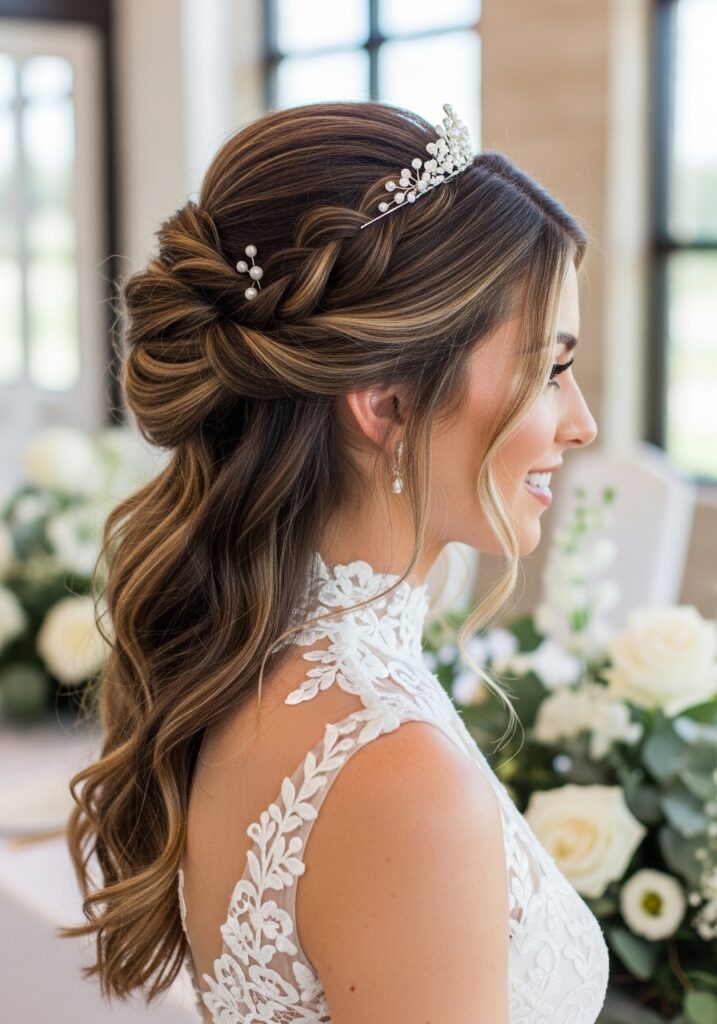
8. Elegant French Twist
The French twist rolls the hair vertically and tucks the ends inside the fold. Long hair complicates it, since the ends need somewhere to go.
Coiling the ends into a small knot before tucking solves that. Pins go in horizontally through the seam, catching both sides of the roll; pushed in vertically they hold nothing. Slightly grippy day-old hair holds the tuck far better than freshly washed hair.
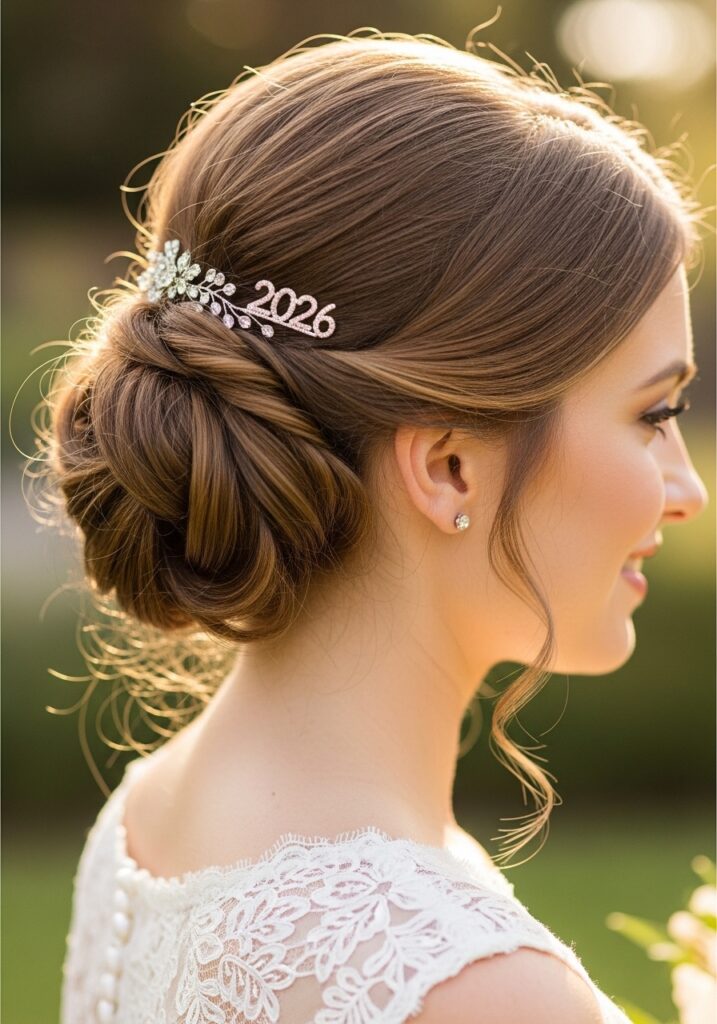
9. Voluminous Bridal Updo
Volume at the crown comes from backcombing or a small padded insert underneath. Either way, the structure is built rather than gathered.
This one needs a trial more than most. Fine hair rarely holds the height without support, and discovering that on the morning leaves no time to adjust. A trial also reveals whether the volume survives four hours or collapses after one.
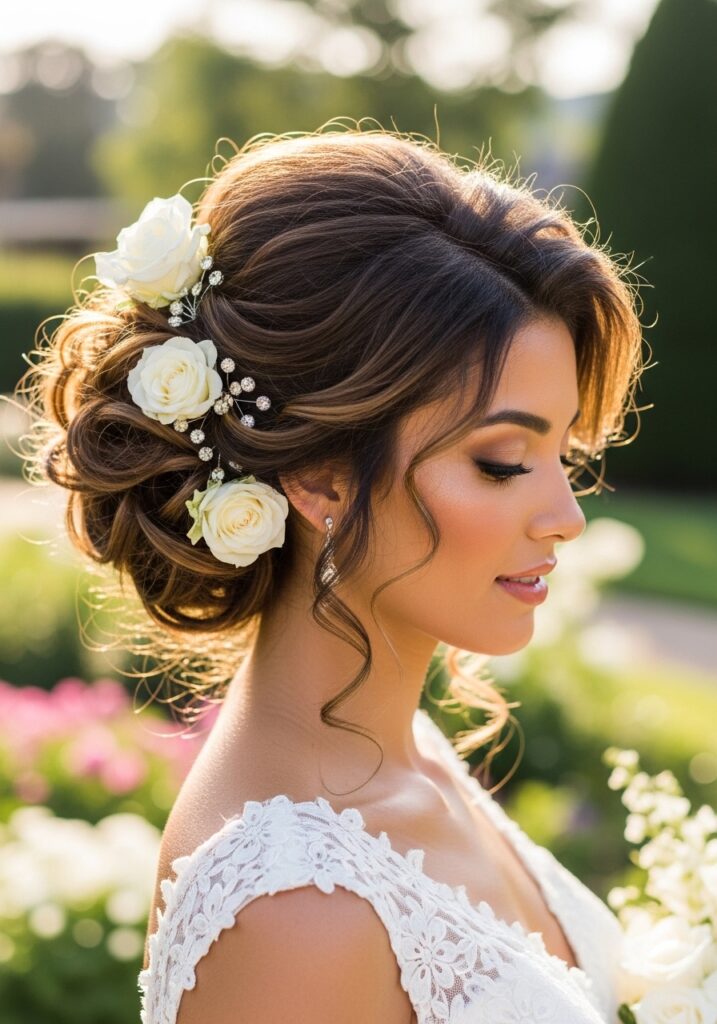
10. Sleek High Bridal Bun
A high bun photographs cleanly and suits modern gowns, but the position works against it over a long day.
All the weight pulls from the crown, which creates tension at the hairline. It also complicates veil placement, since a comb has to sit below the bun rather than under it. Anyone prone to headaches should ask for the bun an inch lower than the sample photograph.
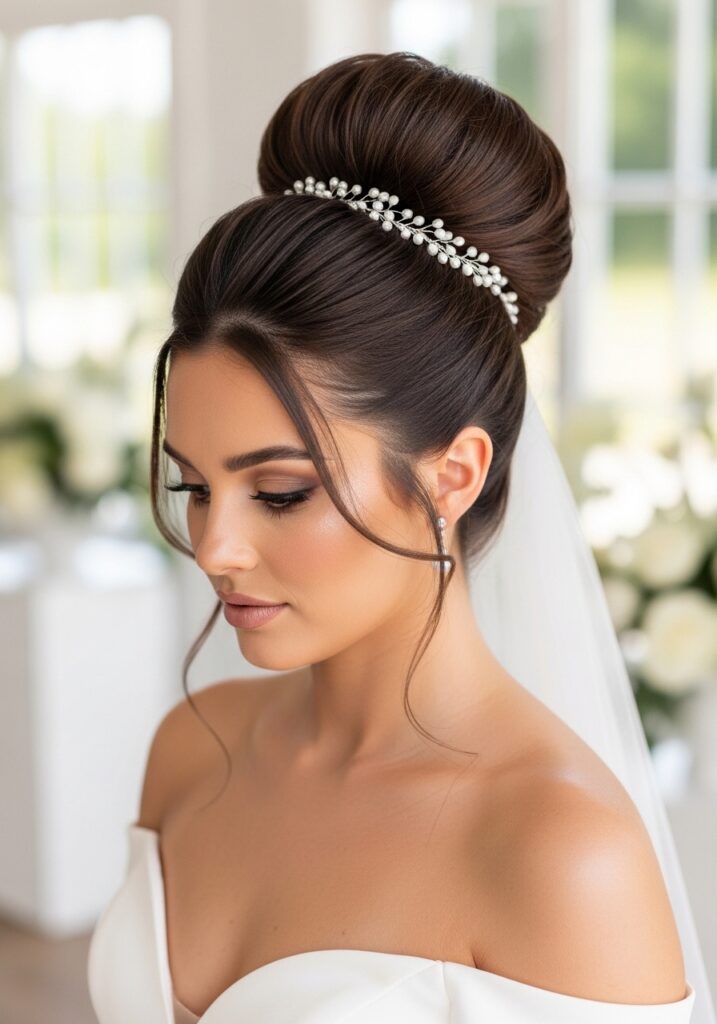
11. Side Swept Bridal Curls
Sweeping everything over one shoulder suits strapless and off-shoulder gowns, and it concentrates all the weight on one side.
Pinning behind the opposite ear anchors it, with the pins hidden under the curls above. Without that anchor the hair returns to centre within an hour, usually during the ceremony. This arrangement also leaves one shoulder bare in every photograph, which is worth checking against the dress.
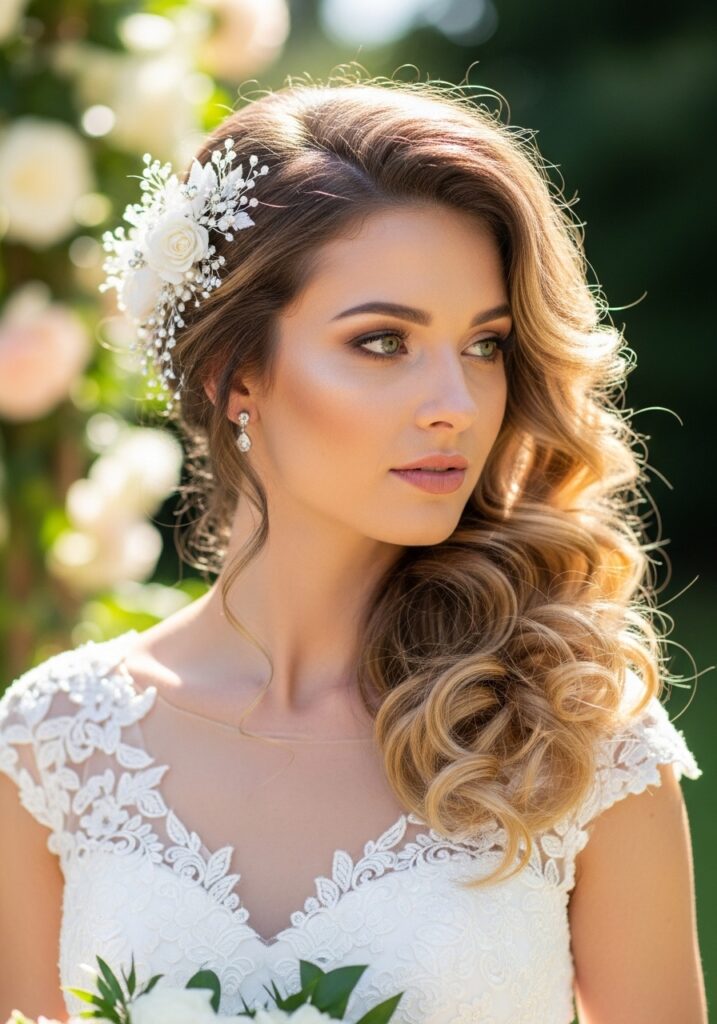
12. Floral Bridal Updo
Fresh flowers in hair have a shelf life. Most last four to six hours out of water, and delicate varieties wilt considerably faster in warm weather.
Florists usually wire and tape stems specifically for hair, which extends that. Confirming the flower choice with the florist rather than the stylist matters, since some blooms hold and some collapse by the reception. Silk alternatives are indistinguishable in photographs and last indefinitely.
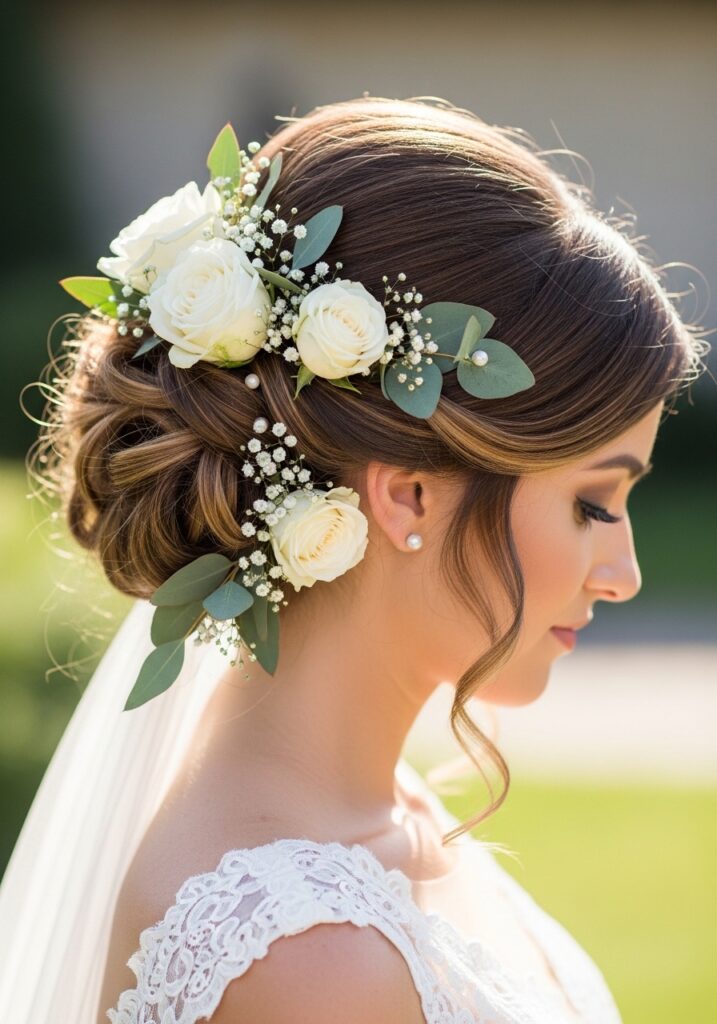
13. Vintage Finger Waves
Finger waves are sculpted flat against the head with setting lotion and clips. The hair then dries completely before the clips come out.
The drying time is the practical issue — often an hour or more, which has to be built into the morning schedule. Rushing it produces waves that drop within minutes. This is a specialist technique, and not every bridal stylist offers it, so it is worth asking before booking.
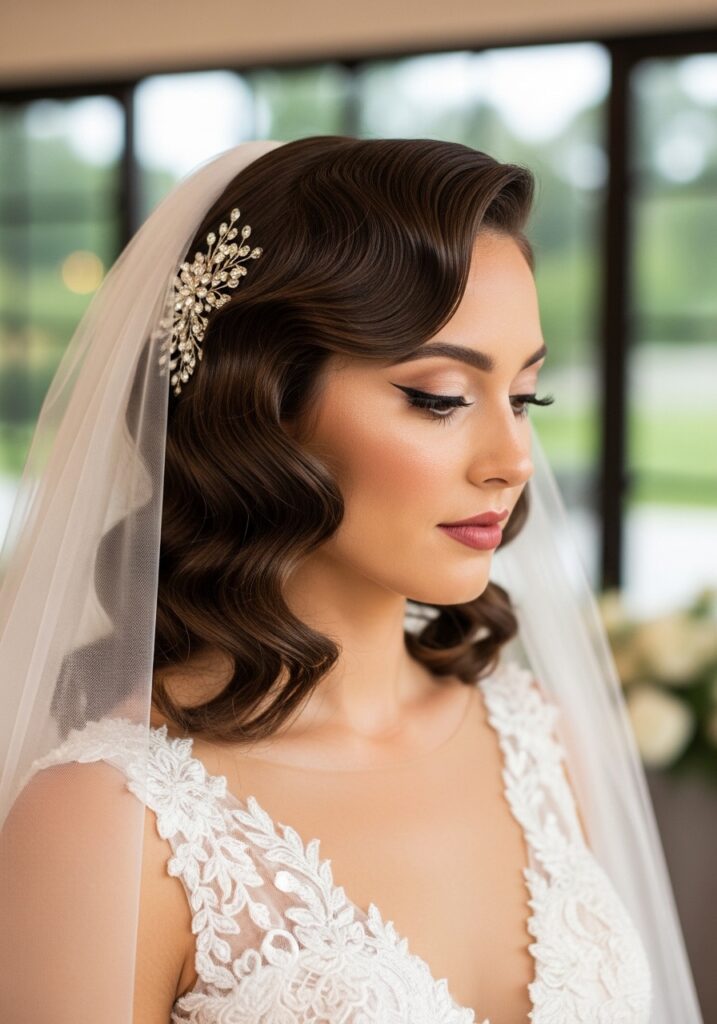
14. Soft Messy Bridal Bun
This style is harder to execute than a smooth bun. It has to look undone without actually coming undone.
Stylists build it structured underneath and then pull pieces out at the end. Hair washed the day before holds it; freshly washed hair slides. That is a scheduling decision brides need to make a week ahead, not on the morning.
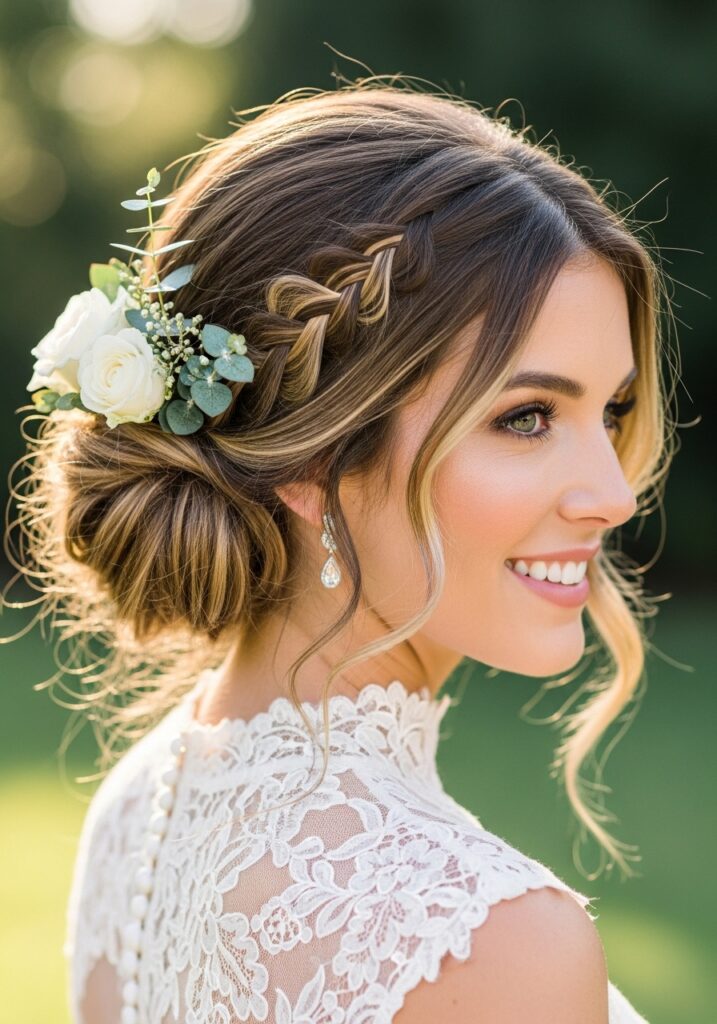
15. Twisted Bridal Updo
Multiple twisted sections pinned together create texture without needing braiding skill. The structure also distributes weight across several anchor points rather than one.
That makes it among the more secure updos here. Pins angled back against the direction of each twist grip properly, where pins pushed straight in work loose over the evening.
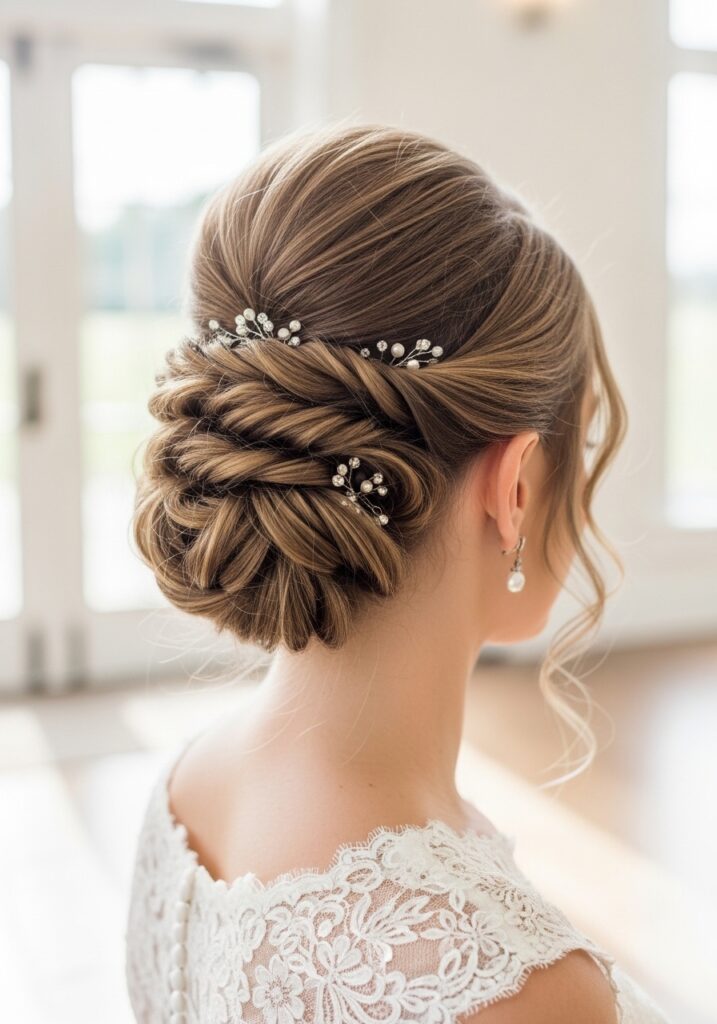
16. Bridal Fishtail Braid
The fishtail crosses thin pieces from the outside of one section to the inside of the other. Thin pieces are what produce the fine woven pattern.
Worn over one shoulder it can be done without a mirror, which matters if a bridesmaid is redoing it later. Widening the braid should start at the tail and work upward — starting at the crown loosens the top and the whole thing unravels.
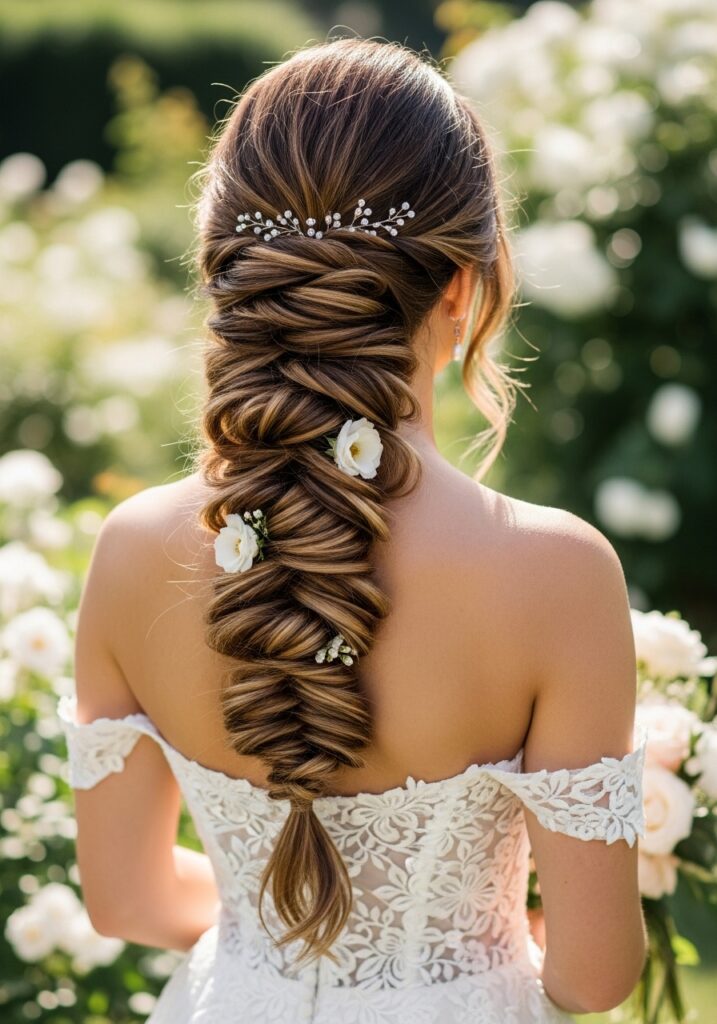
17. Half Up Bridal Bouffant
Lifting the crown creates height without committing to a full updo, and it leaves length flowing for the photographs.
The lift depends on backcombing at the roots, which needs careful removal afterwards. Brushing it out roughly causes real breakage. A conditioner soak and a wide-tooth comb, worked from the ends upward, is the correct way to take it down that night.
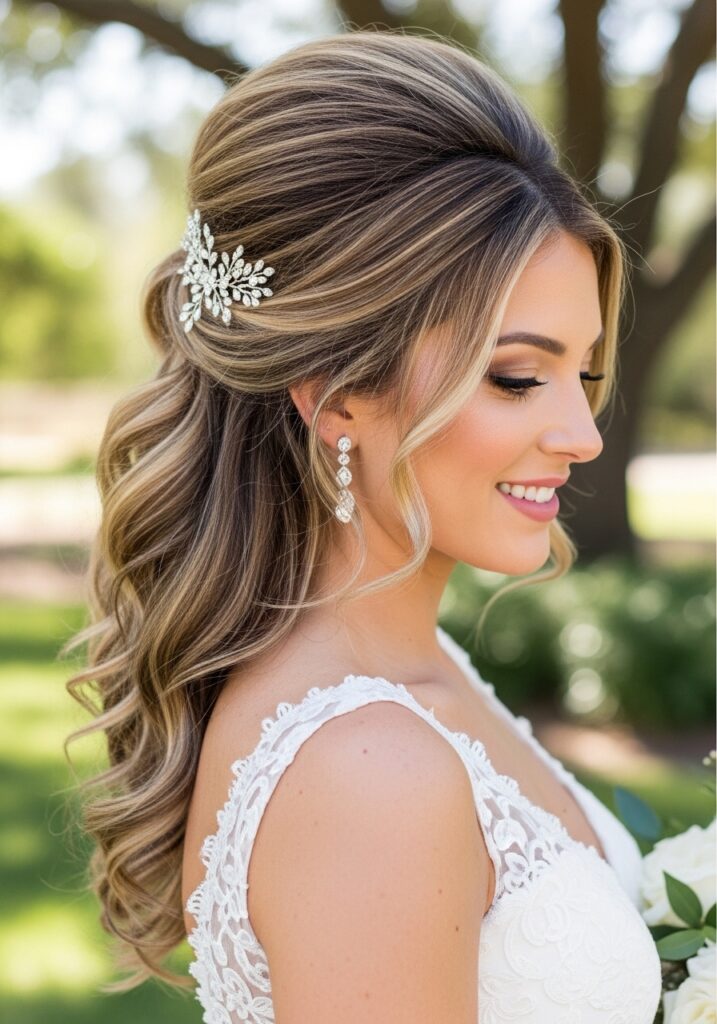
18. Pearl Accessorized Waves
Pearl pins scattered through waves add detail without adding structure, which makes this one of the lower-commitment options.
Pins push in against the direction the hair falls to grip; pushed in with it, they migrate out over the evening. An odd number placed asymmetrically reads as deliberate styling, where an even, symmetrical arrangement often looks slightly off in photographs.
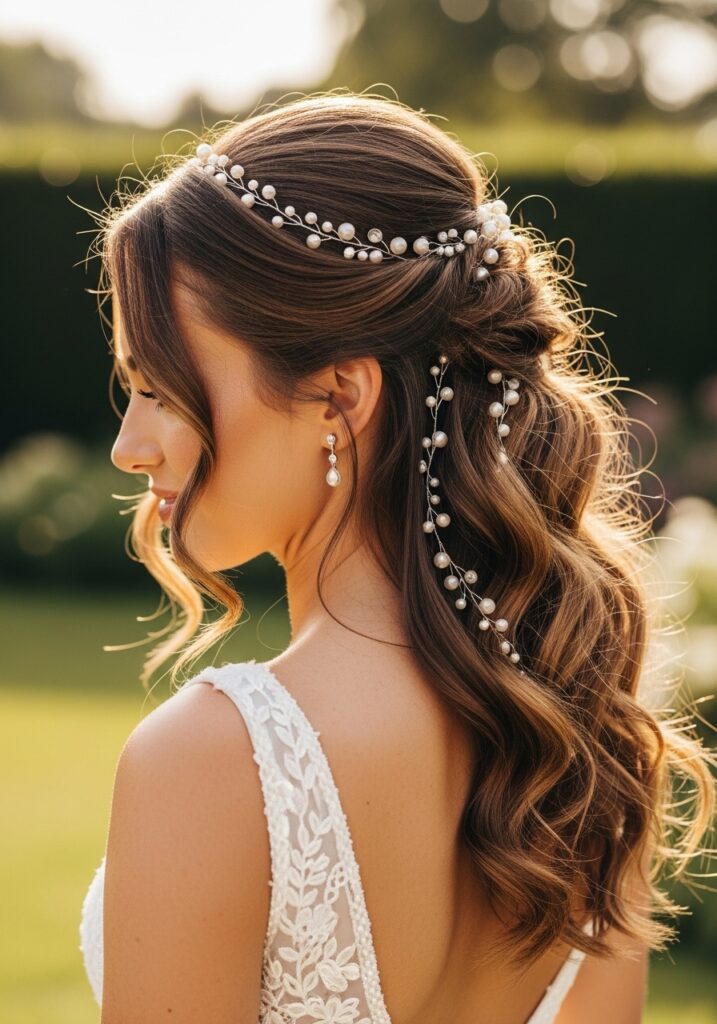
19. Braided Low Bun
Braiding the length before coiling it solves the bulk problem. Plain buns defeat thick or very long hair for exactly that reason.
The braid compresses the volume, so the finished bun sits neat rather than oversized. It also gives pins something structured to grip, which makes this one of the most secure options for a fourteen-hour day.
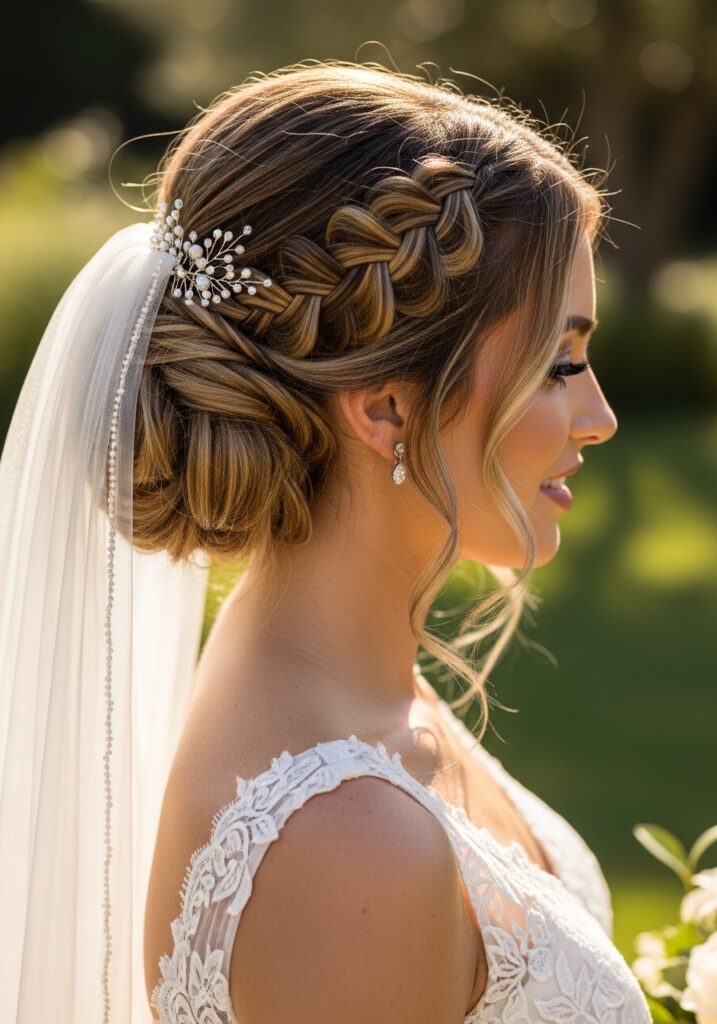
20. Long Bridal Waves with Veil
Worn-down hair under a veil is the most traditional combination, and the tradition runs a long way back. A nineteenth-century dictionary of classical antiquities records the Roman bridal veil, a flame-coloured cloth called the flammeum. It covered the head and fell down the back to the feet, leaving the face visible.
Practically, the modern version needs planning around removal. A veil worn over loose waves flattens the crown when it comes off. Most stylists build in a few hidden pins that hold the shape once the veil is gone.
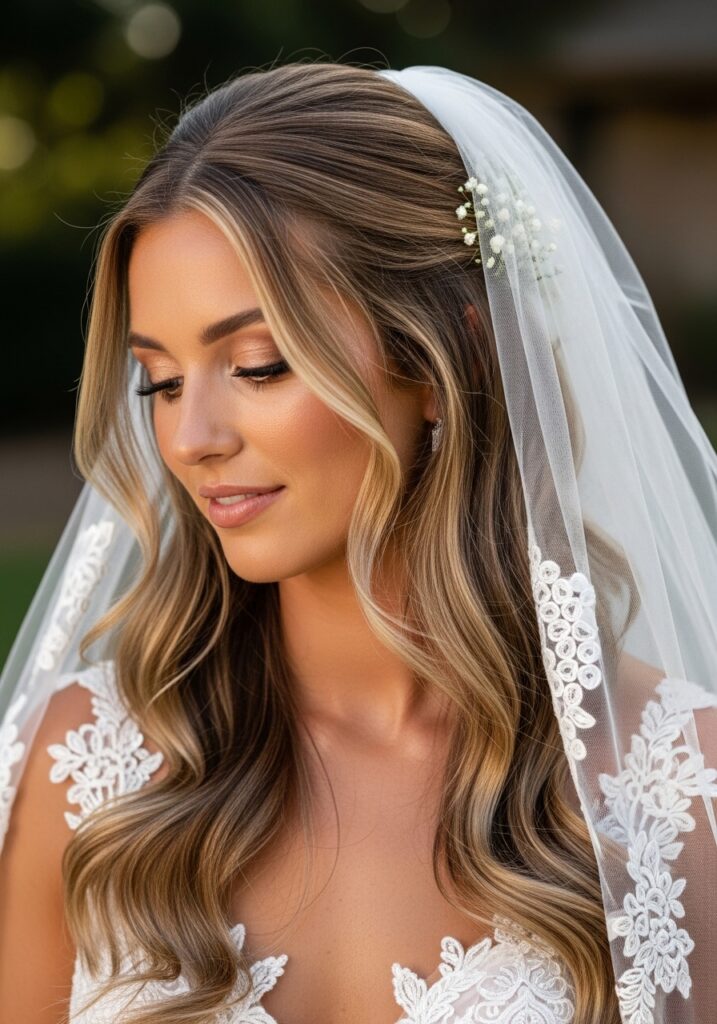
21. Elegant Bridal Top Knot
The top knot is the highest-placed style here, which makes it the most modern-looking and the least veil-compatible.
A comb has to sit behind or below the knot rather than under it. A heavy cathedral veil pulling from that position gets uncomfortable over a long ceremony. It suits registry office and city weddings, where a shorter veil or none at all is the norm.
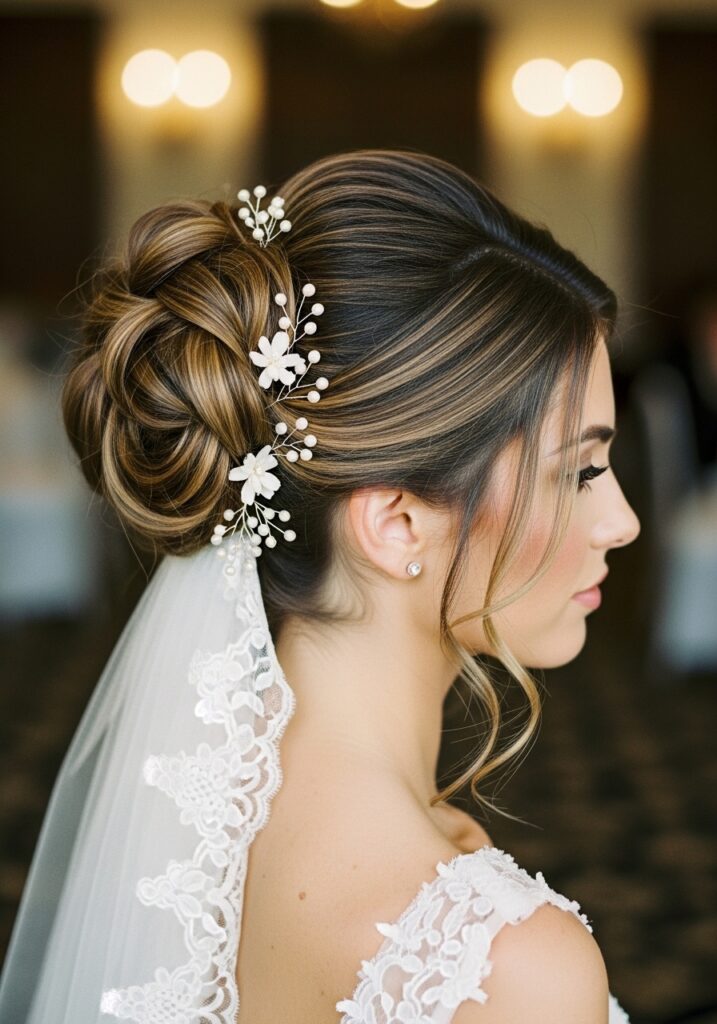
22. Romantic Braided Updo
Several fine braids woven into an updo produce the most intricate look on this list. They also take the most chair time, often ninety minutes or more.
That has to be budgeted into the morning alongside makeup and dressing. Bridal stylists usually charge by time rather than style, so this is also among the more expensive options. Booking it means starting earlier than the schedule initially suggests.
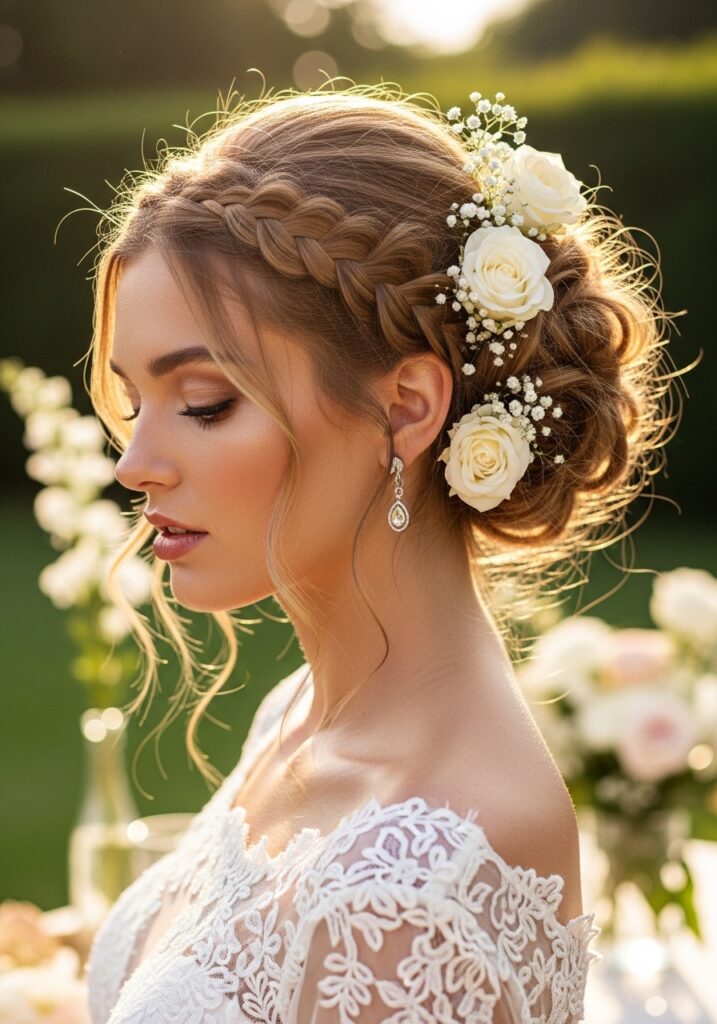
23. Waterfall Braid Bridal Style
The waterfall drops a strand at each pass and picks up a fresh one. That produces the cascading effect across the back of the head.
Curling the lengths before braiding is what keeps the dropped strands separate and visible. Braiding first and curling afterwards tangles them into the braid. That flattens the effect, and it is the usual reason this one disappoints in photographs.
24. Glamorous Curled Updo
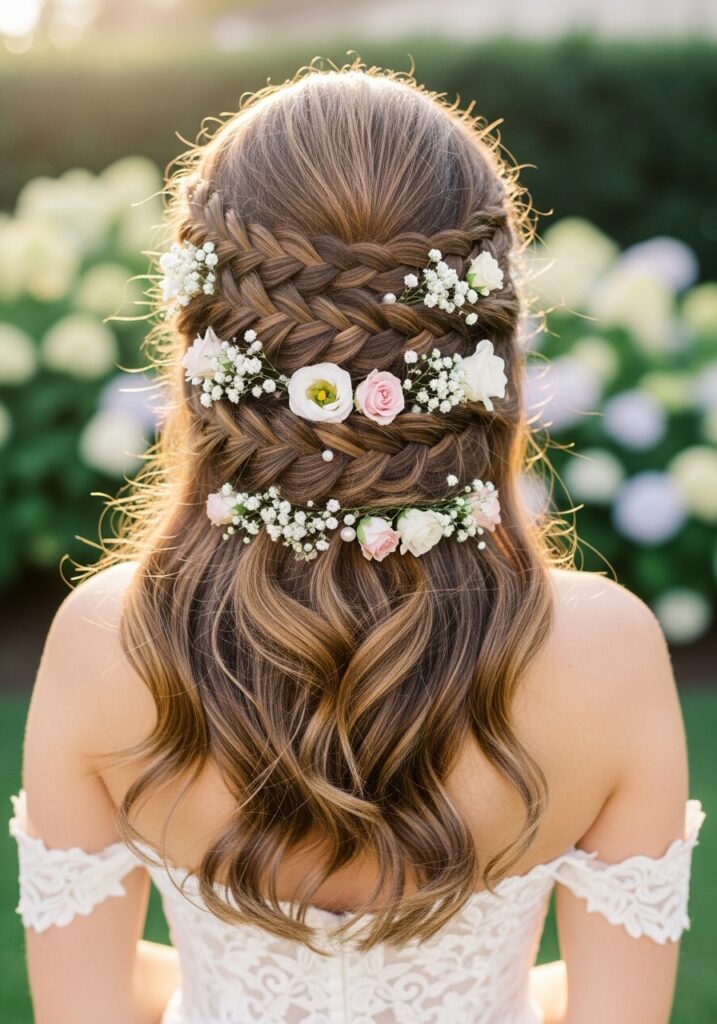
Defined curls pinned into an updo give volume and drama, and the curls have to be set before any pinning begins.
That makes this a two-stage appointment. Curls need to cool completely before they are arranged, or the shape drops as the pins go in. Brides setting curls the night before will find the method in this step-by-step guide to heatless overnight curls. Building that cooling time into the morning is the difference between a full updo and a collapsed one by the ceremony.
25. Minimalist Straight Bridal Hair
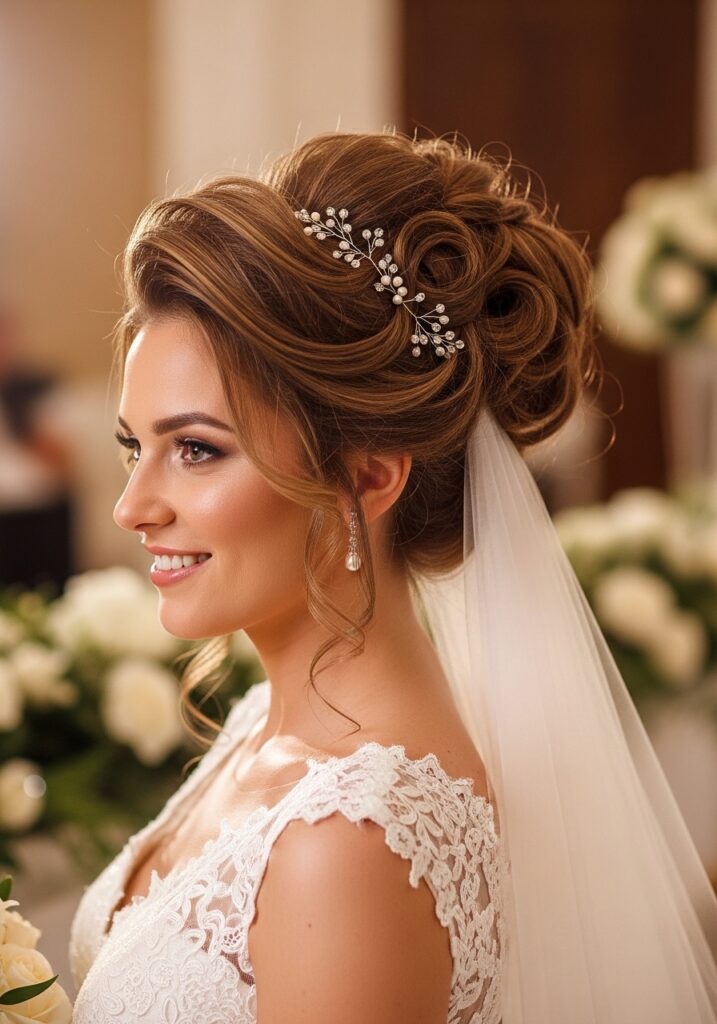
Straight hair worn down shows condition more honestly than any other style, since nothing breaks up the light along the length.
The ends carry years of accumulated wear, so a trim two to three weeks before the wedding makes a visible difference. Humidity is the other factor: straightened hair reverts fastest of anything here, which makes this a difficult choice for an outdoor summer ceremony.
26. Boho Braided Crown with Waves
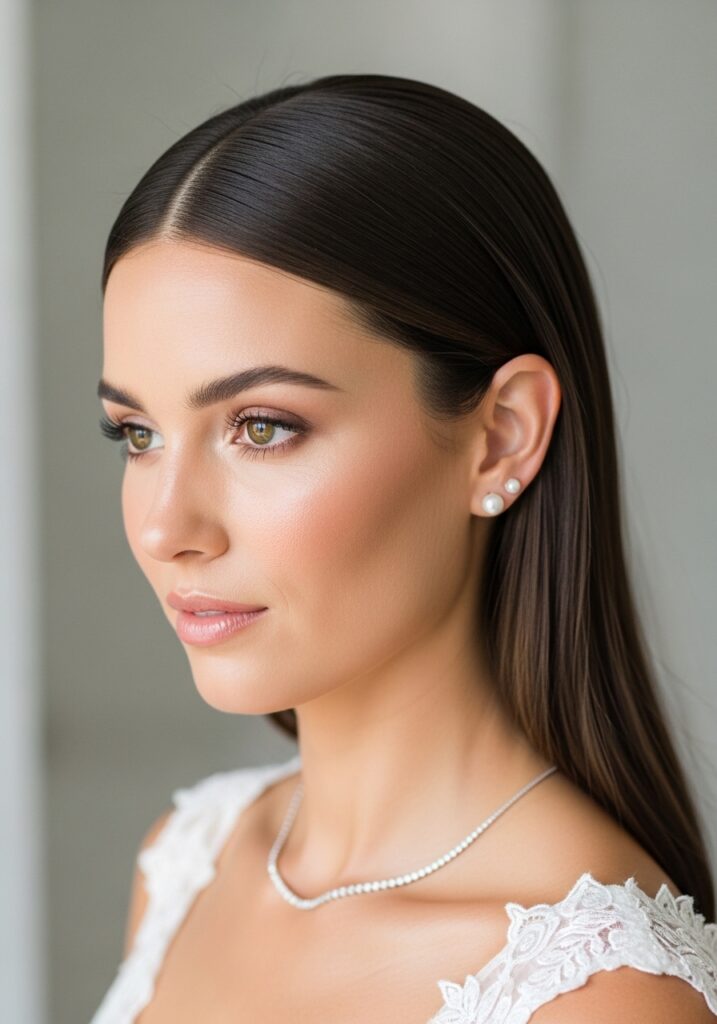
A crown braid with loose lengths gives structure at the top and movement below. That is a sensible compromise for an outdoor wedding.
The braid holds the front section in place against wind, while the back stays loose for photographs. It also works with a veil pinned beneath the braid, where fully loose hair gives a comb nothing to anchor to.
27. Romantic Curly Ponytail
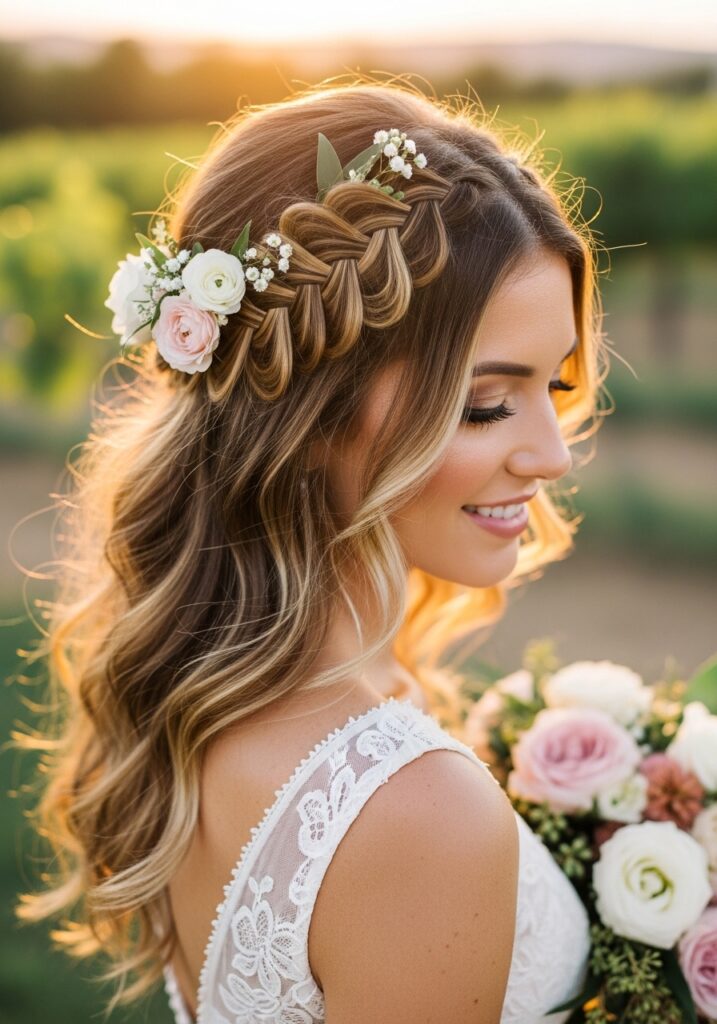
Curls gathered into a low ponytail lose definition at the gather point, which is the recurring complaint about this style.
A soft fabric tie compresses less than a standard elastic and keeps those curls intact. Fluffing the ponytail from underneath rather than the top restores volume without disturbing the pattern on the surface — useful for a mid-reception refresh.
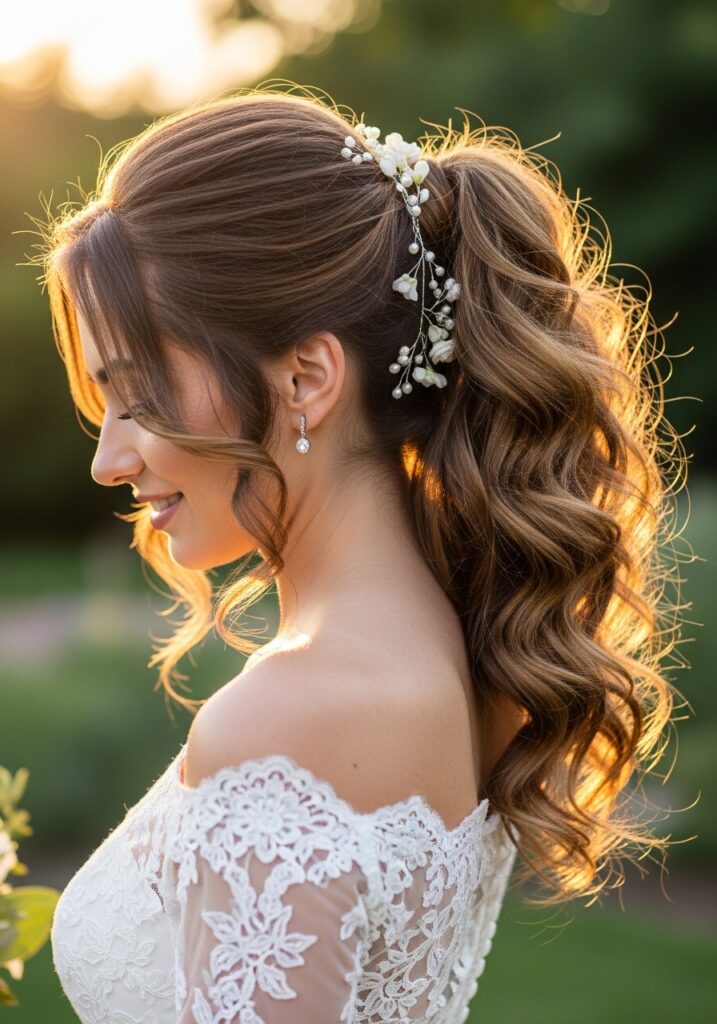
28. Regal Bridal Tiara Updo
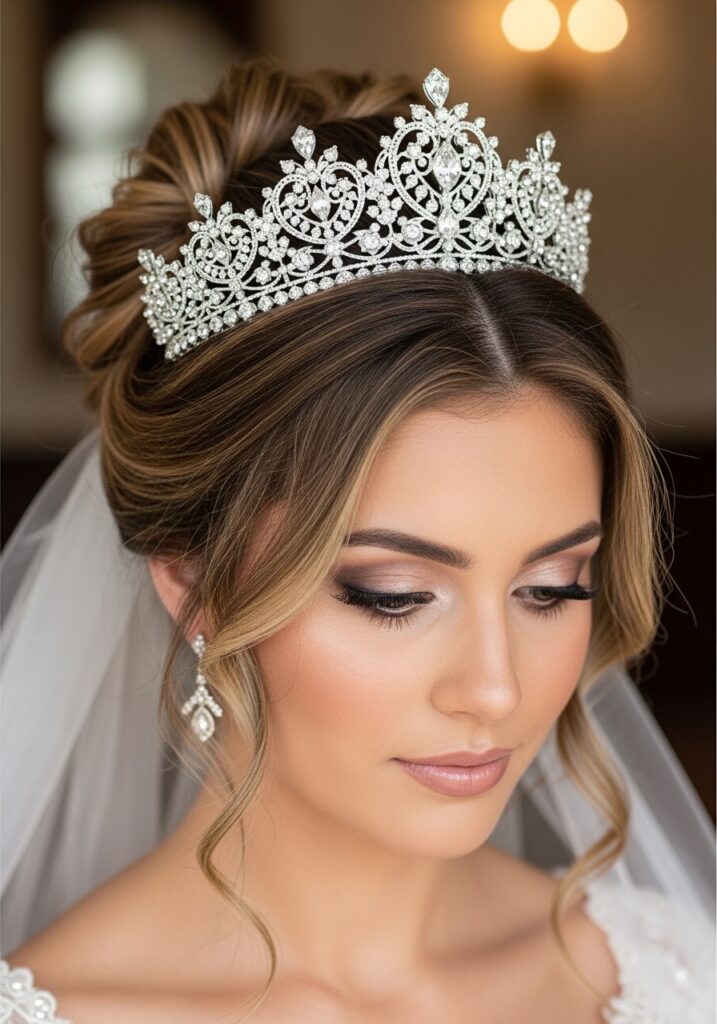
A tiara needs a structured base to sit against, which is why it pairs with an updo rather than loose hair.
Weight is the thing to test at the trial. Heavier pieces need anchoring to pinned sections rather than resting on the hair. A tiara that shifts forward mid-ceremony is difficult to correct discreetly. Bringing the actual tiara to the trial, not a photograph of it, is the only way to know.
Conclusion
Bridal hair is judged at hour twelve rather than hour one. The styles that survive that long share certain traits. Low placement beats high placement for comfort. Structured bases hold veils and tiaras where loose hair cannot. Day-old hair grips where freshly washed hair slides.
Three questions narrow the choice quickly. Where does the veil attach, and what happens to the style when it comes off? Does the look need to change between ceremony and reception, and can that happen without a stylist? And how does it behave in the weather the venue will actually have? A trial that replicates real conditions turns all three from guesses into answers. That means the same products, the same wash timing, and the actual veil and headpiece.

[…] Save This Guide to Pinterest […]