

Short hair has become one of the most searched categories on Pinterest, largely because a good short cut does more visible work than a long one. The shape carries the whole look rather than the length. It is also a bigger commitment than it appears from a photograph. Cleveland Clinic notes that scalp hair grows roughly one centimetre per month, which puts real numbers on any change of mind: a pixie takes close to a year to reach a chin-length bob, and a bob takes about the same again to clear the shoulders. This guide covers 20 chic short hairstyles trending on Pinterest, from jaw-length bobs to cropped pixies, with the salon frequency and grow-out reality attached to each. Short hair is a schedule, not a single decision, and knowing that in advance makes the choice easier rather than harder.

1. Classic Bob Cut
The classic bob lands at the jawline and asks very little beyond a good cut. Thick and fine hair both carry it, which is unusual — most short shapes favour one or the other.
Salon frequency runs to about eight weeks before the line softens. That is the middle of the range for everything here. Styling is genuinely quick: rough-dried and left alone, the cut still reads as intentional, which is the whole argument for it.

2. Textured Pixie Cut
Layers and texture keep a pixie from sitting flat against the head. A small amount of paste worked through with the fingers takes about ninety seconds each morning.
The catch is upkeep. A pixie loses its shape faster than any other cut on this list, usually within four to six weeks, because there is so little length to absorb the growth. Face shape matters more here too, since nothing hides behind length. This breakdown of oval face hairstyles covers which crops suit which proportions.

3. Layered Short Bob
Layers through a bob lift the roots and stop fine hair reading as flat. The lift comes from removing weight, not from adding product.
The cut grows out more forgivingly than a blunt bob, since a softened layer still looks like a layer. That buys an extra two or three weeks between appointments — a small difference that adds up across a year.

4. Blunt Cut Bob
A blunt bob depends entirely on the line, and there is nothing to hide behind. Split ends show along a straight perimeter within days of appearing.
This is the highest-maintenance cut here in salon terms — six weeks, realistically, before the edge loses definition. In exchange it is one of the fastest to style. A middle part and a smoothing serum finish it in under two minutes.

5. Wavy Short Bob
Waves through a bob soften what is otherwise a fairly rigid shape. A wand or a salt spray both work, and the wand version costs about four minutes.
Short hair holds a wave less well than long hair, because there is less weight pulling the bend downward and less length for the wave to travel through. Winding fewer, larger sections looks better at this length than tight uniform curls.

6. Asymmetrical Bob
One side sits longer than the other, which reads as deliberate design rather than an accident. The imbalance is usually an inch or two.
Growth is the complication. Both sides lengthen at the same rate, so the asymmetry holds its proportion but the whole cut drops. Anyone who wants the shorter side to stay short needs appointments closer to six weeks than ten. Tying it back is also awkward, which rules it out for some routines.

7. Short Shag Haircut
Choppy layers, weight lifted from the crown, feathered pieces around the face. Naturally wavy hair suits it because the cut works with an existing pattern rather than imposing one.
Straight hair needs product to show the layers at all, otherwise the shape reads as unfinished. The shag also grows out better than almost anything here — the layers simply lengthen and the silhouette holds, which stretches appointments toward three months.

8. French Bob
The French bob sits at or just above the jaw, usually with a soft fringe, and is designed to look slept-on rather than styled. Air-drying is the intended finish, not a compromise.
Length is the practical consideration. It cannot be tied back, which matters for anyone who exercises, cooks professionally, or simply wants hair off the neck in summer. The fringe also needs trimming between full appointments, adding a step the cut otherwise avoids.

9. Short Curly Hair
Curls shrink, and the shrinkage at short lengths catches people out badly. Hair cut to the chin when wet can sit above the ear once it dries.
Salons that cut curls dry sidestep the problem entirely, and it is worth asking before booking. Internal layers stop the shape turning triangular at the sides, which is the usual complaint about short curly cuts. Weight removal, not length removal, does that work.

10. Pixie Bob
A hybrid: tapered at the back and sides, longer through the crown and around the face. It gives pixie shortness with bob styling options.
The blend between the tapered back and the longer front is what separates a good version from an uneven one. That blend is also the first thing to go as it grows, usually around week six. Anyone growing out a pixie passes through this shape naturally, which makes it a useful staging post rather than only a destination.

11. Side Part Short Hair
Moving the part is the only entry here that costs nothing and requires no appointment. A deep side part shifts the weight across the head and lifts the crown.
The volume fades as the hair settles back toward its habitual line, so this works best on wash day before the part has set. Hair trained to a centre part takes several days of damp combing to accept the change.

12. Choppy Bob
Uneven layers break up the weight of a standard bob and produce an airier shape. The deliberate roughness means daily styling can be imprecise without the cut suffering.
Point-cutting creates the effect, and a stylist unfamiliar with the technique will produce something that reads as damaged rather than designed. Bringing a photograph matters more for this cut than for most.

13. Short Hair with Curtain Bangs
Curtain bangs part at the centre and sweep outward, blending into whatever cut sits behind them. They pair with bobs and shaggy pixies equally well.
The grow-out is the selling point. A blunt fringe reaches an awkward stage within weeks, while curtain bangs simply become longer face-framing pieces. The daily cost is a round brush and thirty seconds, since they dry in whatever direction they landed overnight.

14. Sleek Short Hair
A flat iron and a smoothing serum produce the polished version of any short cut. Short hair reaches this finish far faster than long hair, since there is simply less to pass through.
Temperature is worth watching. Repeated passes at a high setting cause more damage than a single pass at a moderate one, and on short hair the damaged section cannot be trimmed off without losing the shape entirely.

15. Short Hair with Highlights
Lighter pieces exaggerate the separation between layers, which makes a short cut look more deliberate than a solid colour does.
Regrowth shows sooner on short hair than long, because the root area occupies a greater share of the visible length. Balayage handles this better than foils, since the lighter sections start further from the scalp. That difference translates into months of extra wear between colour appointments.

16. Undercut Pixie
Shorter sides beneath a longer top, sometimes with a shaved section hidden underneath. The contrast is the design.
An undercut needs clipper work every three to four weeks to stay sharp — the shortest interval on this list. Growing one out is also the slowest process here, since the undercut section has the furthest to travel before it blends. Anyone unsure should ask for a subtle version first.

17. Short Layered Hair
Layers reduce bulk and add lift without changing the overall length. Straight and wavy textures both take them well.
This is the most forgiving option here for anyone unsure about going shorter. Layers can be added to an existing cut in a single appointment, and they grow out invisibly rather than passing through an awkward stage.

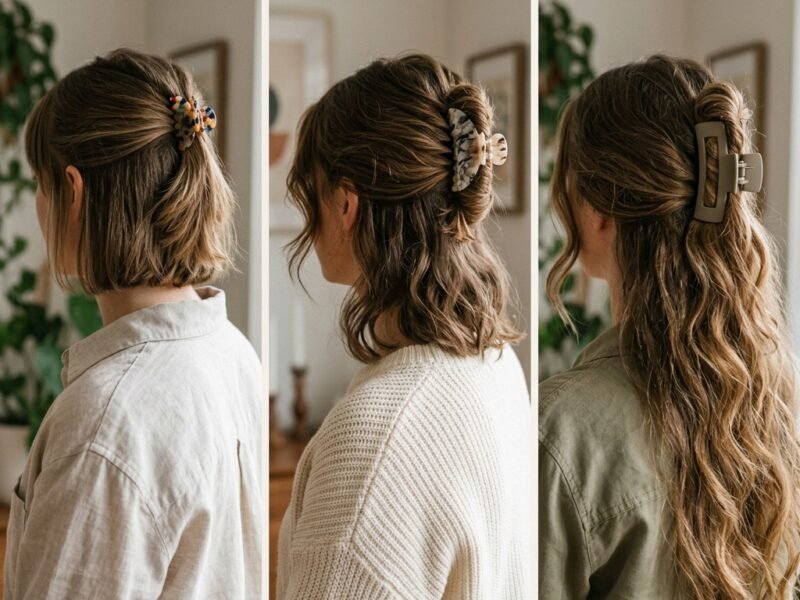
18. Short Hair with Hair Accessories
Clips, pins, and headbands solve a problem specific to short hair: there is not enough length to tie anything back when it misbehaves.
Grip is the deciding factor at this length. Clips slide out of short, clean hair easily, and pins pushed in against the direction the hair falls hold far better than pins pushed in with it. Headbands need to be seated from the front and slid back rather than dropped onto the crown.

19. Soft Wavy Pixie
Gentle bends through a pixie soften the shape without lengthening it. A small wand or a texturising spray both achieve it in a minute or two.
Very short hair struggles to hold a wave at all, so this works best on the longer pixie variations where the crown carries two or three inches. Below that length, texture product does more than heat.

20. Natural Textured Short Hair
Cutting short removes weight, and removing weight lets coils and curls spring up rather than hang down. The volume is a consequence of the length, not of any product.
Shaping matters more than cutting here. A well-shaped short natural cut holds its outline for months, which makes it one of the lower-maintenance options despite appearances. Moisture retention drives the daily result — a leave-in cream and a satin pillowcase do more than any styling step.

Conclusion
Short hair trades daily styling time for salon time, and the exchange rate varies more than most guides admit. These 20 chic short hairstyles trending on Pinterest divide fairly cleanly: the undercut pixie needs attention every three to four weeks, while a short shag or a natural textured cut holds its shape for two or three months.
Three questions settle the choice. How often can a salon appointment realistically happen? Does the hair need to be tied back at any point in the day? And what does the cut look like in month three rather than week one? At roughly a centimetre of growth per month, a change of mind is measured in seasons rather than weeks — which is an argument for starting with a longer bob and working shorter, rather than the reverse.


[…] to Pinterest ✦ Share This Guide […]