
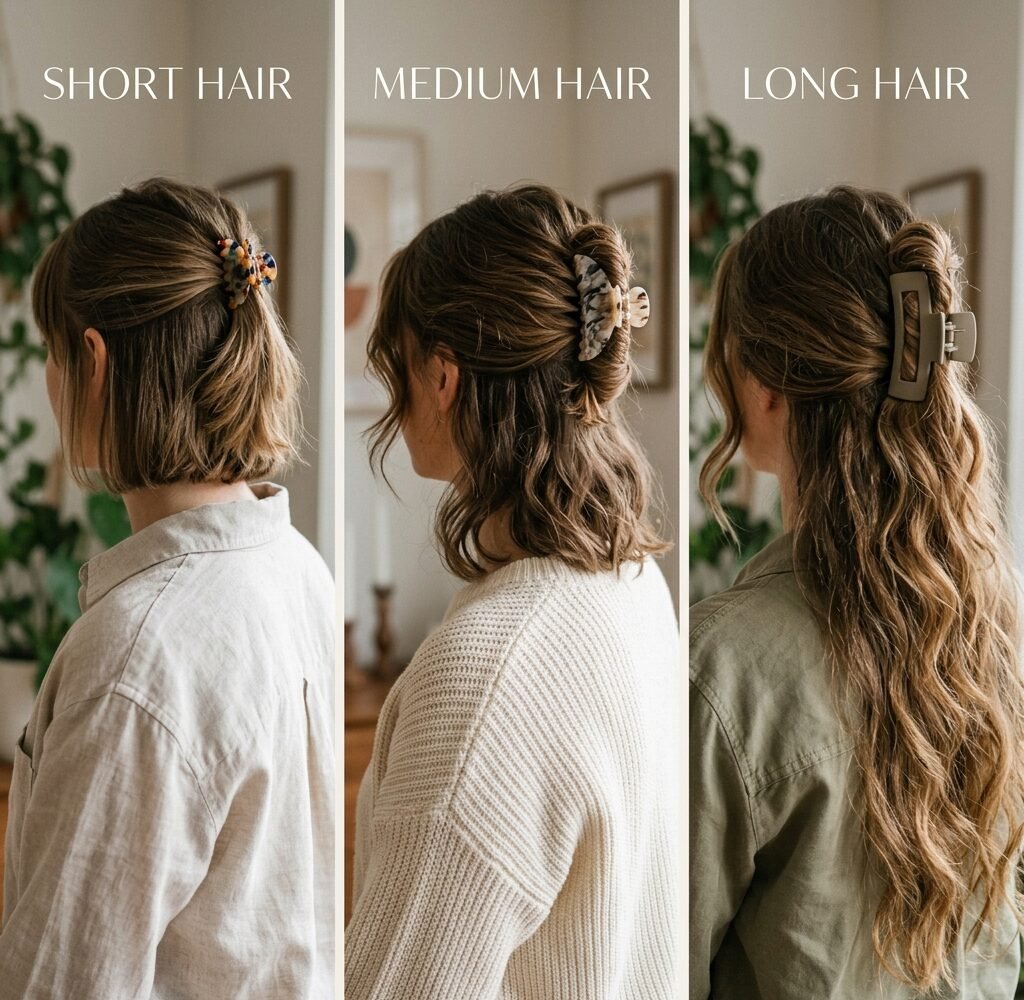
A claw clip is the rare hair accessory that works as hard as a bobby pin and looks like jewelry. It gathers a whole head of hair in a few seconds, holds through a workday, and comes off without a single tug. It is also the reason a lot of people stopped reaching for a hair tie.
The trick is that a claw clip does not behave the same way on every head. Hair length, thickness, and texture all change what the clip can hold and how the finished style looks. A twist that sits tall on long hair may collapse on a bob, and a small clip that suits fine hair can slip off thick hair completely.
This guide starts with how to match a clip to your hair, covers the basic moves behind most claw clip styles, and then walks through ideas for long, medium, and short hair. It finishes with texture adjustments, outfit pairings, and ways to keep everything in place.
Match the Clip to the Hair, Not the Other Way Round
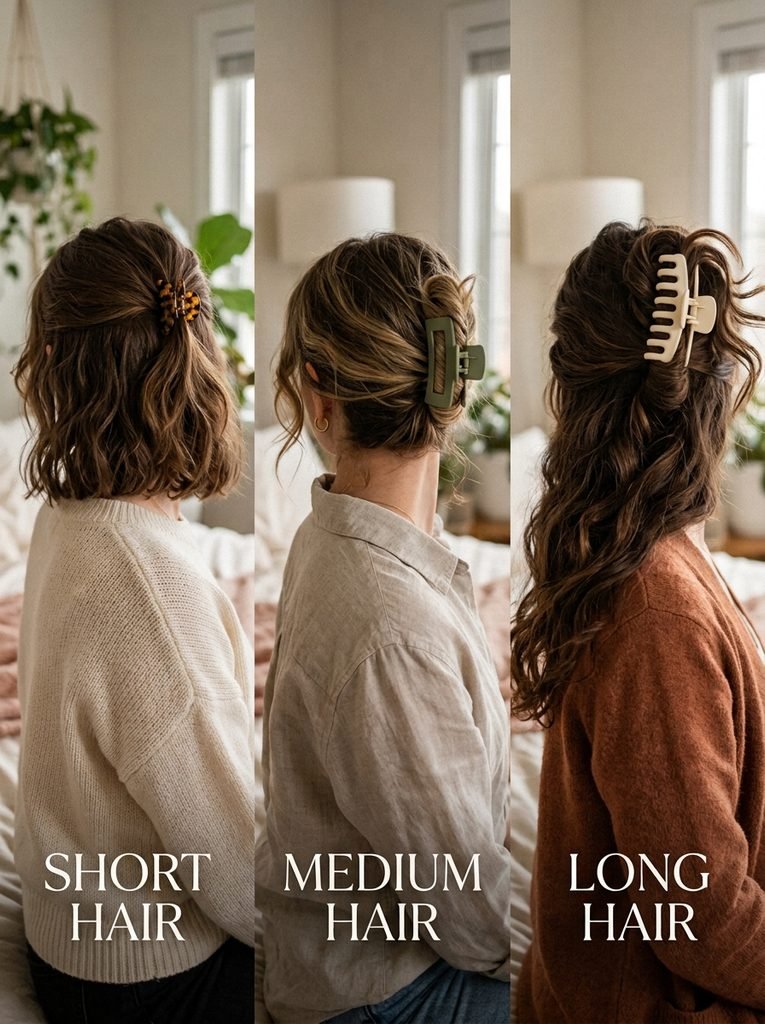
Most claw clip frustration comes from clip size. A clip that is too small slides out, and one that is too large looks bulky and may not grip short hair at all.
| Clip size | Typical width | Works best for | Notes |
|---|---|---|---|
| Mini | About 1 to 2 inches | Short hair, fine hair, half-up styles, small sections | Holds little hair, so it suits small jobs |
| Medium | About 3 to 3.5 inches | Medium hair, bobs, half-up twists, fine to medium thickness | A flexible all-rounder |
| Large | About 4 inches and up | Long or thick hair, full twists and updos | Offers the grip thick hair needs |
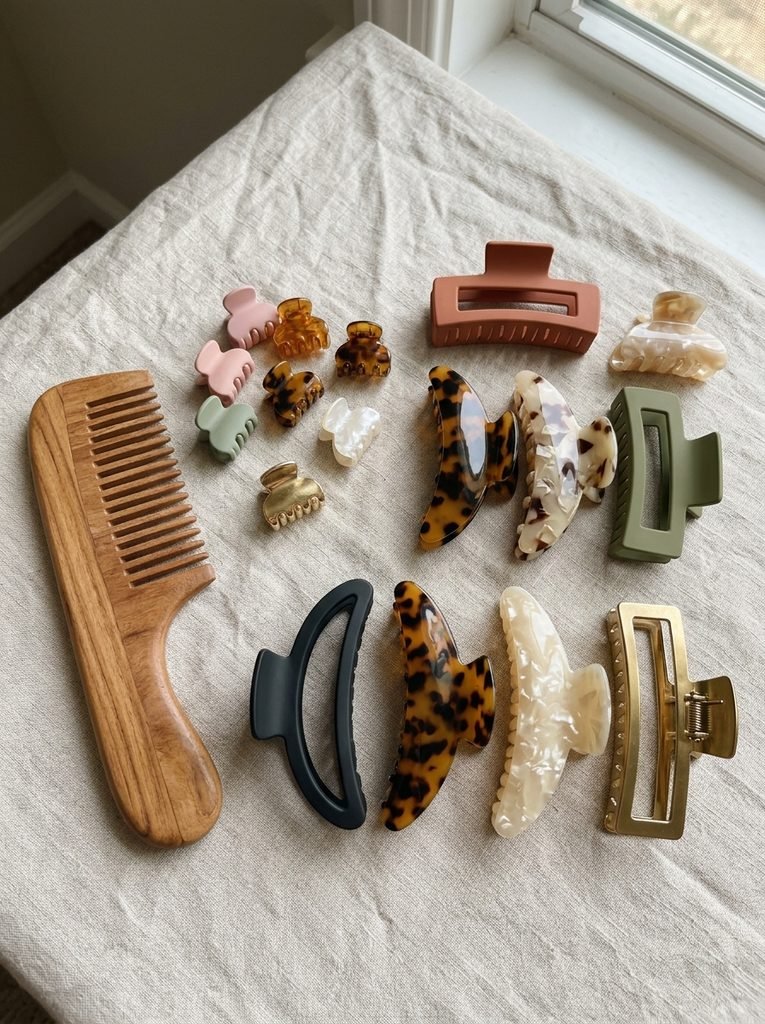
Other details matter too. Teeth that interlock tightly hold finer hair better, while wider spaced teeth suit thick or curly hair. A strong spring keeps the clip closed, but it should not feel painful against the scalp. Matte and textured clips tend to grip better than very smooth glossy ones.
Material is partly about looks and partly about weight. Plastic and acrylic clips are light, while metal clips look more polished and can feel heavier. Tortoiseshell and neutral shades go with most outfits, and bolder colors work as a small accessory.
The Basic Moves Behind Every Claw Clip Style
Almost every claw clip hairstyle is a variation of three actions.
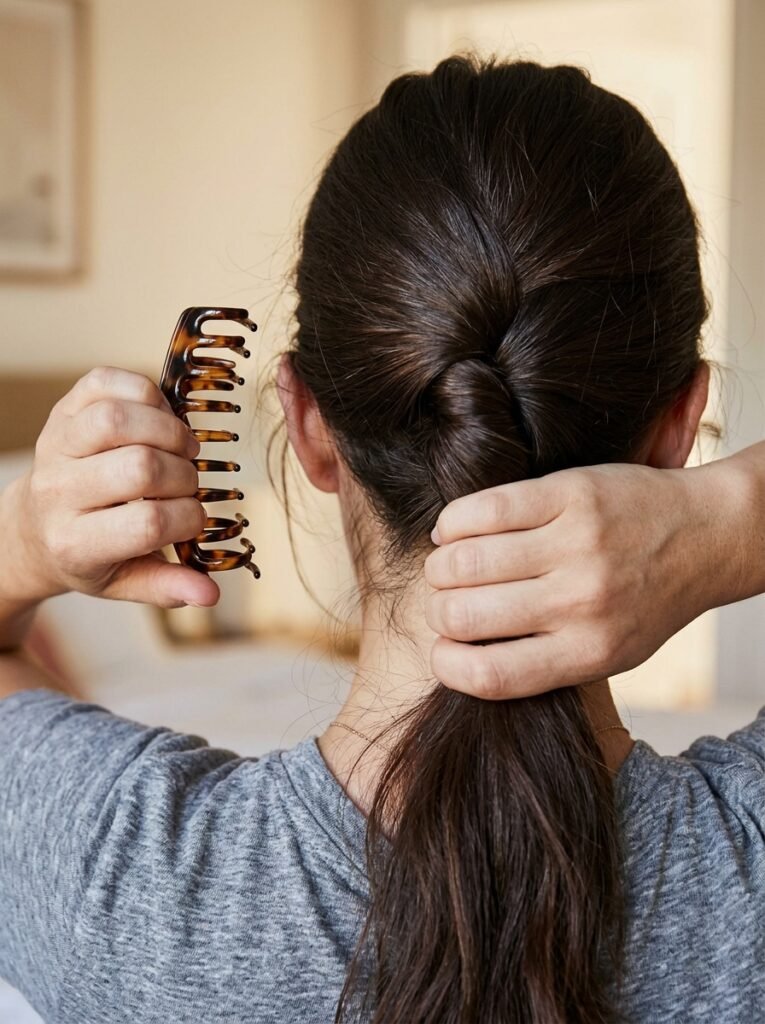
Twist and clip. Gather the hair at the back of the head, twist it into a rope, and fold it upward. Open the clip, slide it across the folded section, and let the teeth catch the hair on both sides. Angling the clip slightly, rather than holding it perfectly flat, adds grip.
Flip-up or fold. Gather the hair into a loose ponytail with your hand, fold the ends upward, and press the clip over the folded section. This creates a softer, more casual look than a tight twist.
Half-up. Take a section from the crown and sides, twist or gather it, and clip at the back of the head. The lengths stay loose below. This is the easiest option and works for nearly every length.
Two details apply to all three. First, where the clip sits changes the mood. A low placement feels elegant and relaxed, while a high placement looks sporty or playful. Second, tension should be firm enough to hold but not tight. If it feels like pulling, loosen the gather and place the clip again.
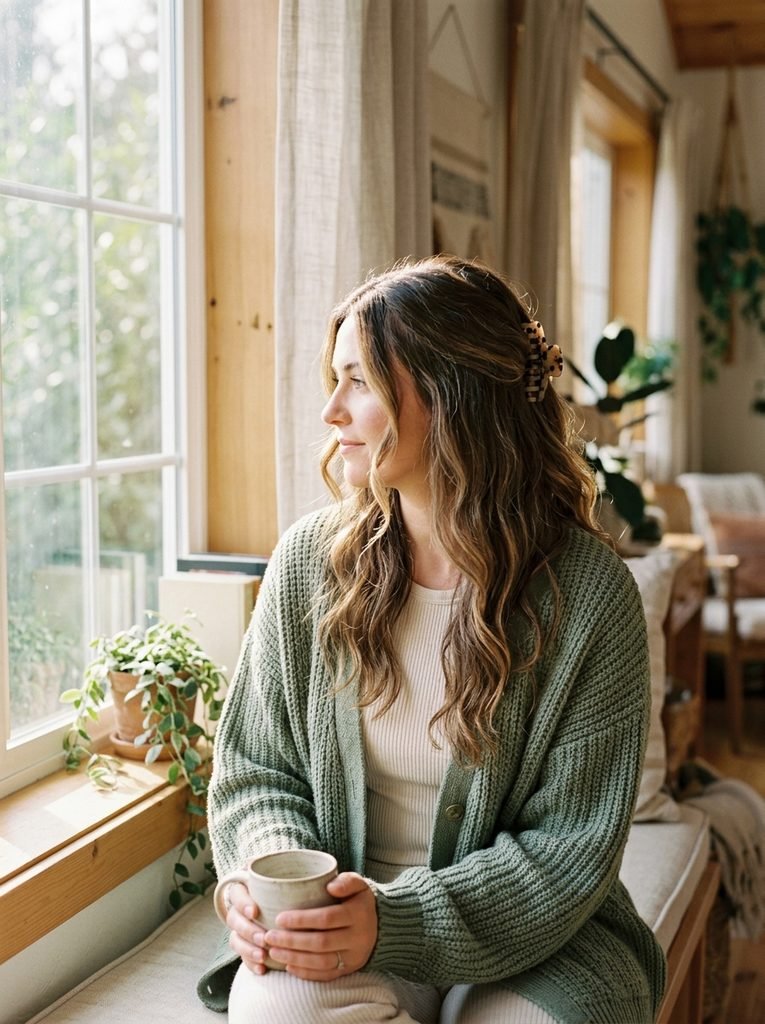
Long Hair: Twists, Chignons, and Loose Half-Ups
Long hair is easy to clip because there is plenty to work with. The challenge is weight. A large, heavy section needs a big clip with strong teeth, otherwise it slips down through the day.
The Classic Twist
Gather hair at the nape, twist it tightly, then fold it up against the back of the head and clip across the fold. Let the ends fan out above the clip for a relaxed, tousled finish. A large clip looks natural here, and a small clip would struggle. This works with straight, wavy, or curly hair.
The Low Chignon
For a smoother look, comb the hair back, twist it at the nape, and wrap it into a low bun. Slide the clip across the bun to secure it. Pull a few strands at the temples for softness. This version suits dressier plans, and a sleek metal clip looks refined.
The Half-Up Clip
Gather the top half of the hair, twist once, and clip it at the crown. The lengths fall loose over the shoulders. It keeps hair off the face while showing the length, and it works particularly well with waves or soft curls.
Two-Clip Volume
Thick or very long hair can be divided into two sections, with one clip at the lower back and another higher, creating a layered look. This spreads the weight and prevents slipping. It also suits hair that is too heavy for a single clip.
Braid and Loop
A loose braid looped back on itself and clipped at the nape creates a textured knot. It is a good option for second-day hair or for anyone who likes a more detailed look.
Medium Hair: Making Enough Hair Behind Short Lengths
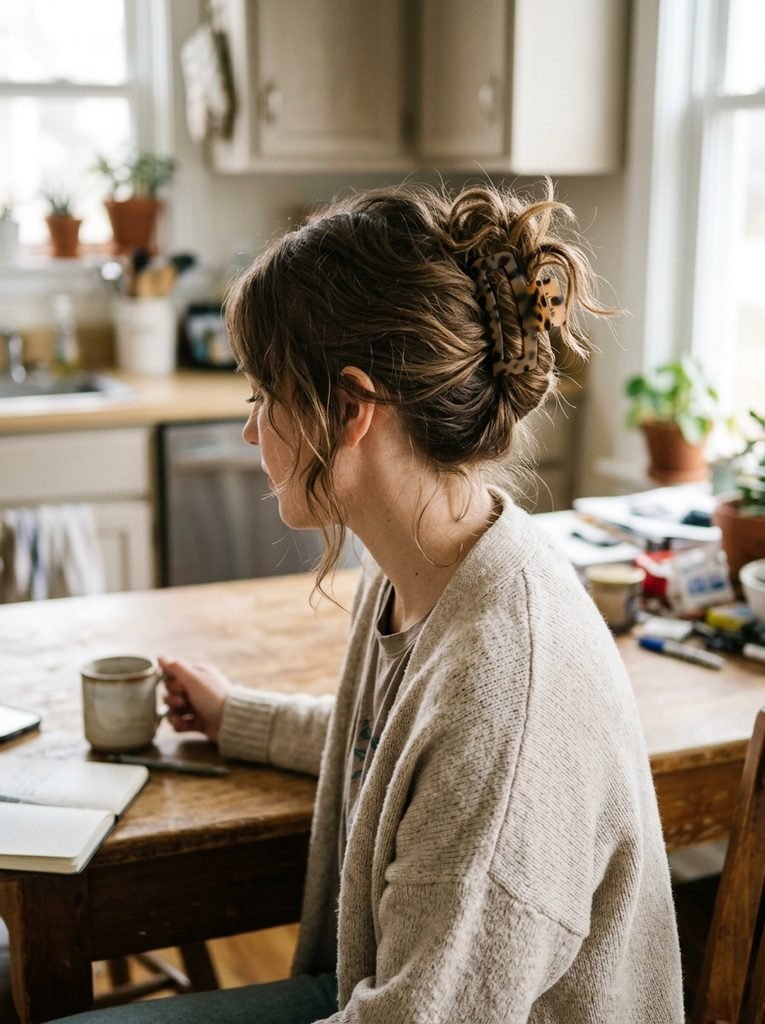
Medium hair is the length where claw clips can feel unpredictable. There is enough hair to gather, but not always enough to fold over, so the style may look flat or slip.
The Messy Twist
Gather the hair at the back of the head, twist once or twice, and tuck the ends upward into the clip so they sit above the hold. A medium clip is usually enough. Leaving a few front strands loose softens the shape, and the result looks casual and put together.
The Low Clip Bun
Pull the hair into a loose low ponytail with your hands, twist it around itself, and clip it at the nape. Because medium hair has less length to wrap, the bun will be small. This is a feature, since it looks neat and understated.
The Half-Up Top Section
Take the upper section of hair, twist it back, and clip it at the crown. For hair that tends to fall forward, this keeps the face open. Layered cuts do especially well here, since the shorter layers add volume at the top. The layered haircut guide explains how layers create movement that clips can use.
The Side Clip
For a quick decorative look, sweep one side of the hair back and secure it above the ear with a medium or small clip. This works well for bobs and lobs and adds a graphic detail.
Texture Is Your Friend
Medium hair that is freshly washed and very smooth can slip out of a clip. A little texture spray, dry shampoo, or a day-old finish gives it grip. Lightly roughing the hair with fingers before clipping often makes the difference.
Short Hair: Small Clips, Smart Sections
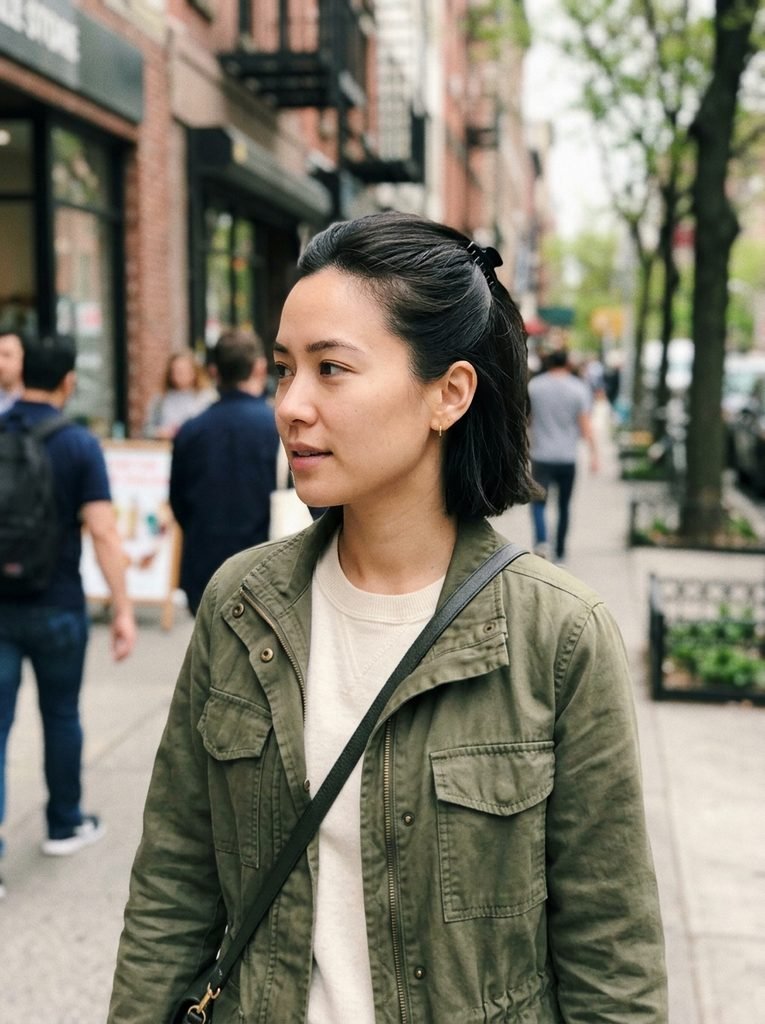
Short hair does not mean claw clips are off the table. It means the clip should be smaller and the hair gathered into smaller sections. For many people, a short cut is where claw clips are most useful, because they manage awkward lengths and give a fresh way to style a haircut.
The Mini Half-Up
Take the top section of hair from the crown, twist it slightly, and secure it with a mini clip at the back. This works with bobs, lobs, and short layers, and it keeps hair off the face without changing the cut.
Clipping Back the Front
Short hair often gets in the eyes. Sweeping the front sections back and clipping them at the sides or crown keeps the face clear. A small matte clip is practical, and a metal clip gives a polished finish.
The Tiny Twist at the Nape
On a longer bob, gather the lower layers at the nape, twist, and clip with a small or medium clip. The shorter pieces around the face stay loose. It creates a mini updo in about thirty seconds, handy for warm days or workouts.
Grown-Out Pixies and Cropped Cuts
Pixie cuts at the awkward in-between stage are often difficult to style. A tiny clip can hold side sections back, and some clips can gather the top into a small tuft. The pixie growing-out guide covers other ways to manage each stage.
Polished Short Hair
For a dressier finish, a sleek hair clip or a metal claw at the side of a smooth bob looks intentional. More ideas for styling short hair appear in the elegant short hair styling guide, and thick short cuts are covered in the short haircuts for thick hair article.
Adjusting for Texture and Thickness
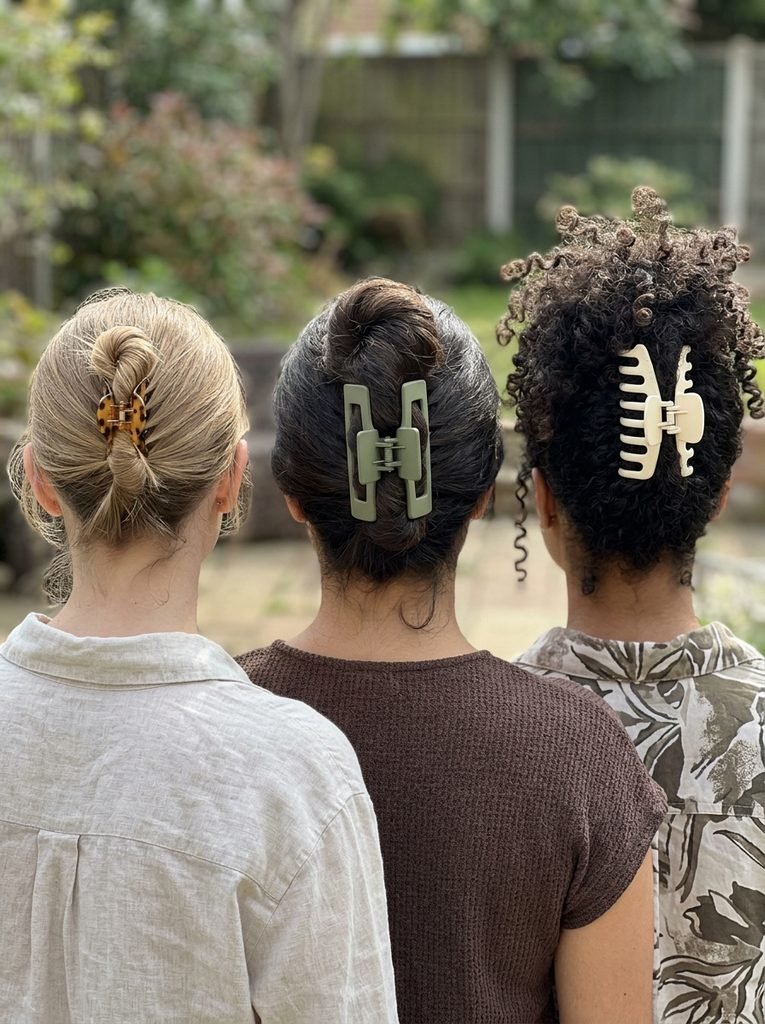
Texture and thickness change what works as much as length.
Fine hair. Fine hair tends to slip, so choose a smaller or medium clip with tight teeth. Add texture at the roots, and gather the hair into a smaller section so the clip can grip it. Twisting the hair firmly before clipping helps.
Thick hair. Thick hair needs a large clip with a strong spring. Divide the hair into two sections if one clip cannot hold it. Layers and thinning cuts can also reduce bulk.
Wavy and curly hair. Curls and waves grip naturally, so a clip holds well. Use wide-toothed clips to avoid snagging, and gather the hair loosely to keep the curl pattern. Clipping on a slightly dry set of curls reduces frizz.
Straight, slippery hair. Very smooth, straight hair is the hardest to hold. Lightly texturize it, avoid applying silky serums before clipping, and consider an extra bobby pin tucked under the clip for security.
Coily or very textured hair. Choose a large clip with wide teeth, and gather the hair into a loose puff or twist before clipping. Satin-lined or smooth clips are gentler on delicate strands.
Matching the Hairstyle to the Outfit
A claw clip works as an accessory, so it helps to think of it alongside clothing.
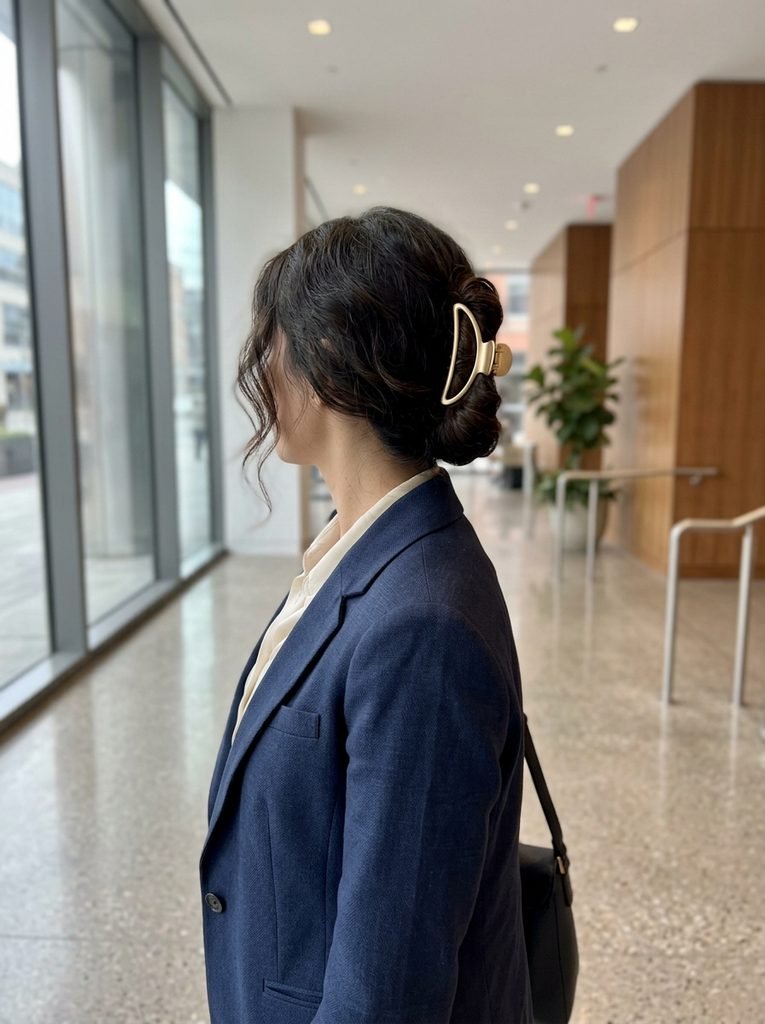
A tortoiseshell clip suits knitwear, denim, and warm earth tones. A black or brown matte clip looks neat with tailoring and office outfits. Metal clips, especially gold or silver, look polished with dresses and evening outfits. Colored acrylic clips add a playful touch to casual outfits and summer dresses.
Hairstyle shape also needs to fit the neckline. A high twist shows off a collar, a scarf, or earrings. A low chignon works with a boat neck or a turtleneck. A half-up style is flexible with almost everything.
Keeping It in Place All Day
A few small habits make the clip last through the day.
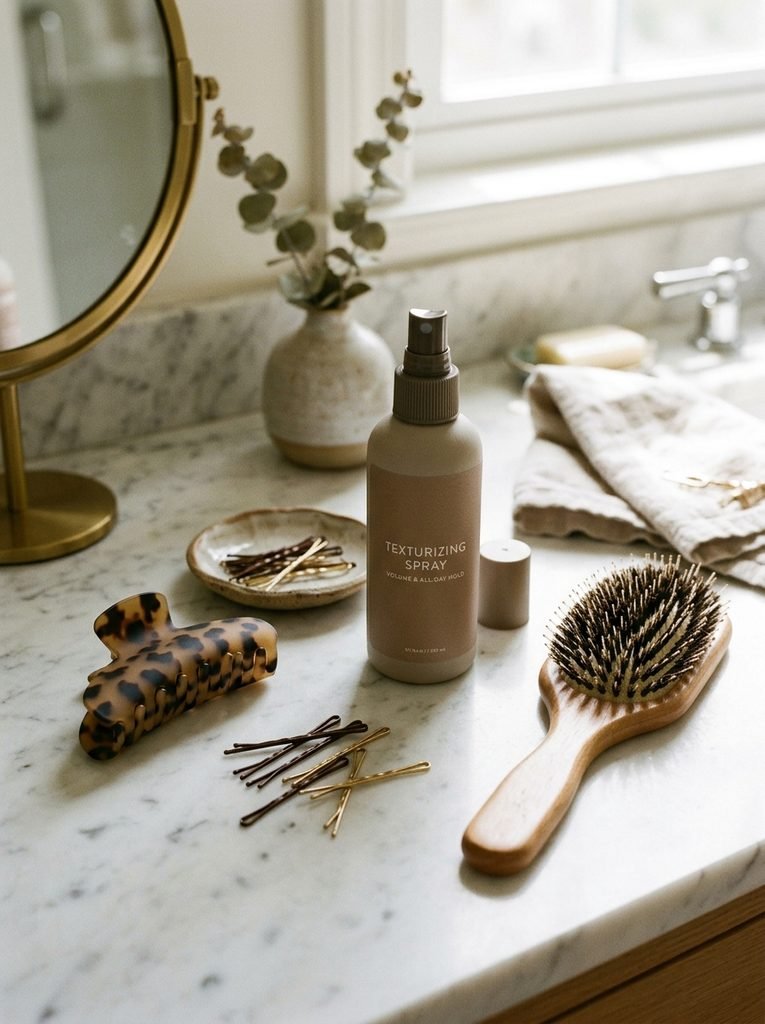
Start with some texture, since very clean, smooth hair slides. Gather the hair at the right height, slightly higher than where you want the clip to end up, because it tends to settle downward. Twist the hair firmly before folding it, and open the clip wide so it catches enough hair on both sides.
For extra support, slide a bobby pin through the twist and under the clip. Make sure the teeth of the clip pass through both the folded hair and the base layer, which locks the style in place.
If the clip keeps slipping, the clip is usually the issue. Try a different size or a clip with finer teeth before changing the whole style.
Comfort and Hair Care
Claw clips are generally gentle, but a few habits keep them comfortable. Avoid clipping hair very tightly, and change the position now and then so the same strands are not under constant tension. Open the clip fully before removing it, rather than pulling it out of the hair.
Many people find that a clip is uncomfortable to sleep in, so removing it before bed is a sensible choice. Clean clips occasionally, especially if they collect product, and choose smooth edges to avoid snagging. If a clip causes discomfort or pulls on the scalp, switch to a different size or shape.
Mistakes That Make a Clip Slip
A few habits cause most failures. Using a clip that is too small for the amount of hair is the biggest one. Clipping freshly washed, very smooth hair without any texture is another. Gathering hair too low, so it drags the clip down, and clipping too loosely are also common.
Finally, closing the clip on only a thin layer of hair rather than the full twist leaves it unsecured. Make sure the teeth go through the fold.
Quick Answers on Claw Clip Hairstyles
What size claw clip should I use?
Use a mini clip for short hair or small sections, a medium clip for medium hair, and a large clip for long or thick hair.
Can I use a claw clip on short hair?
Yes. Use a small clip for half-up styles or to hold back the front, and gather hair into small sections.
Why does my claw clip keep slipping?
It is usually because the clip is too small, the hair is too smooth, or the clip is not catching the full twist. Add texture and check the size.
Are claw clips bad for hair?
Used gently and not too tightly, they are generally considered easy on hair. Avoid pulling hard or leaving the same tension in one spot every day.
Can I wear a claw clip with curly hair?
Yes. Choose a clip with wide teeth and gather the curls loosely so the pattern stays intact.
Start With One Easy Style
If you are new to claw clips, begin with the half-up version. It works on almost every length, takes under a minute, and teaches the key skill of catching the right amount of hair. Once that feels comfortable, try the full twist and experiment with placement.
From there, the clip becomes less of a trend and more of a daily tool. A good clip in a size that suits your hair can replace a stack of ties and pins.



Leave a Reply