

Full fringe divides people. Some love the clean, graphic line it draws across the forehead. Others picture the morning blow-dry and quietly close the tab. Bottleneck bangs sit somewhere between those two reactions. They keep the framing effect of a fringe but drop the heavy horizontal block.
The result looks deliberate without looking rigid. Bottleneck bangs rest short and light near the center, then widen and lengthen as they sweep toward the sides of the face. That gives the cut its name, and it gives the finish a very particular softness.
This article looks at how bottleneck bangs actually look once they are cut and styled. It covers their outline, density, movement and length, and how each of those differs from a full fringe. Everything here is a styling observation rather than professional advice, so use it to sharpen your reference photos before you talk to a stylist.

Why It’s Called a Bottleneck
Picture the silhouette of a glass bottle turned upside down. The narrow neck sits at the top, and the shape flares out into the wider body below. Bottleneck bangs follow that outline. The shortest strands sit at the center of the forehead, while the sides are cut progressively longer, so the fringe opens outward toward the cheekbones.
Because of this, the fringe does not end in a flat line. It ends in a gentle curve or a soft V, depending on how it is cut and styled. The longest pieces usually travel past the brow bone and blend into the face-framing layers, which is why the fringe never looks like a separate patch of hair sitting on top of the rest.
The central section is usually kept fairly light. Instead of a solid curtain of hair, you tend to see a little forehead peeking through, especially on days when the bangs are freshly washed. That see-through quality is one of the biggest visual differences from full fringe, and it is a large part of why people describe the look as airy.
Length matters here too. Most versions start somewhere around the middle of the forehead or just above the eyebrows and finish around the cheekbones, though the exact proportions shift with how much hair is used and how the fringe is layered.

Full Fringe and Bottleneck Bangs Side by Side
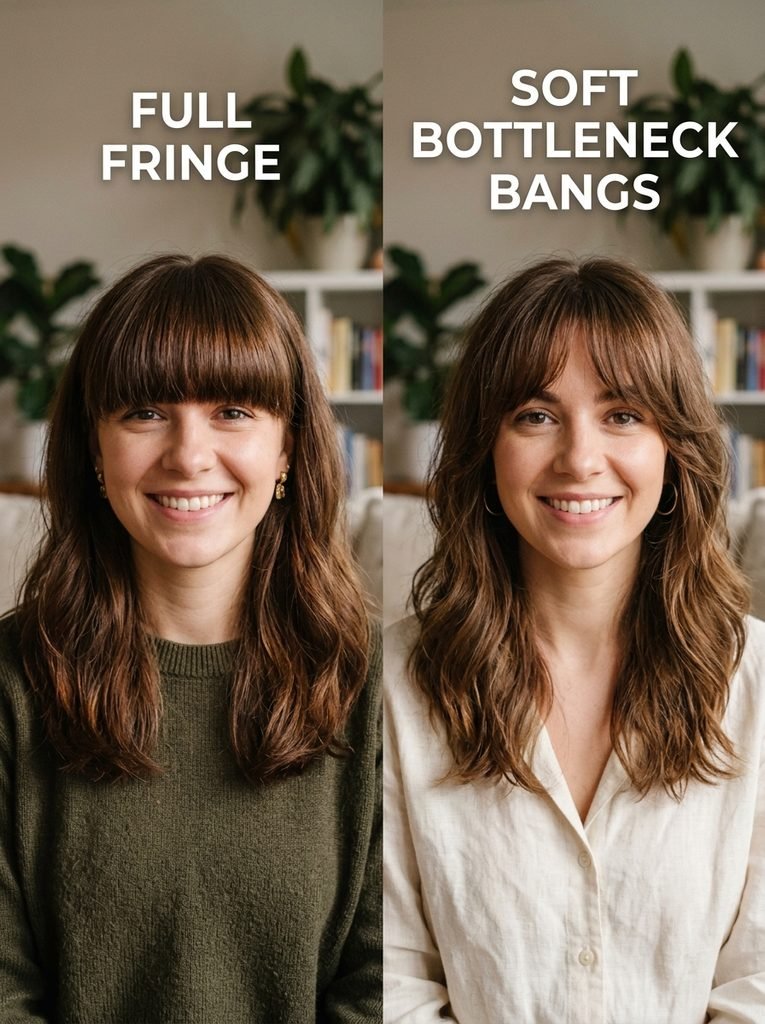
The easiest way to understand the finish is to compare it with the style it often replaces. A full fringe is cut straight across or with a slight curve, usually from ear to ear or close to it, and it sits as one continuous panel. Bottleneck bangs break that panel into a shape with a center and two sweeping sides.
| Detail | Full fringe | Bottleneck bangs |
|---|---|---|
| Outline | Straight or gently curved across | Short at the center, flaring longer at the sides |
| Density | Thick, solid coverage | Lighter, often slightly see-through in the middle |
| Forehead coverage | Most of the forehead | Partial, with more skin showing at the center |
| Movement | Holds its line, moves as one piece | Shifts and separates with each brush of the hand |
| Edge | Crisp or blunt | Softened, blended into surrounding layers |
| Styling feel | More structured | Relaxed and slightly tousled |
Beyond the chart, the day-to-day difference is how each one behaves. A full fringe tends to look its best when it is smooth and tidy, and it shows every cowlick or bit of humidity. Bottleneck bangs are more forgiving. A slightly uneven day still looks like the style, because the shape is built around movement rather than a perfect line.
That said, full fringe has its own appeal. Its impact is stronger, and for some people the graphic edge is exactly the point. Bottleneck bangs suit those who like the idea of bangs but want the option to push them aside without a fuss.
Where They Land Between Curtain Bangs and Wispy Bangs
Bottleneck bangs are often mentioned in the same breath as curtain bangs, and the overlap is real. Both part in the middle and both sweep toward the sides. The difference is mostly in the proportions.
Curtain bangs usually start at the center part and flow long and open from there, so the center is often left quite open. Bottleneck bangs keep a bit more hair in the middle, cut shorter, before releasing into the longer side sections. The forehead feels slightly more covered, and the bangs read as a fringe rather than as long face-framing layers.
Wispy bangs are a different comparison entirely. They describe texture, meaning thin, feathery pieces with a lot of space between strands, and that texture can be applied to many shapes. A bottleneck fringe can be cut wispy, blunt-ish, or somewhere in between. Some people ask for a wispy bottleneck to get the lightest possible finish.
If you enjoy browsing different fringe options, the fringe-heavy looks in this roundup of trendy hairstyles for women in 2026 show curtain and wispy variations that make a helpful visual contrast.

How Hair Texture Changes the Finish
The same cut can look surprisingly different depending on the hair it is cut into. Texture and density change how the shape opens, how much of the forehead shows, and how quickly the fringe settles into its final position.
Straight Hair
On straight hair, the bottleneck outline is at its clearest. The center sits neatly and the sides slide toward the cheekbones in smooth lines. Because straight hair falls flat, the fringe can look sleek and polished, and a small amount of curve from a round brush is usually enough to keep the ends from looking stiff.
Fine straight hair needs a little care. If the center is cut too thin, it can turn stringy, so many people prefer to keep a bit more weight there and let the sides carry the wispy look.
Wavy Hair
Wavy hair tends to give the most natural version of the finish. The bend in the hair adds lift at the roots and softens the flared sides, so the shape appears to move even without styling. Waves can also shorten the fringe as it dries, so the cut often looks a little higher than it did wet.
Curly and Coily Hair
On curls, bottleneck bangs become a shape made of spirals. The center tends to spring up and the sides open into loose curls or coils that echo the rest of the hair. Wavy, curly, and coily hair appears shorter dry than it does wet or stretched, an effect commonly called hair shrinkage. For a short center section, that means a fringe can sit noticeably higher once it dries, so it is worth keeping in mind while looking at reference photos.
Curly hair also tends to produce a fuller, rounder version of the finish rather than a sleek V. That is not a flaw. It is simply the same silhouette expressed through a different texture.
Thick Hair
Thick hair can carry a substantial center section, which gives the bangs more presence. Some thick-haired people ask for the fringe to be thinned slightly so it does not feel heavy, while others prefer to keep the density for a fuller look.

Face Shape and Forehead Considerations
Any advice about matching bangs to a face shape should be treated as a loose guide rather than a rule. Many combinations work, and preference usually matters more than a formula. Still, the shape of bottleneck bangs creates a few visual effects worth noticing.
The flared sides draw the eye outward and then down along the cheekbones. On a face that tends to look longer, that horizontal movement can add a sense of width around the eyes. On a rounder face, the sweeping diagonal lines create a slightly narrower line toward the temples, since the fringe does not end in one wide horizontal stripe.
The forehead is another thing to think about. Because the center is cut shorter, a higher hairline or a very active hairline may show more than it would under a heavy fringe. A cowlick near the front can also push the center in an unexpected direction. Neither is a dealbreaker, but both are useful details to mention at an appointment.
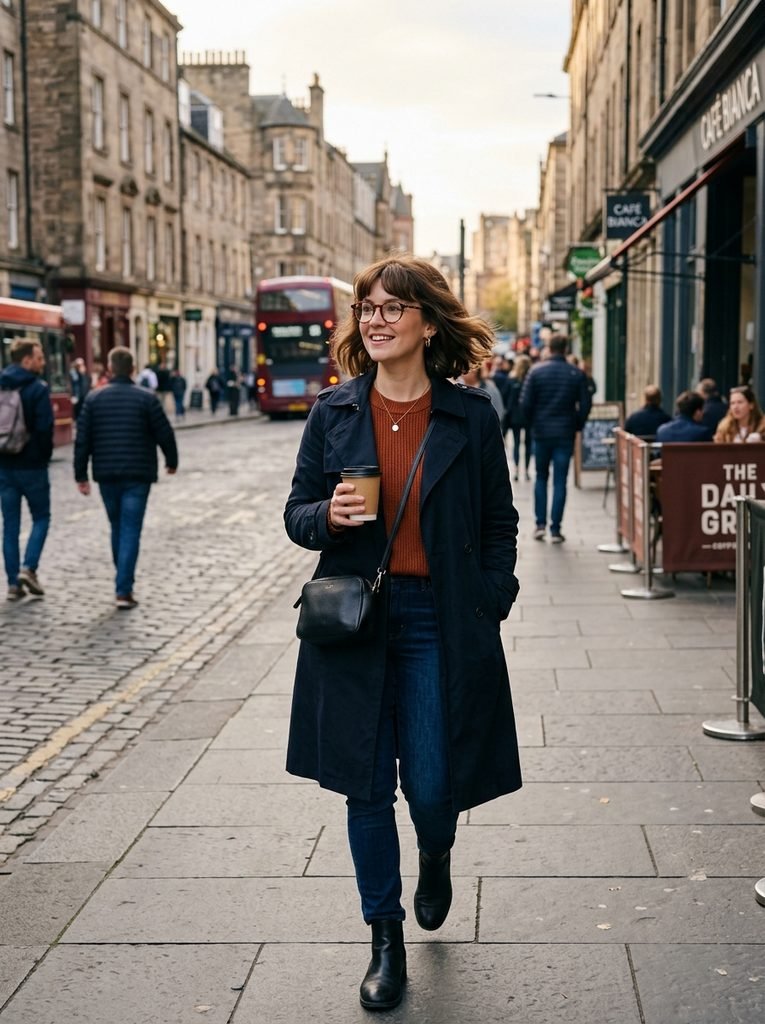
Glasses add another layer. Fringe that reaches or passes the brow can brush the top of the frames, and bottleneck bangs that flare wide may rest along the edges of the lenses. Some people like the way the sides tuck neatly behind the frames, while others prefer a slightly longer cut so the pieces sweep past them.
Everyday Styling and Finishing Touches
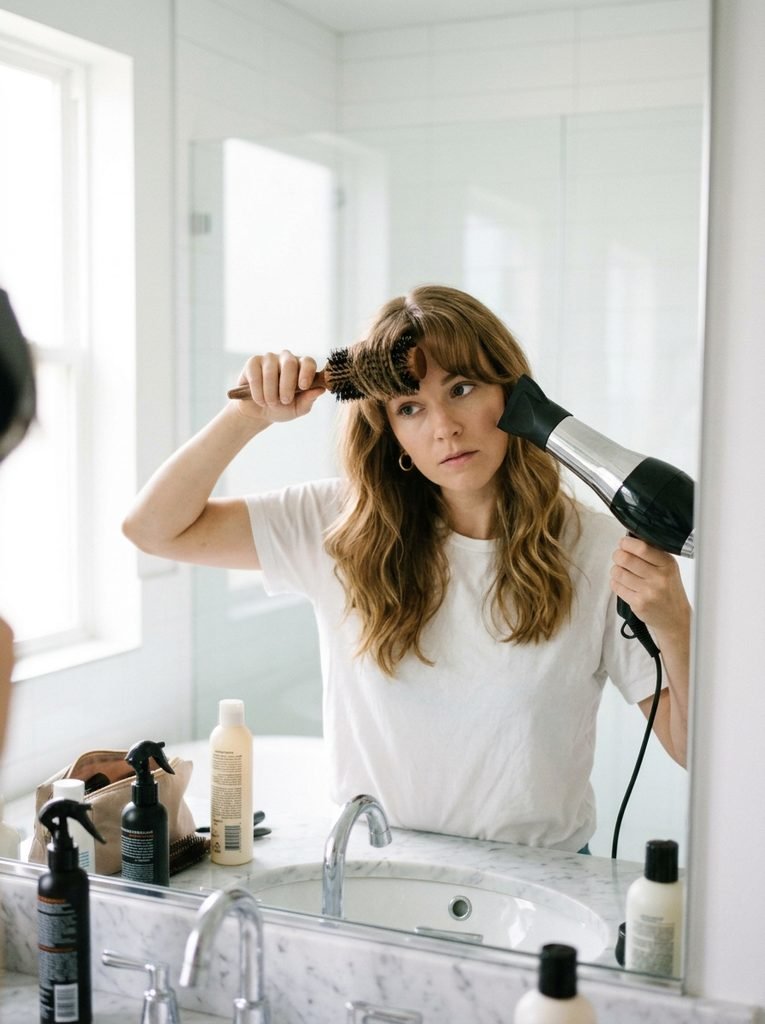
One of the practical appeals of this style is that it does not demand a long routine. The most common approach is a quick pass with a round brush while the fringe is slightly damp, pulling down and away from the center so the sides curve outward. A little heat on the ends helps set the flare.
For a softer finish, some people skip the brush and simply let the hair air dry after a light comb-through. This gives a more tousled shape, especially on wavy textures. A small amount of lightweight texturizing product can add definition without stiffness, though it is easy to overdo, so a very small amount is usually enough.
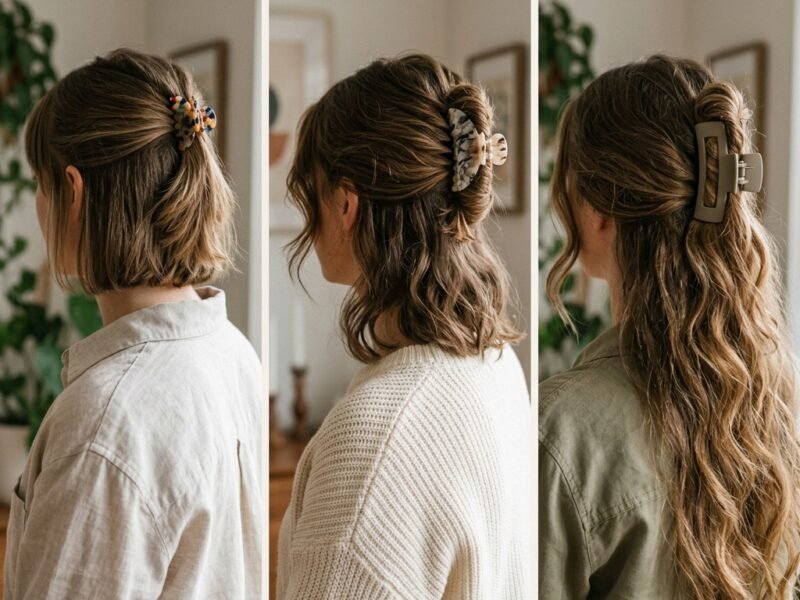
Bottleneck bangs also cope well with pinned-back days. Because the sides are long enough to tuck behind the ears, they blend into a half-up style or a loose ponytail without looking cut off. If you enjoy quick styles for rushed mornings, the ideas in these easy hairstyles for busy mornings pair nicely with a fringe you can sweep aside.
A few small habits keep the finish looking fresh:
- Wash the fringe on its own between full washes if it gets oily faster than the rest of your hair, since the forehead touches it all day. Dermatology guidance ties wash frequency to how quickly hair gets dirty or oily, and that ranges from daily for oily scalps to every week or two for dry or curly hair, so this overview of how often to wash your hair is a helpful reference.
- Keep heavy creams and oils away from the front section, because they flatten the light, airy effect.
- Use a fine-tooth comb or your fingers for quick adjustments instead of reheating.
Growing Them Out Without the Awkward Stage
Grow-out is where bottleneck bangs earn much of their reputation. The longest sections already blend into face-framing layers, so as the shorter center grows, the whole fringe simply lengthens into a curtain-like shape. There is rarely a sudden moment where a short stubby fringe sticks out in the wrong place.
Most people find the in-between phase manageable with a few tools: a side part, a small clip, or a headband. Tucking the sides behind the ears while the center catches up gives the look a deliberate feel. Trims every so often can keep the shape tidy or nudge it toward a longer curtain style.
Timelines vary with hair growth and texture, so there is no reliable number to promise. What can be said is that a fringe with a soft, layered perimeter usually looks more forgiving during growth than a heavy blunt edge does.

Bringing the Right Reference to Your Stylist
Because “bottleneck bangs” is a newer, informal term, different stylists may picture slightly different shapes. Reference photos help. Bring images that show the length of the center, where the sides end, and how full the fringe looks from the front.
It also helps to describe the finish in plain terms. Something like “short and light at the center, sweeping longer at the sides, blended into my layers” tells a stylist far more than the name alone. Mention your hairline, any cowlicks, and how you usually style your hair, since these affect how the cut will settle.
If you are unsure about committing, you can ask about starting slightly longer. Hair can always be cut shorter after a first trim, but it cannot be put back. A stylist may also suggest testing the shape by dry-cutting so they can see how your texture behaves.
A Few Quick Answers
Are bottleneck bangs the same as curtain bangs? They are closely related but not identical. Bottleneck bangs usually keep more hair in the center and end in a flared shape, while curtain bangs typically open wider from the part.
Can they work with a side part? Yes, though the finish changes. The fringe tends to sweep to one side rather than split evenly, which gives a softer diagonal line.
Do they need daily styling? Not necessarily. Many people style them quickly or let them air dry, though the hair’s natural texture and cowlicks affect how cooperative they are.
Can they suit short hair? They can, but the proportions change. On shorter cuts the sides may end around the chin or jaw rather than the cheekbones.
A Fringe You Can Change Your Mind About
The appeal of bottleneck bangs comes down to flexibility. They frame the eyes like a fringe, but they can be swept aside, pinned back, or grown into layers without much drama. That makes them a friendly option for anyone who likes the idea of bangs but hesitates at the commitment of a full, solid line.
If you are deciding between the two, think about the finish you want to see in the mirror. A crisp, graphic edge points toward full fringe. A relaxed shape with movement and a little forehead showing points toward bottleneck bangs. Either way, collecting a few clear photos and describing the details you like will help you get closer to the look you have in mind.



Leave a Reply