
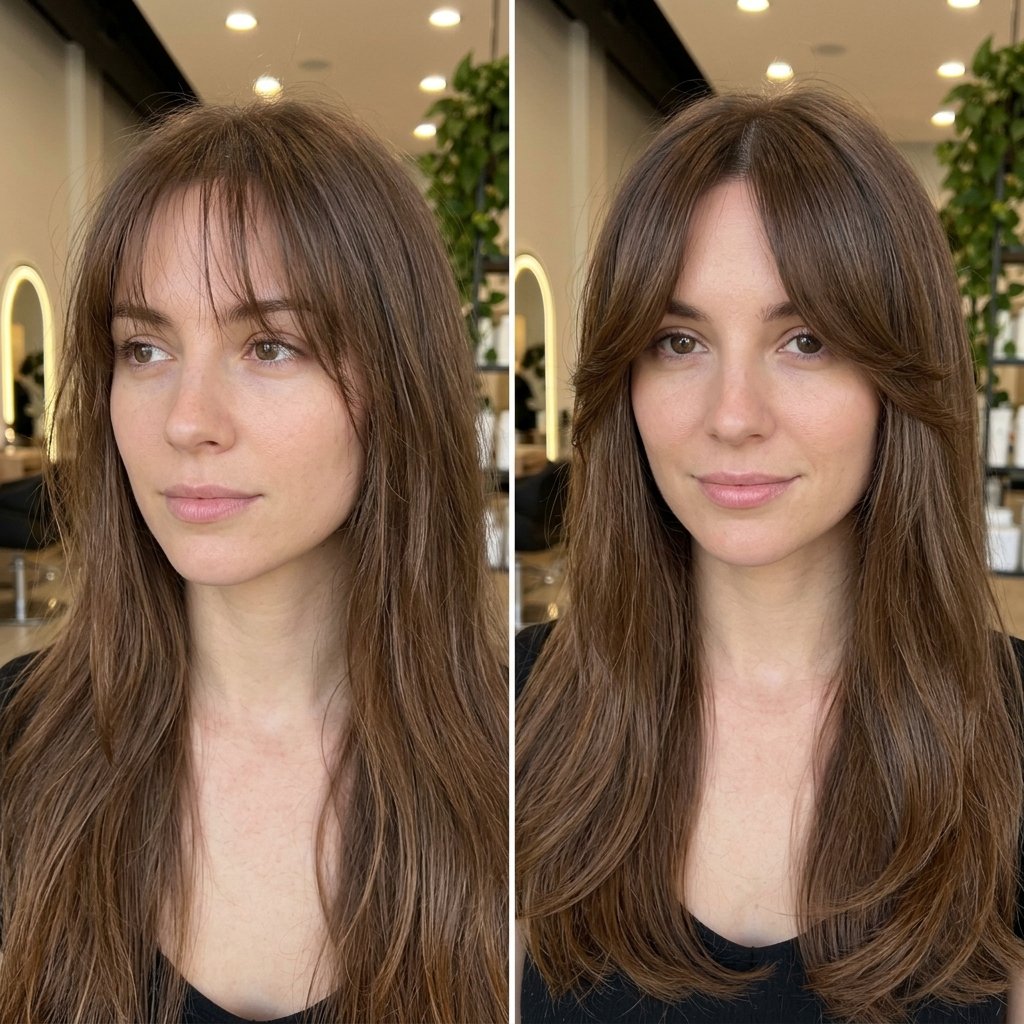
Save enough hair photos in one folder and the two styles start to blur together. Both are soft, both skip the heavy blunt look, and both get described as “face-framing.” Yet when the hair is dry and styled, the finish reads quite differently. One tends to look like a light veil across the forehead. The other looks like a pair of gentle arcs opening in the middle.
This guide compares the two on what shows up in the mirror and in photos: shape, density, movement, framing, texture, and how each one looks by the end of the day. It is not a general bangs guide, and it does not try to tell you which one to get. The goal is to help you see the difference clearly, so the reference photo you save actually matches the finish you want.
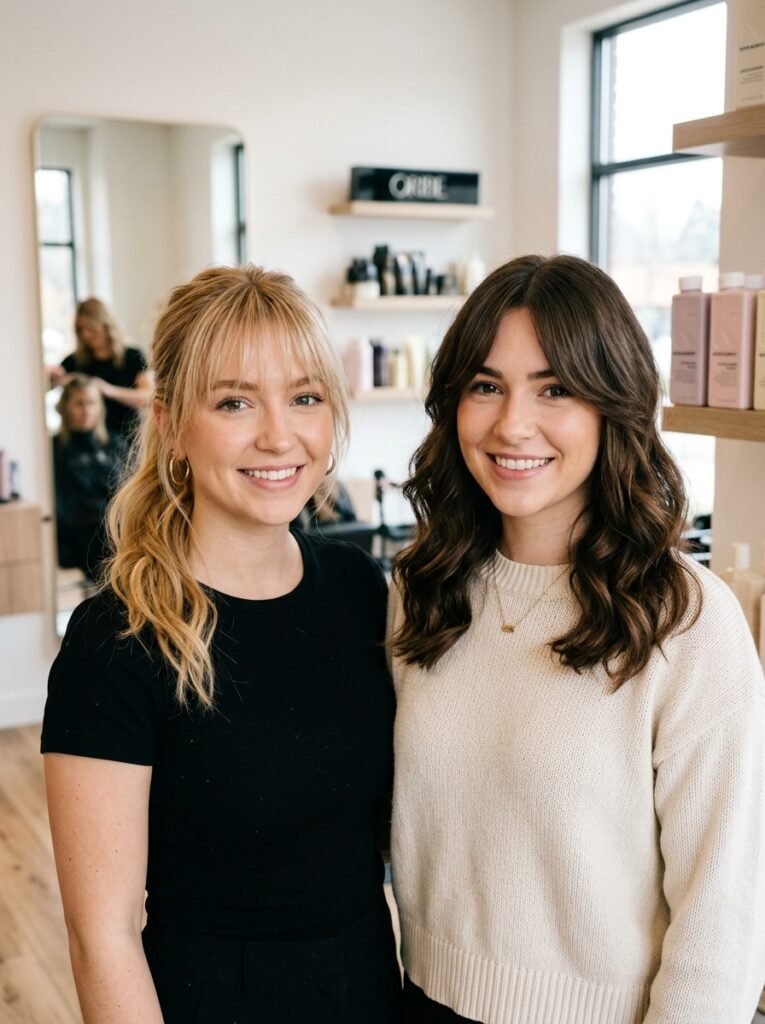
The Quick Comparison Before the Details
Here is the short version. Each point is covered properly in the sections below.
| Finish detail | Wispy bangs | Curtain bangs |
|---|---|---|
| Overall shape | Thin, feathery fringe, usually across the forehead | Center-parted fringe that sweeps outward in two arcs |
| Density | Sparse, see-through, forehead partly visible | Fuller at the center, thinning toward the ends |
| Length | Often brow-length or slightly above | Usually brow to cheekbone, longer at the outer edges |
| Movement | Light, airy, shifts with air and touch | Swooping, flowing, blends into the sides |
| Framing effect | Softens the forehead line | Opens the face and draws the eye outward |
| Styling look | Tousled, delicate, slightly undone | Bouncy, blow-dried, or relaxed and wavy |
Shape: Where the Edge of Each Fringe Actually Lands
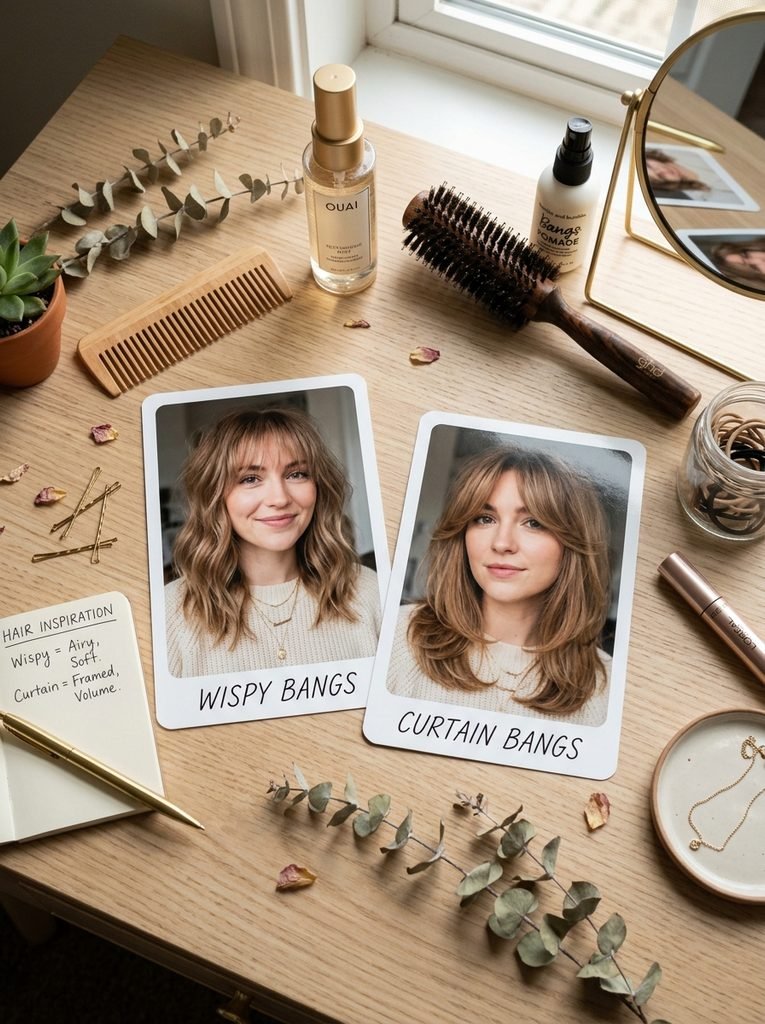
The clearest visual difference is the outline. Curtain bangs are defined by their parting. The hair splits down the middle and falls to each side, which creates a shape that tapers slightly longer towards the outer edges of the face, much like fabric drawn back from a window. The shortest hairs sit near the center part, and the longest blend into the layers around the cheekbones.
Wispy bangs do not depend on a part at all. They are defined by texture rather than direction. The fringe can sit straight across the forehead, angle slightly to one side, or fall in loose pieces, and the bottom edge is broken up so it never forms a solid line. Think of it as a thinned-out fringe rather than a full block of hair, and the finish becomes easy to picture.
Because of this, the two shapes read differently in photos. Curtain bangs look like a deliberate V or a soft double curve. Wispy bangs look more like a scatter of fine strands resting above the brows. If you lay the two side by side, the curtain version has a visible architecture, while the wispy version looks more like a texture applied over the top.
Length matters too. Wispy bangs are usually cut around the brow line or a little above. Curtain bangs run longer, and the shortest section can reach the brow while the outer pieces stretch toward the cheekbones. That extra length is why curtain bangs can be tucked behind the ears or pinned back more easily than a short, sparse fringe.

Density: Why One Reads as Full and the Other as See-Through
Density is where the finish changes most. Wispy bangs are cut with fewer strands, and the ends are usually thinned so light passes through. The forehead shows through the fringe, which is why the style is sometimes called see-through bangs. In photographs, this gives a delicate, airy look that feels closer to a soft veil than a curtain.
Curtain bangs generally carry more hair. The center section is denser, and it gradually feathers out toward the sides. The result looks intentionally shaped rather than sparse. Some versions look quite full, especially on thick hair, while lighter versions are cut with more graduation so they resemble a hybrid of the two.
Hair type affects this more than most people expect. This curtain bangs gallery points out that thick hair gives a rather full curtain fringe, while the same style on fine hair turns out wispy and lightweight, with more of the forehead showing. In other words, the same request can produce two different finishes depending on how much hair you have to work with at the front.
That overlap explains why the terms get mixed up online. A fine-haired person with curtain bangs may end up with a fringe that looks wispy. A thick-haired person with wispy bangs may find them looking fuller than the reference photo. The label matters less than the actual thickness you see in the mirror, so compare your hair density with the photo before trusting the name.
Movement: How Each Fringe Falls Through the Day
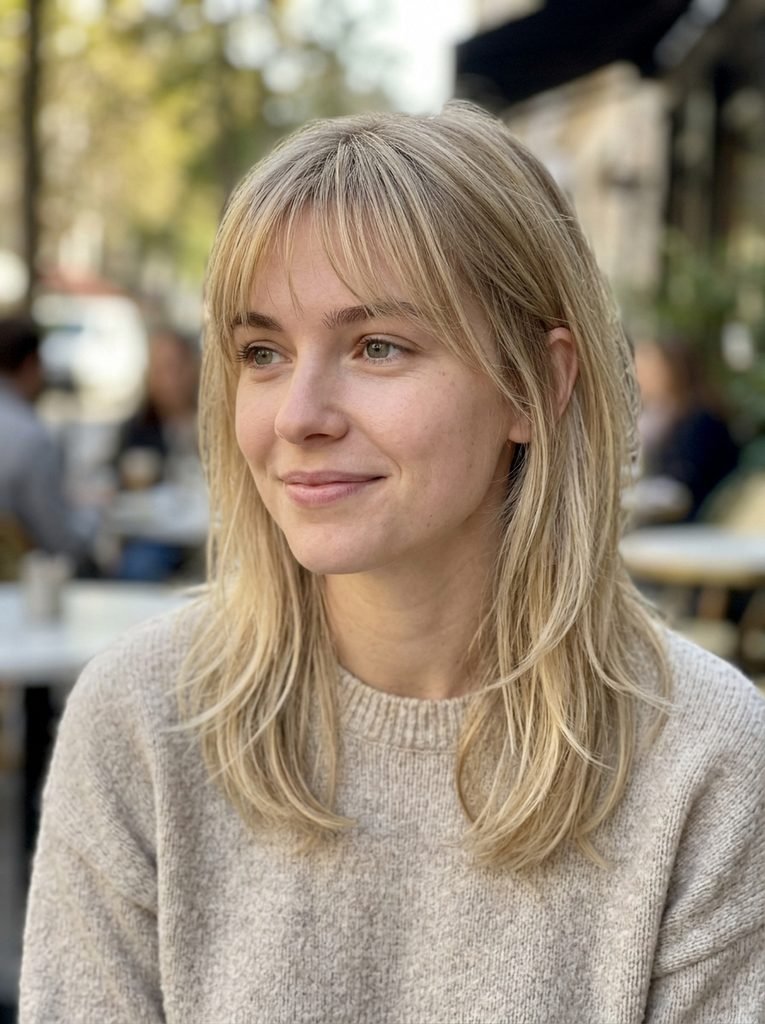
Movement is the part a still photo hides, and it is where the two styles feel most different in real life. Curtain bangs move as one flowing section. When you turn your head, the two halves swing outward and settle back, especially if the hair has been blow-dried with a round brush. The motion is smooth and continuous, and it carries into the surrounding layers.
Wispy bangs move in smaller, more independent pieces. A light breeze, a hand pushed through the hair, or a change in humidity can shift individual strands. This gives the fringe a delicate, slightly unpredictable quality. It looks charming when styled loosely, but it also means the finish changes more from hour to hour.
Weight plays a role as well. Longer curtain bangs have enough length to hang and curve under their own weight, so they hold a shape after styling. Shorter, thinner wispy bangs have less weight, which is why they can look flatter or more separated when they meet oil, humidity, or a warm forehead. This is a general observation about how lighter hair behaves rather than a rule.
If you like the idea of a fringe that follows the rest of your haircut, curtain bangs tend to blend in more naturally. If you prefer a piece with its own personality, wispy bangs stand apart from the layers behind them. To see how a curtain fringe flows into longer feathered layers, the examples in these butterfly haircut ideas are a useful visual reference.

Framing: What Each Finish Does Around the Eyes and Cheekbones
Both styles frame the face, but they do it in different places. Curtain bangs guide the eye outward. Because the hair parts in the center and sweeps aside, the fringe creates diagonal lines that move toward the cheekbones and temples. This opens up the middle of the face and adds shape around the sides.
Wispy bangs frame from above. They sit closer to the brow line and create a soft horizontal layer over the forehead, which draws attention to the eyes. In close-up portraits, a light fringe often makes the eyes the focal point, since nothing competes with them around the cheeks.
The forehead itself is the other difference. Curtain bangs part in the middle, so the center of the forehead is partly visible, and the part creates a small open triangle. Wispy bangs cover the forehead more evenly but let skin show through the gaps, so the coverage feels lighter than a solid fringe while still filling the space.
Here are a few visual notes that help when choosing between them:
- Curtain bangs create a vertical opening at the center and strong diagonal lines toward the sides.
- Wispy bangs create a soft horizontal layer with no strong part line.
- Curtain bangs add width around the cheekbone area when blended into layers.
- Wispy bangs keep the outline of the haircut cleaner because they do not extend into the sides.
Which of these looks better is a matter of taste and personal features, so it is worth holding a photo up beside your own face rather than trusting a general rule about face shapes.

Texture and Curl Pattern: Straight, Wavy, and Curly Finishes
Texture changes the finish of both styles more than most people expect. On straight hair, the difference is at its sharpest. Straight curtain bangs look sleek and directional, with clean arcs. Straight wispy bangs look fine and flat, with visible gaps between strands, which is exactly why the style is often photographed with a slight bend or tousle.
Wavy hair softens both. Curtain bangs on waves take on a relaxed, beachy look where the parting is less obvious and the fringe merges with the rest of the hair. Wispy bangs on waves look feathery, since the bend in each strand fills some of the gaps and makes the fringe appear a little fuller than it would on straight hair.
Curly and coily textures behave differently again. This guide to curtain bangs for curly hair shows how flexible the shape becomes on curls, since the same cut can be worn soft, full, wispy, or barely-there depending on texture and how it is cut. It also suggests using fewer curls through the front for a lighter, airier feel and keeping the shortest pieces near the cheekbone rather than at the eyebrows.
Shrinkage is worth remembering with curls. A curly fringe can look noticeably shorter when it dries, so a wispy curly fringe may sit higher than expected and a curtain fringe may read as a shorter, rounder shape. This is an everyday styling observation rather than a technical claim, and it is a good reason to look at curl photos that match your own texture instead of straight-hair examples.

The Overlap: Where Wispy Curtain Bangs Fit In
Plenty of people search for “wispy curtain bangs,” and it is a real category rather than a contradiction. It is a curtain shape with a wispy finish: parted in the middle and swept to the sides, but thinned so the hair looks light and semi-transparent. Many collections of curtain bang photos label their lightest examples this way.
The hybrid looks different from both parents. It keeps the diagonal movement and the center opening of a curtain fringe, but it loses the fullness. The result feels softer and less committed, which is why it appears often in reference photos for people who want a gentle change.
When you see a photo labeled either way, check three things before assuming which finish you are looking at: whether there is a clear center part, whether the ends sweep past the cheekbones, and how much forehead skin shows through. Two yes answers and a lot of see-through skin usually means the wispy curtain hybrid. A clear part with a denser center points to a classic curtain fringe. A fringe with no obvious part and many thin strands is closer to true wispy bangs.
If you are collecting ideas, the roundup of 25 trendy hairstyles for women in 2026 includes both a curtain bangs with long layers example and a separate wispy bangs entry, so you can compare the two finishes within one page.

Styling Each Finish: What the Look Depends On
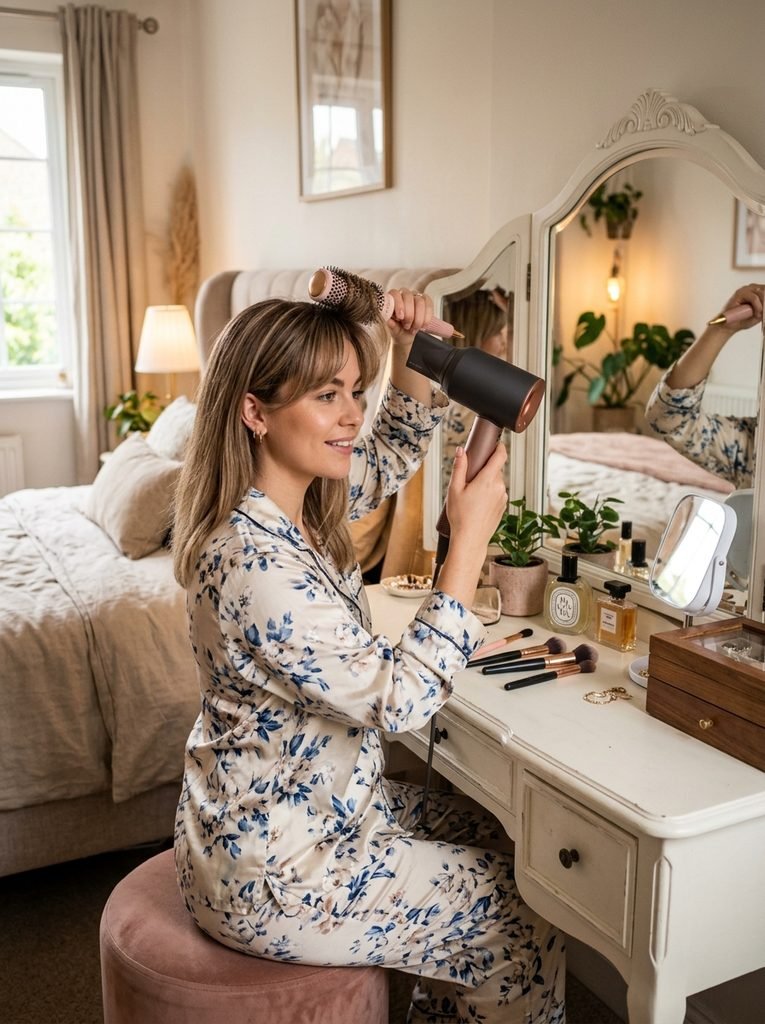
Styling is what turns a cut into a finish, and the two fringes ask for different things. Curtain bangs generally respond well to a round brush or a quick blow-dry that curves each side away from the center. Directing the air outward while the hair is slightly damp sets the arcs, and the finish looks polished and bouncy.
Wispy bangs usually need a lighter hand. A small amount of heat, a quick pass with fingers, and minimal product tend to keep them soft. Heavy creams can clump fine strands together and remove the see-through look, so the finish shifts from airy to stringy. A light styling spray or a small amount of dry shampoo at the roots is a common way to keep them separated, though results vary with hair type.
Heat protection is worth using with either fringe. In its 2026 fringe report, Who What Wear quotes a celebrity hairstylist who calls a heat protectant the first step whenever bangs are heat-styled. Since the fringe is short and often styled daily, it takes more repeated heat than most other sections of hair.
There is also a difference in styling time. Curtain bangs can be pinned, tucked behind the ears, or blended into the layers, so a bad morning is easy to hide. Wispy bangs have fewer options because they are short and light. Many people brush them aside, add a small clip, or wear a headband on days when the finish does not cooperate.
For quick reference, here are the finishes each style tends to produce with common techniques:
- Round brush and outward airflow: polished curtain arcs, or a smooth wispy fringe with slight lift.
- Air-dry with a light texturizer: relaxed curtain bangs with visible wave, or a tousled wispy finish with more separation.
- Flat iron with a slight bend: sleek curtain bangs with clean lines, or a sharp but thin wispy fringe.
Growing Out and Everyday Wear: How the Finish Changes Over Time
A fringe rarely looks the same in week six as it does on cut day, and the two styles age differently. Curtain bangs have a reputation for growing out gracefully because they already blend into the layers on each side. As they lengthen, they simply drift toward the cheekbones and merge with the face-framing pieces.
Wispy bangs have a shorter runway. As they grow, the sparse strands reach the eyes sooner and can start to look uneven. Some people then sweep them to the side or pin them back, but the finish changes noticeably from delicate and see-through to scraggly if the lengths are not tidied up.
Everyday conditions also affect each style. Humidity, sweat, and oily skin add weight to fine hair, which affects wispy bangs first because they are thinner. Curtain bangs have more substance and hold a shape better, though they can still flatten. This is why both looks are often photographed in ideal conditions, and why real days look slightly different.
Hats, hoods, and sunglasses are another small factor. A curtain fringe recovers by shaking the hair back into place, while a wispy fringe may need a quick finger-comb. Neither is difficult, but the finish is more forgiving on the curtain side.

Some Background: Where Curtain Bangs Came From
Curtain bangs feel new, but their look is not. A Southern Living feature credits Brigitte Bardot with practically inventing them in the 1960s, and they have returned repeatedly since, including a strong revival on social platforms. That history explains why many reference photos lean toward a retro finish, with volume, bounce, and a slightly glamorous curve.
Wispy fringes tend to appear more in modern minimal looks. Their light, undone finish suits current preferences for softer, lived-in hair, which is partly why they are so common in recent trend lists.
Knowing this helps when reading photos. A curtain fringe styled with a big blow-dry looks vintage. The same fringe air-dried looks contemporary. A wispy fringe with sleek hair looks modern and clean, while the same fringe with a heavy bend looks softer and more romantic. The finish is as much about styling choices as about the cut itself.
How to Compare Photos Before You Decide
Since the difference is visual, the best test is visual too. Choose two or three reference photos of each style on hair that resembles yours in length and texture. Look at the same five points in each: the part, the length at the sides, how much forehead shows, how the ends finish, and how the fringe blends into the rest of the hair.
Then imagine the finish in your own routine. If you wear your hair up often, a curtain fringe can be pinned back easily, while a short wispy fringe may leave loose strands around the face. If you rarely style your hair, a wispy fringe with a natural bend may suit a low-effort morning better than a fringe that depends on a round brush.
A few plain questions can help:
- Do you want a visible part in the middle, or a fringe that spreads evenly across the forehead?
- Do you prefer a see-through finish or something with more weight?
- Is your hair fine, medium, or thick, and how close is it to the reference photo?
- Do you want the fringe to blend into layers or stand apart from them?
Answering these before an appointment also makes it easier to describe the finish you want with words and a photo rather than a single label. Since hairstyle names overlap so often, a clear photo is more reliable than a name.
The Finish That Stays With You
Both styles soften a face, and both work with a range of textures. What separates them is what you see when the hair settles: curtain bangs give an open, flowing shape with a clear center, while wispy bangs give a light, feathery layer that sits like a soft screen above the eyes. The choice comes down to whether you prefer structure or airiness in that final look.
If the two still feel close, remember the hybrid exists. A wispy curtain fringe borrows the parting of one and the lightness of the other, and it may be the finish you were picturing all along. A saved photo, a clear sense of your hair density, and a few honest questions about your routine will do more than any label can.


Leave a Reply