Plus-size bridal styling has too often been framed as a problem to solve: how to look smaller, or choose a dress that minimises rather than celebrates. That framing leaves many brides shopping from apology rather than confidence.
Genuine bridal styling starts from fit and from flattery in its truest sense: what makes a specific body look extraordinary, not what makes it disappear. That outcome depends on construction, fabric, and proportion rather than concealment.
Plus-size bridal shopping also involves practical realities that differ from the standard market: limited sample sizes, uneven brand coverage, and the need for a stylist who treats plus-size fit as its own discipline. This guide pairs fifteen outfit ideas with the practical knowledge needed to shop for them.
Why Plus-Size Bridal Styling Has Its Own Logic
Fabric behaves differently depending on the body it covers. Greater volume through the bust, waist, or hip changes how a textile drapes, where it holds tension, and how proportions read to the eye. Recognising this lets a bride shop with intention instead of guesswork.
Bodice construction, the waist-to-hip transition, and fabric behaviour matter more for plus-size fit than for standard sizing. A fluid fabric moves with the body, while a rigid fabric resists it and feels stiffer. These details determine whether a gown succeeds, far more than the silhouette name on the label.
Conventional advice for larger brides has long repeated a narrow set of rules: choose an A-line, avoid anything fitted. Anthropometric research on plus-size populations, including three-dimensional body-scanning surveys published in Fashion and Textiles, shows plus-size bodies vary widely in bust, waist, and hip proportion rather than one uniform shape. That range is why construction quality and individual fit matter more than any fixed rule.
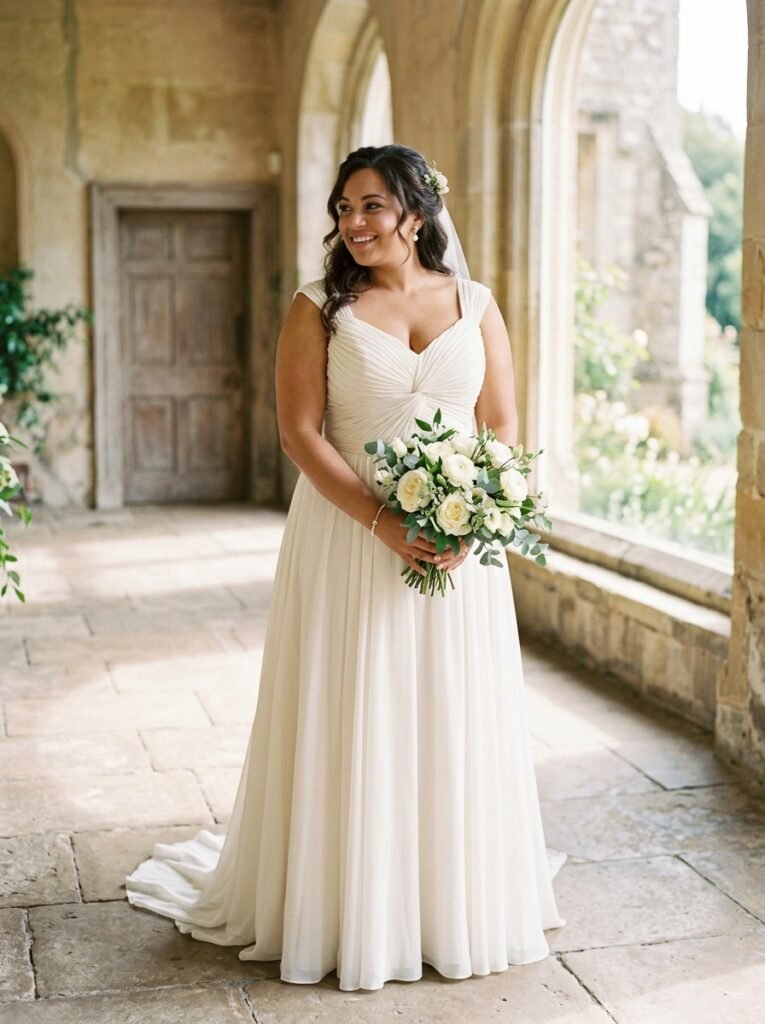
An A-Line Gown With Ruching at the Bodice
The A-line remains one of the most reliable silhouettes for plus-size brides, and its success goes beyond general popularity. Because it fits through the bodice before flaring from the natural waist, the A-line spreads a gown’s visual weight evenly instead of concentrating tension at one point on the body.
Ruching at the bodice adds a specific advantage. Gathered fabric creates texture and dimension that draws the eye across the bodice as a whole rather than toward any single area beneath it. The gathering also gives natural give, so it moves with the body instead of pressing against it.
A ruched bodice paired with an A-line skirt in jersey, chiffon, or soft crepe works as a strong starting point for nearly any plus-size figure. The gathering at the bodice combined with the flare below produces a silhouette that reads as both forgiving and genuinely elegant.
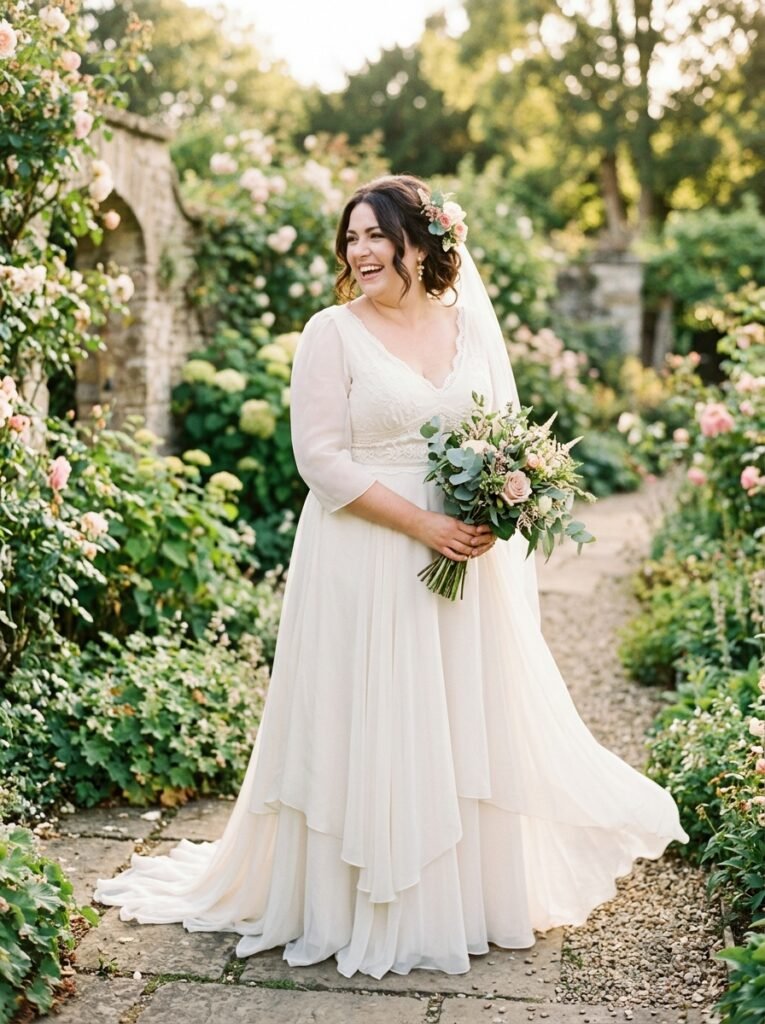
A Flowing Empire Waist Gown
An empire waist places the gown’s defining seam directly below the bust, at the torso’s highest, narrowest point, and lets everything below fall freely to the floor. This construction sidesteps midsection fit entirely by letting fabric fall away from the body.
In lightweight chiffon or flowing crepe, an empire gown produces a romantic, almost weightless silhouette that remains easy to wear through a full day. The fabric moves with the body rather than shaping it, creating a relaxed elegance that suits a wide range of plus-size figures.
An empire waist depends on precise fitting above the seam. A bodice cut too loosely can create a baggy effect that undermines the whole line. A well-fitted bust and a seam positioned exactly at the underbust make this silhouette succeed.
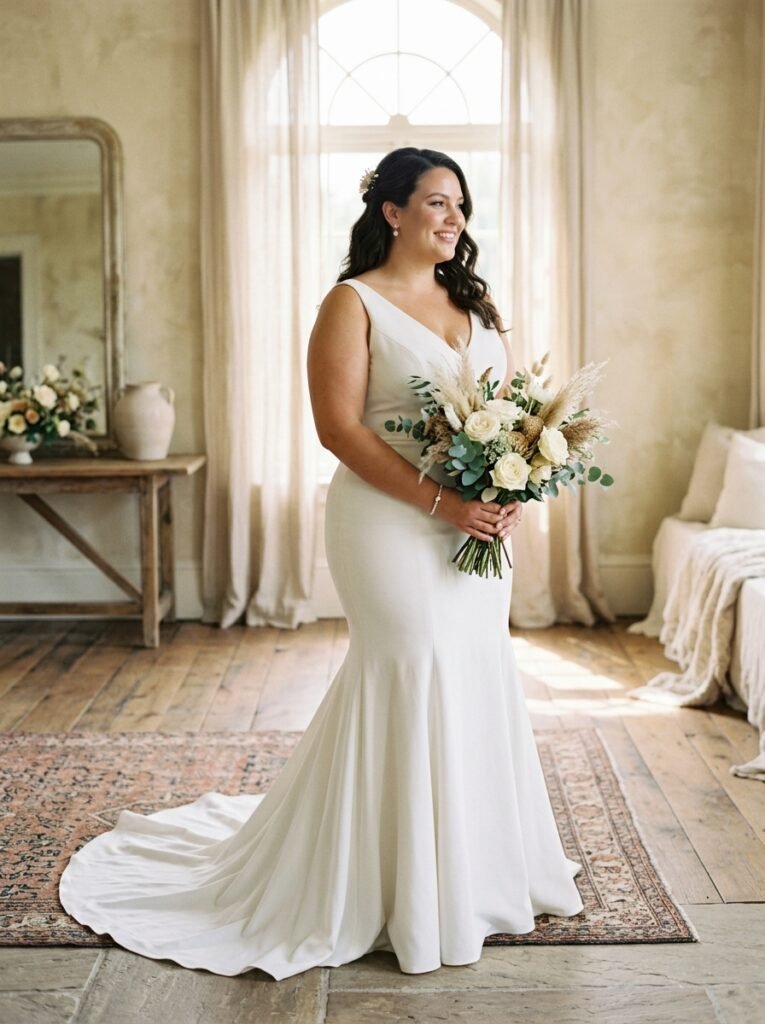
A Fit-and-Flare Silhouette in a Stretch Fabric
A fit-and-flare gown hugs the bodice and hip before flaring lower than a traditional A-line, and it can produce a striking result on plus-size bodies when the fabric and fit are right. Stretch is the deciding factor.
A fit-and-flare made in ponte, stretch crepe, jersey, or four-way stretch satin moves with the body instead of pulling against it at the hip, accommodating natural curves rather than creating stress points. The same silhouette in a stiff, unforgiving fabric produces a far less flattering result.
With the right fabric, a fit-and-flare celebrates a plus-size bride’s curves more directly than an empire waist or a loose A-line. This cut suits a bride who wants the dress to follow her shape rather than skim over it, and a well-made version looks extraordinary.
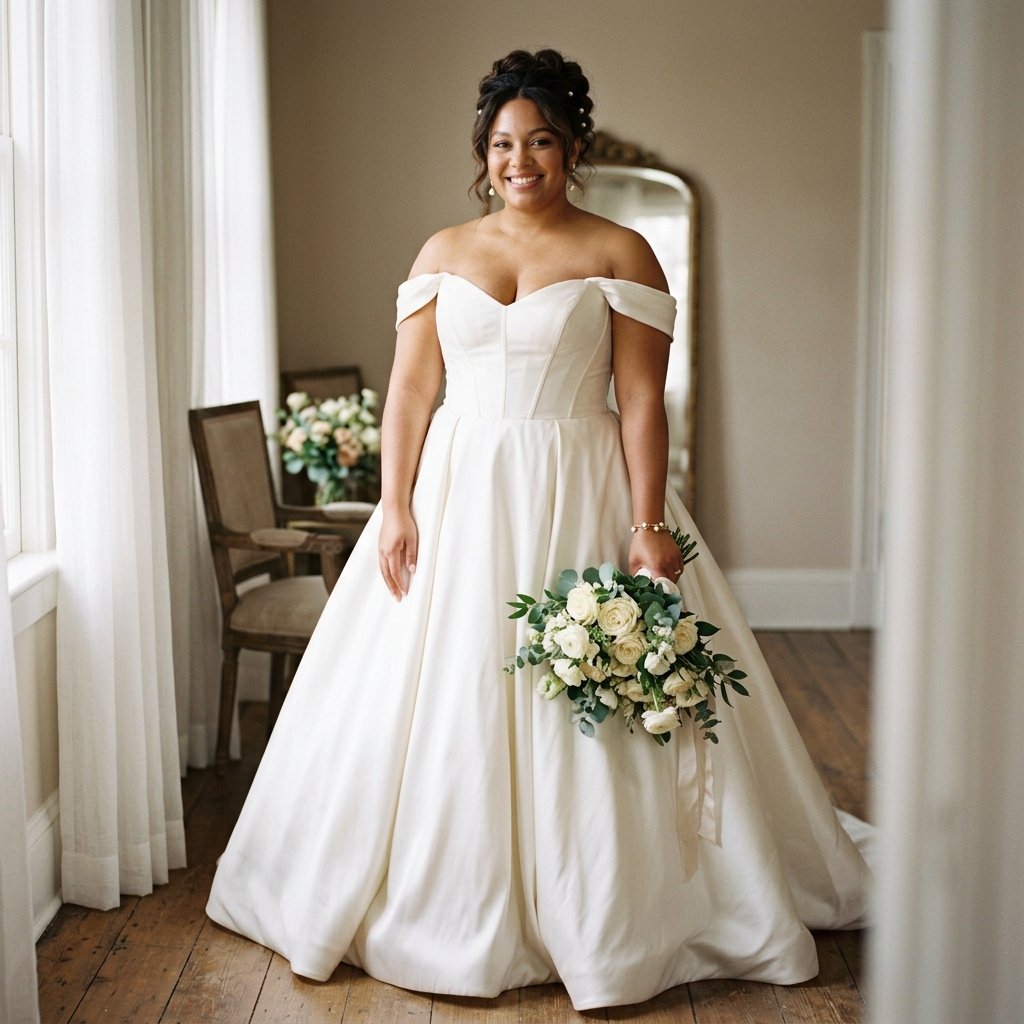
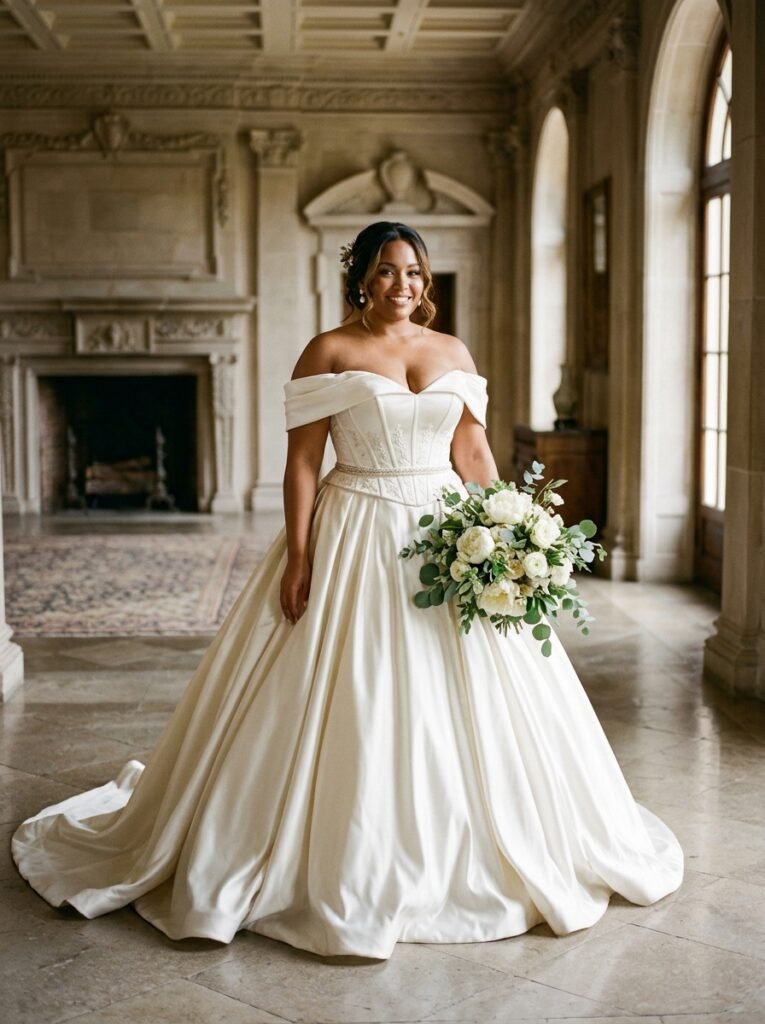
An Off-the-Shoulder Ball Gown With a Defined Waist
Bridal advice often steers plus-size brides away from ball gowns, assuming skirt volume overwhelms a larger frame. That assumption oversimplifies the silhouette. An off-the-shoulder neckline draws the eye to the shoulders and décolleté, and paired with a defined waist and full skirt can produce a dramatic, classic bridal look on any body.
Waist definition makes or breaks this silhouette. A ball gown without a defined waist reads as shapeless on any figure. A corseted bodice, a seam positioned at the natural waist, or internal boning gives the gown structure and builds the hourglass relationship between bodice and skirt.
Skirt volume should match the bride’s height and frame. A cathedral-scale skirt can overwhelm a shorter plus-size bride, while the same volume can look magnificent on a taller frame. Trying the silhouette at the correct scale during a fitting appointment remains the most reliable way to judge proportion.
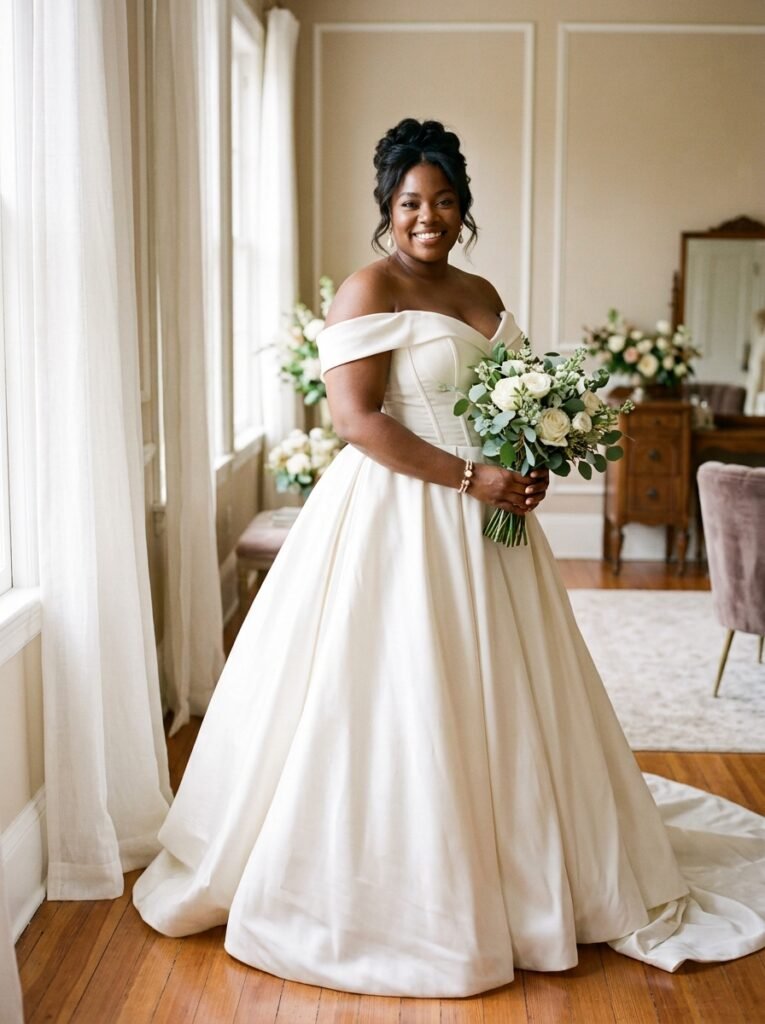
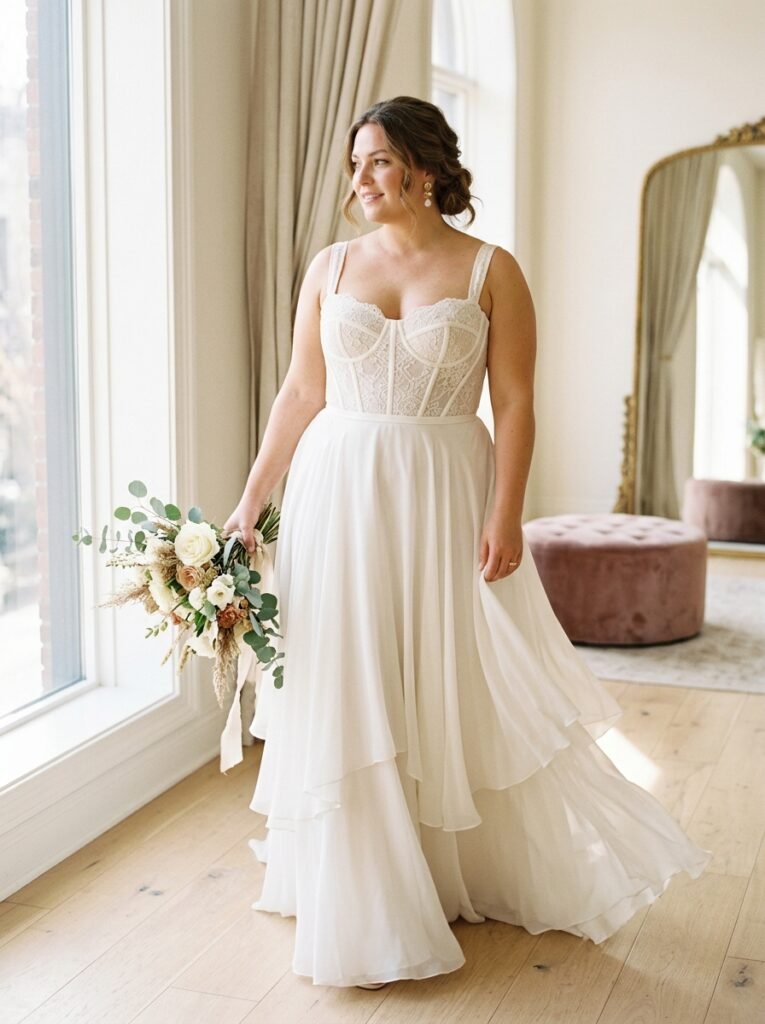
A Structured Bodice With a Soft Flowing Skirt
Pairing a structured, boned bodice with a soft, flowing skirt in chiffon, tulle, or crepe produces one of the most consistently flattering combinations in plus-size bridal wear, because it delivers support above the waist and freedom of movement below it.
A structured bodice provides support many plus-size brides need through the bust and mid-torso, creating a lifted, defined line that an unsupported bodice cannot achieve. The flowing skirt beneath falls away naturally, adding a light, airy quality to the lower half of the look.
This pairing also holds up practically across a full day and evening. Because the bodice structure maintains its shape, the bride is not adjusting or repositioning the dress throughout the reception. The bodice holds its line while the skirt moves freely with her.
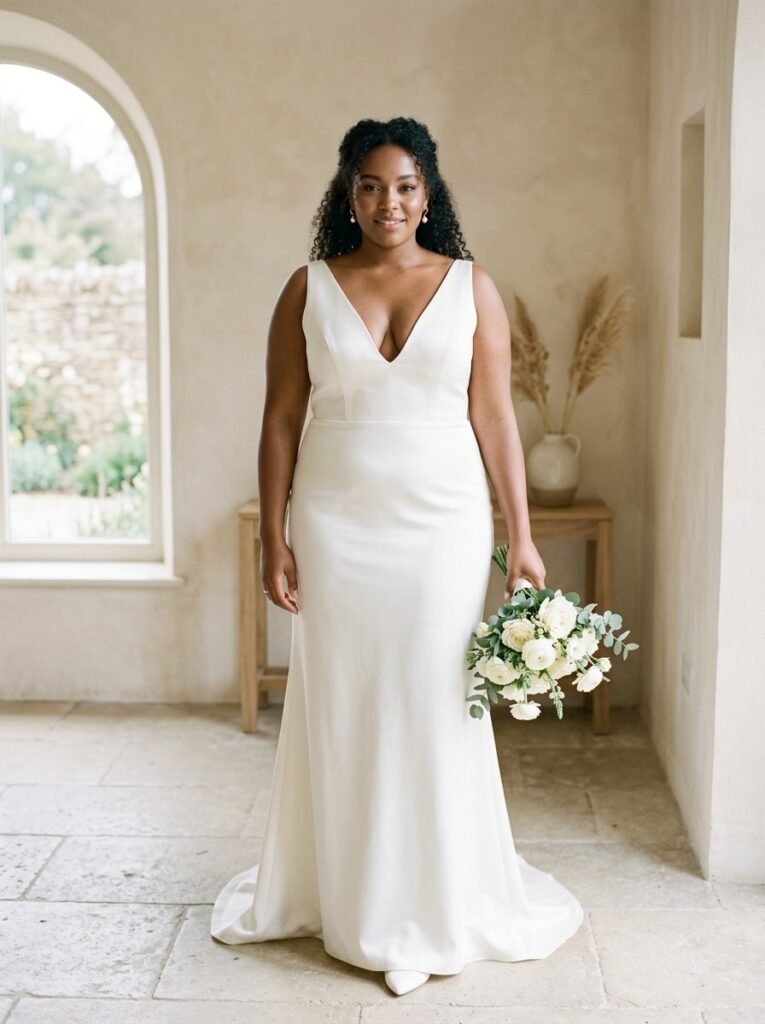
A Simple Satin Column With a Plunging Neckline
A column gown falls straight from shoulder to hem without a defined waist, and plus-size brides are sometimes told fitted styles like this are off-limits. On the right body, in the right fabric, a satin or crepe column can look sophisticated and powerful.
Fabric weight determines whether a plus-size column succeeds. A heavy, fluid satin drapes smoothly over curves and creates an unbroken line from shoulder to hem. A lightweight satin clings to every contour instead, producing a very different result.
A plunging V-neckline on a column silhouette adds vertical length through the centre of the bodice and draws attention to the décolleté. The V creates a line that elongates the torso and balances the horizontal emphasis that can otherwise dominate a fuller bust.
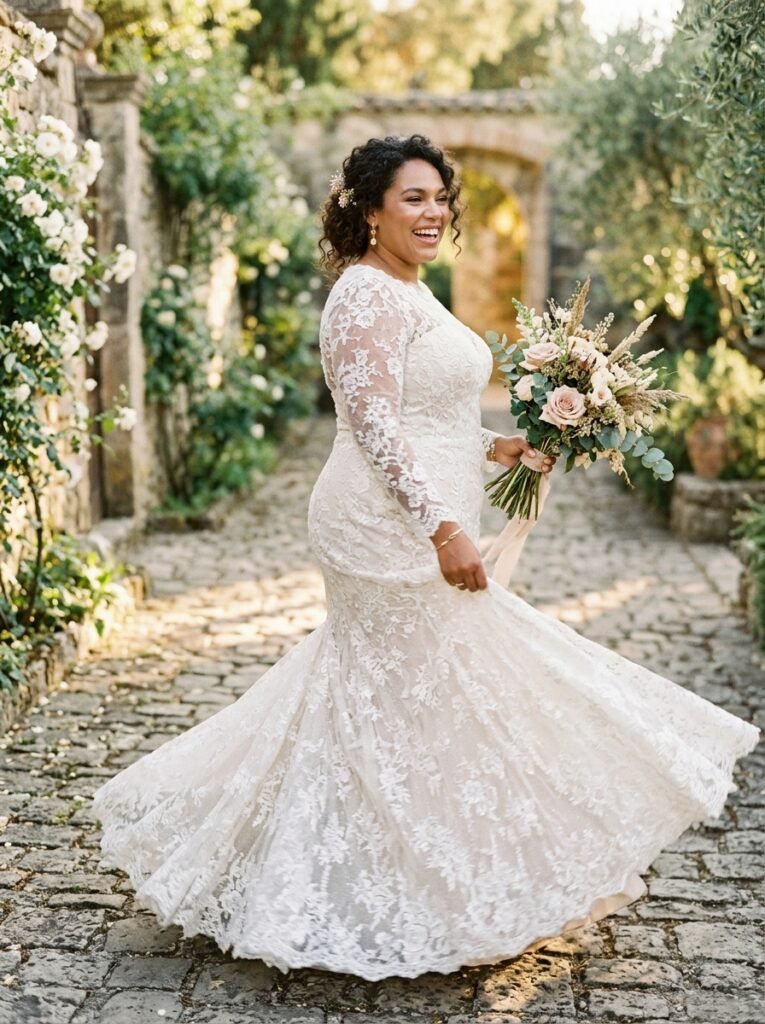
A Lace Overlay Gown With a Trumpet Hem
A trumpet silhouette finished with a lace overlay ranks among the most romantic and detailed options in plus-size bridal wear, and the lace itself carries advantages beyond its beauty.
Lace has inherent texture and dimension that gives the eye somewhere to travel, so it reads the body’s silhouette less directly than a smooth, plain fabric would. The effect is not about concealment. It adds visual richness that makes the gown’s overall impression more layered.
A trumpet hem extends the fitted portion of the gown further down the leg than a standard fit-and-flare before flaring at or below the knee, adding visual length ahead of the dramatic flare, which particularly benefits brides with longer torsos.
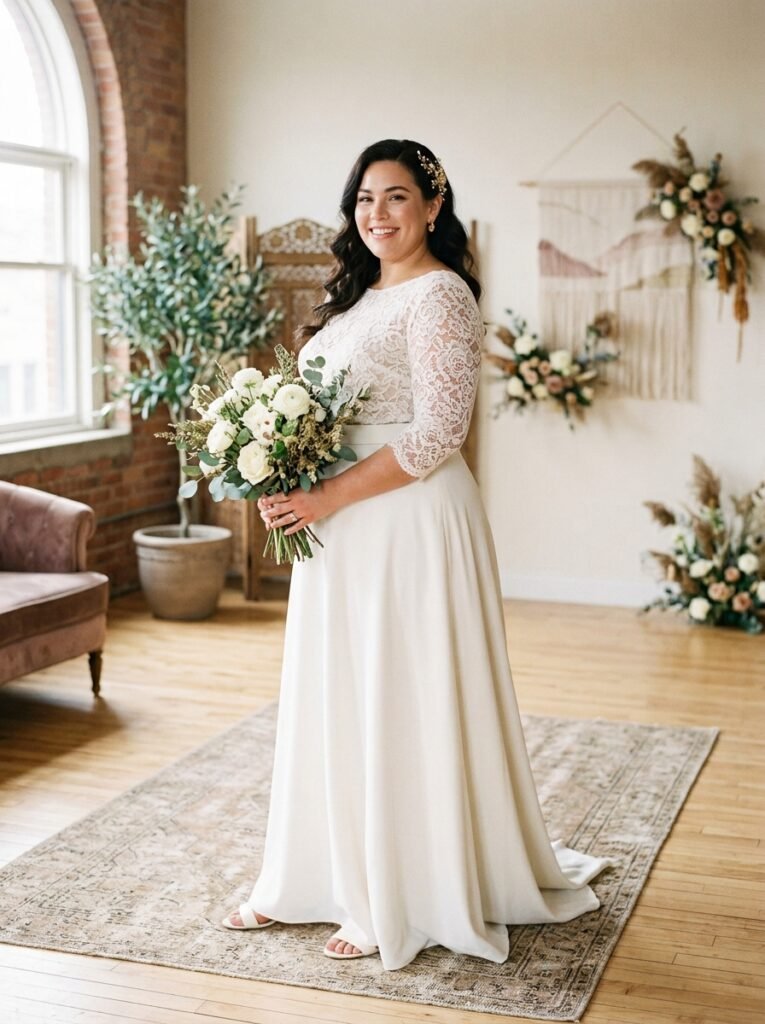
A Two-Piece Bridal Set
A bridal two-piece, made up of a high-waisted skirt and a separate top, has become one of the more modern approaches in plus-size bridal wear because it offers a fit flexibility that a single gown cannot match.
A single dress forces the bodice and skirt to fit the same size simultaneously, which creates problems when bust and hip measurements differ. A two-piece set allows the top to be sized independently, so each piece fits the body part it covers.
A high-waisted skirt paired with a fitted or lightly draped top creates a natural waist-definition point at the skirt’s seam, achieving an effect similar to an empire waist without requiring a fitted midsection. Each piece can also be altered independently, which simplifies the fitting process considerably.
A Dramatic Cape or Overskirt Addition
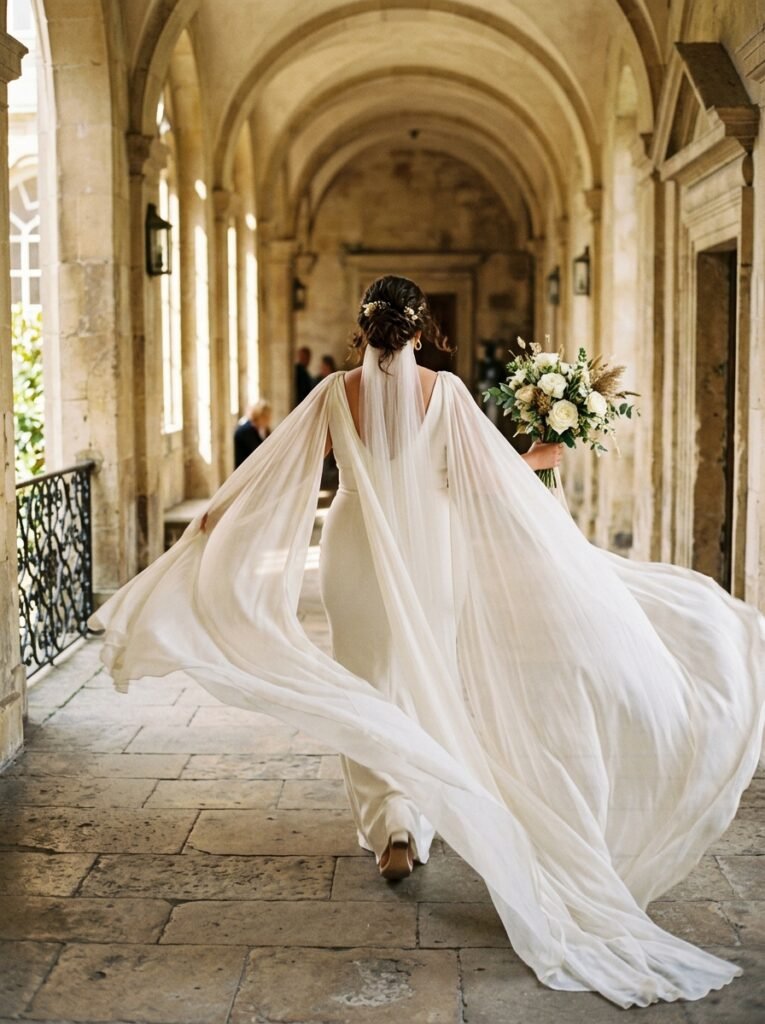
A bride who wants a simpler base silhouette but extra drama for the ceremony can add a detachable cape or overskirt over a simpler dress, an elegant and flexible solution.
A flowing silk or chiffon cape attached at the shoulders creates a sweeping silhouette as the bride walks. The cape adds length and movement to the back of the look, elongates the overall line, and photographs strikingly from behind.
A detachable tulle or crepe overskirt worn over a simpler slip dress creates the impression of a more elaborate gown for the ceremony. Removing it for the reception reveals a simpler, dance-friendly look, giving a plus-size bride full bridal drama for photographs without committing to that volume all evening.
A Deep V-Neck Gown in Duchess Satin
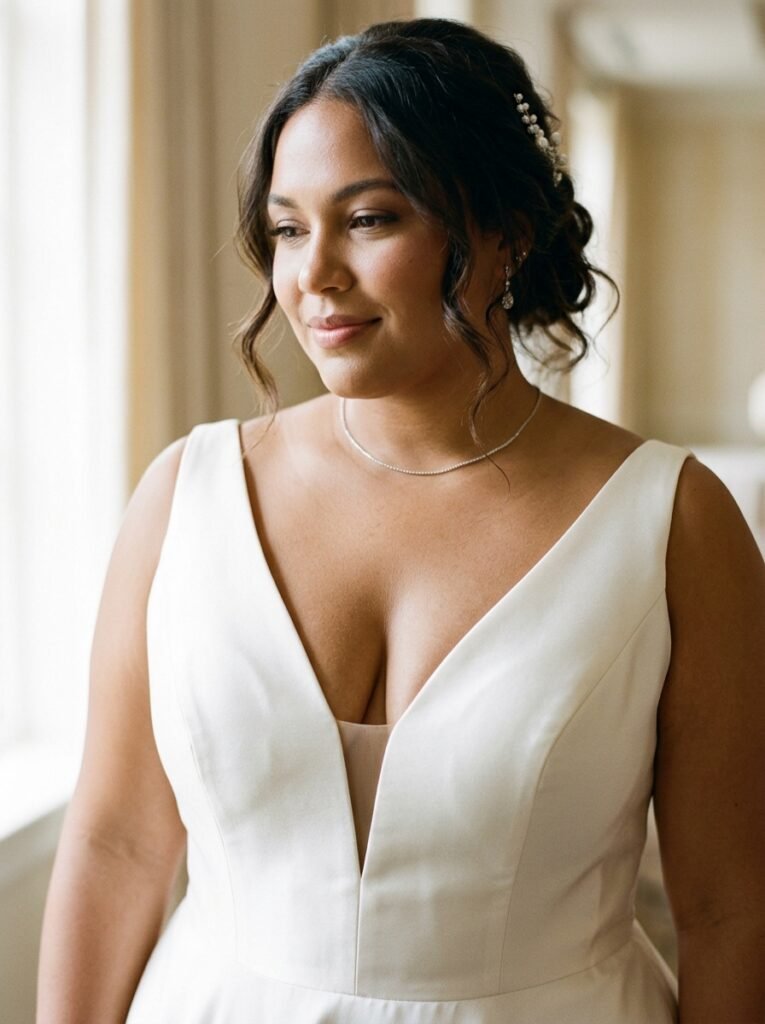
Duchess satin ranks among the most appropriate fabrics for plus-size bridal wear because of its weight, sheen, and structural quality. It holds a silhouette rather than collapsing, drapes rather than clinging, and photographs with a richness few other fabrics match.
A deep V-neckline in duchess satin creates a deliberate vertical line down the centre front, elongating the torso and drawing attention to the décolleté. The V produces a centred, elongating focal point rather than a horizontal line across the widest part of the chest, which suits most plus-size body shapes.
A V-neckline in duchess satin also delivers effortless elegance with minimal embellishment. The fabric and neckline together do the styling work, producing a complete bridal statement without additional ornamentation.
A Strapless Sweetheart With Corset Boning
Bridal advice sometimes discourages strapless gowns for plus-size brides on the assumption that the bodice will not stay in place without straps. A properly constructed strapless gown makes this concern largely unfounded.
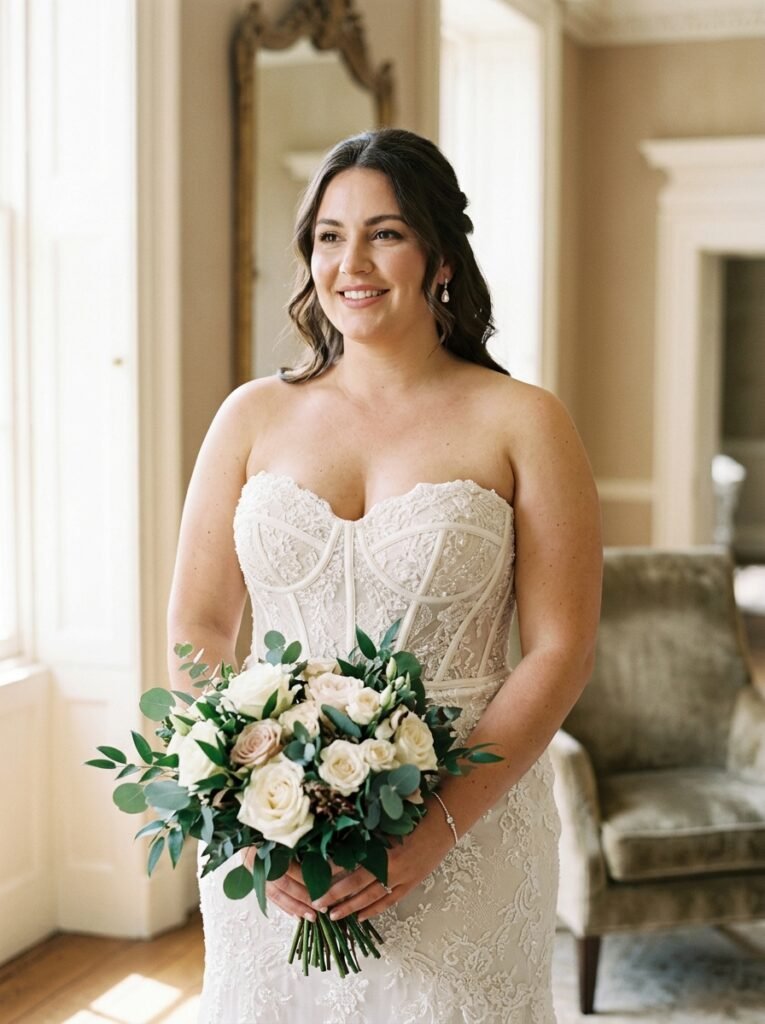
A strapless sweetheart gown with corset-style boning in the bodice offers some of the strongest support in bridal wear, because the boning holds the bodice in place from within rather than depending on straps. A well-fitted, well-boned bodice should feel secure without any sensation of sliding.
The sweetheart neckline suits a fuller bust particularly well: the curved dip at the centre adds visual interest and depth, while the straight lines on either side add structure and lift that many other necklines do not provide.
This silhouette depends on an excellent fitting appointment with a specialist experienced in plus-size bridal construction, since the boning must be positioned precisely for the individual body.
A Bohemian Lace Gown With Bell Sleeves
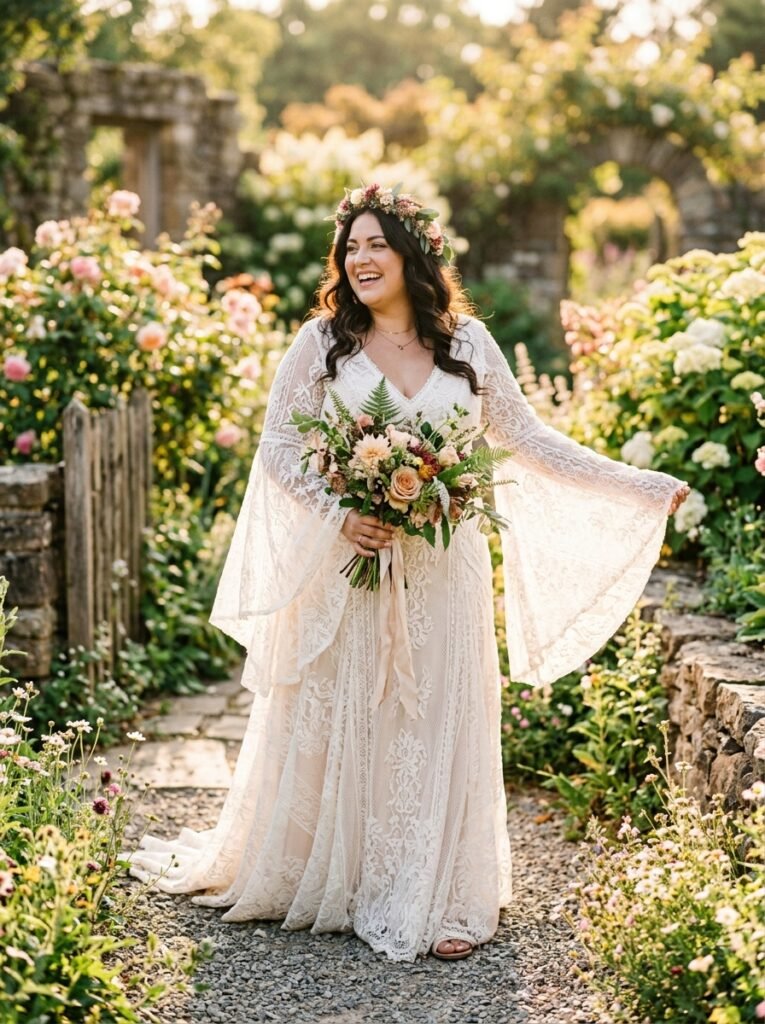
A romantic, bohemian-inspired lace gown with bell or flutter sleeves gives a plus-size bride arm coverage that feels intentional and elegant rather than defensive.
Bell and flutter sleeves fall away from the arm and create movement, reading as a deliberate romantic styling choice rather than coverage for its own sake. Because they do not cling to the arm, they suit a wide range of arm shapes and proportions.
A bohemian gown with a soft base and lace overlay through the bodice and sleeves has a feminine quality suited to outdoor and garden ceremonies, and to any bride whose style leans ethereal rather than structured. The lace texture keeps the eye from reading the silhouette beneath as directly as plain fabric would.
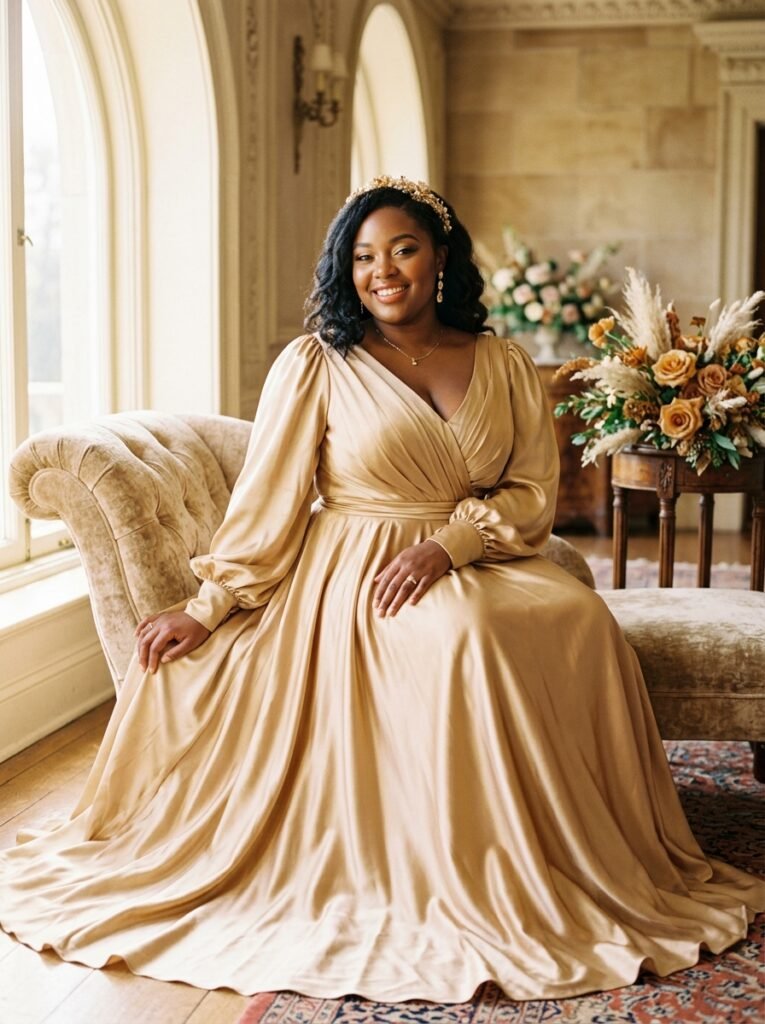
A Rich Coloured Bridal Look
White or ivory bridal wear reflects tradition rather than obligation, and a plus-size bride who feels most herself in colour can choose a deliberately coloured look as a genuine, beautiful expression of personal style.
Deep champagne with gold undertones, rich blush, dusty rose, powder blue, sage green, and soft lavender have all gained acceptance as bridal tones. For a bride whose skin undertone does not suit white or ivory, or who simply prefers colour, any of these shades offers a beautiful alternative.
A deep champagne or warm gold gown on a warm-toned plus-size bride can look more bridal, and more beautiful, than stark white, because the colour works with her skin tone instead of creating stark contrast against it.
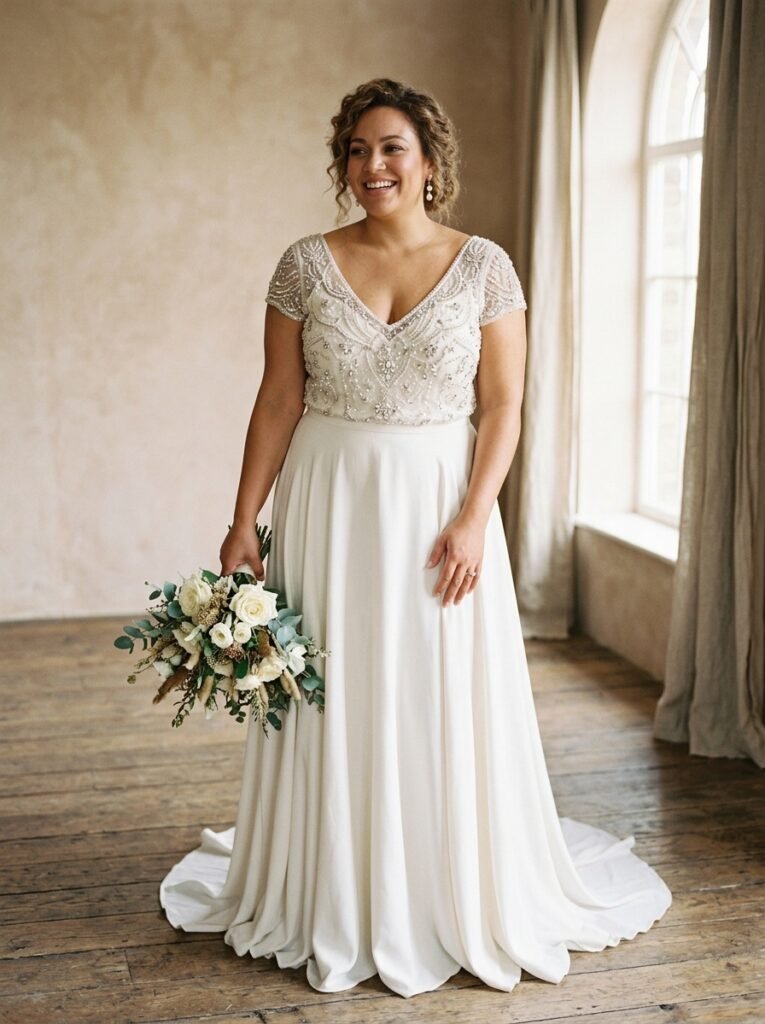
Bridal Separates: A Flowing Skirt and a Beaded Top
Bridal separates offer the most practical sizing advantage of any plus-size bridal approach, and pairing a flowing, high-waisted silk or crepe skirt with a beaded or embellished top is one of the most elegant expressions of that approach.
A beaded top draws attention to the upper body, and specifically to the embellishment and craftsmanship of the bodice, rather than to overall size. Embellishment placed near the face and neckline creates an upward visual focus that pulls the eye away from the body below.
A high-waisted skirt creates a visual waist point that suits most plus-size body shapes, suggesting definition even where the natural waist is less pronounced. Flowing fabric in the skirt also moves beautifully both in photographs and in person.
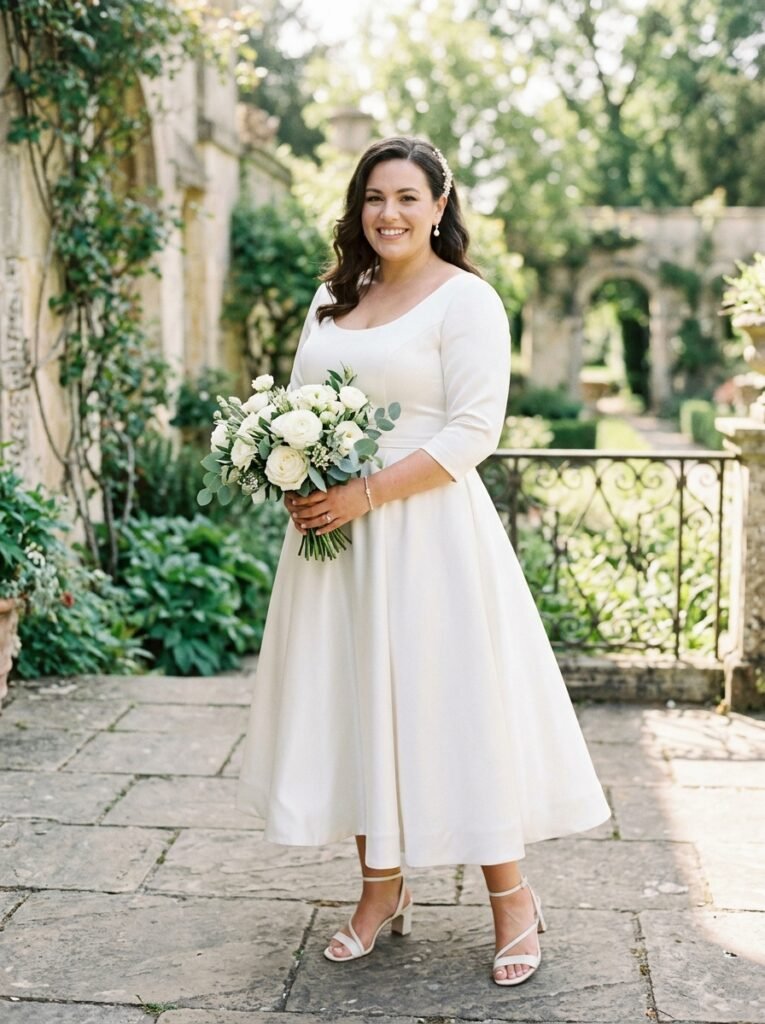
A Midi or Tea-Length Bridal Dress
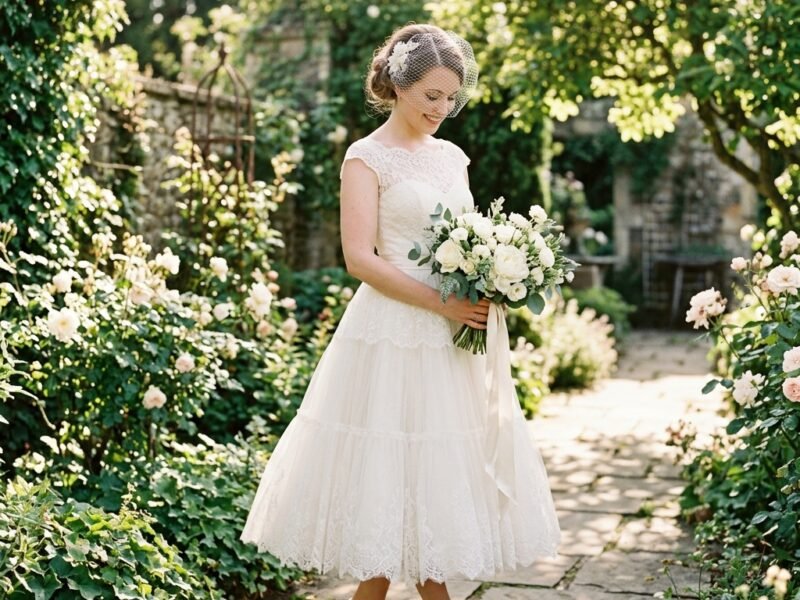
A midi or tea-length bridal dress, falling between the knee and ankle, suits plus-size brides particularly well for relaxed or non-traditional weddings, outdoor celebrations, or anyone who wants more freedom of movement than a floor-length gown allows.
A well-fitted midi in a structured cotton blend, a satin with body, or a crepe with enough weight to fall cleanly creates a polished, decidedly bridal look while showing the legs. It offers the best bridal vehicle for a bride who wants to feature them.
Paired with heels that complement the hemline and a veil or accessories that elevate the overall look, a midi-length dress can feel every bit as formal as a floor-length gown while suiting a modern, confident bride.
Working Through the Fit Challenges of the Bridal Market
Knowing what to expect from the bridal market, and how to navigate its specific challenges, makes the shopping process considerably less stressful for plus-size brides.
Sample sizes in most traditional bridal boutiques run from roughly a bridal size eight to twelve, translating to a US size six to ten. Most samples will not fit a plus-size bride for try-on without significant clipping or pinning, which makes it difficult to judge how a properly fitted dress will look.
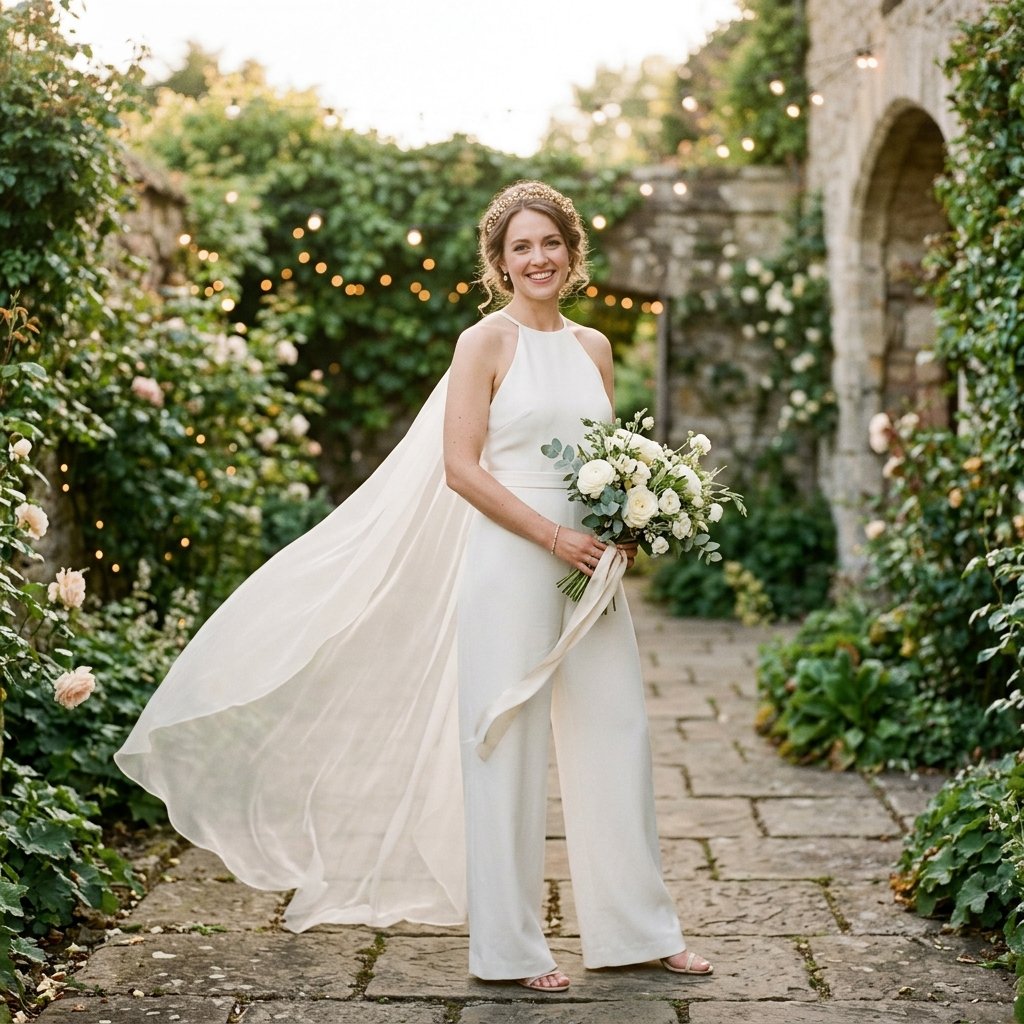
Seeking boutiques that stock plus-size samples, or working with designers who specialise in plus-size bridal wear, lets a bride try on dresses that fit rather than imagining herself into something smaller. That is worth the extra time, and it applies equally to brides exploring a bridal jumpsuit instead of a gown.
Brands producing genuine plus-size bridal ranges include Essense of Australia, Pronovias, Stella York, Azazie, and Eloquii’s bridal line, alongside dedicated plus-size bridal designers. Custom dressmaking through an independent atelier removes size constraints entirely and builds a garment around the bride’s individual measurements.
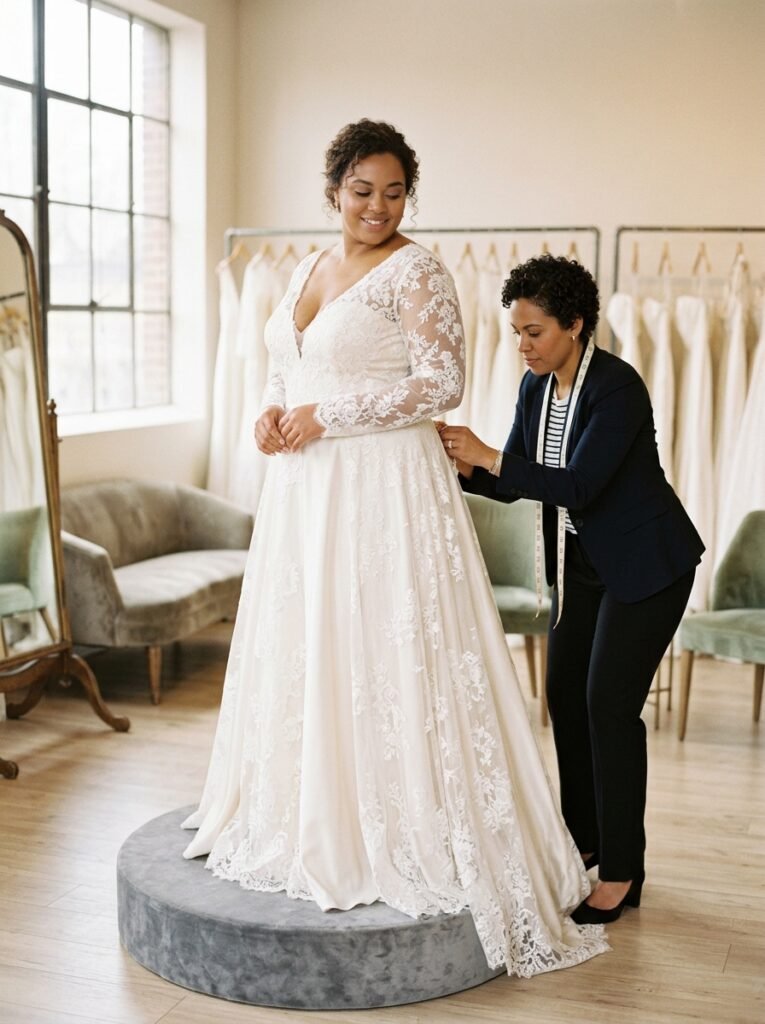
Alterations form part of every bridal process, not a sign of failing to find the right dress off the rack. A dress that fits perfectly without alteration is unusual for any bride. Budgeting for alterations from the outset keeps the overall bridal budget realistic.
The Most Important Styling Rules for Plus-Size Brides
A handful of principles run through all fifteen looks above and explain why each one succeeds.
Fit outweighs every other factor in whether a dress looks flattering. A beautifully designed dress in the wrong fit looks worse than a simple dress fitted well. A bride should avoid settling for significant fit problems hoping alterations will fix them, and instead work from her own measurements.
Fabrics with drape consistently outperform fabrics that resist the body. Fluid fabrics move with the body and create graceful lines, while stiff fabrics create tension at the widest points. Chiffon, silk, crepe, jersey, and flowing satin generally outperform brocade or stiff organza.
A bride benefits most from embracing what makes her feel beautiful rather than following generic coverage advice. The most successful plus-size bridal looks are not the ones that obscure the most; they are the ones where she is clearly wearing something she loves.
Necklines that open the chest, including plunge V-necks, sweetheart necklines, off-the-shoulder styles, and portrait necklines, tend to elongate the upper body and draw attention toward the face and décolleté, a flattering effect for most plus-size bodies.
Shoes, veil, jewellery, and overall styling matter as much for a plus-size bride as any bride. The complete look shapes the total impression, and a bride curious how these choices shift across body types can compare a petite bridal look. Investing equal thought in every element produces the strongest result.
Frequently Asked Questions
What dress silhouette is most flattering for plus-size brides? No single silhouette suits every plus-size body, since figures vary widely in where they carry weight. The A-line and empire waist offer reliable starting points, but a fit-and-flare, column, or ball gown can look equally striking depending on body shape, fabric, and fit. Trying several silhouettes at a fitting appointment is the only reliable way to know what suits an individual body.
Where can plus-size brides shop for bridal gowns? Dedicated plus-size boutiques operate in most major cities, and online retailers including Azazie, BHLDN, JJ’s House, and David’s Bridal carry extended sizes. Essense of Australia, Stella York, and Pronovias offer plus-size ranges through their boutique networks, while custom dressmaking removes size constraints entirely.
How much should plus-size bridal alterations cost? Costs vary by location, complexity, and the seamstress involved. A budget of three hundred to five hundred dollars generally covers moderate work such as hemming, taking in seams, and adding a bustle. Rebuilding a bodice or adding boning costs more, so request an estimate before purchasing a gown.
Are certain necklines off-limits for plus-size brides? No. This persistent myth does not hold up in practice. The most flattering neckline depends on the shape of the collarbone, bust, and shoulders rather than body size. Sweetheart, V-neck, off-shoulder, and portrait necklines all work well when correctly fitted.
How far in advance should plus-size brides begin shopping? Shopping should begin at least ten to twelve months before the wedding for a newly ordered gown, since plus-size gowns can carry longer lead times and alterations. Starting early allows time to visit multiple boutiques and complete alterations without rushing.
The Bridal Look Every Bride Deserves
Plus-size bridal styling has too often carried an implicit apology: the idea that a bride is working from a difficult starting point and that the best achievable outcome merely minimises the challenge. That framing is inaccurate and worth rejecting outright.
The fifteen looks in this guide are not compromises. Each works exceptionally well on plus-size bodies because it understands how fabric, fit, and silhouette interact with curves rather than fighting them. An empire waist falling in fluid chiffon, a ruched A-line, a structured bodice, a column in duchess satin: none of these are consolation prizes. They are extraordinary looks in their own right.
Every bride deserves to feel as radiant and as completely herself as any other bride walking down the aisle. The dress should contribute to that feeling, not create obstacles to it. With the right silhouette, fabric, fit, and the freedom to choose what genuinely feels beautiful, it will.

[…] The best plus-size date night outfit ideas are not about hiding curves or following strict fashion rules. They come down to choosing pieces that feel confident, comfortable, and authentic to the wearer. Whether the plan calls for a romantic floral maxi dress, a sophisticated satin wrap dress, a powerful monochrome look, or a casual denim ensemble, a fitting outfit exists for the occasion. Readers dressing for other milestone events may also find useful direction in this guide to plus-size bridal outfits that truly flatter. […]
[…] Azazie, David’s Bridal, JJ’s House, and similar retailers all carry bridesmaid styles in white or near-white that read as completely appropriate wedding gowns. The styling often reads simpler and more modern than traditional bridal, a look many contemporary brides prefer. Brides considering unconventional sizing routes may find related guidance in this roundup of flattering plus-size bridal outfits. […]
[…] body before committing. For a related look at styling around body shape more broadly, this guide to plus-size bridal outfits that truly flatter covers similar proportion principles from a different starting […]
[…] The principles in this guide work best as a starting point rather than a rulebook. Testing them against real experience, keeping what proves useful, and setting aside what doesn’t turns dressing well into a practice rather than a destination. Readers building a wardrobe that photographs well without chasing every trend may also find 20 Outfit Ideas That Look Expensive Without the Price Tag useful for applying these same silhouette and fabric principles to everyday dressing. Anyone shopping for body-type-specific dressing ahead of a wedding season can also find focused guidance in Plus-Size Bridal Outfits That Truly Flatter. […]