
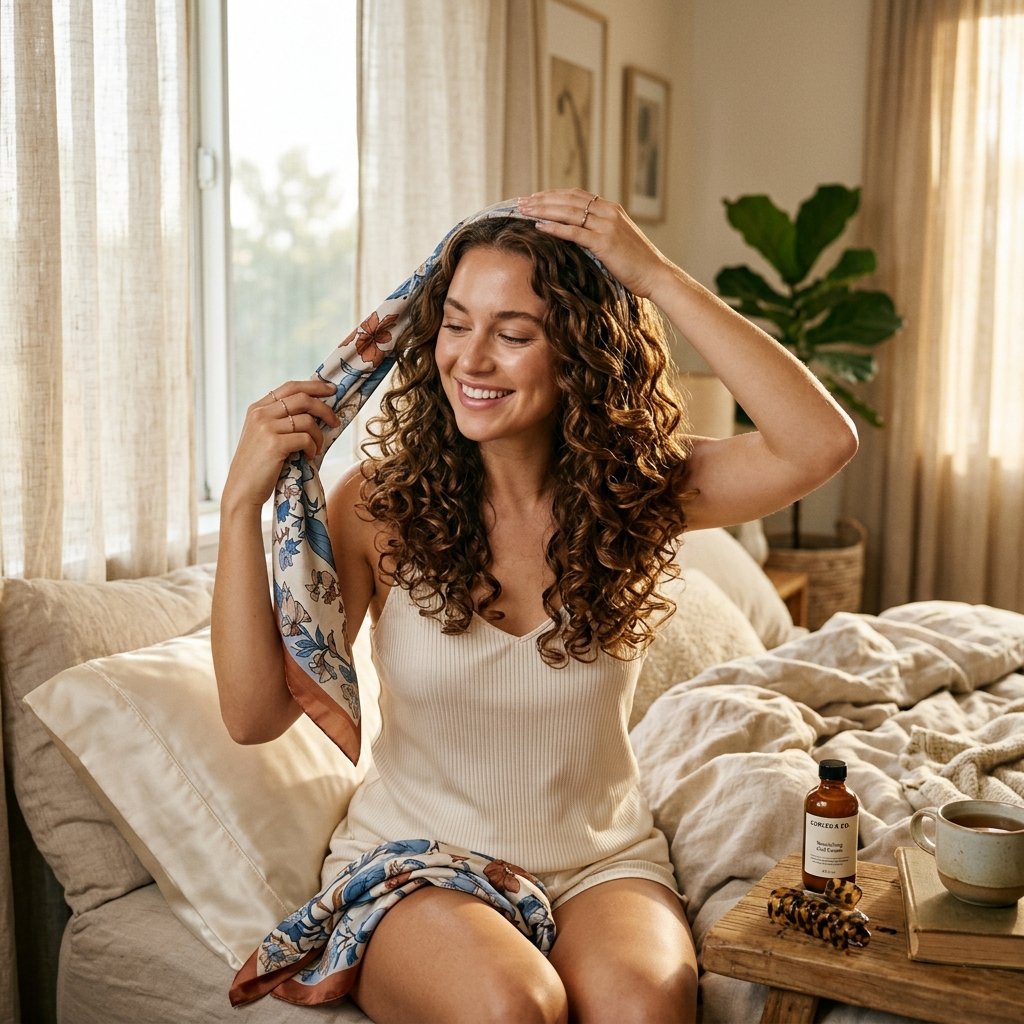
Beautiful curls don’t require a hot iron and twenty minutes at the mirror every morning. Curling irons work, no argument there. But they heat hair to temperatures that damage the cuticle over time, demand skill to avoid burns or uneven results, and eat up morning minutes most people would rather spend elsewhere.
Heatless curls predate hot tools by centuries. Rags, rollers, pins, and braids have shaped hair overnight for generations. Today’s versions are more refined, better documented, and easier to access than ever. They produce everything from soft beachy waves to tight ringlets, without heat damage, morning effort, or anything beyond a bit of overnight patience.
This guide walks through heatless overnight curl methods, from the simplest to the more involved, with clear instructions and an honest sense of what each one delivers. Whichever hair type or curl goal applies, one of these techniques fits.
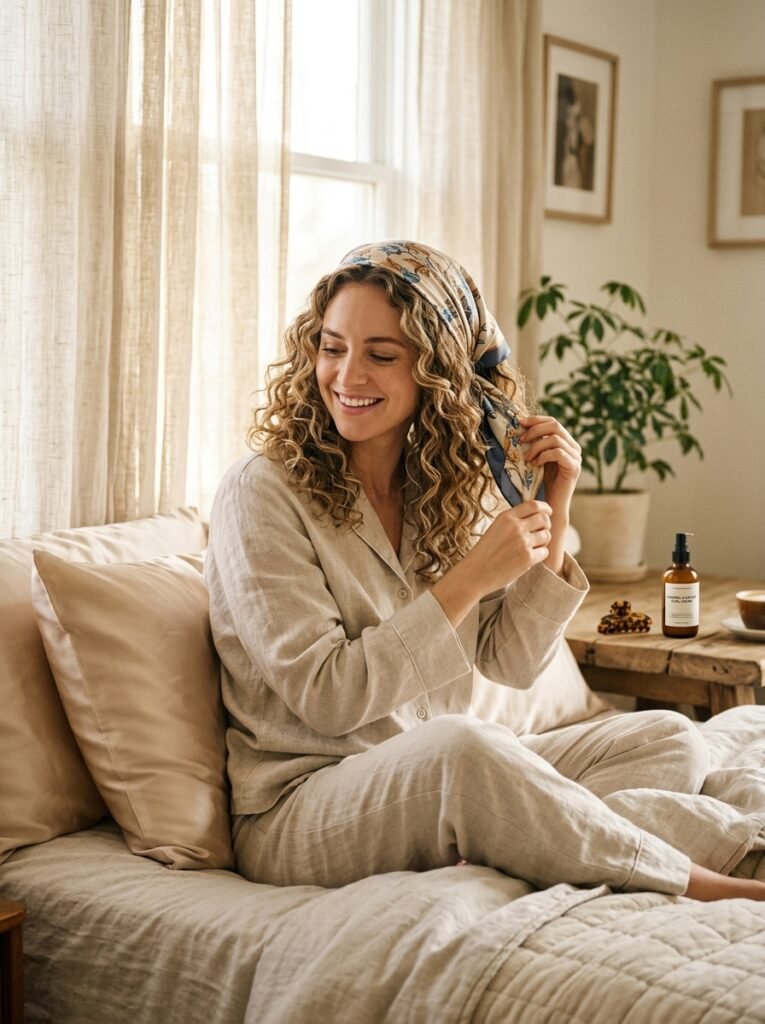
What Makes Heatless Curls Work
Understanding the underlying mechanism makes it easier to choose the right method and troubleshoot results that don’t match expectations.
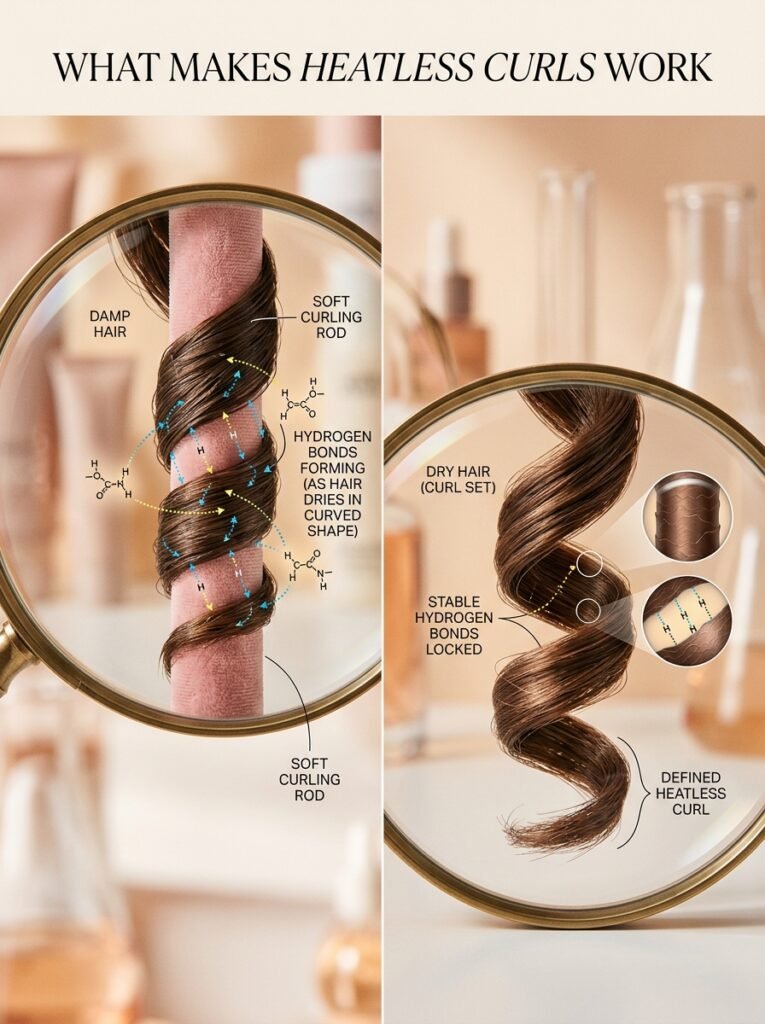
Heatless curls rely on hydrogen bonds within the hair’s keratin structure. Researchers at McGill University’s Office for Science and Society explain that these bonds break easily on contact with water, which is why wet hair reshapes so readily around a curler. As hair dries in that new shape, the bonds reform and hold the curl until humidity loosens them again.
Wrapping damp hair around a rod, straw, sock, or fabric strip lets the bonds set as the hair dries around that shape. Tighter wraps around smaller objects produce tighter curls. Looser wraps around larger objects produce relaxed waves.
Heat speeds this process dramatically, which is why a curling iron works instantly. Heatless methods depend on time instead, which is why overnight remains the most reliable window. Hair that’s fully dry before the tool comes out holds its curl. Hair removed while even slightly damp loses definition fast.
That’s the single most important factor in heatless curl success: hair must be completely dry before takedown. Healthy hair, a light hold product, and enough drying time separate curls that last all day from curls that fall within an hour.
Preparation Steps That Apply to Every Method
Whichever method gets chosen, preparation follows the same basic sequence.
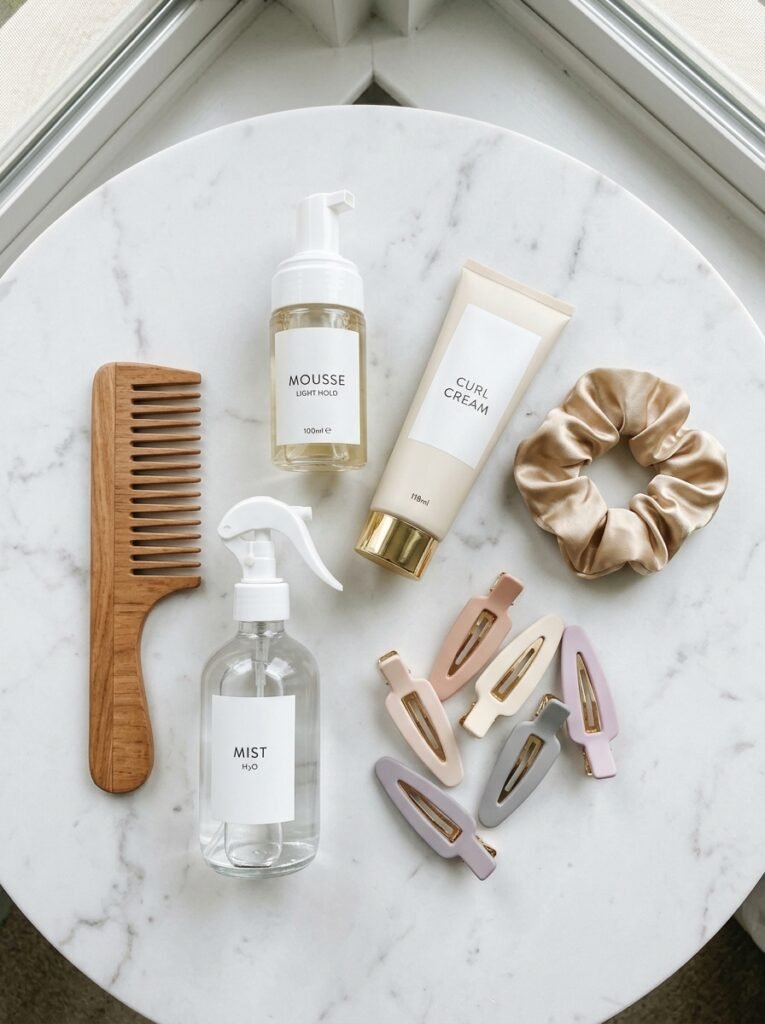
Start with clean or day-old hair. Freshly washed, very silky hair sometimes struggles to hold a curl, while day-old hair with a bit of natural texture usually grips better. A light mousse or curl-holding foam applied to freshly washed, still-wet hair gives it something to grab onto as it dries.
Dry hair to roughly seventy to eighty percent before applying any tool. Soaking wet hair takes too long to fully dry overnight, which risks the curl never setting. Slightly damp hair, cool to the touch but no longer dripping, is the ideal starting point.
Apply a light hold product throughout before beginning. A mousse, curl cream, light-hold gel, or setting spray gives the hydrogen bonds something to fix around and meaningfully improves how long the curl lasts. Less is more here: too much product creates a crunchy, stiff result, while too little leaves the curl unable to hold.
Section the hair before starting any method. Smaller, controlled sections produce more even, defined results than working with large chunks of hair at once. The right number of sections depends on the method and hair thickness.
Sleeping on a silk or satin pillowcase reduces friction against the tools overnight and helps prevent surface frizz.
The Silk Scarf or Robe Tie Method
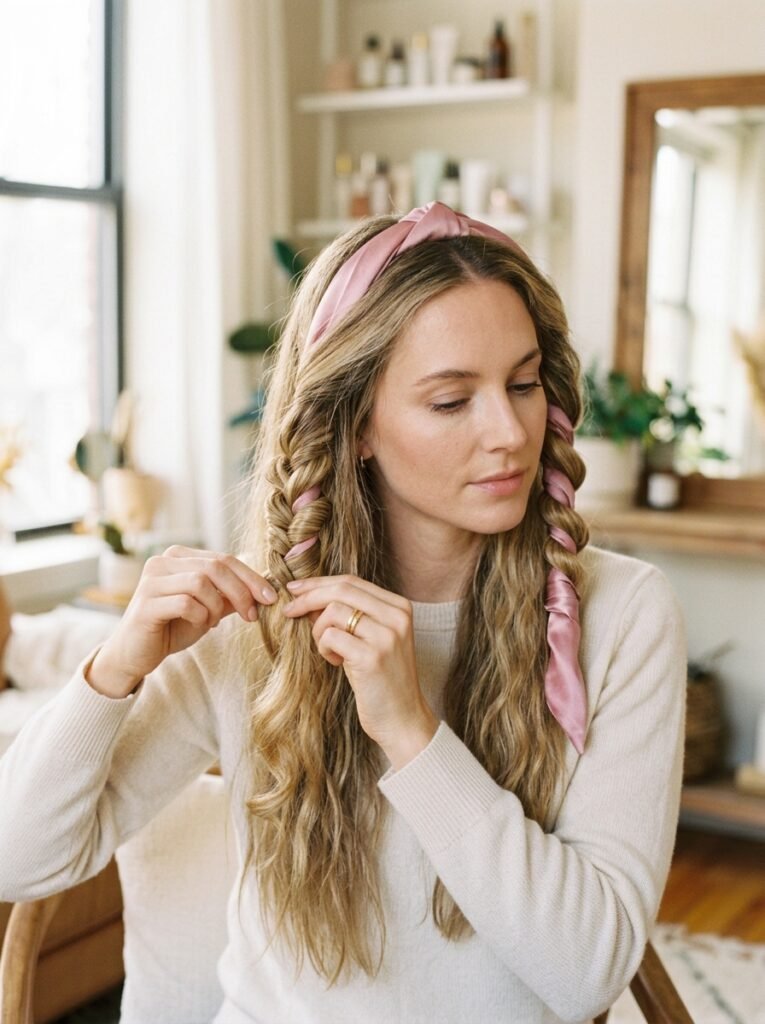
A long silk robe tie or scarf placed at the crown and used as a winding rod produces loose, romantic waves or tighter curls depending on how snugly the hair wraps.
Part the hair at the center and drape the tie horizontally from ear to ear. Wind sections from each side around the tie, moving downward until every section reaches the end, then secure and tie the ends loosely at the crown to hold everything overnight.
In the morning, slide the tie out gently rather than pulling, then finger-separate and finish with a touch of oil for shine.
Best for: Medium to long hair, any texture. Loose waves on straight hair, defined curls on naturally wavy hair.
The Sock Curls Method
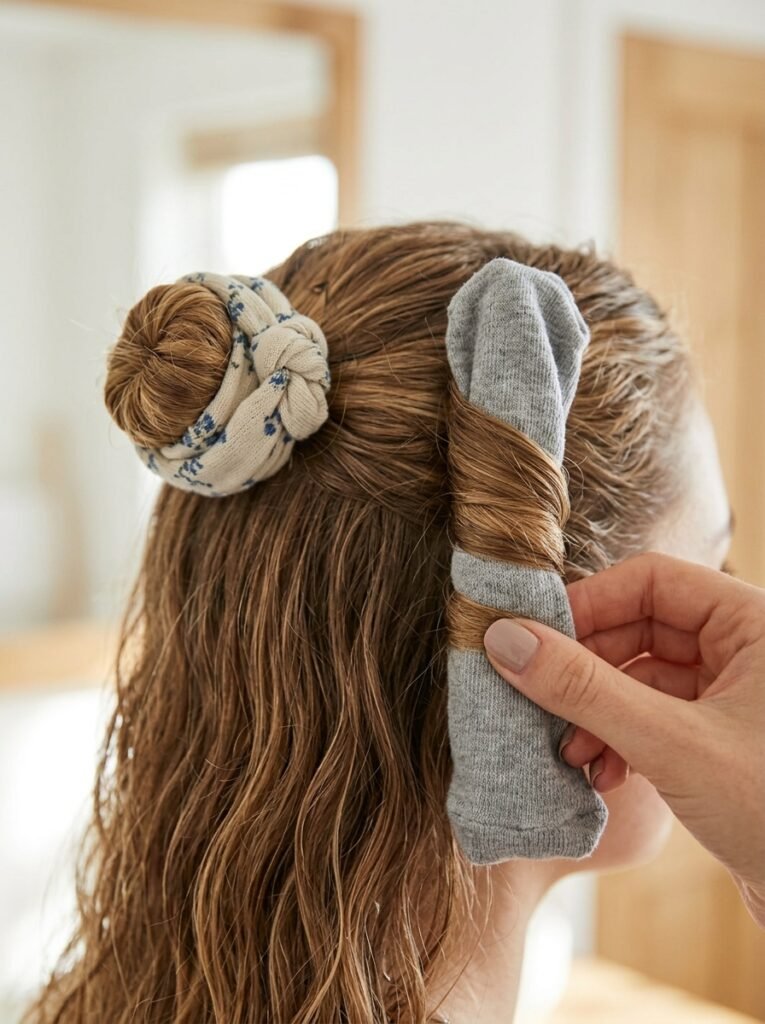
One of the oldest and most accessible techniques, requiring nothing more than a clean sock with the toe cut off to form a soft fabric tube.
Thread a two-inch hair section through the tube and roll upward from ends to roots, rolling the sock along with it, then tie the ends together once the sock reaches the scalp. A thin sock produces a tighter curl; a thick one produces a looser wave.
Untie and unroll each section gently in the morning, finger-separating rather than brushing to avoid frizz.
Best for: All hair types and lengths. Tighter curls with thin socks, looser waves with thicker ones.
The Flexi Rod Method
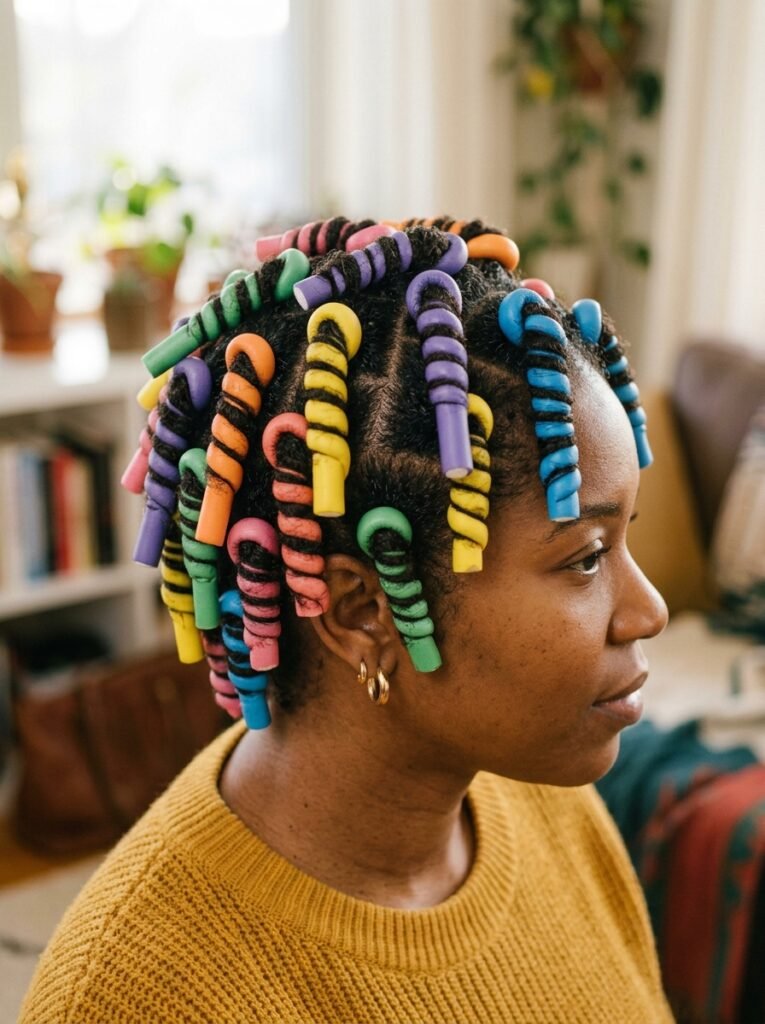
Flexi rods are soft, bendable foam rods built specifically for overnight curling, which makes their results some of the most consistent on this list.
Wind a section of hair around the rod from tip to root in a spiral, then bend the rod’s ends up toward each other to hold it in place. Small rods create tight ringlets, medium rods create defined curls, and large rods create loose waves. Mixing sizes across the head avoids a uniform, artificial look.
Bend each rod straight and slide it out gently the next morning, letting the curl fall naturally before touching it.
Best for: All hair types, especially natural and textured hair. Reliable for tight, defined curls.
The Bantu Knot Method
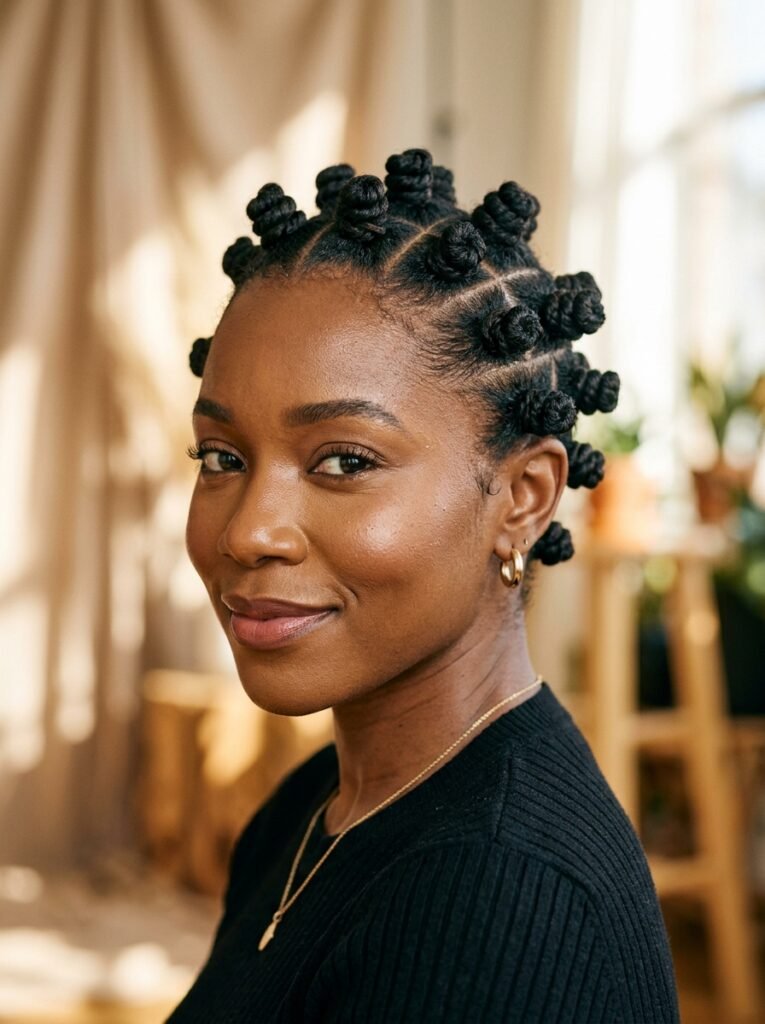
A traditional African styling technique used for decades to set tight, spiral curls, particularly effective on natural and textured hair.
Apply curl cream to a section, twist it from root to tip, then coil the twist around its own base into a small knot at the scalp and tuck the end underneath. Smaller knots produce tighter spirals; larger knots produce looser waves.
Uncoil each knot carefully from the base outward in the morning, then separate curls with oiled fingers rather than a comb.
Best for: Natural and textured hair especially. Produces tight spiral curls.
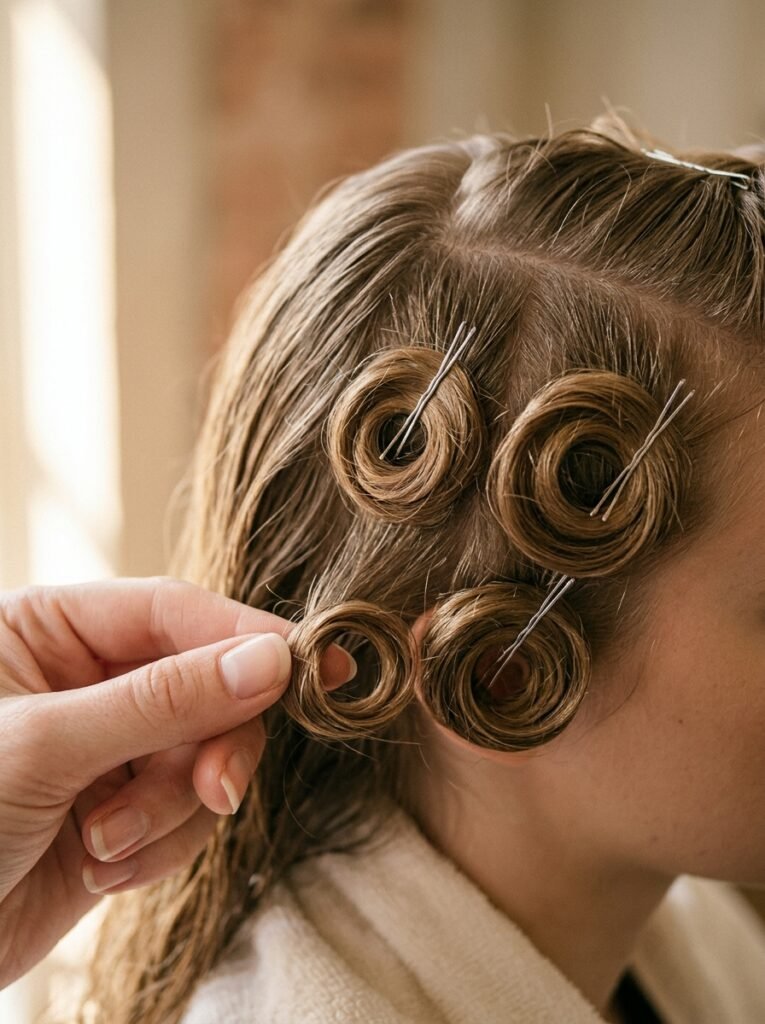
The Pin Curl Method
One of the oldest, most precise heatless techniques, used since the early twentieth century for finger waves and vintage rolls. It needs only bobby pins and produces a smooth, classic curl rather than a beachy one.
Smooth a thin section with a comb, wrap it around two fingers into a flat circle, slide it off while keeping the shape flat, press it against the scalp, and cross two bobby pins through the center to secure it.
Remove each pin gently in the morning and let the curl release naturally, then brush lightly for a blended wave or finger-separate for defined curls.
Best for: Fine to medium straight hair. Smooth waves or vintage-style curls with good root volume.
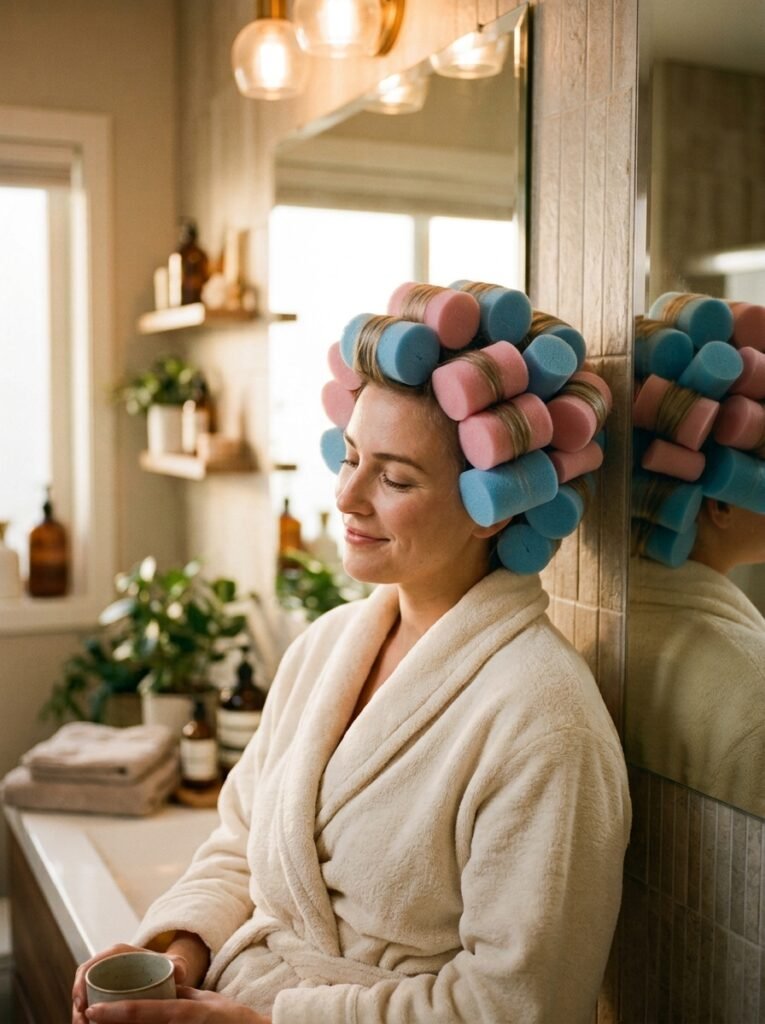
The Foam Roller Method
A classic overnight tool that stays reliable and easy to use, especially once the rolling motion becomes familiar.
Roll a damp section upward from end to root with even tension, then clip the roller in place once it reaches the scalp. Larger rollers add volume and loose waves; smaller ones create tighter curls. A slight diagonal placement adds natural variation to the finished shape.
Unclip and unroll gently from root to end the next morning, then finger-separate and mist lightly with holding spray.
Best for: All hair types, particularly thicker hair that needs a tool with body to hold its weight.
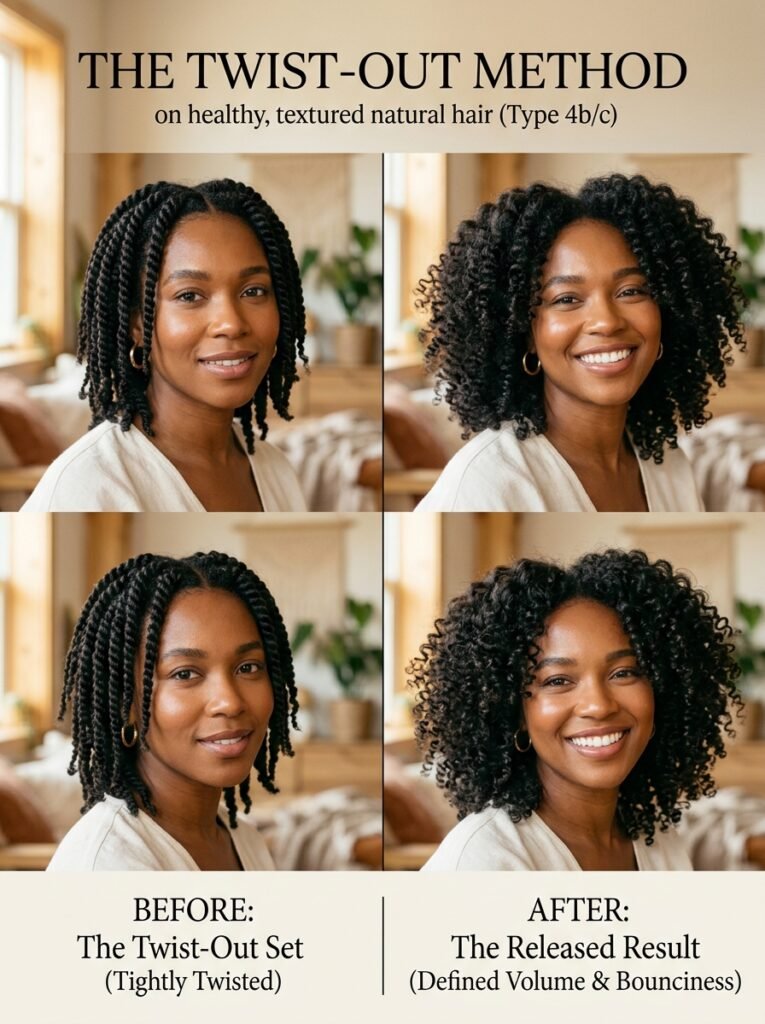
The Twist-Out Method
A staple technique for natural and textured hair, producing defined, springy curls, though it also works on straight or wavy hair with enough product hold.
Apply curl cream to a damp section, divide it in two, and twist the strands around each other from root to tip, keeping tension even. Secure the end with a clip or band. Smaller sections create tighter curls; larger sections create looser waves.
Wait until hair is completely dry before untwisting, then apply a bit of oil to the fingers and separate gently without a comb or brush.
Best for: Natural and textured hair. Defined, clump-free curls; also works on wavy hair with the right product.
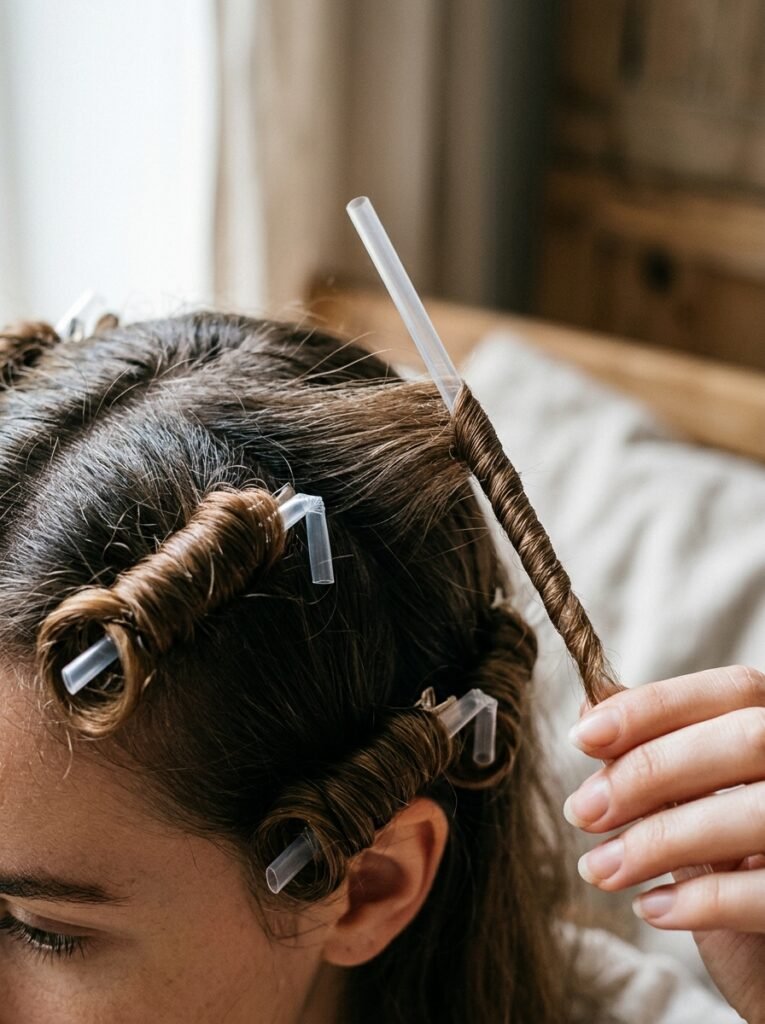
The Straw Curls Method
One of the tightest, most defined heatless curl results available, popular for creating very curly styles on straight or barely wavy hair.
Wrap a thin section tightly around a drinking straw from root to tip in a downward spiral, then fold the straw’s ends up to secure them. Smaller straws produce tighter ringlets; larger bubble tea straws produce looser spirals. Thin sections take more time to wrap but reward fine hair with dramatic definition.
Unfold the straw and slide it out slowly the next morning, letting the curl settle before separating with oiled fingers.
Best for: Fine to medium hair wanting tight, defined ringlets.
The Loose Braid Method
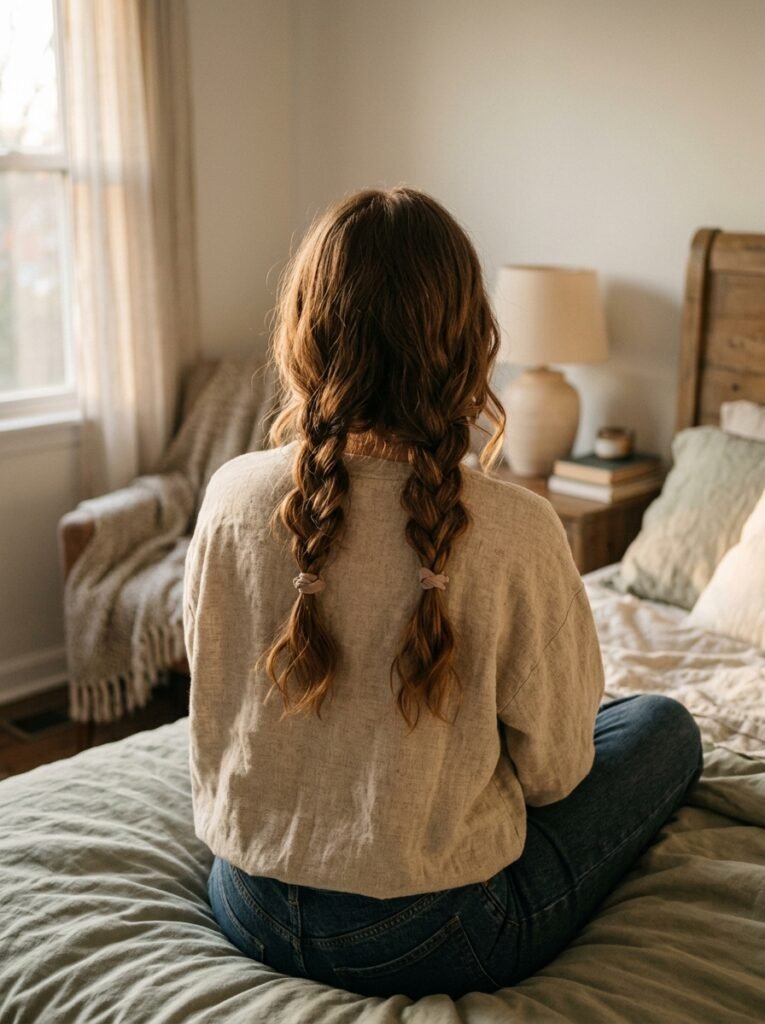
The simplest heatless option: braiding overnight produces waves rather than curls, with the number and tightness of braids controlling the result.
Two or three loose braids create relaxed, beachy waves. Four to six slightly tighter braids create more defined texture. Many small braids throughout create a heavily crimped, textured effect.
Remove the elastics and unweave each braid gently from end to root in the morning, then tousle and finish with a touch of serum.
Best for: All hair types and lengths. The easiest starting point for heatless curl beginners.
The Headband Curl Method
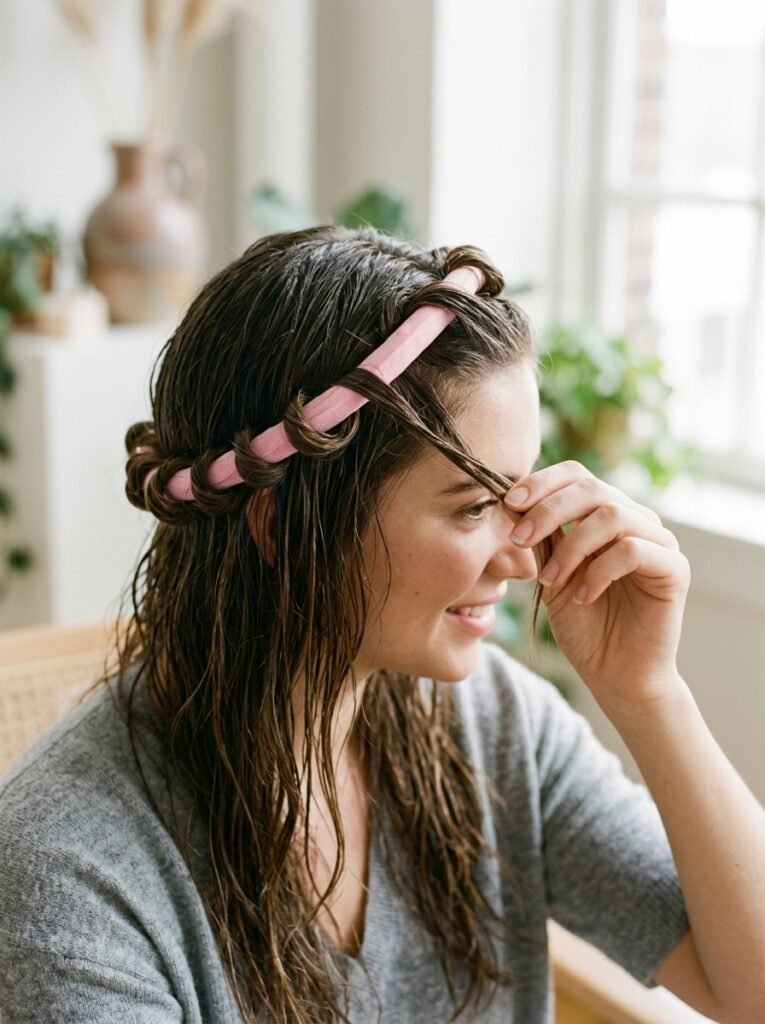
A soft, stretchy headband produces a halo of loose, voluminous curls, similar to the silk scarf method but with slightly less precise control.
Place the headband around the head like a crown, then weave sections of damp hair over and under it repeatedly until every section is looped in, tucking loose ends underneath to secure.
Slide each section back over the band in reverse the next morning, then finger-separate without brushing to preserve the wave.
Best for: Medium to long straight or wavy hair. One of the most comfortable overnight methods to sleep in.
The Rag Curl Method
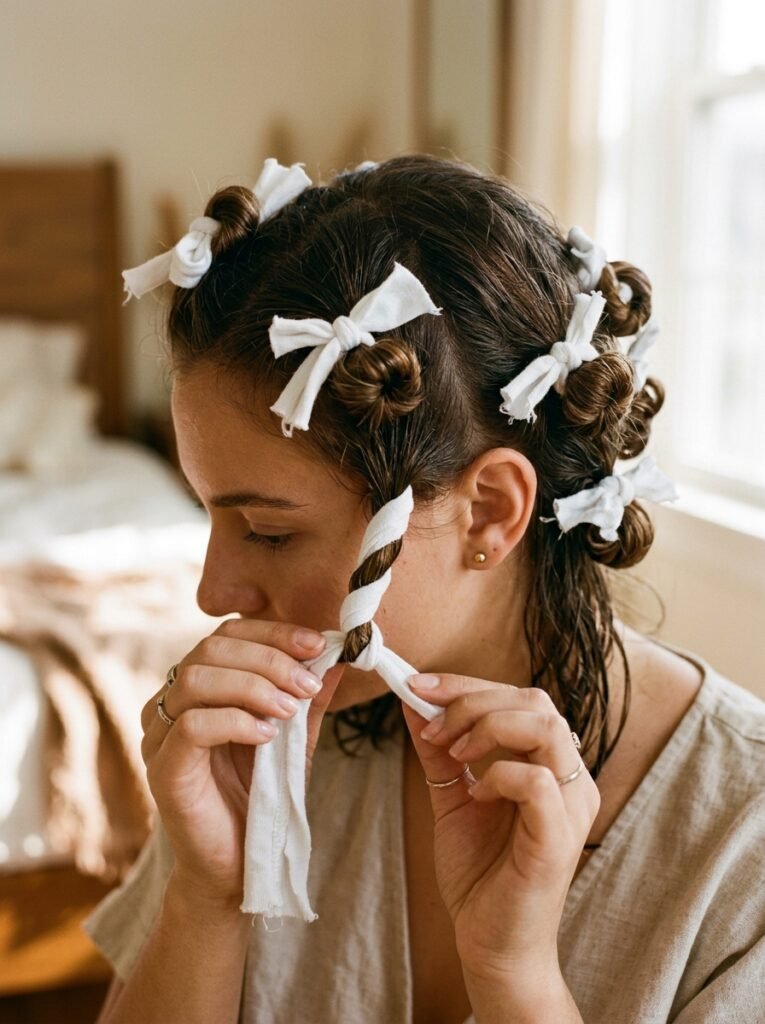
One of the oldest heatless methods around: cloth strips torn from an old t-shirt produce a vintage-style curl with softer tension than pin curls.
Cut fabric into strips roughly an inch wide, place a hair section’s end against a strip, and roll upward toward the root, tying the strip’s ends in a knot to secure. Wider strips with more hair produce looser waves; narrower strips produce tighter curls.
Untie and unwind each strip gently the next morning, letting curls settle before separating and finishing with a light oil.
Best for: All hair types, particularly gentle for damaged or fragile hair.
The Two-Strand Twist and Release Method
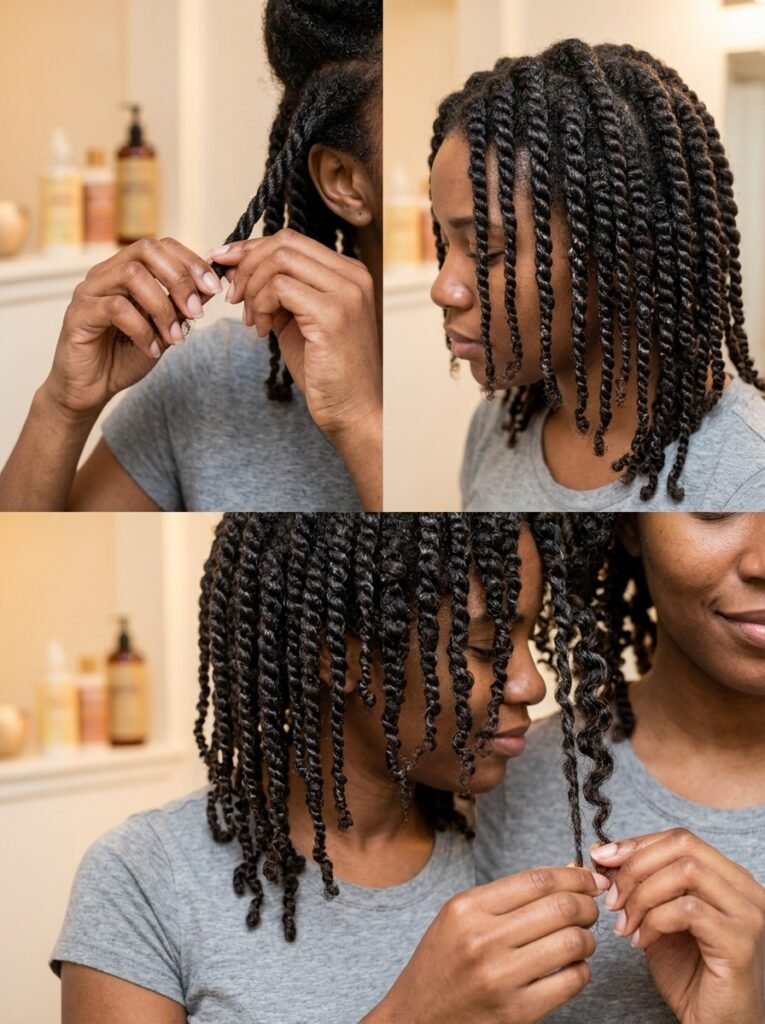
A variation on the twist-out with a different takedown that produces a softer, more blended wave rather than a defined individual curl.
Apply a light mousse instead of a thick cream, twist two strands loosely from root to tip, and clip the end. After the twist dries fully overnight, uncoil it from the end upward instead of pulling the strands apart.
Running fingers lightly through the released twists blends the wave further into a natural, soft finish.
Best for: Any hair type wanting soft, blended waves rather than distinct spirals.
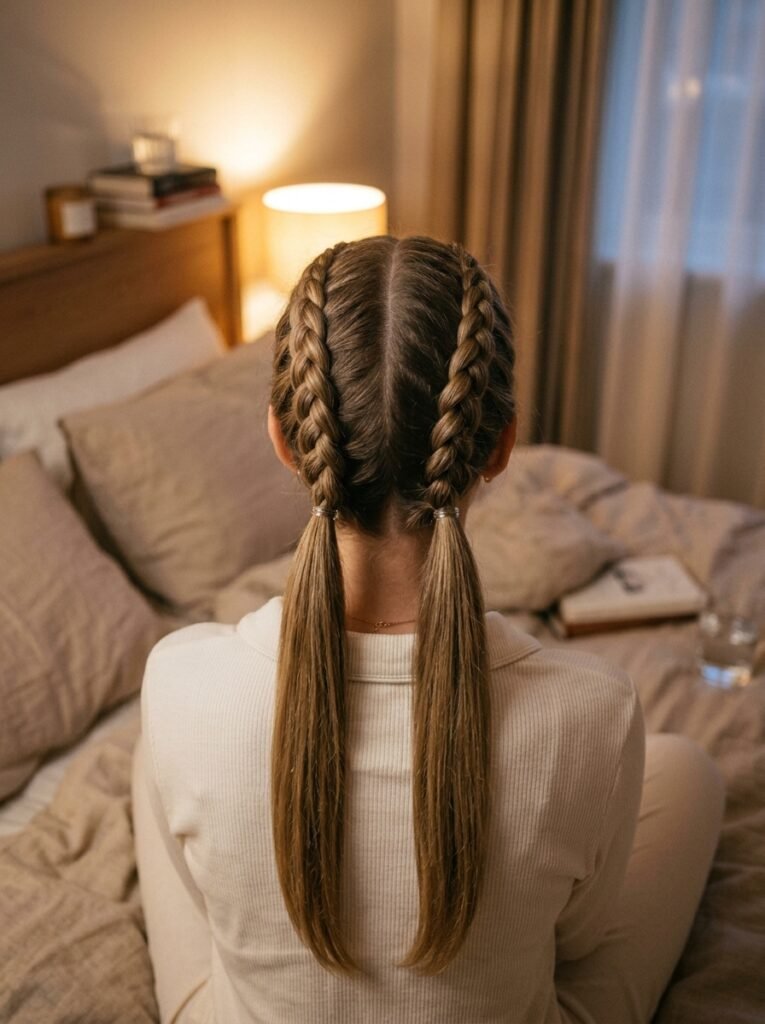
The Double Dutch Braid Method
Two Dutch braids worn overnight deliver some of the most dramatic, consistent results available, especially on thick hair that other methods struggle to fully set.
Part the hair down the center and Dutch braid each side completely from root to end, securing with a soft elastic. Dutch braids sit raised on the surface rather than lying flat, which produces a slightly more crimped wave than a standard braid.
Unravel each braid gently from the bottom up in the morning, then shake to blend and finish with a touch of shine serum.
Best for: Medium to thick hair. High-volume textured waves that hold up well on heavier hair.
The Perm Rod Method
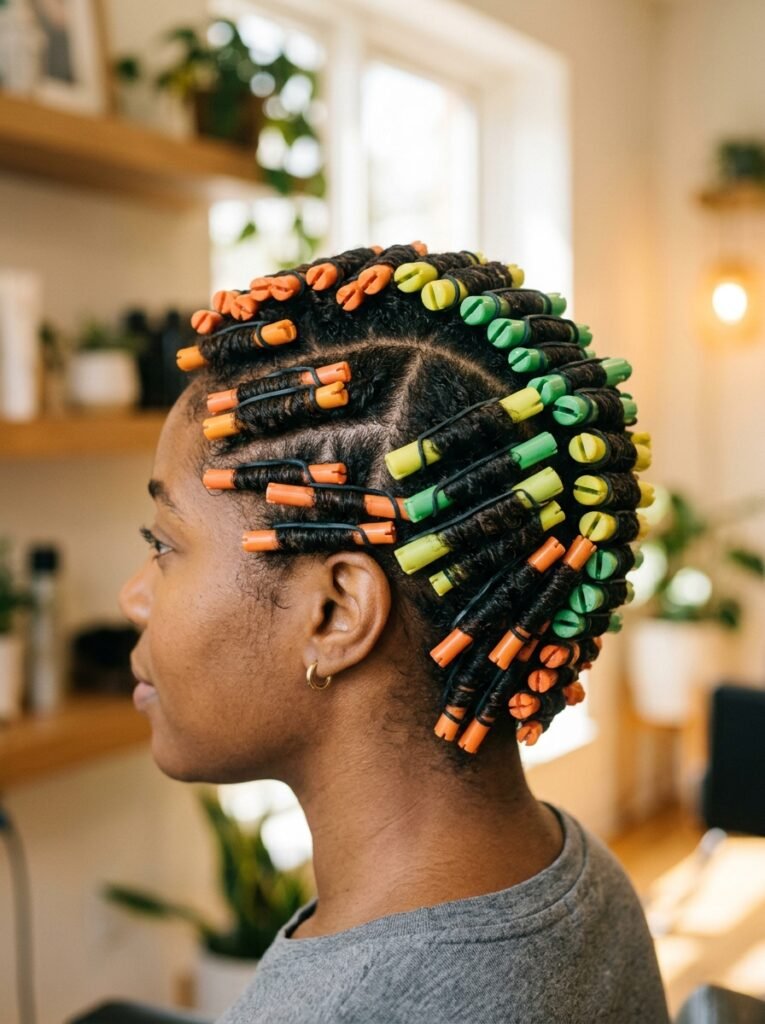
Perm rods, sold in beauty supply stores in a range of sizes, produce defined, consistent spiral curls among the most precise heatless results available.
Apply gel or cream to a damp section, wind it around the rod from root to end in a downward spiral, then snap the fastener closed. Small rods create tight spirals; large rods create looser, more open ones. Mixing sizes adds natural dimension.
Open each fastener and slide the rod out gently the next morning, letting curls cool and settle before separating with oiled fingers.
Best for: Natural and textured hair wanting defined spiral curls with a salon-quality finish.
The Twisted Bun Method
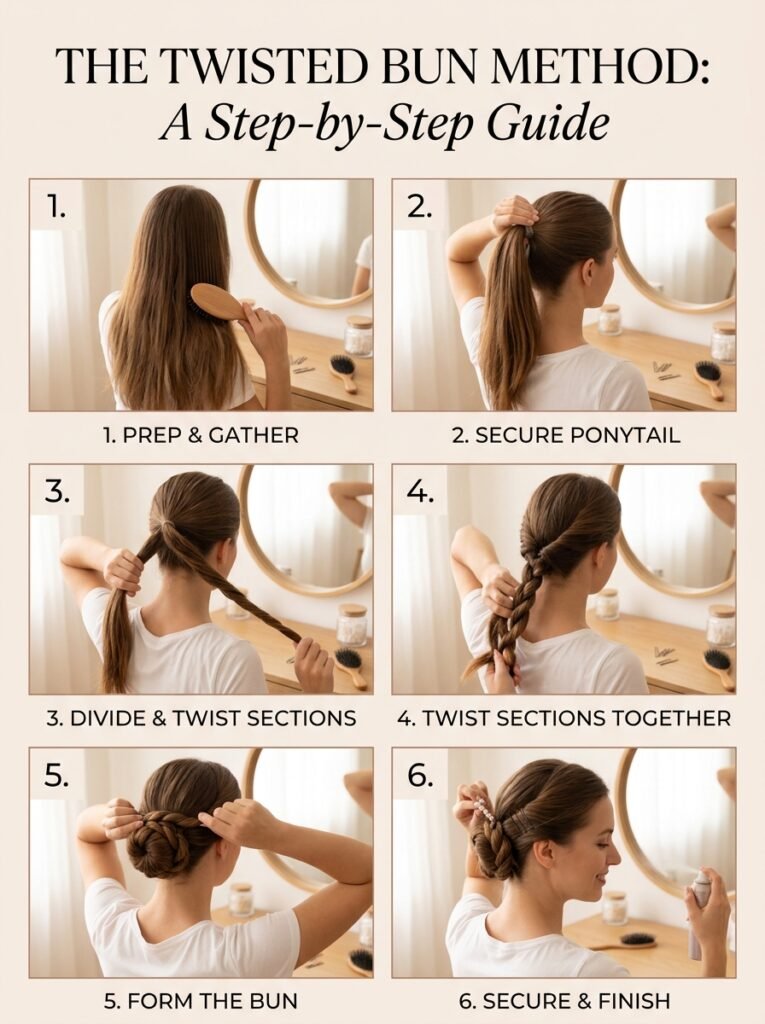
Combines the wave-setting benefit of a twist with the volume of sleeping in a bun, landing somewhere between defined curls and voluminous waves.
Twist a damp section from root to end with even tension, then coil it into a bun and secure with pins or a soft scrunchie. Multiple smaller buns create more texture; fewer, larger buns create softer, more blended volume.
Remove the pins the next morning, uncoil and separate with fingers, then mist lightly and shake to release full volume.
Best for: Medium to long hair of any texture. A reliable all-rounder for everyday heatless curls.
Tips for Making Heatless Curls Last All Day
The curl sets overnight. Keeping it through the day takes a few consistent habits.
Avoid touching the hair too much during takedown, since every touch introduces some frizz at the cuticle. Work through it with oiled fingers and a light hand.
Apply a light-hold finishing spray after fully separating the style. Hold the can about a foot away and mist once lightly rather than saturating the hair.
Protect the style overnight if it needs to last a second day. A loose, high “pineapple” ponytail preserves curl shape with minimal tool use, and a silk bonnet works especially well for natural and textured hair. For readers planning curls around a wedding day specifically, this guide to wedding guest hairstyles that hold up all day covers additional longevity tricks worth combining with these methods.
Resist adding extra product when curls fall quickly. More product usually means more buildup, not better hold. Check instead whether the hair was fully dry before takedown and whether the product type actually matches the hair’s texture.

Choosing the Right Method for Your Hair Type
Not every method suits every hair type equally. A few quick guidelines help match method to hair.
Fine, straight hair holds curl least easily and benefits from smaller sections and more product. Pin curls, straw curls, and perm rods create the precise, small wraps that fine strands can actually hold onto. Readers dealing with fine or thinning hair more broadly may also find these styling ideas for making thin hair look fuller useful alongside these curl methods.
Medium, wavy hair is the most forgiving type and responds well to nearly any method, with flexi rods, foam rollers, and sock curls as reliable starting points.
Thick, straight hair needs tools with enough body to hold its weight: larger foam rollers, flexi rods, or the double Dutch braid method, which spreads the weight throughout the braid rather than relying on one tool.
Natural and textured hair does best with methods that work with its existing curl pattern. Twist-outs, Bantu knots, and perm rods produce the most defined, longest-lasting results.
Damaged or fragile hair needs the gentlest handling. Rag curls, loose braids, and the headband method all apply minimal tension.
Frequently Asked Questions
How long do heatless overnight curls last? It depends on hair type, product, and method. Well-set curls on prepared hair typically last one to two days. Fine, straight hair holds the least, while natural and textured hair, which already has a curl pattern for the bonds to reinforce, holds the longest. A light water or curl-refresher mist on day two, followed by gentle scrunching, can revive curls that have relaxed.
Can I do heatless curls on completely dry hair? Most methods need at least some dampness to work, since the hydrogen bond process depends on moisture. Fully dry hair wrapped in a tool will show some wave from physical bending alone, but the result will be less defined and less durable than curls set on damp hair. A light mist of water or curl refresher before wrapping dry hair can noticeably improve results.
What is the best product to use for heatless overnight curls? A light mousse or curl-setting foam works reliably across most hair types, adding hold without weight. A medium-hold gel suits natural and textured hair especially well. A curl cream adds moisture with less hold, and a setting spray layers well on top of any of these. Heavy oils or butters used before setting can prevent hair from drying properly.
Why did my heatless curls fall out quickly? Taking the style down before the hair is fully dry is the most common cause, since even slightly damp hair loses definition within an hour. Insufficient product is the second most common cause, particularly for fine, straight hair. The third is starting on hair that’s too freshly washed and silky to grip a curl; a texture spray or waiting a day usually solves this.
Are heatless curls better for hair health than a curling iron? Yes. Heatless methods never expose hair to temperatures high enough to disrupt the strand’s protein structure, unlike heat styling, which causes cumulative cuticle damage even with a heat protectant. Treating heatless methods as the primary approach, with occasional heat styling as the exception, noticeably improves hair condition over time.
The Morning After
Heatless curls carry a quality that hot tools rarely achieve. They look like hair rather than a styling job, since the curl was set slowly, without intense heat, incorporating the hair’s own natural texture along the way.
That quality is worth the slightly more deliberate evening routine. Ten to twenty minutes before bed trades for waking up to a finished style, with no morning heat, mirror time, or burned fingers.
Pick one method that fits your hair and curl goal, try it on a low-stakes evening, and adjust the product or section size based on the result. By the third attempt, the technique becomes second nature.



[…] Anyone who prefers to skip hot tools entirely can build a similar wave pattern overnight. A heatless curling method produces a comparable soft wave with no heat exposure the night before […]
[…] the top section, while a diffuser adds lift without disrupting curl pattern. A related roundup of heatless overnight curl techniques offers additional ways to build volume in the uncut sections without heat […]