

Every summer, the same scene repeats. Twenty minutes go into styling hair in the morning, and it looks exactly right. Then comes the walk outside into ninety percent humidity, and within ten minutes that effort starts unraveling. By the time the destination arrives, a halo of frizz has appeared that was not there at the door, and nothing short of starting over fixes it.
That scenario ranks among the most consistent beauty frustrations for anyone with hair even slightly prone to frizz. The frustrating part is not just that frizz happens. Most available advice is either too vague to help or focused on products without explaining why they work, which leaves people cycling through purchases rather than addressing the actual cause.
The actual cause of frizz in humid weather is specific and understandable, and once it makes sense, the solutions follow logically. This guide covers the science briefly, the routine in detail, the products with clear reasoning, and the habits that separate hair that holds up in humidity from hair that does not.

Why Humid Weather Causes Frizz
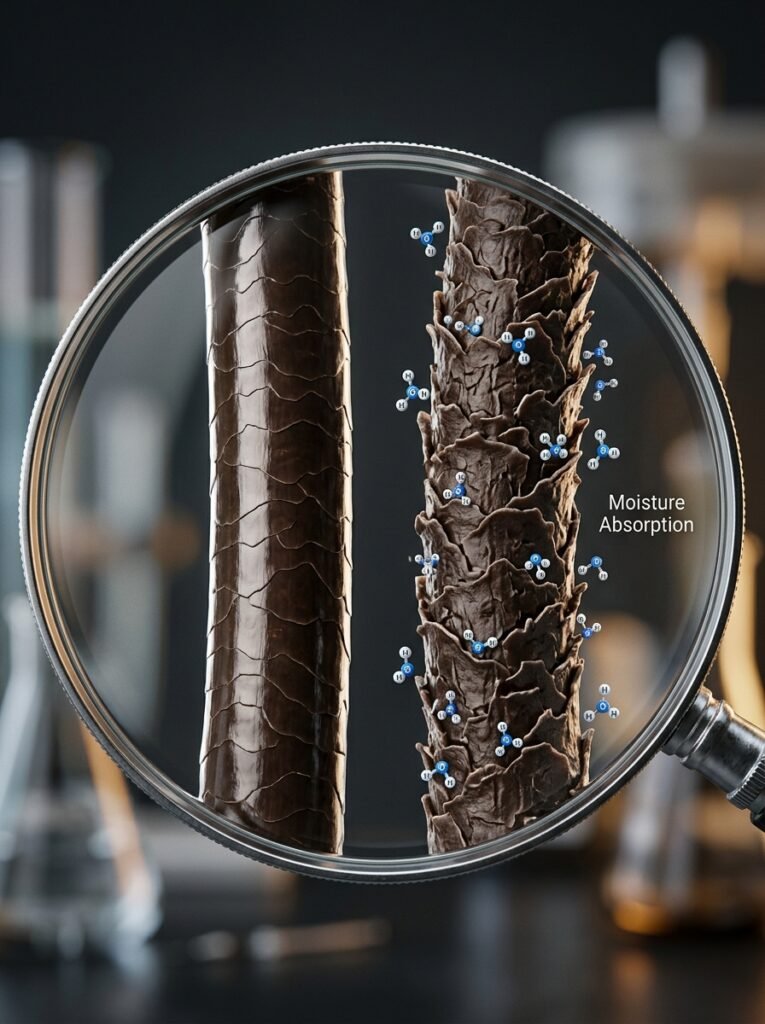
Hair frizzes in humidity because of a structural feature nearly every strand shares: the cuticle layer.
Each strand is covered by a cuticle, a layer of overlapping scales that ideally lies flat and smooth along the hair shaft. A flat cuticle looks smooth, reflects light evenly, and feels soft. A raised cuticle looks rough, scatters light unevenly, and lets moisture from the air enter the shaft freely.
In humid conditions, hair with a raised or compromised cuticle absorbs moisture from the surrounding air. That absorbed moisture swells the hair shaft unevenly, creating the roughness and undefined texture known as frizz. Research published in Cosmetics & Toiletries links this directly to porosity. Bleached and chemically treated hair has a degraded protective outer layer. It absorbs moisture faster and produces measurably more frizz than untreated hair under identical humidity. Naturally smooth, flat-cuticle hair resists this process far better than wavy, curly, coarse, or heat-damaged hair.
This explains why frizz worsens on some days and troubles some people more than others regardless of product use. It is a structural response to environmental moisture, and managing it well means addressing the cuticle rather than just coating the hair’s surface.
Start With the Right Shampoo
Shampoo is where frizz control either begins properly or gets undermined before styling even starts. Few people think of shampoo as a frizz tool, but the choice significantly affects how the cuticle behaves after washing and throughout the day.
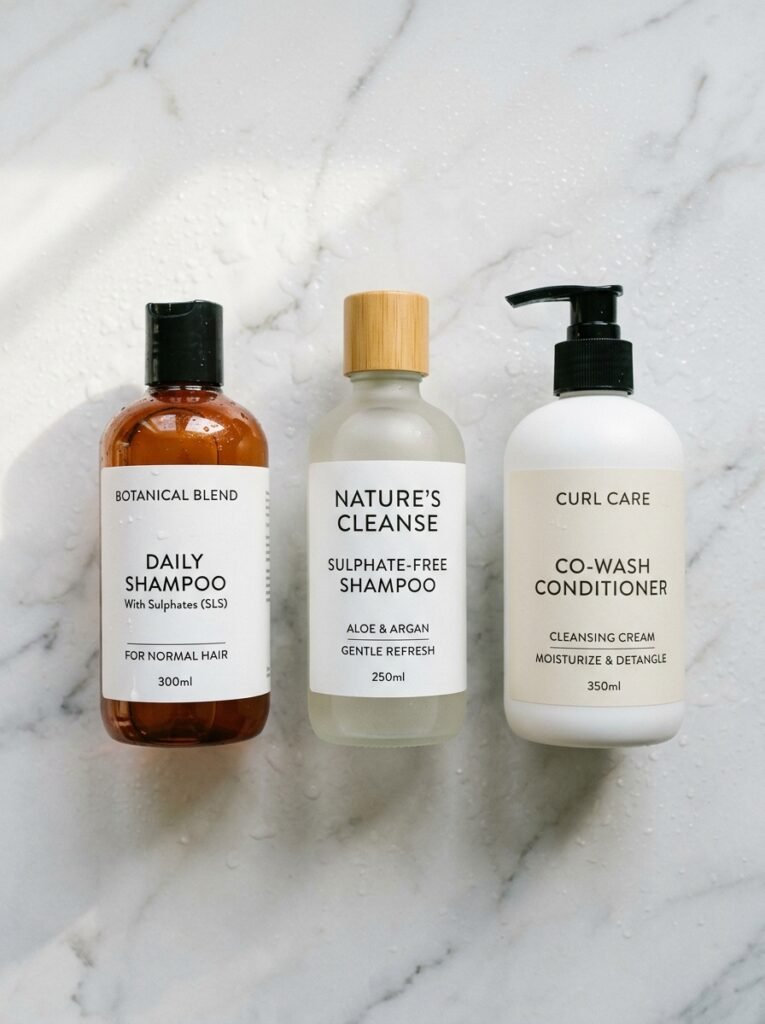
Sulphate-free shampoos serve as the baseline recommendation for frizz-prone hair. Sulphates, the surfactant cleansing agents in most conventional shampoos, remove oil and buildup effectively but strip the hair shaft dry and leave the cuticle rough and raised. A raised cuticle after shampooing begins absorbing moisture from the air almost immediately, making the rest of the routine harder.
Sulphate-free formulas cleanse with less stripping, leaving the cuticle smoother and better prepared for the products that follow. They often lather less, but that does not mean they cleanse less thoroughly. The surfactant system is simply gentler.
Clarifying shampoos with sulphates still have a place for removing buildup from heavy products, hard water minerals, or chlorine, but they should not become a regular habit for frizz-prone hair. A quarterly clarifying wash followed by deep conditioning works better.
Co-washing, cleansing with conditioner alone between shampoo days, helps many frizzy and curly hair types maintain moisture without the stripping effect of regular shampooing. It does not suit very fine or oily hair well, but coarser, drier, curlier types often find it worth trying.
Conditioning Is Not Optional
Conditioner is the most direct tool for improving cuticle behavior in frizzy hair. Skimping on it, or using it incorrectly, is one of the most common reasons frizz management fails even with real effort behind it.
Conditioner temporarily smooths the cuticle, adds slip for detangling without mechanical damage, and deposits moisture and sometimes protein into the shaft. All three outcomes directly address frizz by leaving the cuticle flatter and less receptive to atmospheric moisture.
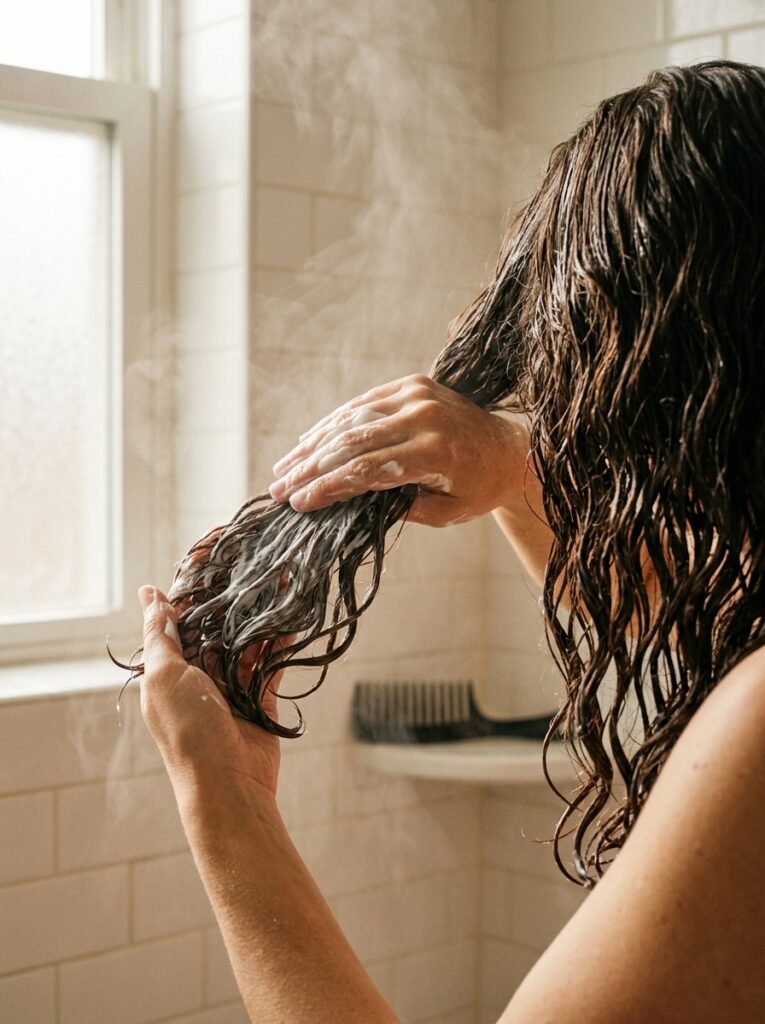
Technique matters here. Apply conditioner generously to the mid-lengths and ends of wet hair, the oldest and most porous parts of the strand. A wide-tooth comb or fingers distribute it thoroughly and work through tangles while it sits. Leave it on for at least three to five minutes rather than rinsing immediately, since contact time lets conditioning agents work on the cuticle rather than just coat the surface.
Deep conditioning once a week produces a meaningfully different result than regular conditioning alone. A mask left on for ten to thirty minutes, ideally under heat, allows deeper penetration and cuticle repair than a three-minute rinse-out achieves. For dry, porous, or damaged hair, weekly deep conditioning ranks among the highest-impact single habits in a frizz routine.
Leave-in conditioner applied to damp hair after rinsing adds another layer that maintains moisture balance as hair dries. It forms a light barrier that slows moisture absorption and keeps the cuticle smoother through drying and styling.
How You Dry Your Hair Changes Everything
Drying is where much frizz actually gets created rather than prevented. The specific method used has a bigger impact on frizz than most people realize.
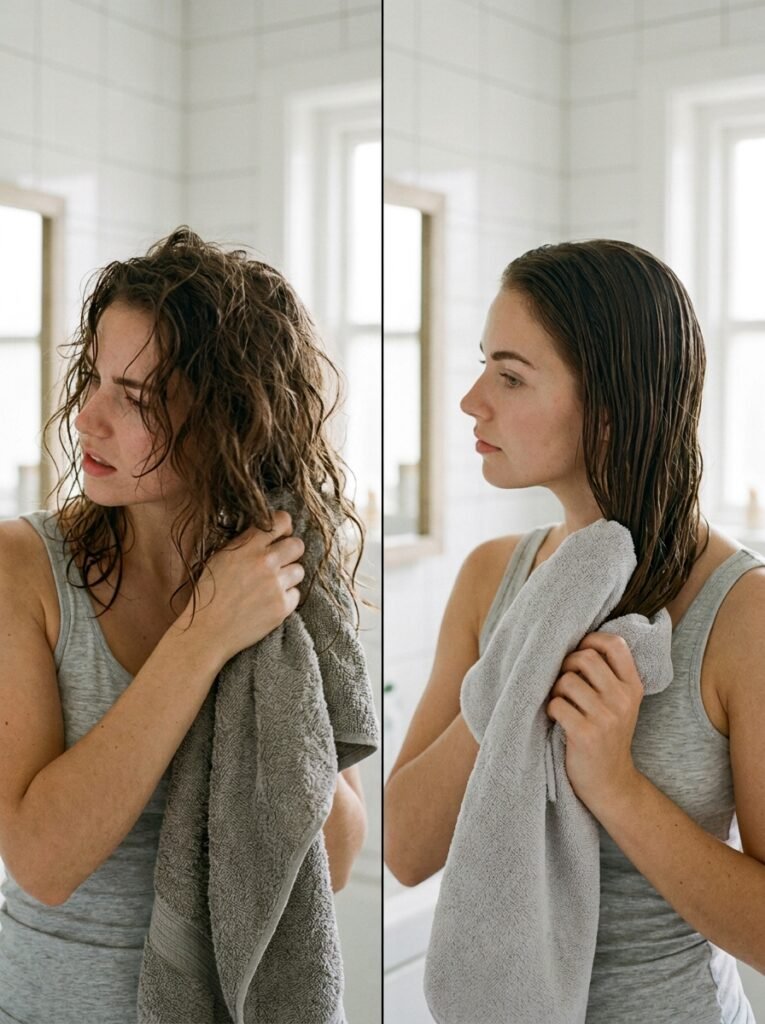
Rubbing wet hair with a regular terry cloth towel ranks among the most consistent frizz contributors. Terry cloth’s rough texture and the friction of rubbing lift the cuticle aggressively, creating a rough surface that then absorbs air moisture freely. Switching to a microfibre towel or a clean cotton t-shirt dramatically cuts this friction. The correct technique is gently squeezing or pressing moisture out rather than rubbing, keeping the cuticle as flat as possible.
Air drying without touching hair protects smoothness and definition best, particularly for wavy and curly types. Without product, though, air drying can still allow humidity to be absorbed during the process. Product applied to wet hair creates a light film that manages this absorption.
Blow drying done correctly can actually cause less frizz than air drying. Using a concentrator nozzle pointed downward along the hair shaft directs air in a way that pushes the cuticle flat rather than lifting it. Blow drying without a nozzle, or pointing airflow upward or sideways, lifts the cuticle and contributes to frizz. Medium heat on mostly dry hair, rather than soaking wet hair, also reduces the heat stress that damages the cuticle over time.
Diffusing remains the preferred blow-dry method for curly and wavy hair in humid weather, since it dries hair from below in a way that enhances the natural curl pattern rather than disturbing it. The gentler, distributed airflow reduces frizz while still speeding up drying compared to air drying alone.
Products That Actually Work and Why
Product selection is where frizz management comes together or falls apart. Understanding why specific product types work makes it easier to choose well and avoid wasting money on things that miss the actual problem.
Humectants are worth understanding before reaching for any product. These are ingredients that attract and hold moisture: glycerin, hyaluronic acid, aloe vera, and panthenol all qualify. In low humidity, humectants draw moisture from deeper hair layers to the surface, which helps. In high humidity, the same humectants can attract so much atmospheric moisture that they contribute to frizz instead of solving it.
This is why products that work beautifully in dry weather can worsen frizz in humid weather, and why frizz management often needs a different strategy in summer than in winter. In high humidity, lighter humectants, or humectants balanced with film-forming agents that create a light surface barrier, work better.
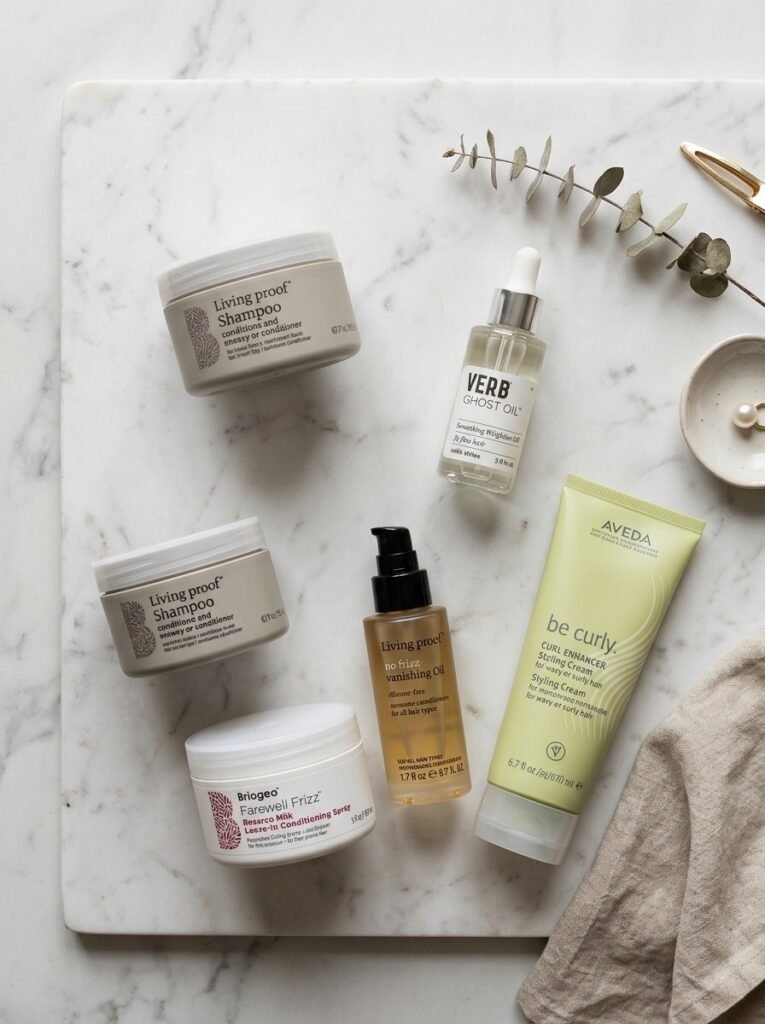
Anti-frizz serums and oils coat the cuticle with a light film that reduces moisture absorption. Argan oil, camellia oil, and silicone-based serums all work through this mechanism. A small amount applied to dry or damp hair goes a long way; too much weighs hair down and looks greasy rather than smooth.
Curl creams and styling creams for wavy and curly hair combine light hold with moisturizing ingredients and often film-forming agents that define curl pattern while reducing the frizz between curls in humid conditions. Applied to soaking wet hair and either air dried or diffused, a good curl cream produces significantly less frizz than skipping product entirely.
Anti-humidity hairsprays finish a style with a film that resists moisture penetration. They do not replace the earlier routine steps, but they add a meaningful final layer that extends hold in humid conditions when applied lightly from about twelve inches away.
Hold products like gel form a cast around the hair that physically prevents frizz by keeping each strand in position regardless of humidity. Gel works especially well for curly and wavy hair applied to soaking wet hair and left to dry completely before the cast is broken by gentle scrunching. Touching or combing gel-styled hair before it fully dries almost guarantees frizz.
Styling Habits That Reduce Humidity Frizz
Beyond the wash routine and products, a handful of styling habits significantly affect how hair behaves in humidity.
Avoiding touching hair while it dries is the most consistently broken rule in frizz management. Every pass of a hand through drying hair disrupts the cuticle and creates frizz. Once product goes on and hair starts drying, leaving it alone completely pays off in noticeably smoother results.
Styling in sections rather than all at once ensures even product distribution and more defined results, particularly for curly or wavy hair. Product applied haphazardly across large sections misses areas and creates inconsistent texture that humidity then exploits.
Applying styling products to hair that feels wetter than expected is a common point of confusion worth clarifying. Most curly and wavy hair products work best on genuinely soaking wet hair rather than merely damp hair. The extra water helps distribute product evenly and settles gel or cream into the right consistency for defining curl pattern.
Avoiding high-heat tools on already frizzy or humidity-affected hair prevents another common setback. Heat creates a temporary smoothness that disappears within minutes outside, since the heat-opened cuticle immediately resumes absorbing atmospheric moisture. When heat styling is necessary, a heat protectant, the lowest effective temperature, and an anti-humidity finishing product applied right after all help.
Pineappling, loosely gathering curly or wavy hair on top of the head overnight with a silk scrunchie, preserves definition and reduces friction frizz while sleeping. Paired with a silk or satin pillowcase, this overnight habit significantly reduces the frizz and disturbance to manage the following morning.

Protective Styles for Extremely Humid Days
On the most aggressively humid days, the most practical solution is sometimes a style that removes hair from the equation entirely.
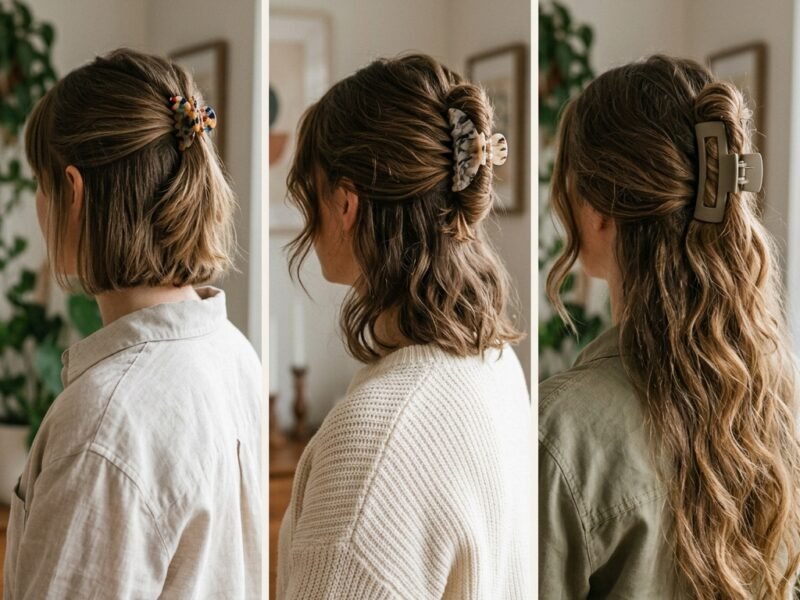
Braids, whether a single plait, two braids, French braids, or a crown braid, tuck hair away from atmospheric moisture and contain it in a structured style unaffected by weather. Applied to slightly damp hair with a small amount of gel or curl cream, braids often set neater and more defined than braiding on completely dry hair. Anyone dressing for an outdoor event where humidity is a factor may also find this guide to hairstyles that survive a long, humid day useful for style selection beyond braids.
Buns, whether low, high, or twisted, contain hair completely and work especially well when it has been slightly dampened and smoothed with an anti-frizz serum before being put up. The serum controls surface frizz before gathering, and the bun removes the remaining length from contact with humid air.
Twists and updos protect hair similarly and can look deliberately styled and elegant rather than defensive. Protective styles sometimes get treated as giving up on the hair rather than a genuine choice, which sells them short. A sleek updo on a humid day is a smart decision, not a compromise.

Ingredients to Look for in Anti-Frizz Products
Understanding which ingredients to look for, rather than relying on specific brands, allows any product to be evaluated intelligently.
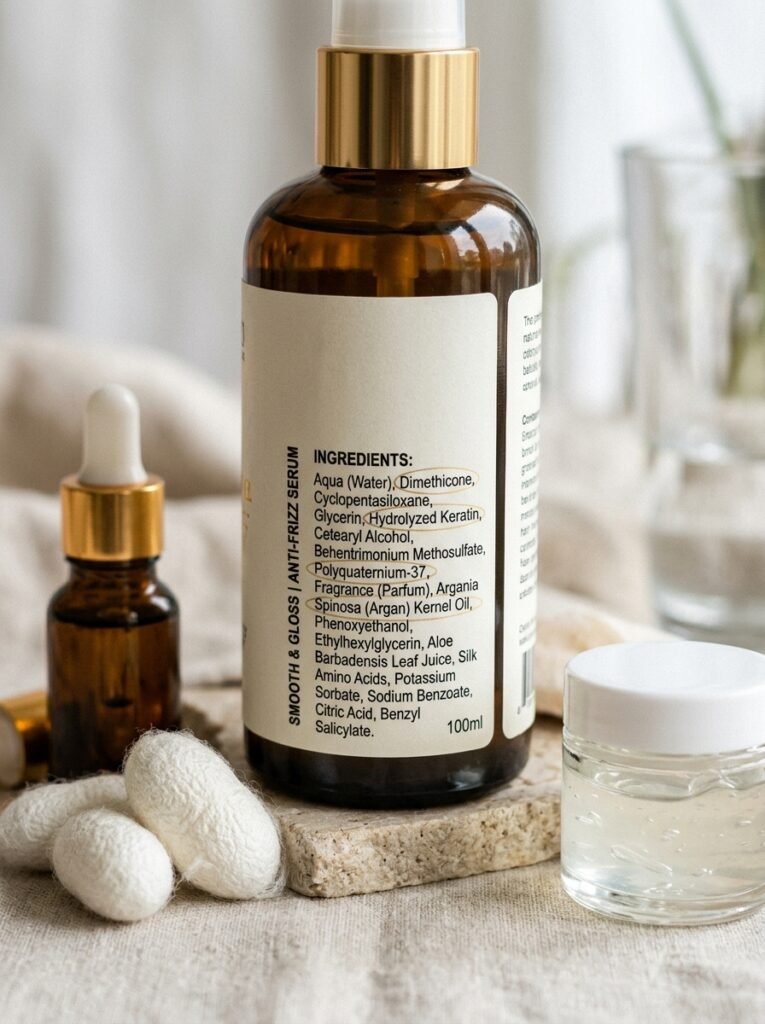
Silicones, particularly dimethicone and cyclomethicone, rank among the most effective anti-frizz ingredients because they create a smooth film over the cuticle that physically blocks moisture absorption. Some hair care communities avoid them since removing them fully requires sulphate shampoo, creating a cycle that can be drying over time. Lighter silicones like cyclomethicone evaporate after application without building up. Heavier silicones like dimethicone sit longer and perform better in extreme humidity but need proper cleansing to remove.
Hydrolysed proteins, including keratin, silk protein, and wheat protein, fill gaps in the cuticle structure that create porosity and let moisture in. Products containing these as conditioning agents strengthen the cuticle from within and reduce its tendency to absorb atmospheric moisture.
Polyquaterniums are film-forming agents that coat hair and provide humidity resistance without the weight of silicones. Modern anti-humidity products use them widely, and they work effectively across most hair types.
Oils used as surface sealants, including argan, jojoba, camellia, and avocado oil, coat the cuticle and reduce moisture absorption while adding shine and softness. Quantity matters most: a small amount seals without weighing hair down, while too much creates greasiness.
Common Frizz Control Mistakes
Knowing what consistently goes wrong helps avoid the most costly errors in time, money, and results.
Over-applying product is the most frequent mistake. More product does not mean less frizz; it means weighed-down, greasy hair that may still frizz because the product was too heavy to distribute evenly. Starting with less than seems necessary, distributing it thoroughly, and adding more only if needed works better.
Skipping conditioner or using it too briefly is a foundational error that undermines everything else in the routine, since no product applied afterward compensates for a cuticle left unsmoothed in the shower.
Using a wide-tooth comb on dry frizzy hair to smooth it creates significantly more frizz, not less. Combing dry frizzy hair lifts the cuticle and separates strands that were lying together, multiplying the surface area available for frizz. If combing dry hair is necessary, a small amount of serum first and very gentle, slow strokes help.
Washing hair too frequently strips natural oils that provide some cuticle protection and moisture balance. For frizz-prone types, washing two to three times a week rather than daily, with dry shampoo or co-washing between wash days, maintains better baseline moisture and cuticle condition.
Ignoring the weather forecast when planning hair sounds minor but is genuinely practical. Checking the humidity forecast the evening before and adjusting both product and style plan prevents a lot of unnecessary frustration. A ninety percent humidity day calls for a different approach than a fifty percent day, and knowing in advance allows a realistic choice rather than a mid-day surprise.
Frequently Asked Questions
What is the fastest way to reduce frizz in humid weather? A small amount of anti-frizz serum or oil worked through the affected areas with the hands smooths the cuticle temporarily. Focus on the hair’s surface rather than the full length, and it reduces frizzy appearance within minutes. It is a surface fix rather than a root cause solution, but it is reliable for immediate improvement when applied sparingly.
Does hair type affect how much frizz occurs in humidity? Yes, significantly. Wavy, curly, and coily hair types have a naturally more open cuticle than straight hair, so they absorb atmospheric moisture more readily and frizz more. Chemically processed hair, including coloured or bleached hair, and heat-damaged hair also carries a more porous cuticle regardless of natural texture. Fine straight hair can frizz too, typically to a lesser degree unless damaged or chemically treated.
Are there hairstyles naturally more resistant to humidity frizz? Styles that contain the hair, like braids, buns, and updos, resist frizz best because they remove most of the hair from contact with humid air. Among styles worn down, more defined curl or wave patterns resist frizz better than undefined texture, since the definition holds strands together and reduces individual expansion. Fully straight styles frizz fastest in humidity, since any moisture absorption disturbs the straightened pattern immediately.
Does a cold water rinse at the end of a shower really help with frizz? Yes, with some nuance. A cooler rinse helps because cold water encourages the cuticle to close more tightly than warm water, leaving it flatter immediately after washing. This improves baseline smoothness before any product is applied, though the effect is real but not dramatic alone. It works best as part of a comprehensive routine rather than a standalone fix.
How can frizz be controlled in humidity without hair looking greasy? The balance comes down to product quantity and type. Lighter products, serums and light creams rather than heavy oils and butters, applied sparingly and distributed thoroughly rather than concentrated in one spot, work best. Anti-frizz products belong on the mid-lengths and ends rather than the roots, where they tend to look greasier. Letting products dry fully before judging whether more is needed also helps, since damp product always looks heavier than dried product.
Putting It All Together
Frizz in humid weather is not a problem a single product fixes. It is a routine problem requiring a routine solution. A shampoo that does not strip the cuticle. A conditioner applied properly and left on long enough. A drying technique that preserves rather than disrupts the cuticle. Products chosen for the specific humidity conditions. Habits that stop the most common mechanical interference.
None of that is complicated once the reasoning behind each step is clear, and none of it demands a large budget. The most important elements, sulphate-free shampoo, a good conditioner, a microfibre towel, a basic serum, and the patience not to touch hair while it dries, sit at almost every price point.
Working through this routine systematically, starting with the towel, the touching habit, and the conditioner technique before adding the rest over time, produces cumulative rather than instant improvement. After a week or two of the full routine, stepping outside into humid weather becomes significantly less alarming than it used to be. Anyone building a broader summer hair routine may also find the styling techniques in this beach wave hairstyle tutorial useful for working with, rather than against, humidity on styled days.




Leave a Reply