
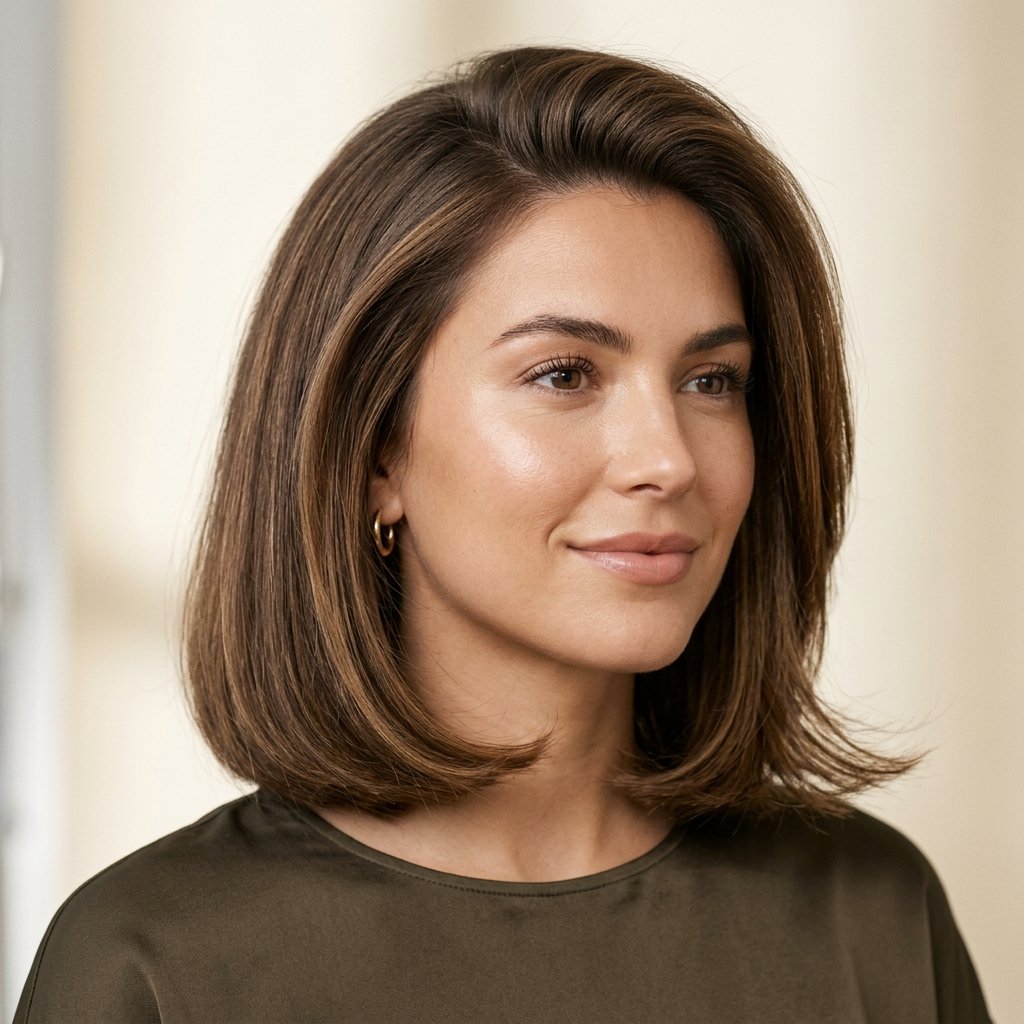
Thin hair rarely announces itself all at once. It shows up gradually, in small moments — a ponytail that suddenly wraps twice instead of three times, or light passing through the hair in a way it never used to. Noticing the pattern often brings a flash of doubt about whether fuller, bouncier hair is even possible without a wig or a set of clip-ins.
It is possible, and extensions have nothing to do with it. The right haircut changes how fine or thin hair moves and reads to the eye. Certain cuts build the illusion of density through blunt lines, strategic layering, or smart length placement, and a stylist familiar with fine hair can adapt any of these approaches to nearly any face shape or lifestyle.
Two different traits hide inside the word “thin,” and untangling them explains why one haircut transforms one head of hair while doing almost nothing for another.
Diameter, Density, and What Thin Really Means
Hair diameter measures the width of a single strand. Hair density counts how many strands grow per square inch of scalp. A head can carry high density paired with a fine diameter, and the result still reads as thin because each individual strand disappears against the light. The reverse happens too: lower density combined with a thicker strand can still look reasonably full.
Research published in the European Journal of Dermatology measured hair growth patterns across thousands of adults from two dozen ethnic groups on five continents. The study found that strand diameter and scalp density vary independently rather than tracking together, which helps explain why identical complaints about “thin hair” often call for completely different fixes.
A haircut built around blunt ends, deliberate length, and controlled layering improves the appearance of both traits at once. That principle connects every style below, even though the techniques differ from one cut to the next.
The Blunt Bob Remains the Most Reliable Fix
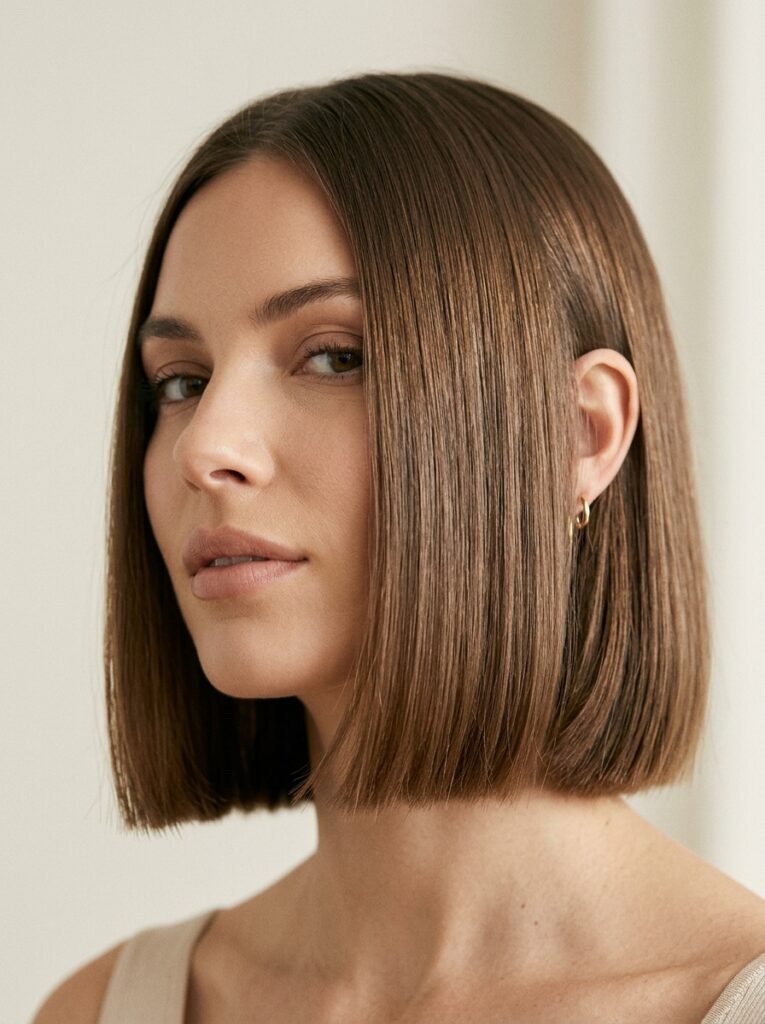
Ask most stylists which single cut does the most for thin hair, and the blunt bob usually tops the list. The logic is simple. When every strand ends at the same length, the edge looks dense and solid rather than feathered or thin. There’s no gradual taper pulling the eye toward empty space.
The blunt bob performs best somewhere between the jaw and the collarbone. Shorter versions that land at or just below the ear tend to look especially weighty. Longer versions, closer to chin length, feel more relaxed while still delivering that dense visual line at the ends.
One request matters more than any other during the consultation: no razor cutting and no heavy texturizing. Both techniques strip bulk from the ends, which works directly against the goal. Scissors alone, with clean, even ends, keep the density where it counts.
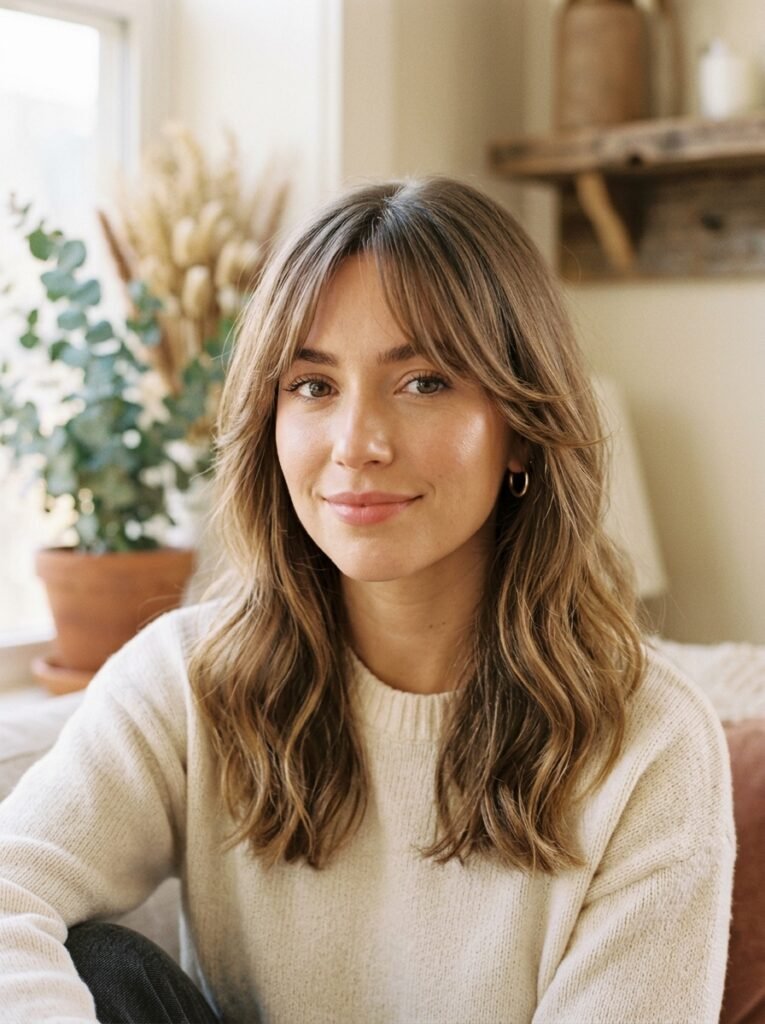
Curtain Bangs With Face-Framing Layers
Curtain bangs have had a long cultural moment, and fine-haired clients are quietly among their biggest beneficiaries. The reason comes down to focus.
Soft, wispy bangs that part in the middle and sweep to the sides pull attention toward the front section of the hair. Styled with a little volume and a few face-framing layers, that section becomes the visual focal point. The eye lands on movement and texture near the face rather than on the thinness of the length behind it.
Length is the detail that decides whether curtain bangs work on fine hair. Bangs cut too short tend to fall flat and lifeless. Longer curtain bangs, roughly eyebrow to cheekbone, carry more weight and blend into the rest of the hair far more naturally.
A stylist can add a handful of soft face-framing layers at the same appointment. These layers should stay longer and more subtle than traditional layering, just enough to create movement without stripping bulk from the rest of the cut.
The Textured Lob Adds Intention to a Long Bob
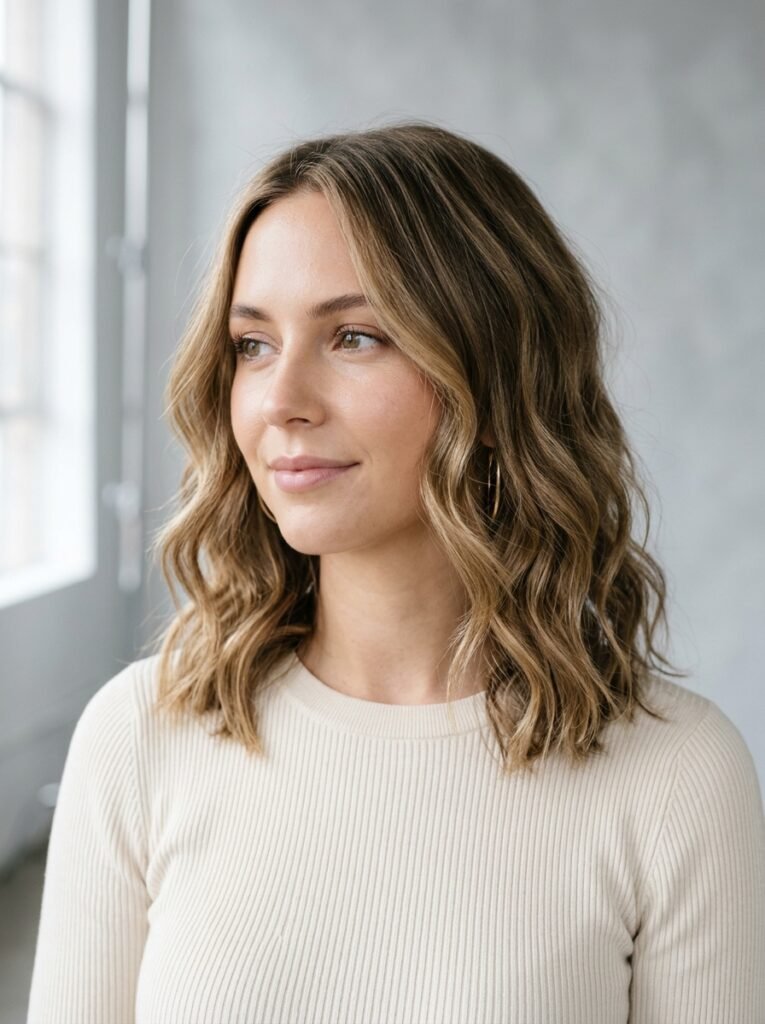
The lob, or long bob, sits between a traditional bob and shoulder-length hair. On its own, this length already suits fine hair well, since it keeps enough weight in the cut without letting gravity pull everything flat. Adding intentional texture pushes the result further.
Texture here doesn’t mean choppy or undone. It means styling with a soft wave or bend, using a large-barrel curling iron or a flat-iron technique built for gentle curves rather than tight curls. Hair that moves and overlaps slightly this way adds perceived volume and reads noticeably thicker overall.
Restraint matters most with the textured lob. One pass with a curling iron and a light texturizing spray usually finishes the look. Fine hair weighs down quickly under heavy products, so less styling product genuinely produces more volume.
A Pixie Cut Built for Volume at the Crown
Not everyone wants to go short, and that hesitation is entirely reasonable. For those open to it, though, a well-shaped pixie ranks among the most volume-enhancing cuts available for fine hair.
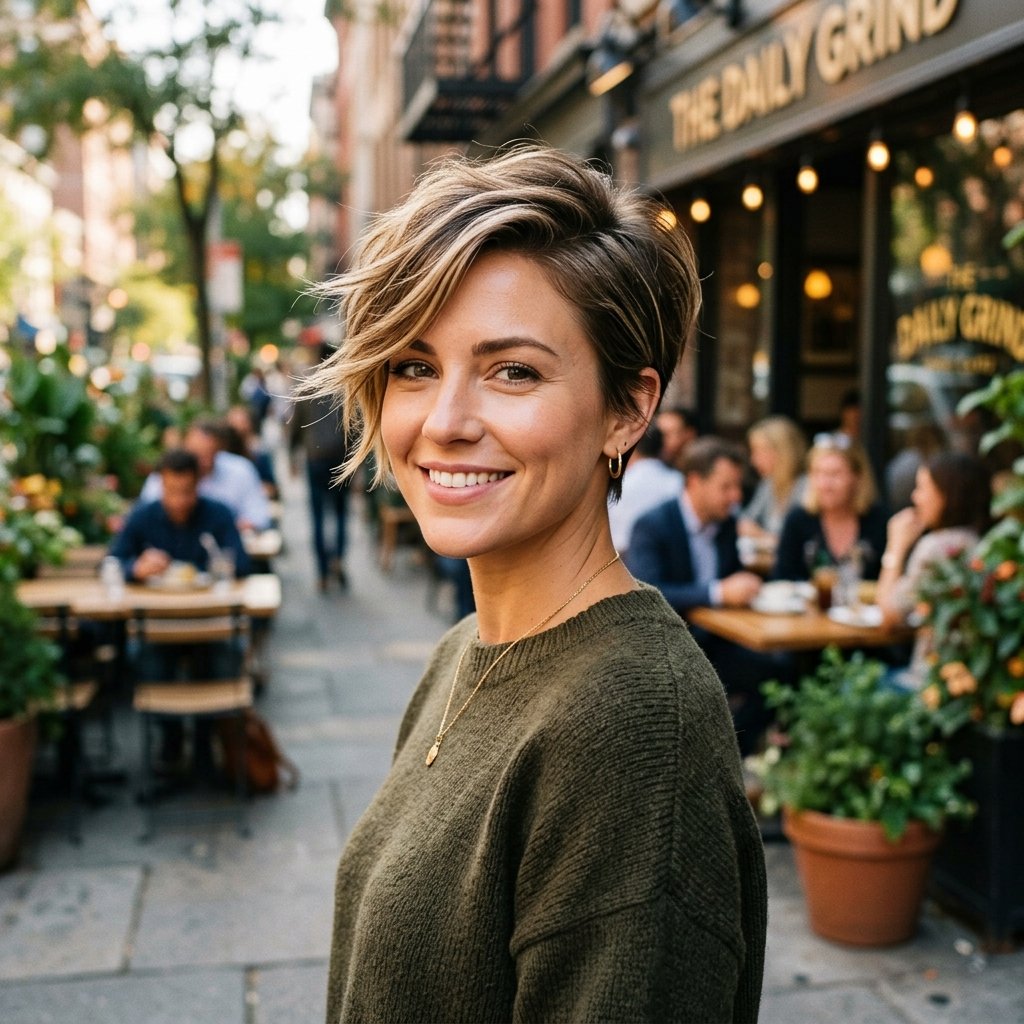
Shape decides the outcome. The cut should carry length and volume at the crown, with shorter, tighter sides framing it. That silhouette looks full and deliberate rather than sparse, because the longest hair sits exactly where the eye expects the most fullness.
Styling a pixie for maximum volume usually involves blow-drying with a round brush or diffuser while lifting at the roots, then finishing with a lightweight texturizing paste or powder at the crown. A little dry shampoo adds grit and grip that keeps fine hair lifted through the day.
The cut itself carries most of the responsibility here, not the styling routine. Choosing a stylist who understands how to build volume into the shape, rather than simply cutting everything shorter, makes the real difference.
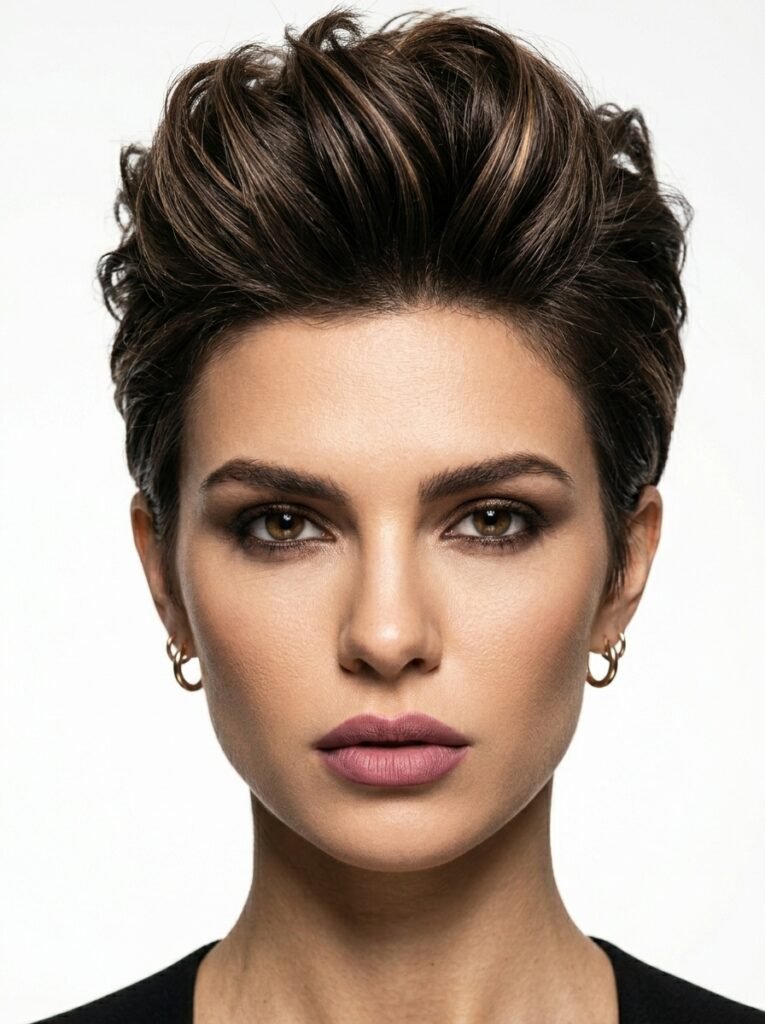
A Shag With Layering Concentrated at the Crown
The shag haircut has circulated since the 1970s and never fully disappears, largely because it genuinely suits a wide range of hair types when it’s cut correctly. Fine hair, though, needs a specific adjustment to the classic version.
Traditional shag cuts rely on heavy layers and significant texture running through the whole length. On fine hair, that much layering removes weight the style actually needs, leaving it looking limp instead of tousled. A modified shag works better: longer, softer layers concentrated around the crown and mid-section, with fewer layers reaching the ends.
This version typically pairs with some kind of fringe, either a full bang or a curtain-bang variation. Bangs genuinely help fine hair because they fill the front of the face immediately, giving the whole style a sense of fullness from the first glance. Anyone weighing how much layering their hair can actually handle before it loses body might find this breakdown of layered haircuts useful for narrowing down the request before a consultation.
Styling calls for a diffuser and a volumizing mousse applied to damp hair. Gentle scrunching, followed by diffusing until dry, produces the lived-in texture the shag is known for, without flattening the crown in the process.
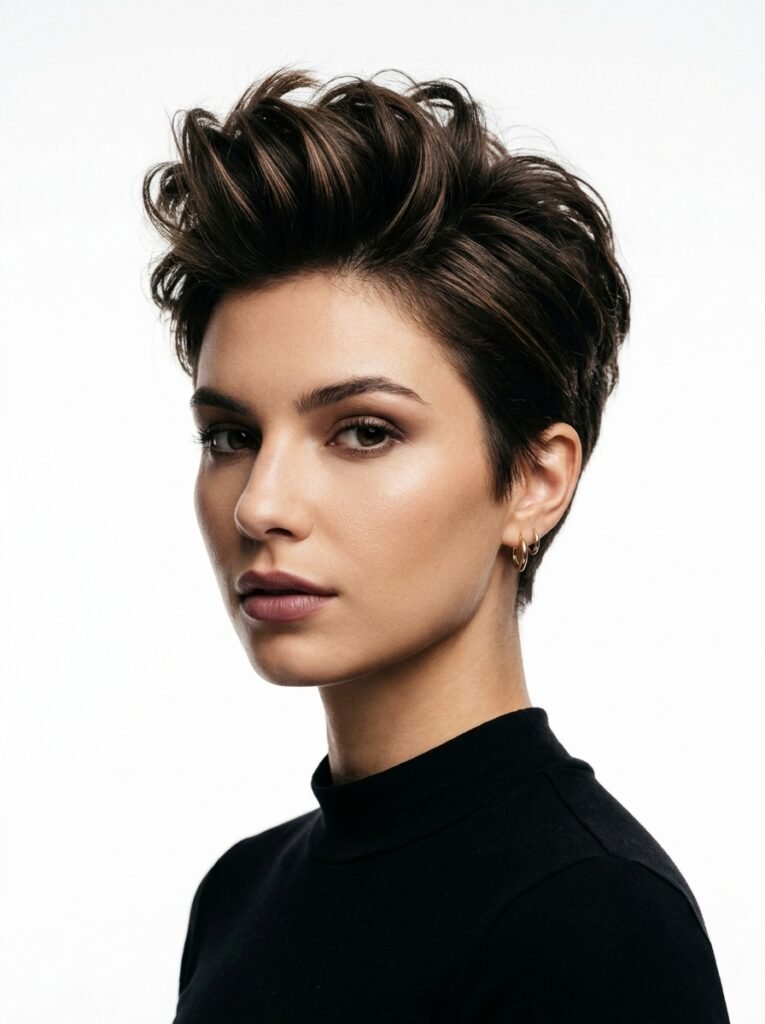
Soft Waves on a One-Length Cut
This pairing surprises people, but a single-length cut styled with soft waves can look stunning on fine hair and add a real sense of thickness that’s otherwise hard to reach.
The logic resembles the textured lob. Hair that moves, bends, and overlaps fills visual space. A one-length cut left straight looks exactly like what it is: fine hair lying flat against the head. Loose waves introduce dimension and movement, and with them, the impression of more hair overall.
Wave size decides how well this works. Big, loose S-curves outperform tight ringlets every time. A barrel between one and a half and two inches usually produces the right bend without coiling the hair too tightly. Running fingers through the curls afterward, then setting them with a light, flexible-hold spray, keeps the shape soft rather than stiff.
This style holds up best at medium lengths, roughly collarbone to shoulder. Longer lengths start to work against fine hair, since gravity becomes a bigger factor and the extra weight flattens the waves out again by midday.

The French Bob
The French bob has become one of the most requested cuts in recent memory, and fine-haired clients benefit from it as much as anyone. It typically sits at or just above the chin, with blunt ends and a fringe, usually a full or soft bang.
The combination of a blunt cut and shorter length explains why it works so well for thin hair. At chin length or above, fine hair simply doesn’t have enough length left to hang and go flat. Blunt ends create the same solid visual line found in a traditional bob, and the compact overall shape looks full rather than sparse.
Maintenance stays minimal once the cut is done correctly. A wash, a blow-dry with a round brush for a slight bend, and the look is complete. No elaborate styling routine is required.
For anyone hesitant about a dramatic change, the French bob offers a reasonable middle ground. It reads as less extreme than a pixie but shorter than a standard bob, and the transformation for thin hair tends to be substantial.

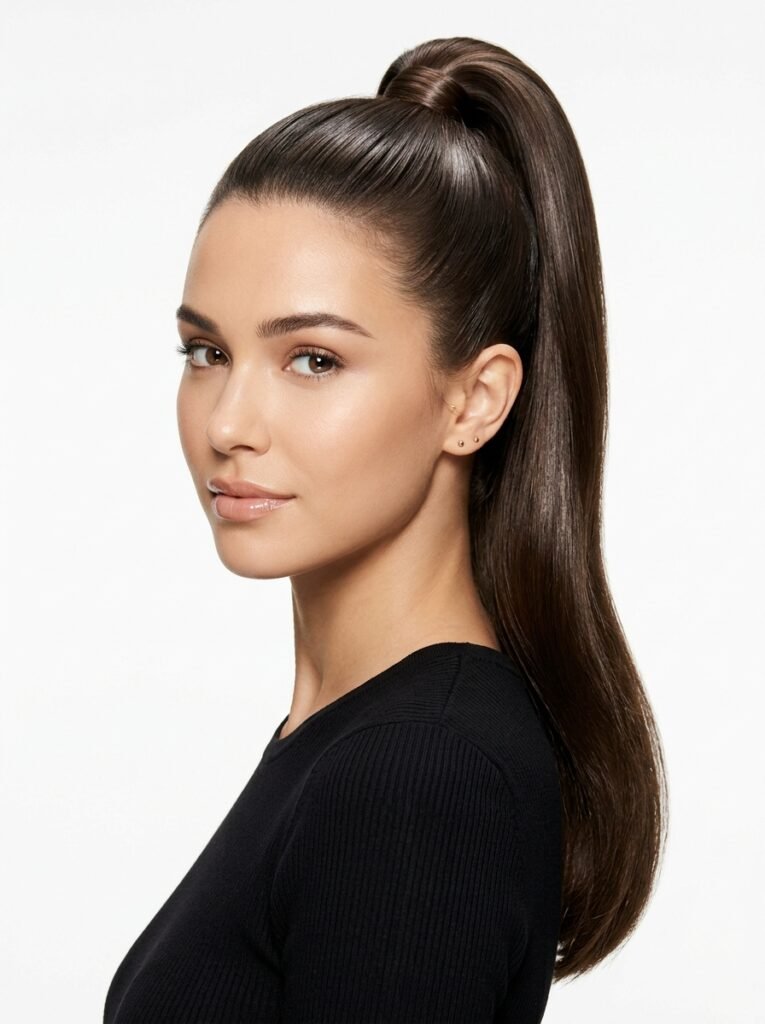
A Sleek High Ponytail With Root Volume
This one leans more toward styling than cutting, but it earns a spot on the list because it’s one of the most flattering, deceptively full-looking options available for thin hair.
Prep and technique carry most of the effect. A volumizing spray applied at the roots before blow-drying sets the foundation. Drying with the head flipped upside down for the first couple of minutes builds maximum lift at the roots. Flipping back upright and smoothing the outer layer with a round brush preserves that volume underneath.
Placement matters when gathering the ponytail. Positioning it slightly forward of the usual spot naturally lifts the crown and reads fuller. A light backcomb at the very base, right before securing with an elastic, adds another layer of lift. Wrapping a thin strand around the elastic hides it cleanly and finishes the look.
The finished ponytail looks substantial even when the actual volume of hair stays modest. High placement gathers everything at a point where it can fan out and move, and that movement is what reads as density.
Fast Styling Tricks for Days Without a Fresh Cut
Not every full-looking day starts at the salon. A handful of quick techniques add volume and body to fine or thin hair between appointments, using tools most people already own.
Blunt Bob Blow-Dry
Steps:
- A stylist cuts the hair straight across at chin or jaw length, since blunt ends create the illusion of density.
- Blow-drying with a round brush, pushing the ends slightly outward, sets the shape for the day.
Beachy Waves
Steps:
- Sectioning damp hair and curling with a one-inch wand, alternating direction each section, builds movement.
- Running fingers through the curls, rather than a brush, and misting with texturizing spray keeps the lift and grip intact.
Root Teasing at the Crown
Steps:
- Sectioning a small triangle of hair at the crown and backcombing gently at the roots builds a hidden cushion.
- Smoothing the top layer over it and setting with a light-hold hairspray keeps the lift in place all day.
High Ponytail With a Bump
Steps:
- Light teasing at the crown, followed by gathering all of the hair into a high pony, builds the base shape.
- Wrapping a small strand around the elastic hides it, and loosening the ponytail slightly afterward adds extra fullness.
Braided Crown (Halo Braid)
Steps:
- Sectioning the hair into two parts and dutch-braiding each side toward the back creates the base shape.
- Pinning the braids across the crown like a halo adds width and disguises thinner patches. For more braid patterns built specifically around fine strands, this guide to braided styles for thin hair covers the prep work that keeps braids from looking stringy.
Textured Pixie or Short Crop
Steps:
- Layers cut short with texturizing shears build volume directly into the shape.
- A pea-sized amount of texturizing paste, scrunched upward from the roots, finishes the look.
Half-Up Top Knot With Volume
Steps:
- Backcombing the top section slightly, then gathering the crown hair into a small high bun, sets the base.
- Leaving the rest down and curling it loosely balances the shape.
Side-Swept Bangs
Steps:
- Cutting bangs on a diagonal, longer at the outer edge, frames the face and draws attention away from thinner roots.
- Blow-drying with a round brush, sweeping the bangs to one side, adds extra lift near the face.
Habits That Make Thin Hair Look Even Thinner
Knowing what to avoid matters just as much as knowing what to do. A handful of common habits quietly work against fine hair without anyone realizing it.
- Excess length is a frequent culprit. Once fine hair grows very long, gravity dominates, pulling the strands flat against the head and erasing volume as the day wears on. Most stylists who specialize in fine hair recommend keeping length at or above the collarbone for the best results.
- Heavy products create a similar problem. Thick serums, oily conditioning treatments, and dense creams weigh fine strands down and leave them looking limp and slightly greasy. Lightweight mousses, volumizing sprays, and dry shampoos work far better for this hair type.
- Over-washing strips away the natural oils that give fine hair some grip and texture. Daily washing can leave strands too clean and slippery, which paradoxically makes styling and holding volume harder.
- Skipping the round brush on wash days leaves volume on the table. A round brush used during blow-drying lifts the root and builds bend that lasts for hours, making it one of the most effective tools available for fine hair.
What to Tell a Hairstylist
Walking into a salon with fine hair and no clear direction often results in a haircut that looks nearly identical to the one already on offer. Being specific about hair type and goals makes the biggest difference in the outcome.
Mentioning fine hair upfront, along with a goal of maximizing volume and perceived density, sets the right expectations. A direct request to skip the razor and heavy texturizing shears prevents the most common mistake, since both techniques strip bulk from the ends. Asking about blunt cuts or soft layering, rather than heavy layering throughout, keeps the consultation focused.
Reference photos communicate faster and more accurately than a verbal description ever can. An experienced stylist can look at a reference image and give an honest read on whether the style will actually work for a given hair type before any cutting begins.
Frequently Asked Questions
- Can thin hair actually look thick without extensions? Yes. The right haircut creates a visual illusion of density through blunt ends, strategic layering, and deliberate length placement. Styling methods such as blow-drying with a round brush, using volumizing products, and adding soft waves also play a significant role.
- What length works best for thin hair? Most stylists recommend keeping fine hair at collarbone length or shorter, since this prevents gravity from pulling it flat while still leaving plenty of styling options open. The blunt bob and French bob rank among the most effective choices.
- Does cutting hair shorter make it look thicker? Generally, yes. Shorter hair leaves less length for gravity to weigh down. A blunt cut at a shorter length concentrates the hair’s weight at the ends, creating a denser visual appearance, though the right cut at any length can improve how fine hair looks.
- Which products help add volume to thin hair? Lightweight volumizing mousse, root-lifting spray, or dry shampoo all add texture and grip without extra weight. Heavy oils, thick creams, and silicone-dense serums tend to work against fine hair.
- Is layering good or bad for thin hair? It depends on the type of layering. Heavy layering throughout the length removes bulk and can leave fine hair looking sparse. Soft, longer layers concentrated near the face and crown add movement without sacrificing density, so requesting lighter, more minimal layering usually produces the best result.
The Bottom Line
Thin hair is not a limitation so much as a set of tendencies worth understanding. A blunt bob, a well-shaped pixie, a textured lob, or even a soft-wave styling technique can transform how fine hair looks and feels, often within a single appointment.
The starting point is a stylist who understands fine hair and takes the diameter-versus-density distinction seriously. From there, the right length, the right products, and a cut chosen for shape and movement rather than sheer volume do the rest of the work.
Fine hair does not need to be thick to look full. It only needs the right cut behind it.

[…] Readers with fine or thinning strands may prefer lower-tension versions. A companion guide on hairstyles that make thin hair look thicker covers volume-building techniques for several looks […]
[…] or long flowing layers all transform a look by framing the face and supporting natural beauty. As strategic layering already helps thinning hair look fuller, bangs add another simple lever for building visual density at the hairline. These styles trend […]
[…] in reverse, using volume-building techniques rather than curl definition. A closer look at hairstyles that make thin hair look thicker covers additional volume tricks that pair well with a butterfly cut on finer […]
[…] Readers with fine strands looking for more grip-focused options can also browse this guide to hairstyles that make thin hair look thicker. […]
[…] can actually hold onto. Readers dealing with fine or thinning hair more broadly may also find these styling ideas for making thin hair look fuller useful alongside these curl […]
[…] shaping there. Anyone dealing with fine strands more broadly can also find useful techniques in this guide to hairstyles that make thin hair look thicker, many of which pair well with heart-shaped face […]