

Nail trends for 2026 split along a line most inspiration photos never mention: what the design actually requires to exist. Some are regular polish and a steady hand. Others need gel, a curing lamp, chrome powder, or a magnet, and cannot be reproduced in any other medium. Knowing which is which turns a saved image into something achievable rather than a disappointing afternoon.
These 20 cute nail ideas cover both ends of that range. Each entry names the technique behind the look, whether it can be done at home, and the specific point where home attempts usually fail. One note applies across the gel-based designs. Researchers at UC San Diego found that the UV lamps used to cure gel manicures caused cell death and cancer-causing mutations in human cells, and wrote that these devices may raise the risk of early-onset skin cancer. The team noted a long-term epidemiological study would be needed to confirm the link. Fingerless UV gloves or sunscreen on the hands before curing are the common precautions.

1. Milky Glazed Donut Nails
The glazed effect comes from chrome powder buffed into a cured gel layer and sealed on top. That makes it gel-only. No regular polish reproduces it.
Preparation decides the result. Chrome magnifies every ridge in the nail plate underneath, so a smoothing base coat stops being optional. Applied over a milky white rather than a bright one, the finish reads pearl instead of mirror, which is the softer version most people mean.

2. Pastel French Tips
This is one of the few designs on the list achievable in regular polish, and one of the hardest to do freehand.
The curve where the tip meets the base is called the smile line, and an uneven one is the flaw that shows first. Guide stickers give a clean edge without any brush skill. Checking the line in daylight before the top coat goes on takes seconds and catches most errors.

3. Strawberry Milk Nails
A translucent pink built in two or three sheer coats, this is the most beginner-friendly design here.
Thin coats are the whole technique. One thick coat pools at the cuticle and stays soft underneath for days, which is exactly how a dent appears overnight. The sheerness also forgives uneven application in a way opaque shades never do.

4. Chrome Aura Nails
The glowing centre is created with an airbrush or a sponge, then sealed under chrome. Both steps need gel.
Sponging is the home-achievable method, and blending is where it goes wrong. A hard edge between the centre and the surround reads as a blob rather than a glow. Building the colour across several light passes rather than one heavy one produces the fade.

5. Tiny Heart Accent Nails
Hand-painted hearts need a fine liner brush and a slow hand. Decals achieve the same look in a fraction of the time.
Placement carries more weight than execution. One or two hearts near the cuticle read as deliberate; the same hearts scattered across every nail read as busy. Sealing the edges of a decal under top coat stops it lifting within days.

6. Jelly Glass Nails
Jelly relies on translucent gel built in layers, so the colour deepens with each coat while staying see-through.
Regular polish cannot hold this. It either covers or streaks. Charms, glitter flakes, and dried flowers can be suspended between the layers, which is where the technique gets interesting. Removal takes longer than standard gel, since the layer count is higher.

7. Minimal Gold Line Nails
Thin metallic lines over a neutral base take minutes rather than an hour, which makes this among the cheapest salon add-ons.
A striping brush draws them, and a steady hand matters more than any artistic sense. Because the design is sparse, it tolerates regrowth better than full-coverage patterns. A few millimetres of growth does not break the composition.

8. Soft Lavender Nails
A single-colour pastel, achievable in any medium, and the simplest design on this list to maintain.
Pastels show tip wear sooner than nudes, because the contrast against the nail bed is higher and chips have nowhere to hide. A matte top coat mutes the shade a level, so anyone choosing lavender under gloss should expect it to read deeper once flattened.

9. Micro French Nails
The micro French reduces the tip to a line barely a millimetre deep, which has largely replaced the thick 1990s band.
Precision at that scale is genuinely difficult freehand, and this is one worth paying for. It suits short nails particularly well, since the thin line does not shorten the visual length. Approaches to making short nails look longer are covered in this guide to lengthening designs.

10. Pearl Embellished Nails
Flat-back pearls sit on top of the nail, which means they catch on fabric and hair.
Half-pearls hold better than full spheres. Setting them into gel before curing keeps them attached far longer than gluing onto a finished surface. Placing them near the cuticle rather than the tip keeps them clear of the knocks that dislodge them.

11. Chrome Mirror Nails
Full mirror chrome is the most demanding version of the powder technique, because a true reflection shows every imperfection beneath it.
The base has to be perfectly level before the powder goes on. Any ridge, bubble, or uneven cure translates into a visible distortion. This is the design most likely to disappoint at home, and the one where a technician earns the difference.

12. Butterfly Accent Nails
Butterflies come as decals or hand-painted work, and the difference in cost is substantial.
Decals repeat across fingers unless the technician varies placement deliberately, which is worth asking for. Keeping them to one or two accent nails prevents the design tipping into novelty. Translucent wings layered under a top coat produce the floating effect.

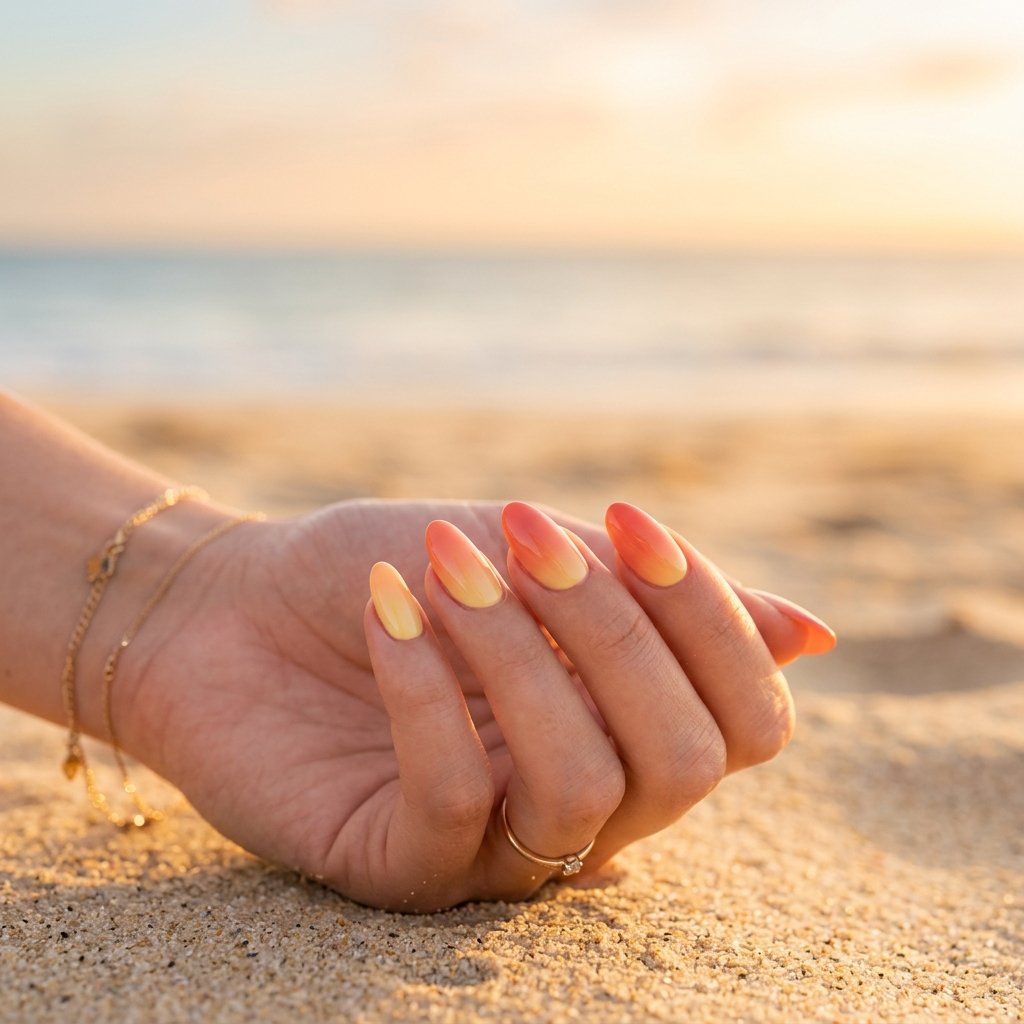
13. Soft Ombre Pink Nails
A gradient built with a make-up sponge, dabbed on and blended before curing or drying.
Because the two pinks sit close together, blending errors show far less than they would across a high-contrast fade. That makes this the sensible first attempt for anyone practising the technique. Three light passes beat one heavy one.

14. Glitter Cuticle Nails
Reversing the usual gradient, this places the glitter at the base and fades it toward the tip.
The placement has a practical benefit worth knowing: glitter at the cuticle disguises regrowth as the nail moves outward, so the design holds its look considerably longer than a tip-heavy one. Removal is slower, since glitter resists acetone.

15. Daisy Flower Nails
Five dots around a centre dot produce a daisy. That is the entire technique, and it needs a dotting tool rather than a brush.
Dotting tools cost very little and remove almost all the skill from floral nail art. A bobby pin head works as a substitute. Letting each layer dry before adding the yellow centre stops the colours bleeding into one another.

16. Baby Blue Nails
Another single-colour pastel, and one that reveals application flaws more than most.
Light blues tend to streak on the first coat, since the pigment load is low. Two thin coats fix it where one thick coat makes it worse. The shade also shifts noticeably under warm indoor lighting, appearing greyer than it does in daylight.

17. Marble Stone Nails
Veining is drawn into a wet base with a fine brush, then blurred before it sets.
Timing is everything. Drawn too early the lines spread and muddy; too late and they sit as hard strokes rather than veins. Every nail comes out different, which is the intended outcome and also why the design forgives a shaky hand.

18. Velvet Magnetic Nails
Magnetic polish contains fine metallic particles that align when a magnet passes over the wet surface, producing a shifting band of light.
The magnet is usually sold with the polish, and holding it closer produces a sharper band. Deep shades show the effect best because the contrast is higher. This is genuinely achievable at home, provided the polish is gel and gets cured immediately after the magnet passes. Anyone setting up to do gel work themselves will find the full process in this guide to at-home gel nails.

19. Rainbow Minimal Nails
One colour accent per nail, kept small, so the rainbow only appears when the hands are seen together.
The restraint is what makes it work. Full rainbow coverage reads as novelty; a single line or dot per finger reads as considered. It also uses up the ends of existing polish bottles, which makes it one of the cheapest designs here.

20. Nude Gloss Nails
The simplest design on the list, and the one where shade selection does all the work.
Matching the undertone matters more than the shade name. Beige suits warm skin, blush suits cool, and peach sits between. The top coat carries the finish, since the colour itself contributes almost nothing. Two thin coats, always.

Conclusion
The 2026 nail trends divide cleanly by what they require rather than by how they look. Chrome, jelly, aura, and magnetic designs are gel-only and cannot be reproduced in regular polish at any skill level. Pastels, nudes, ombre, dots, and fine line work are all achievable at home with a few inexpensive tools — a dotting tool, a striping brush, a make-up sponge, and guide stickers cover almost everything on this list.
Three points recur across the twenty. Thin coats beat thick ones in every medium, because thick polish stays soft underneath and dents. Placement beats quantity for any decorative element, since restraint is what separates deliberate from busy. And designs that concentrate interest near the cuticle rather than the tip hold their appearance far longer as the nail grows.
Anyone booking rather than doing it themselves gets the most value from the designs where technique genuinely shows: mirror chrome, micro French, and hand-painted detail. The rest are worth a practice run at home first.



Leave a Reply