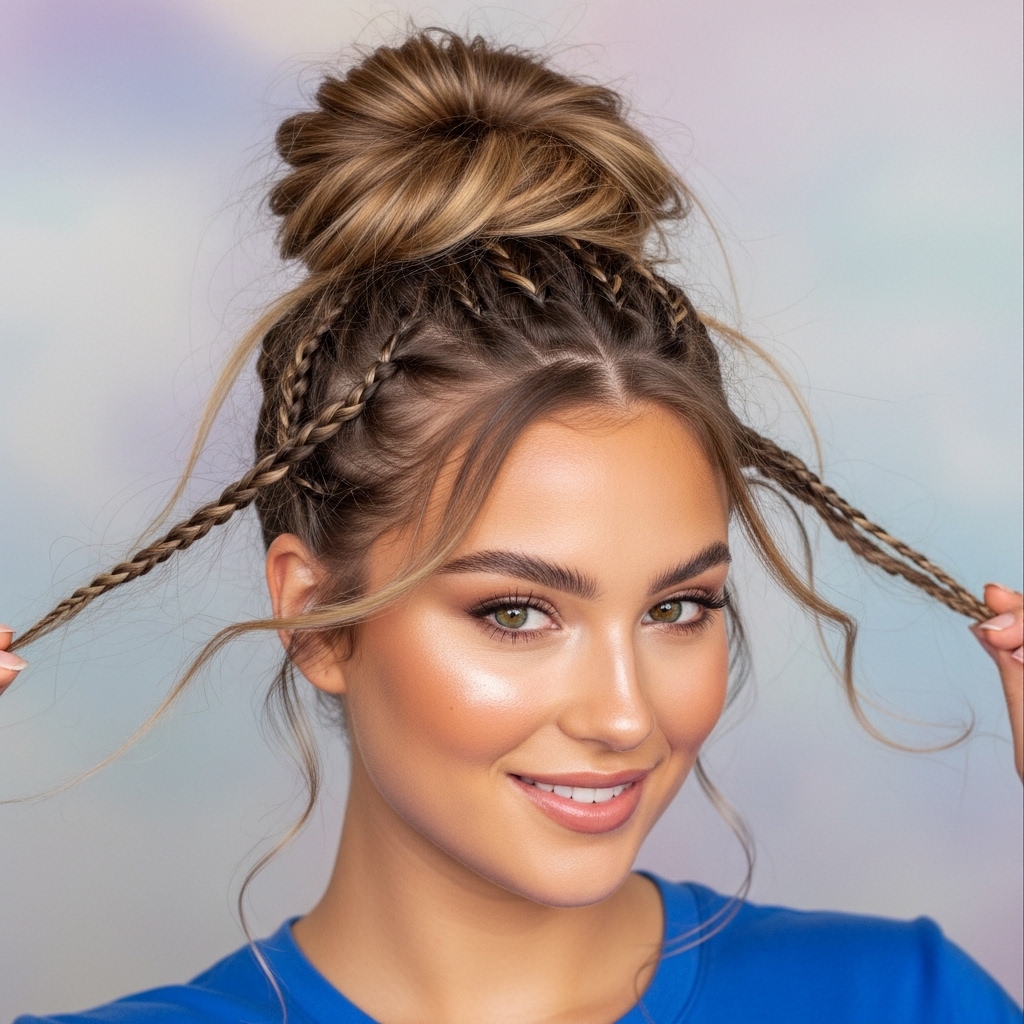
Short-form video judges a hairstyle differently from a mirror. The frame is vertical, so width gets cropped. The camera sits about a foot from the face, which changes proportions before any styling decision is made. Rutgers researchers, publishing in JAMA Facial Plastic Surgery, put a figure on it. A selfie at roughly 12 inches makes the nasal base appear about 30 percent wider than the same face shot at five feet. Whatever sits nearest the lens grows. That single fact explains why face-framing styles behave so unpredictably on camera and so reliably in person. This guide covers 29 viral TikTok hairstyles and how each reads in a vertical frame. Which get cropped, which need movement, and which collapse under a ring light.
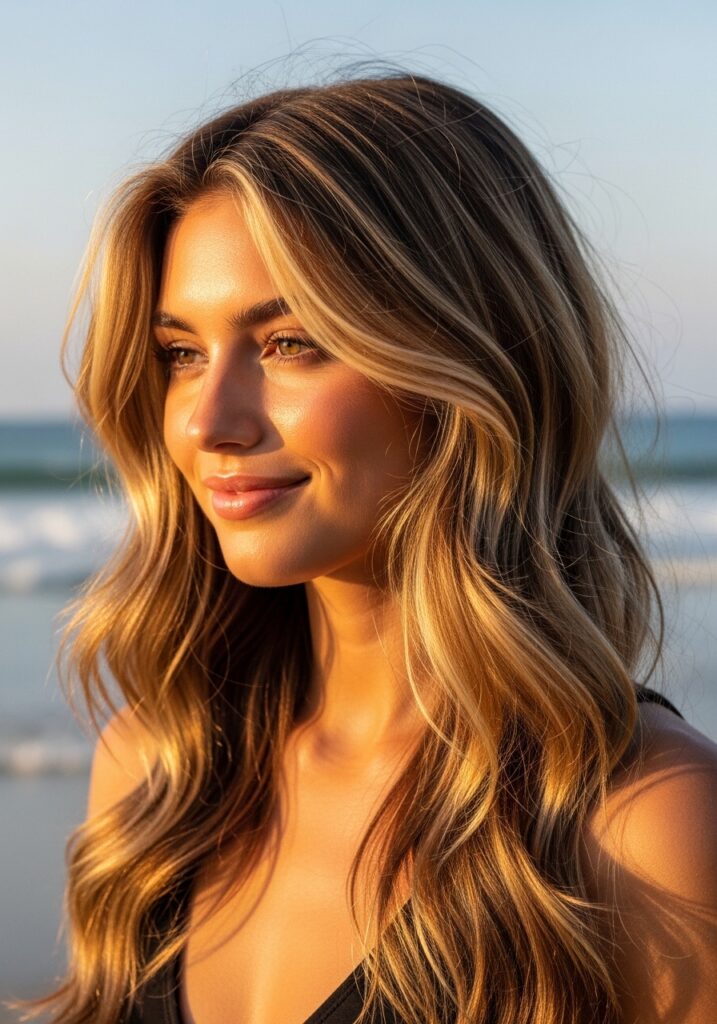
1. Soft Beachy Waves
Beachy waves suit video better than photography, because the medium rewards movement and a still frame cannot show it.
A head turn separates the waves and reveals the texture. The same style photographed straight-on looks flat by comparison. Alternating the curl direction between sections stops the head reading as one uniform bend. That uniformity is what makes waves look set rather than natural.
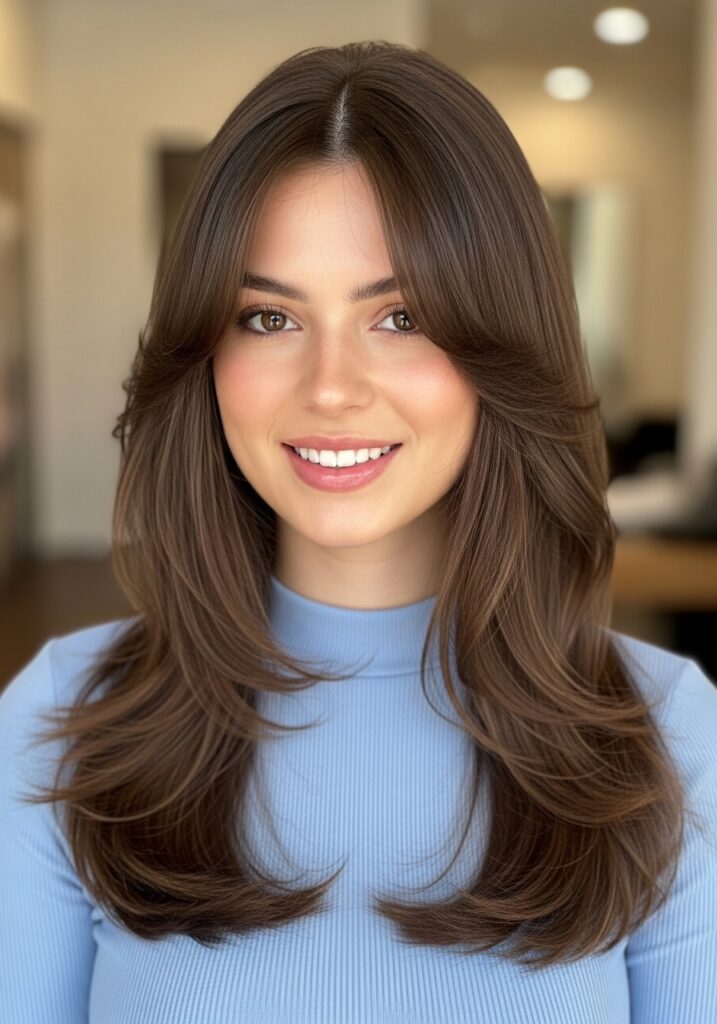
2. Curtain Bangs with Loose Layers
Curtain bangs sit closest to the lens of anything on this list, which makes them the most affected by camera distance.
At arm’s length they read wider and heavier than they do in a mirror. Holding the phone further back and cropping in afterwards fixes most of that. Sweeping them outward also keeps them clear of the face at close range.
3. Bubble Braids
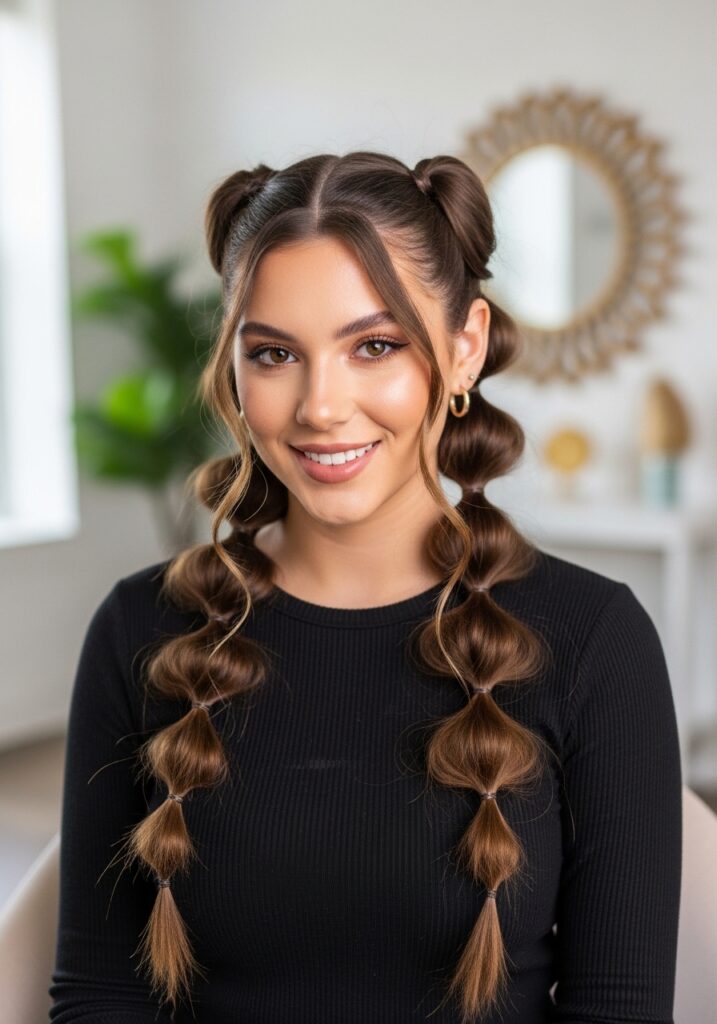
Bubble braids photograph well because the segments read clearly even at small sizes on a phone screen.
Even spacing is what makes them work, and uneven gaps cannot be corrected afterwards. Roughly a hand’s width between elastics keeps it consistent without measuring. The technique detail behind each everyday style covers the pulling method that shapes each segment.
4. Twisted Half-Up Hair
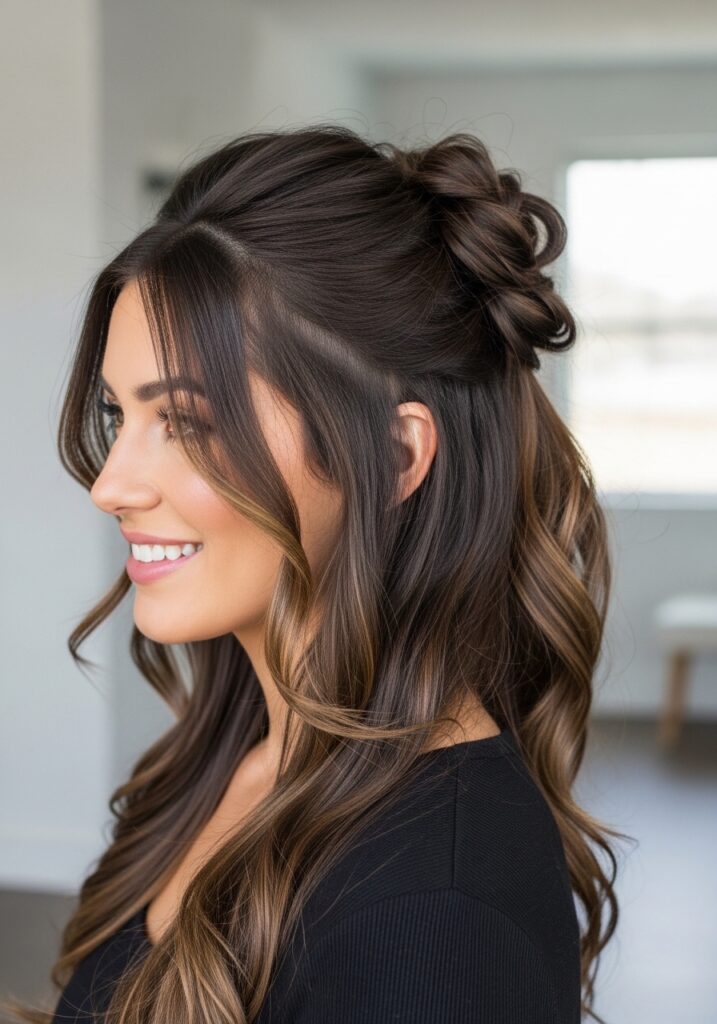
The twist sits at the back of the head, which means it is invisible in a front-facing frame.
Anyone filming this style needs a rear angle or a turn to show it at all. From the front only the pulled-back sides register. It suits a style with a reveal built in, rather than a straight talking-to-camera shot.
5. Sleek Low Bun
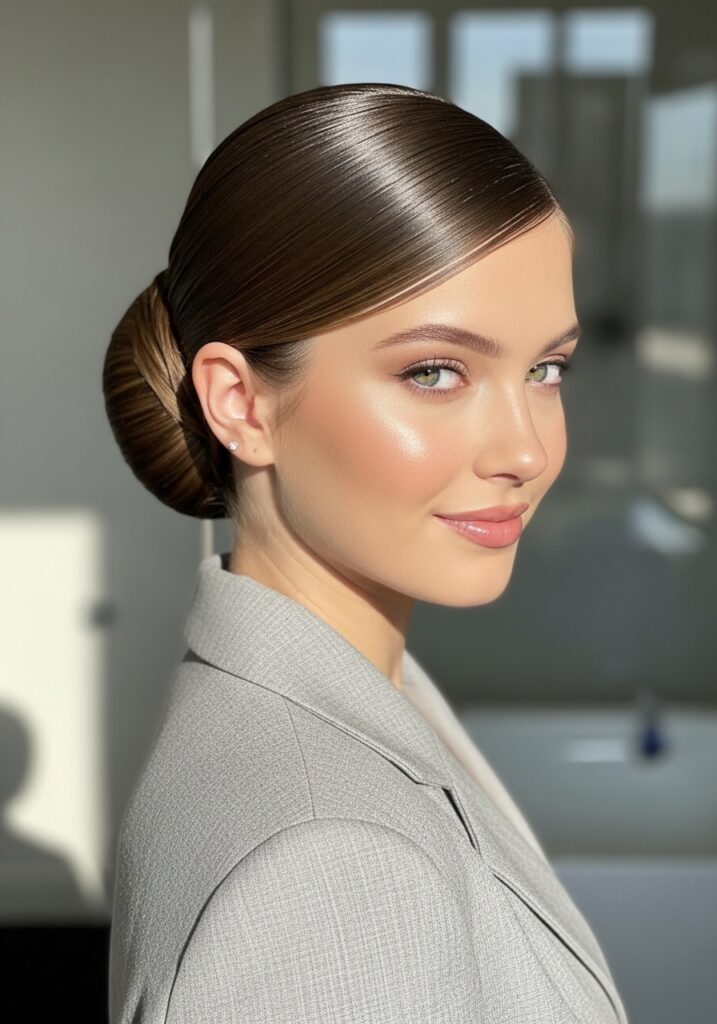
A sleek bun exposes the face completely, which at close camera range is the least forgiving arrangement available.
It also reads clean at any resolution, since there is no fine texture to lose in compression. Serum applied sparingly matters here. Under a ring light, excess product reads as grease rather than shine. A pea-sized amount is the working limit.
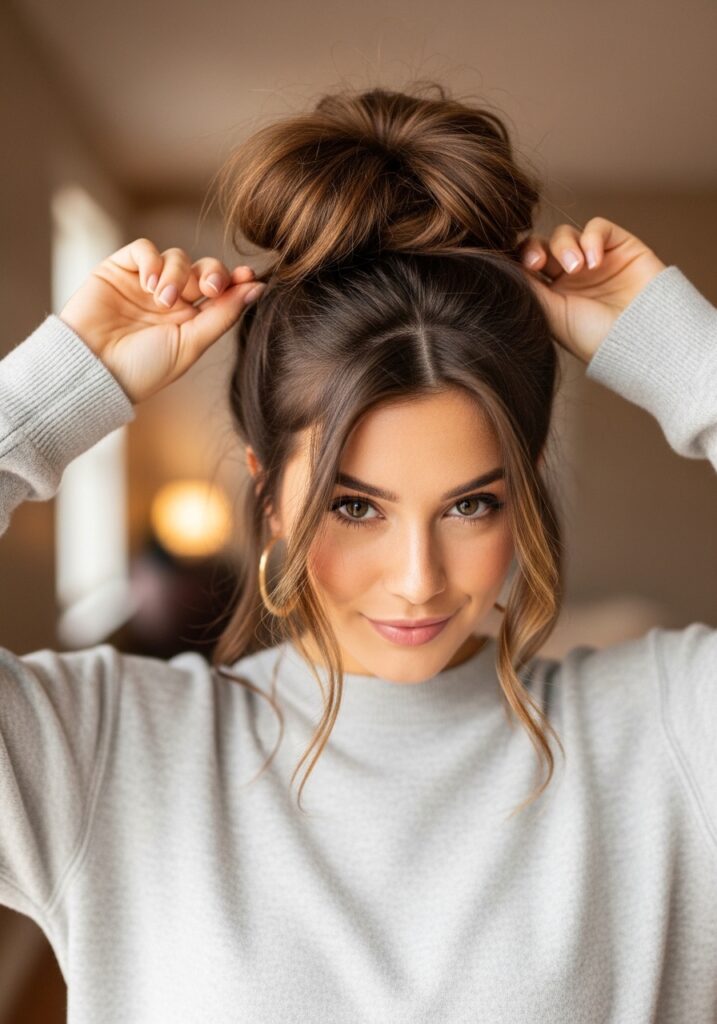
6. Messy Top Knot
The top knot sits high enough that a vertical frame can crop it entirely, depending on how the shot is composed.
Leaving headroom above the crown solves it. Height is the whole point of the style. A frame cut at the hairline removes the silhouette. Loose strands at the temples soften the face at close range. A fully pulled-back look reads severe there.
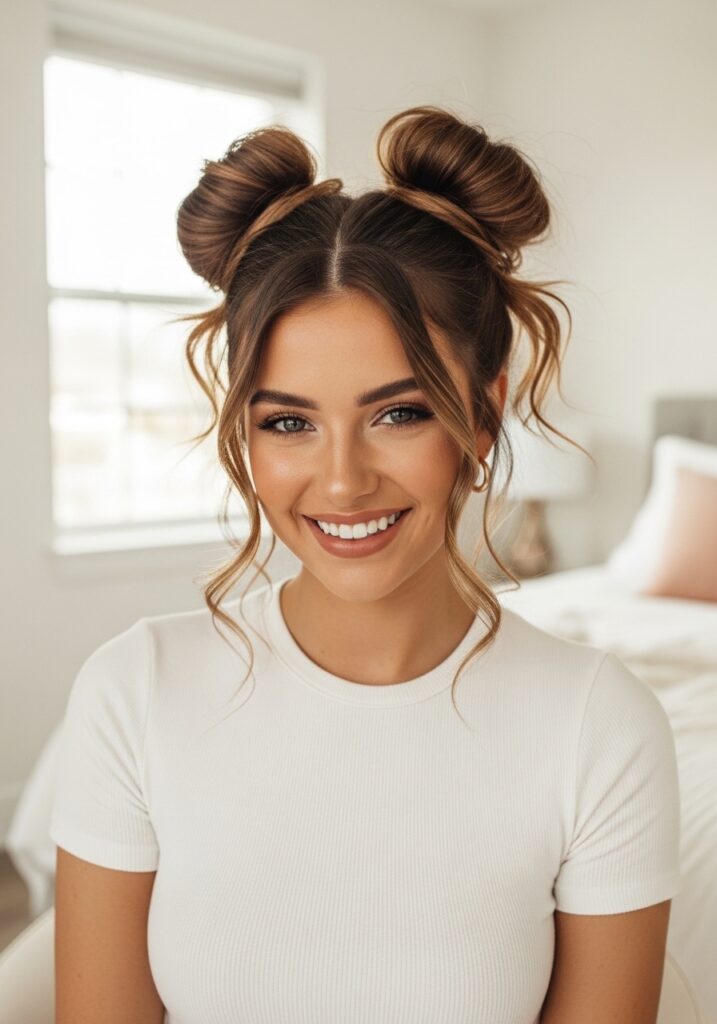
7. Mini Space Buns
Space buns are the widest style on this list, and width is exactly what a 9:16 frame removes.
At arm’s length both buns can sit outside the crop. Filming further back keeps them in shot, as does turning slightly so one bun leads. Placing them level with the top of the ears also keeps them inside the frame.
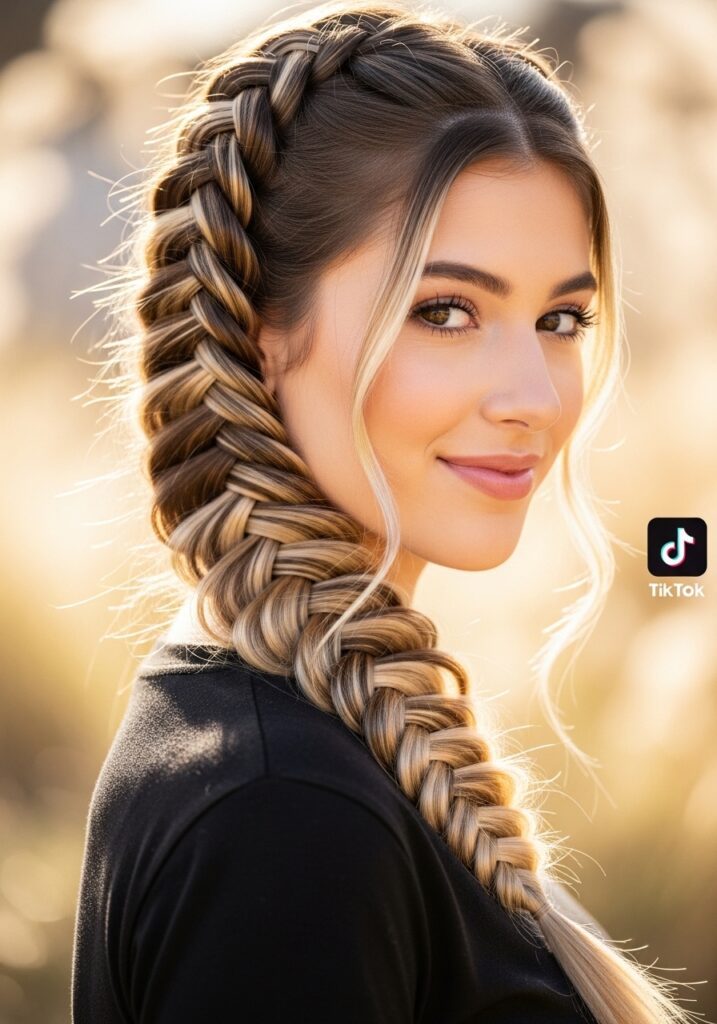
8. Fishtail Braid
The fishtail’s appeal is a fine woven pattern, and fine patterns are the first thing video compression destroys.
Thin pieces produce the detail; thick ones produce a rope twist that reads as neither. Worn forward over one shoulder, the braid sits closer to the lens and the pattern survives. Draped down the back it disappears entirely.
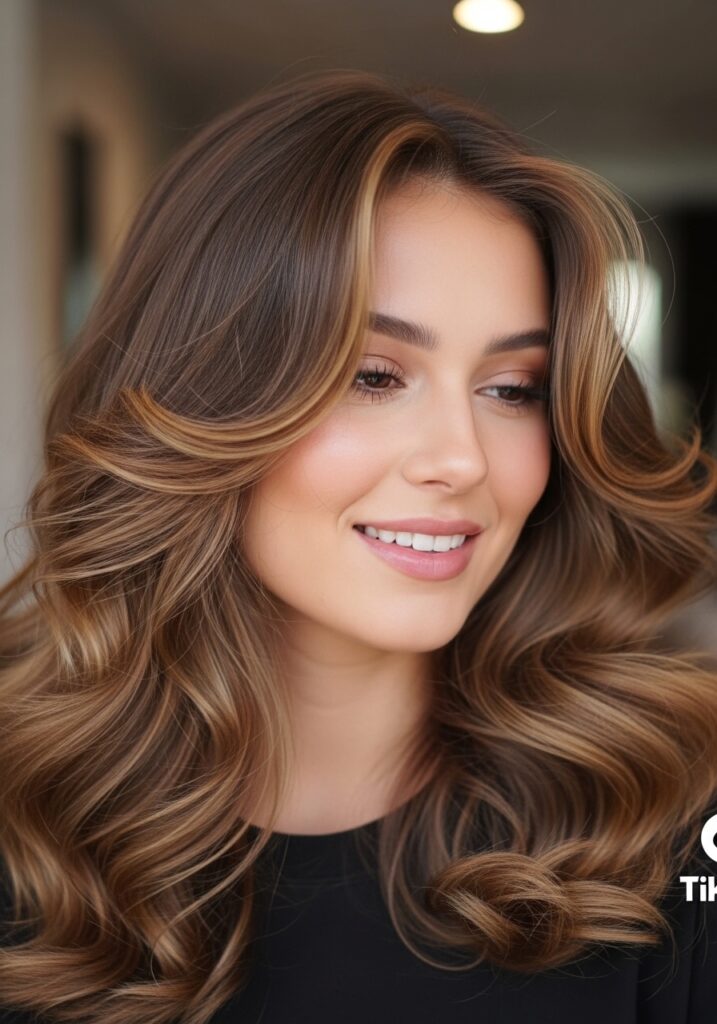
9. Voluminous Blowout
Volume sets as hair cools rather than while it is hot, which is the step that separates a blowout from a dry.
Holding each section on the brush for a few seconds after the dryer moves away locks the lift in. Releasing warm undoes it. Lift matters more on camera than usual. A vertical frame emphasises height, and a flat crown reads immediately.
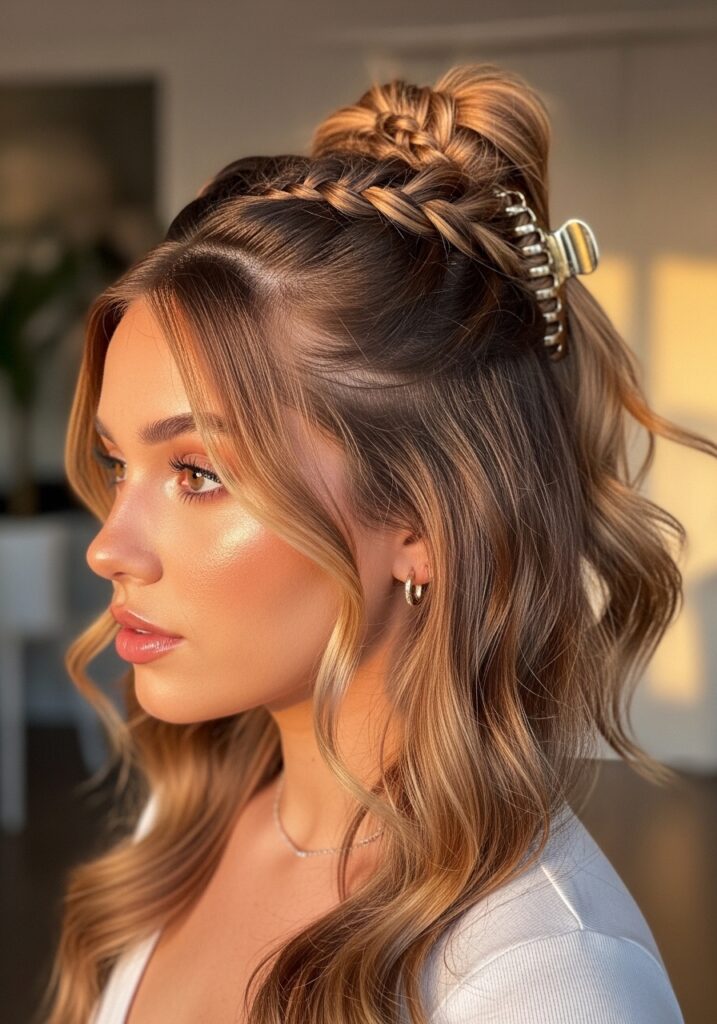
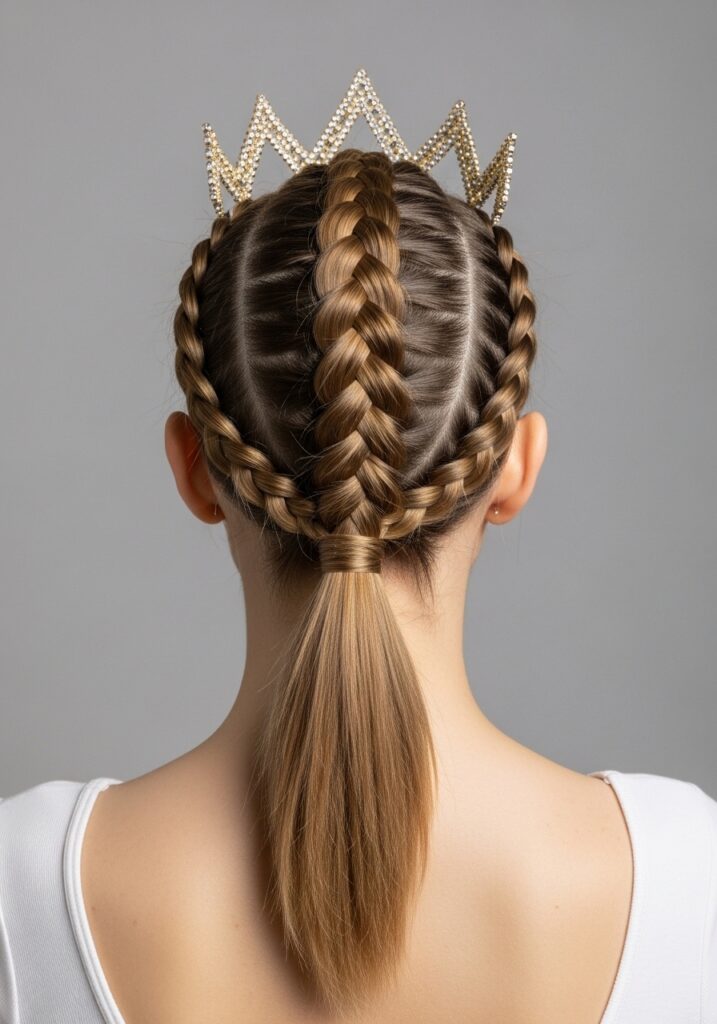
10. Half-Up Braided Crown
A crown braid wraps the head, so part of it always faces away from the camera.
The front-facing section is what needs to look right. Pinning at five or six points stops it drifting across takes. That drift is where most crown braids fail during filming. Thinning each braid before wrapping stops it sitting bulky.
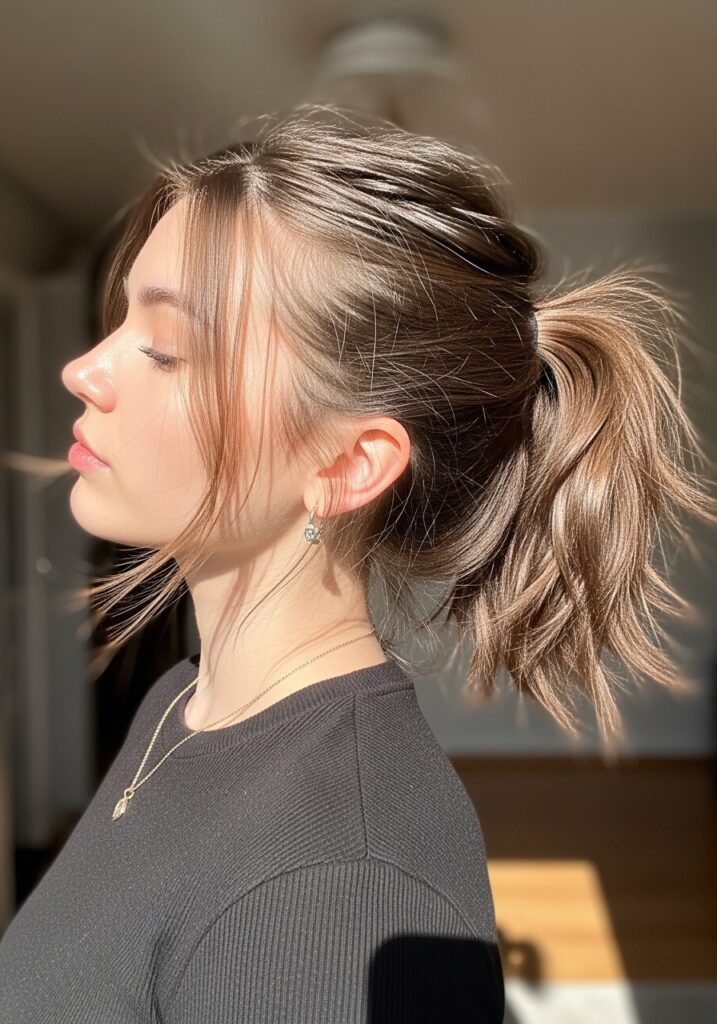
11. Low Messy Ponytail
The low ponytail sits behind the shoulders, so from the front it reads almost the same as hair worn down.
Crown volume is what distinguishes it on camera. Three or four gentle tugs at the top after tying create height; more than that collapses it. Face-framing pieces left loose soften the line where the hair pulls back.
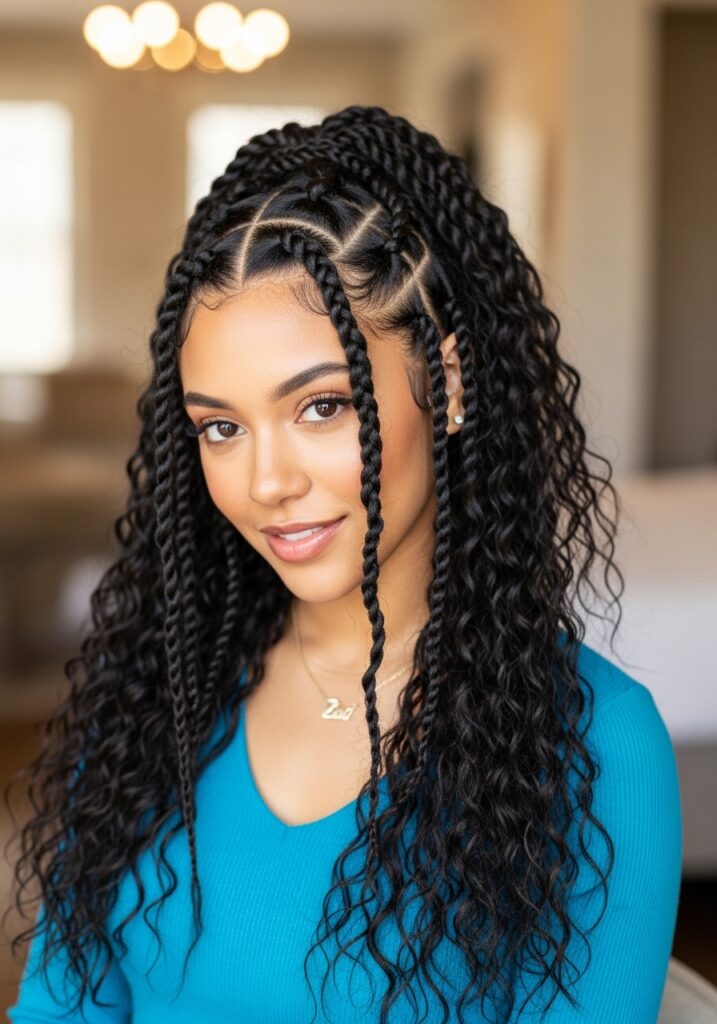
12. Two-Strand Twist Half-Up
Two twists running back from the temples stay visible in a front-facing frame, unlike most half-up variations.
That makes them a practical choice for talking-to-camera formats. Securing each twist with a small clear elastic before joining them stops slipping across takes. Twisting away from the face keeps both sections lying flat.
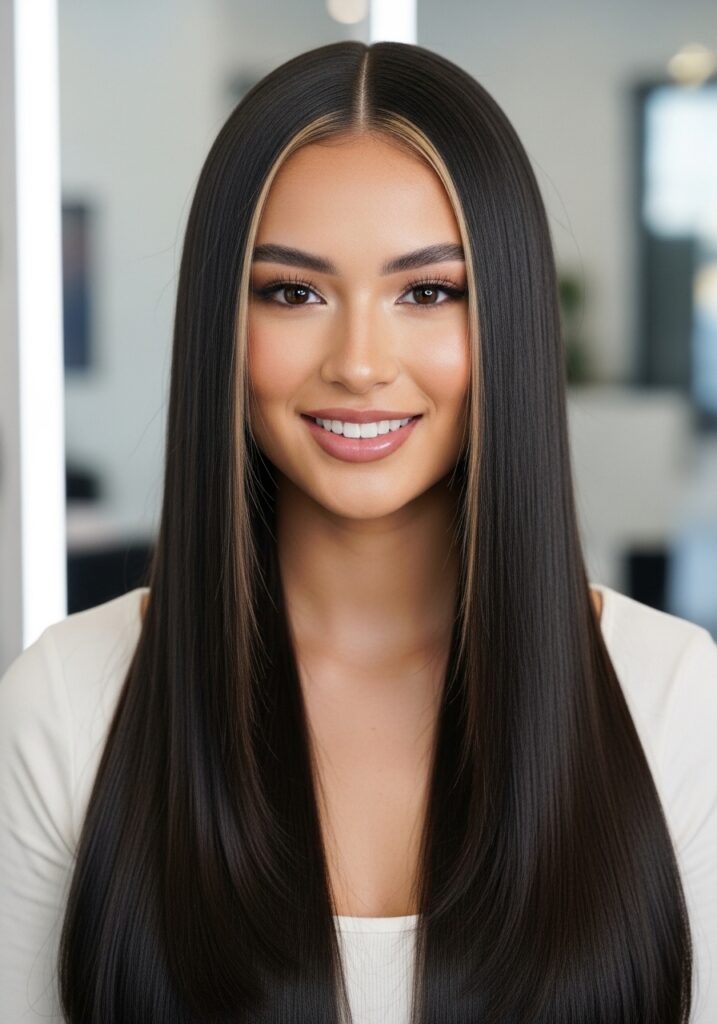
13. Sleek Middle Part
A centre part draws the eye straight down the middle of the frame, which is where a vertical crop is strongest.
Precision matters more here than in any other style. A comb tail run back from the bridge of the nose finds the midpoint. Drift of a few millimetres shows once the footage plays back. Front cameras mirror by default, which hides it while filming.
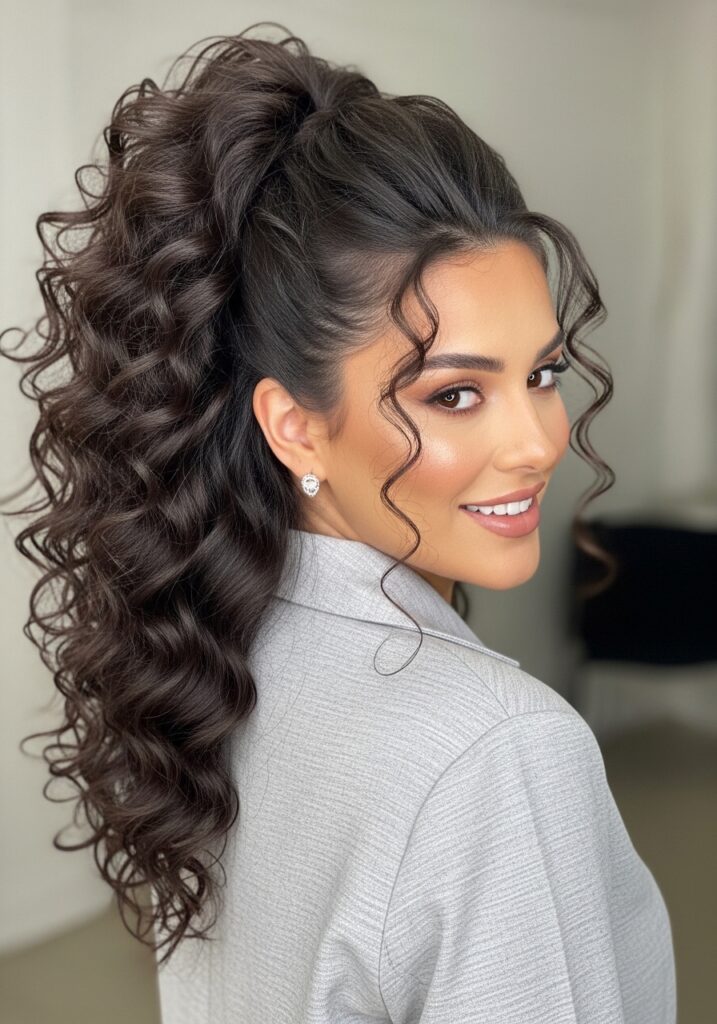
14. Voluminous Curly Ponytail
Curls flatten at the point where the band grips, and that flattening shows clearly on camera.
A soft fabric tie compresses far less than a standard elastic. Fluffing from underneath rather than the top restores volume without disturbing the surface. It is the quickest fix between takes.
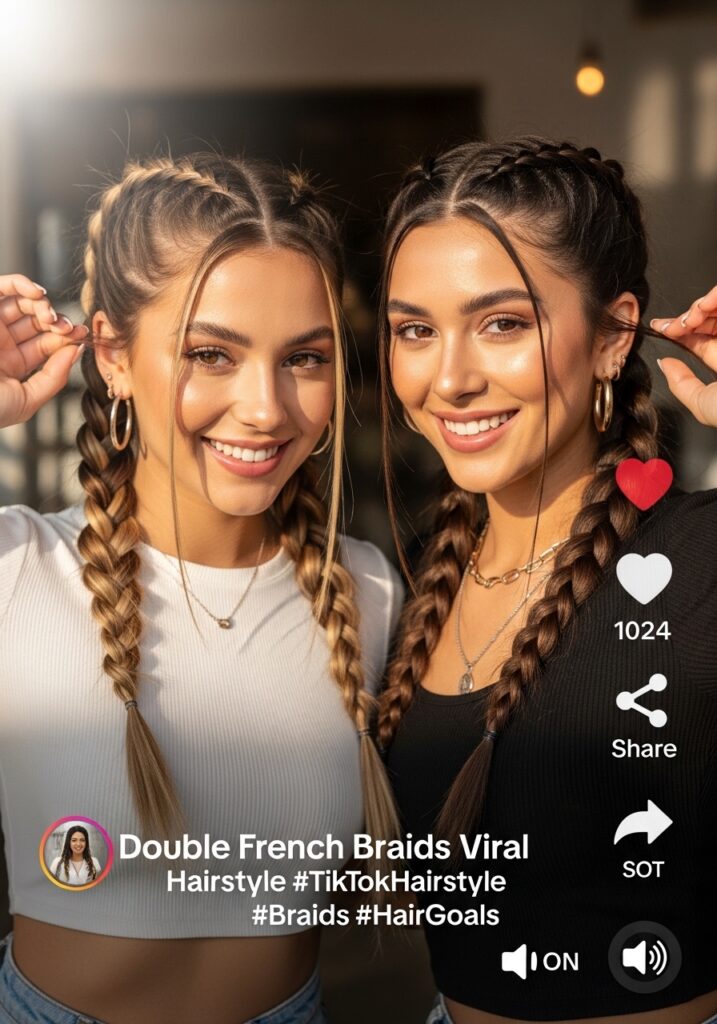
15. Double French Braids
Double braids sit flat against the head, so they survive movement better than almost anything here.
That durability matters across long filming sessions or active content. A clean centre part running to the nape is what makes the pair look right. Equal pickups each pass keep both braids even. Unevenness reads immediately on screen.
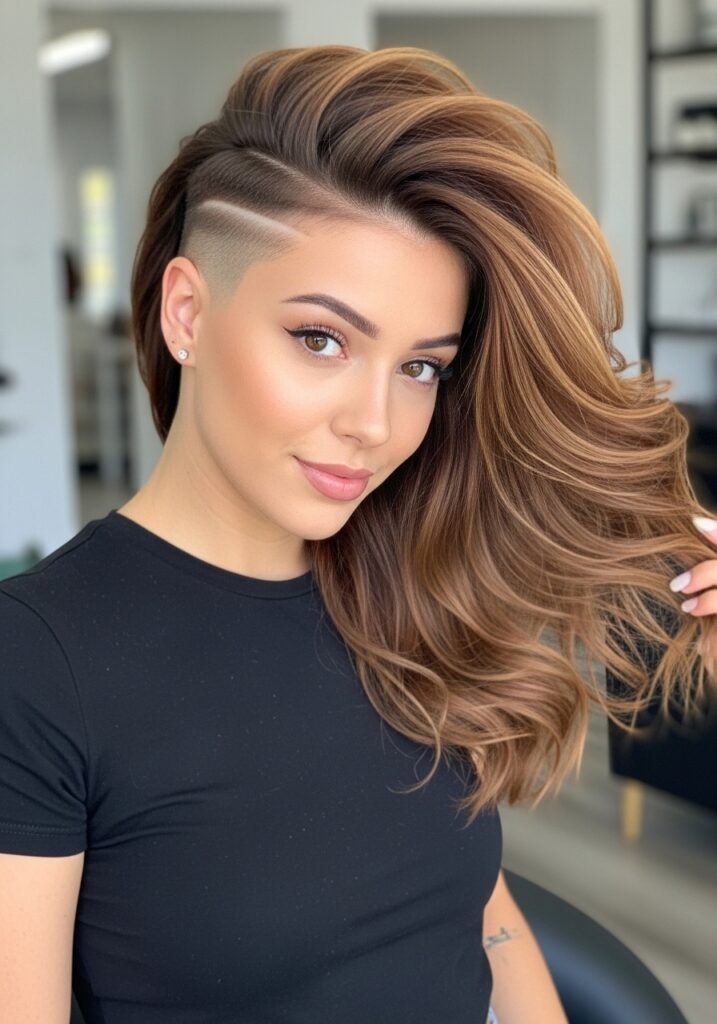
16. Faded Undercut with Long Top
The contrast between cropped sides and a long top is a silhouette effect, and silhouettes survive small screens well.
Upkeep is the trade-off. A fade needs clipper work every three to four weeks to stay sharp, the shortest interval of any cut on this list. Growing one out is slow. The shortest section has the furthest to travel before it blends.
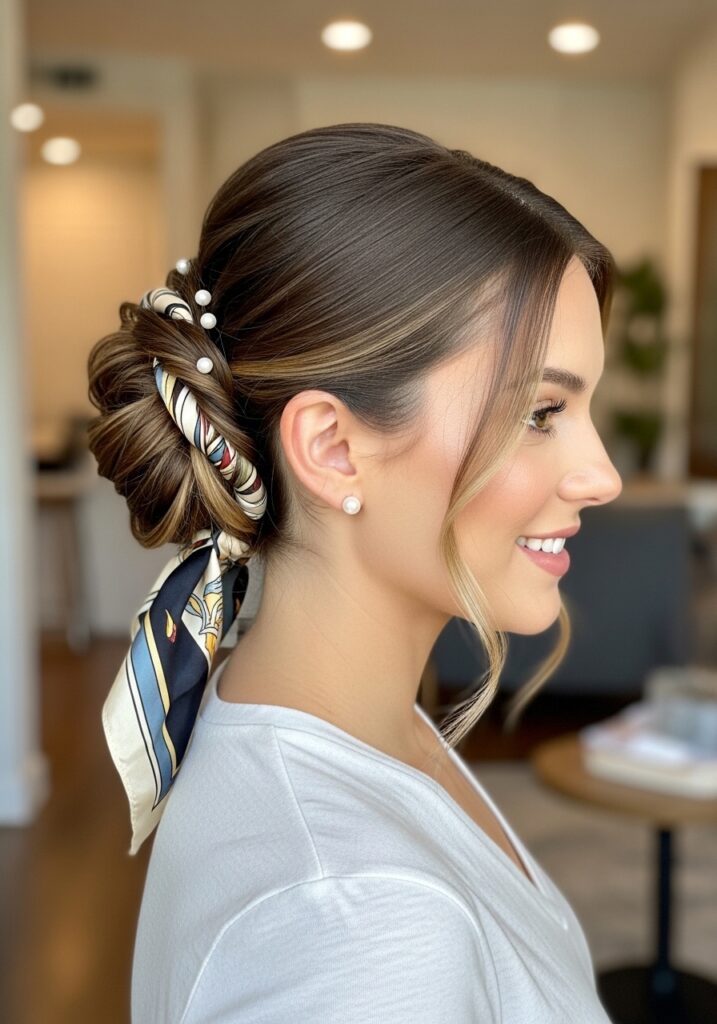
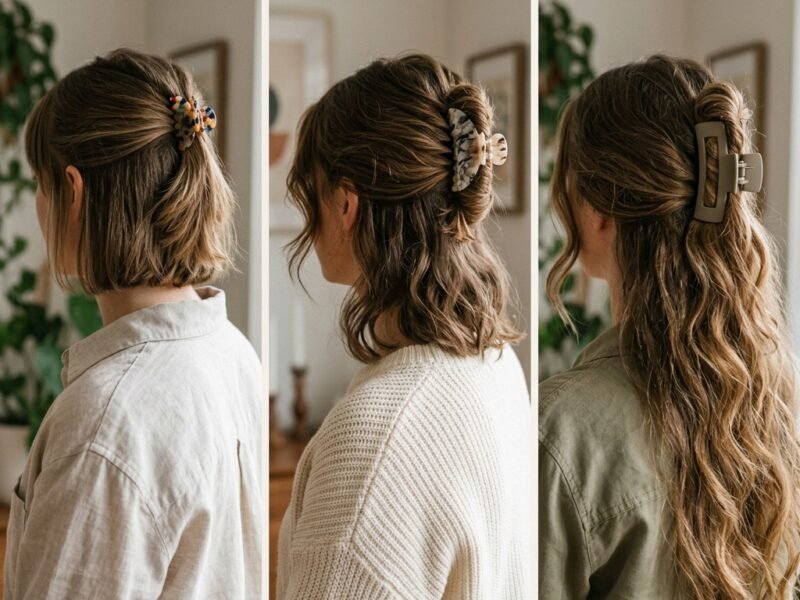
17. Twisted Low Bun with Accessories
Accessories are what make this style register on camera, since the bun itself sits behind the head.
Pearl pins and small clips catch light and give the frame something to hold. Pins pushed in against the fall of the hair grip properly. Pushed in with it, they work loose over a session. An odd number placed asymmetrically reads as deliberate.
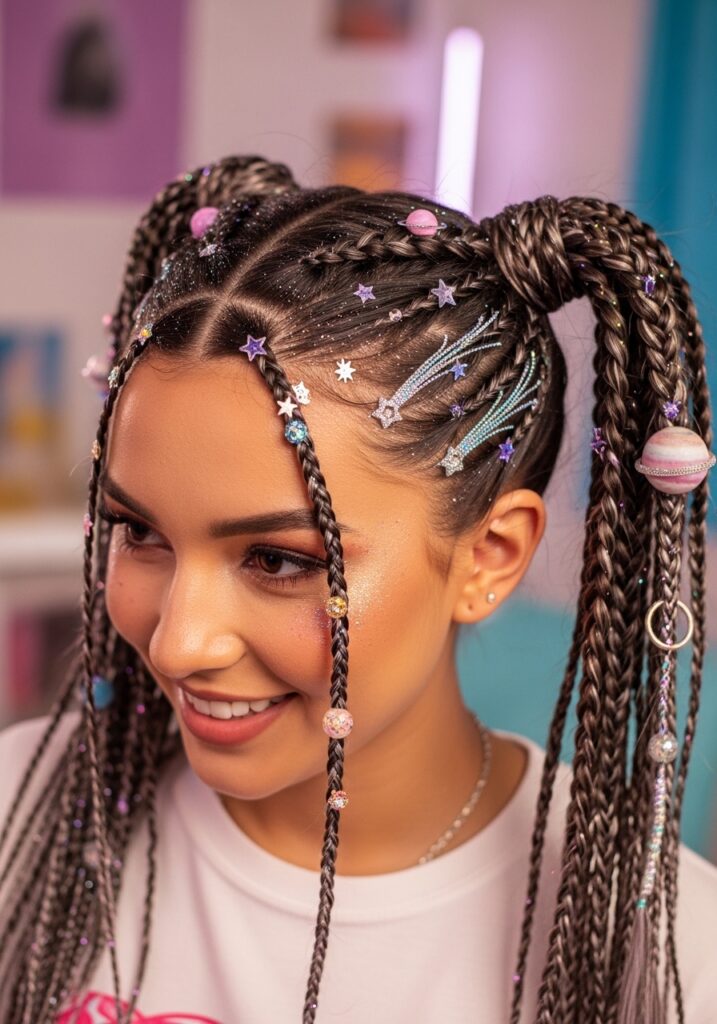
18. Space-Inspired Braided Pigtails
Metallic thread and coloured elastics read strongly on camera because they reflect light differently from hair.
Pigtails carry the same width problem as space buns. Both sit outside a tight vertical crop at close range. Bringing them forward over the shoulders keeps them in frame. It also puts the detail nearer the lens, where it survives compression.
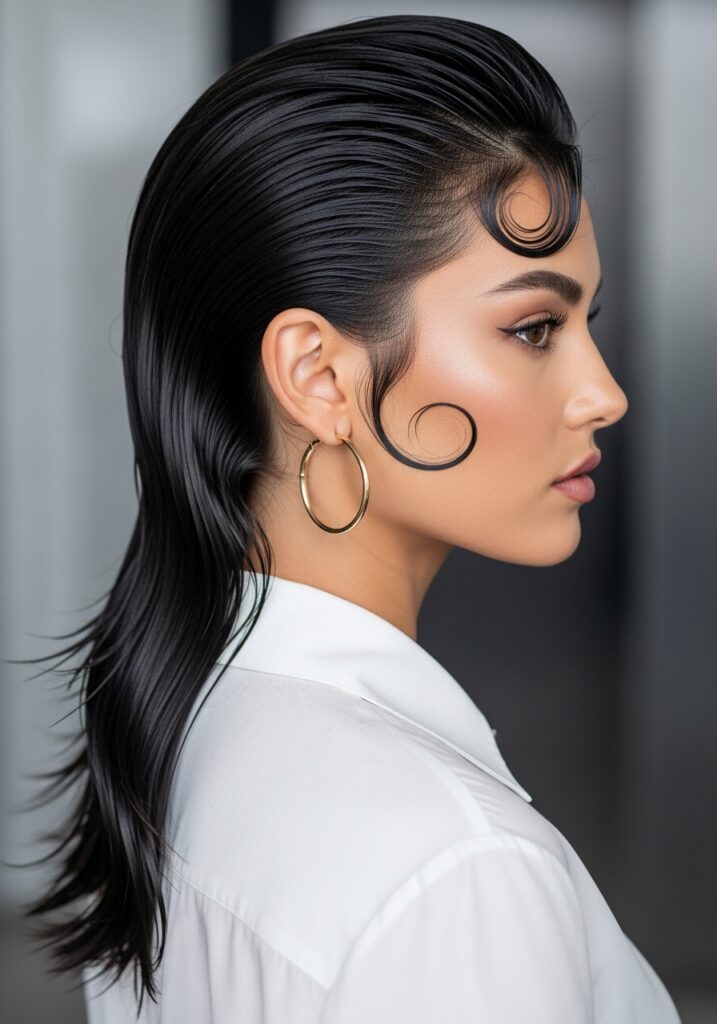
19. Wet-Look Slicked Back
The wet look depends entirely on lighting. Under a ring light it flattens into a solid dark shape with no definition.
Side lighting restores the gloss. Shine comes from light reflecting off a curved surface at an angle. Straight-on light has nowhere to bounce. Moving the light off-axis beats adding more product.
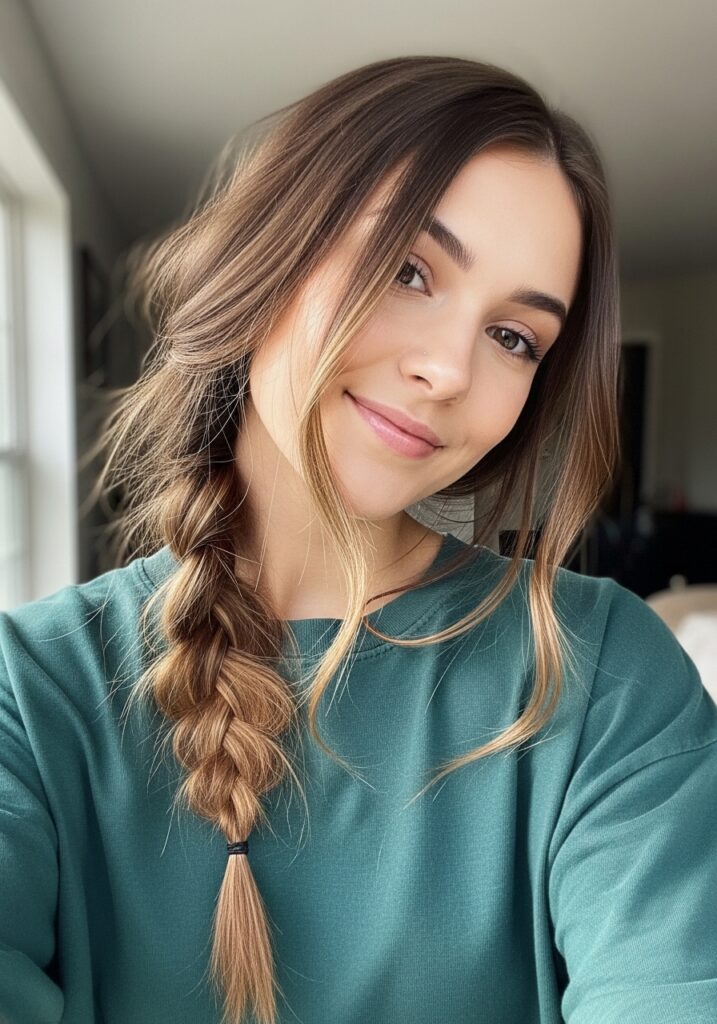
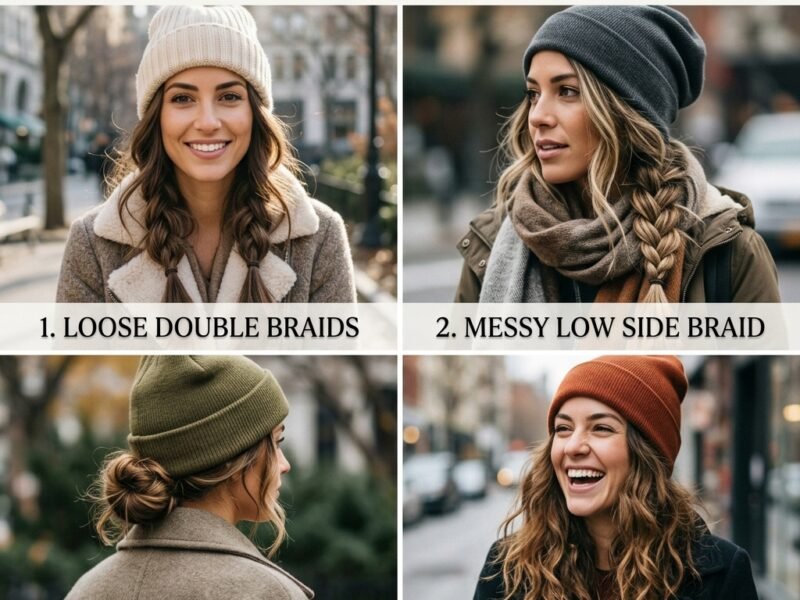
20. Messy Side Braid
Pulled over one shoulder, the braid sits forward of the face and close to the lens, which is ideal for a vertical frame.
It can also be done entirely by feel, without a mirror. Widening should start at the tail and work upward. Starting at the crown loosens the top, and the braid unravels before the ends gain width.
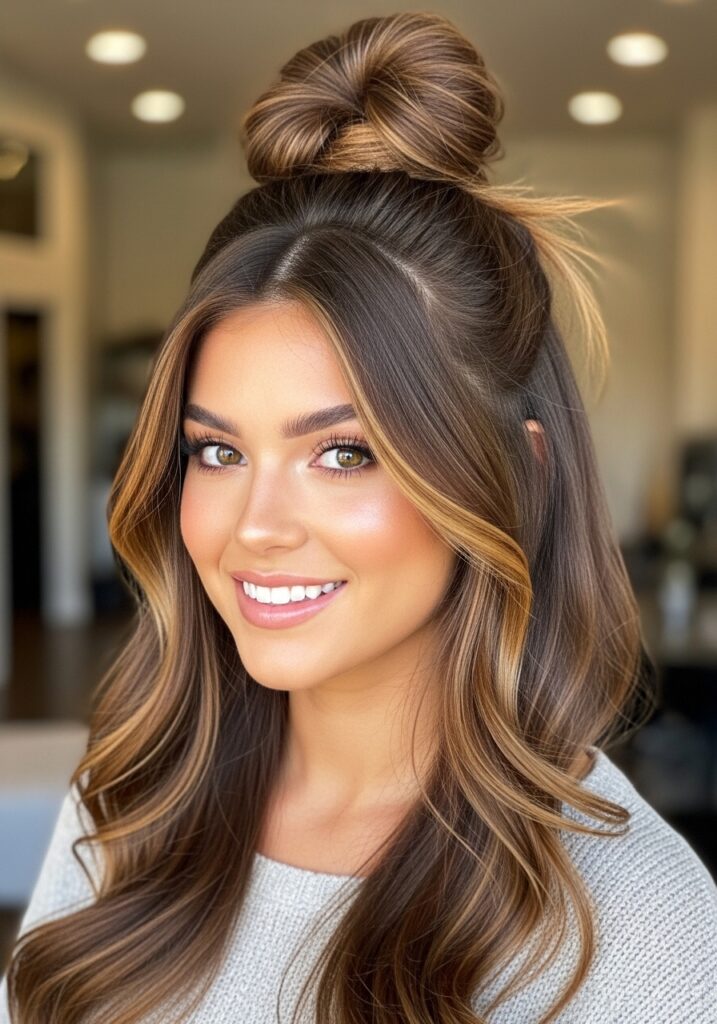
21. Half-Up Top Knot
Only the top section goes up, so the knot stays small and the weight problem disappears.
It also holds through repeated takes better than a full bun, which slides as the hours pass. A section running temple to temple is enough. Plenty of length stays visible below the knot.
22. Dutch Braided Crown
Dutch braids cross underneath rather than over, which pushes them into relief against the scalp.
That raised profile makes the crown visible on camera. A French braid sits flat and disappears. The braid also rests on the head rather than pulling into it, so tension stays low.
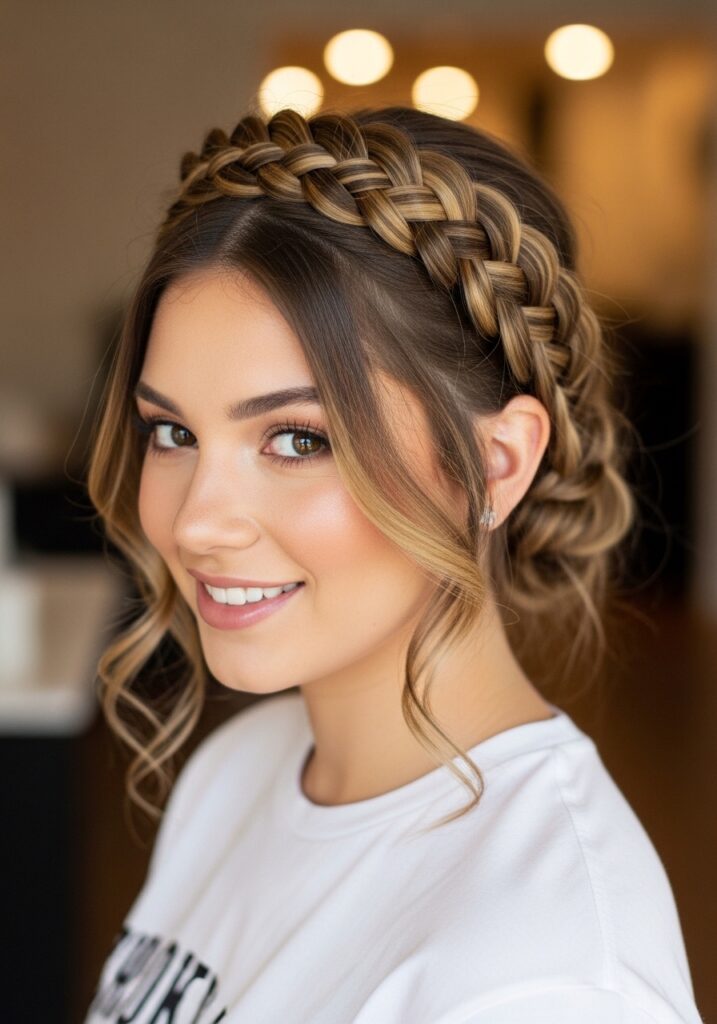
23. Layered Shag with Curtain Bangs
The shag removes weight through the crown, which is what produces the lift a vertical frame emphasises.
Straight hair needs product to show the layers. Without texture the shape reads unfinished. What to ask for at the consultation, and how layering differs for fine versus thick hair, is covered in this guide to layered cuts.
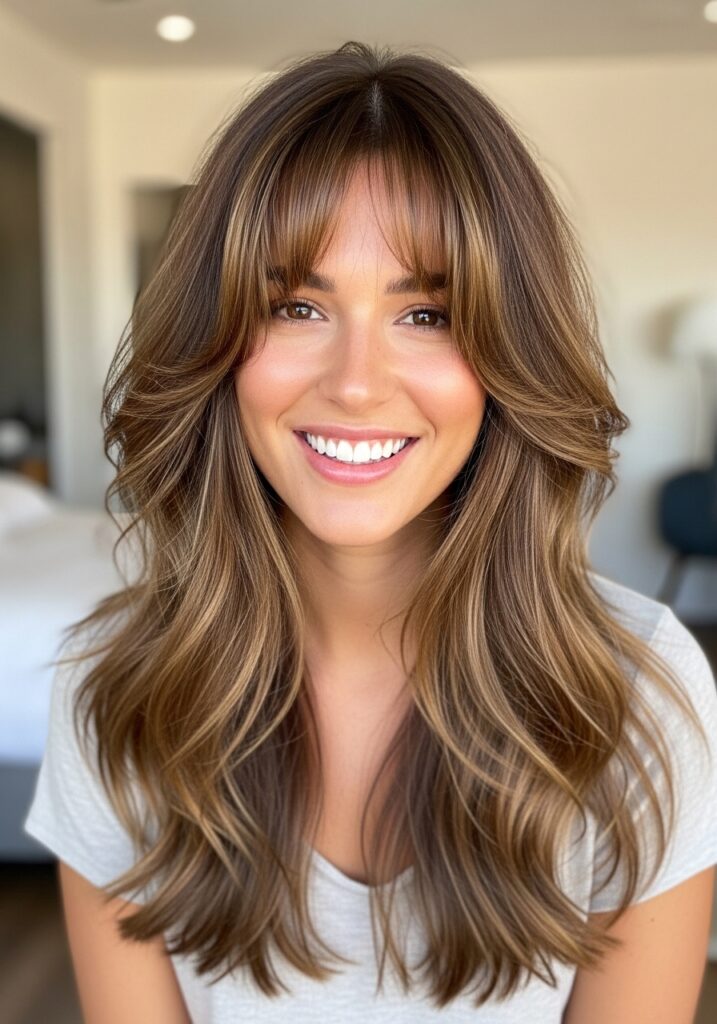
24. Classic High Ponytail
Height comes from where the hair is gathered, not from how tightly it is pulled. Tipping the head forward brings everything to the crown.
Two elastics stacked together hold the height without painful tension, which matters across a long session. A high ponytail also swings. Swing is one of the few things video captures that photography cannot.
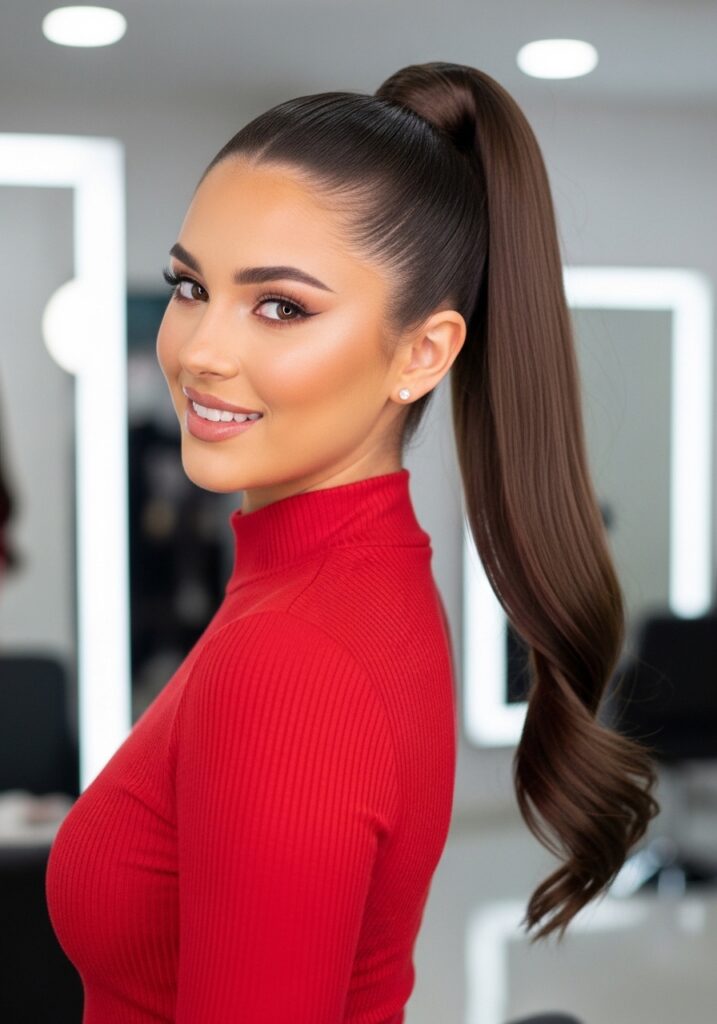
25. Low Twisted Ponytail
Twists running into a low tail add detail at the sides of the head, which is where a front-facing frame actually looks.
A small clear elastic on each twist, before gathering, stops them loosening mid-take. Doing it in one motion is faster and usually means one side slips within the hour.
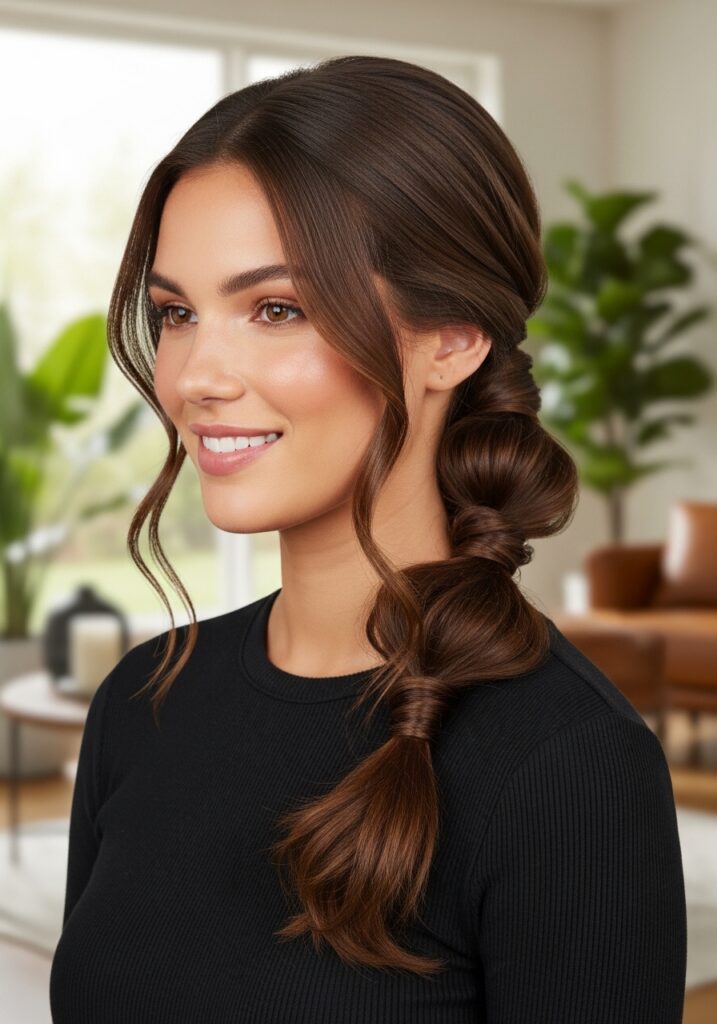
26. Twisted Pigtail Braids
Twisting each section before braiding adds a second layer of texture, which gives the braid more visible structure on screen.
Both sections twist the same way individually, then wrap the opposite way. Twisting everything in one direction produces braids that unwind themselves within minutes.
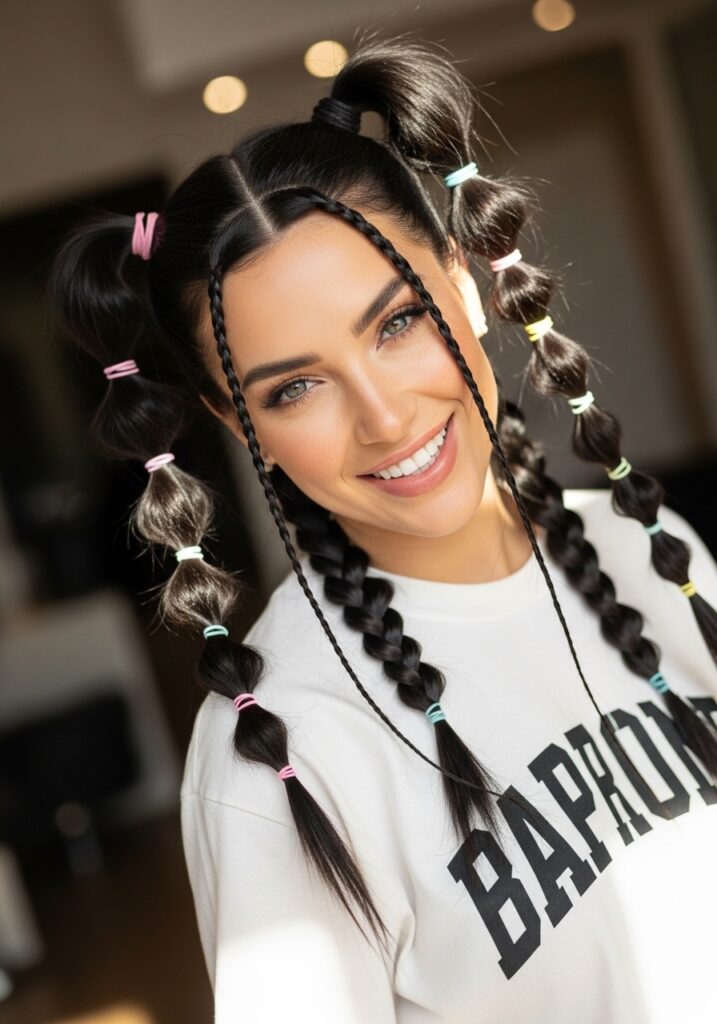
27. Retro Flip Hair
The flip turns the ends outward. That curve catches light along its edge in a way an inward curl does not.
A large round brush turning out at the ends creates it. Medium-length hair suits it best. The flip needs the ends to sit clear of the shoulders. Below that length the shoulder pushes the curve out of shape.
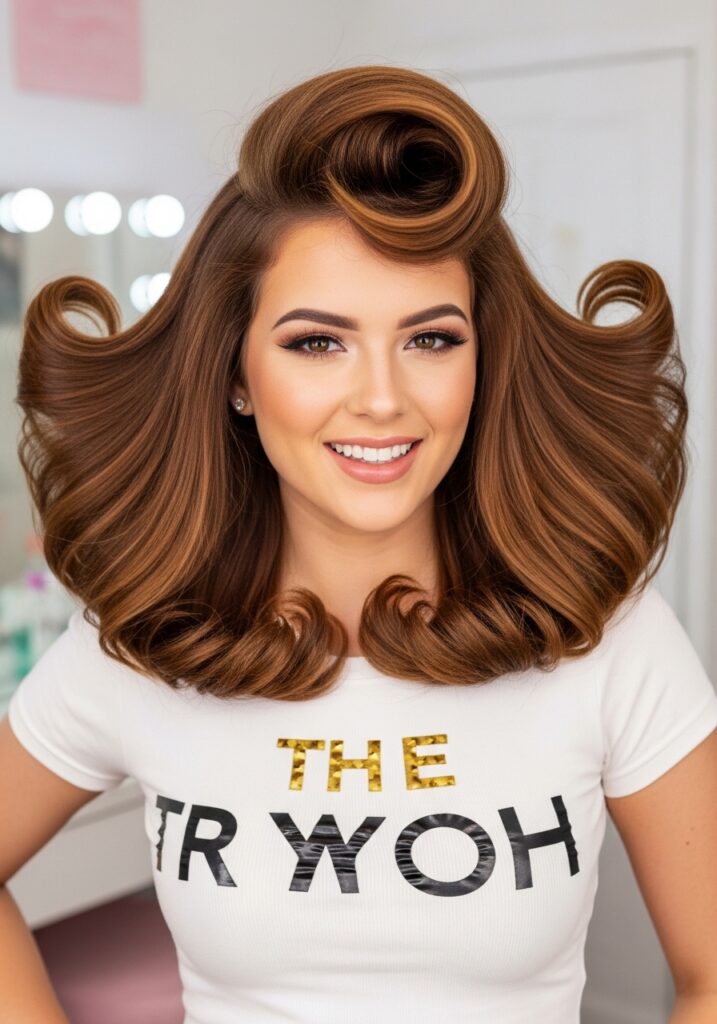
28. Side-Swept Curls
Sweeping curls to one shoulder creates asymmetry. That reads well in a vertical frame, because it breaks the centre line.
Stability is the issue. All the weight sits on one side, so the hair migrates back to centre within the hour. Pinning behind the opposite ear anchors it, with the pins hidden under the curls above.
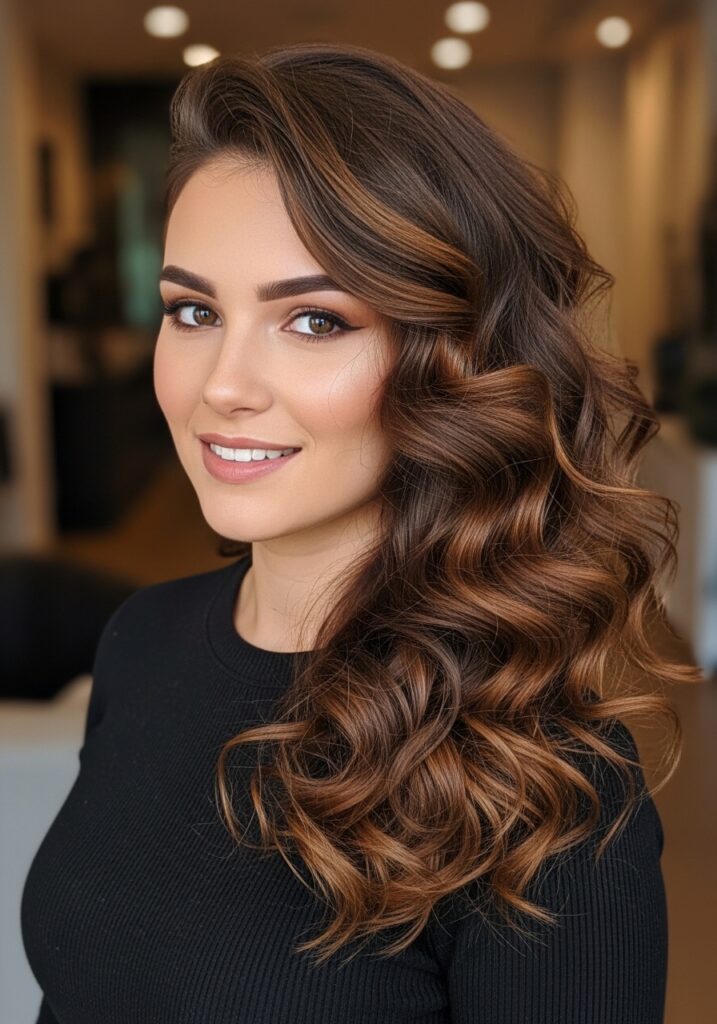
29. Messy Braided Bun
Braiding the length before coiling it compresses the volume, so the bun sits neat rather than bulky.
The braid also gives pins something structured to grip. That makes it one of the more secure options for a long session. Structure underneath, softness on top, is the working order. Building it loose from the start produces a bun that slides.
Conclusion
These 29 viral TikTok hairstyles divide along lines that have nothing to do with how they look in a mirror. Width is the first. Space buns, pigtails, and anything sitting wide of the head get cropped at arm’s length. Depth is the second. A style built at the back of the head is invisible to a front-facing camera.
Three adjustments carry across all of them. Move the camera back and crop in afterwards. Close range distorts whatever sits nearest the lens. Move the light off-axis. Straight-on lighting flattens texture and turns gloss into a dark shape. And favour styles that move, because movement is the one thing video shows that a photograph cannot.

Leave a Reply