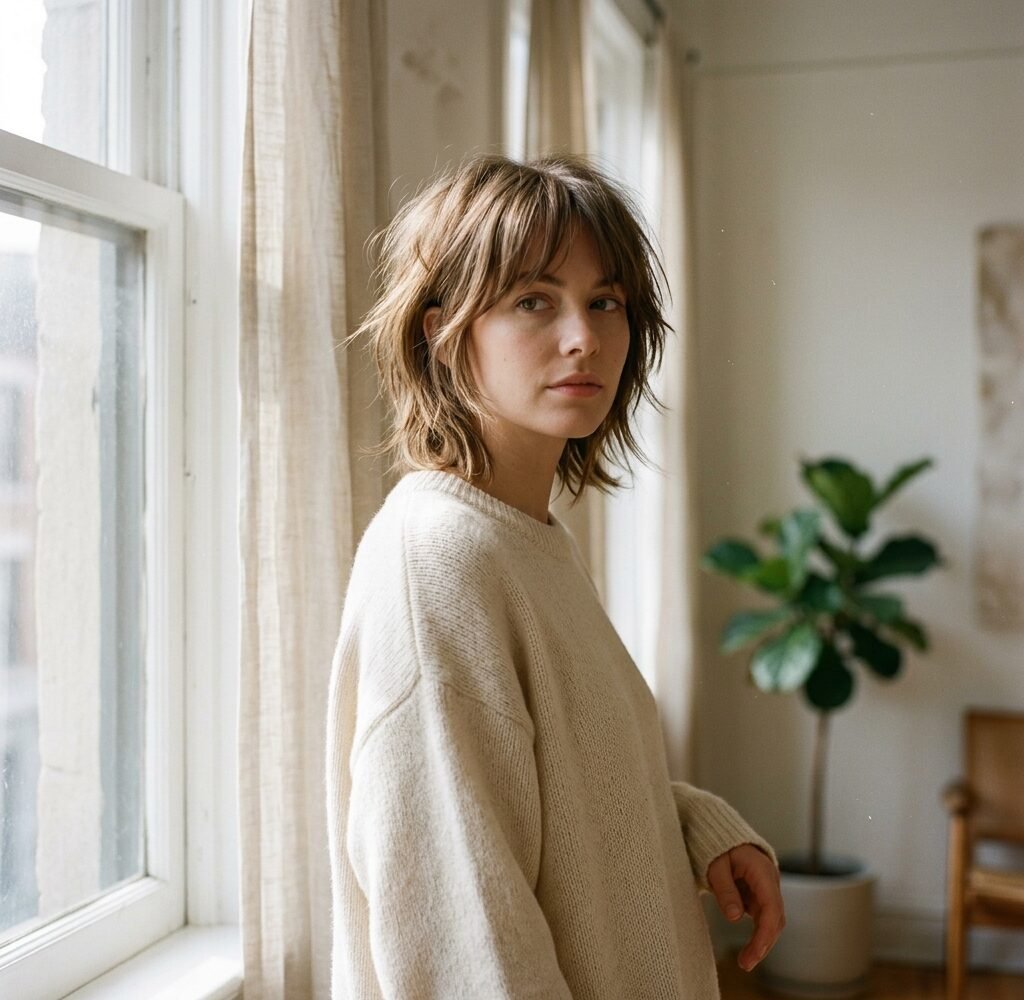
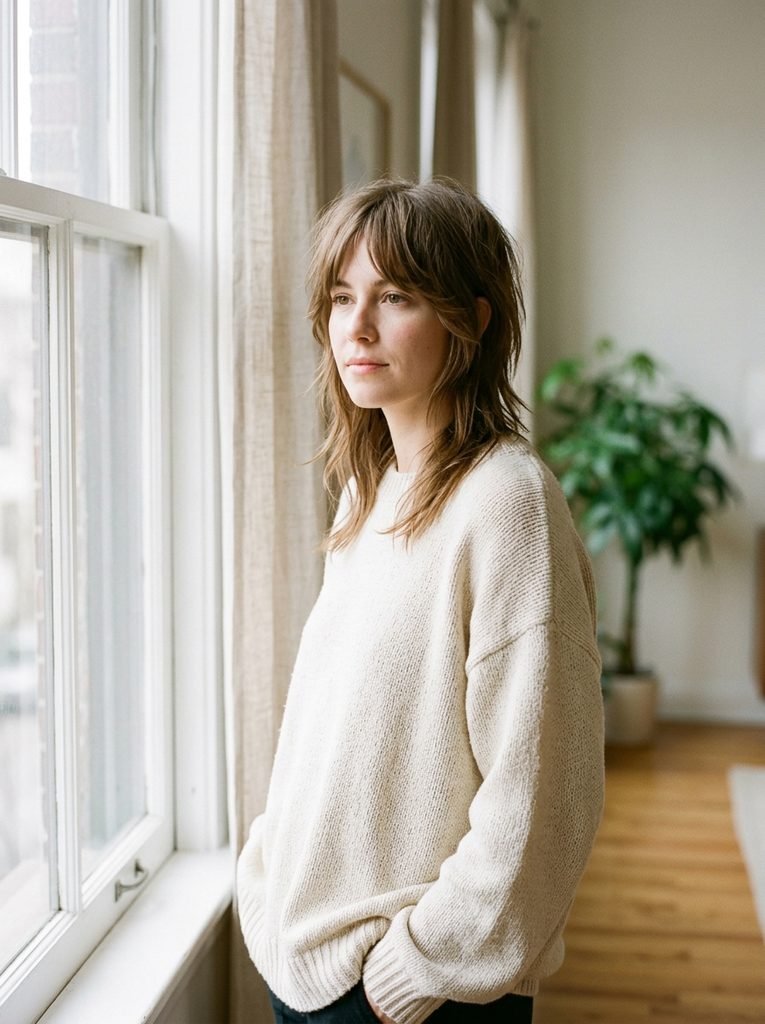
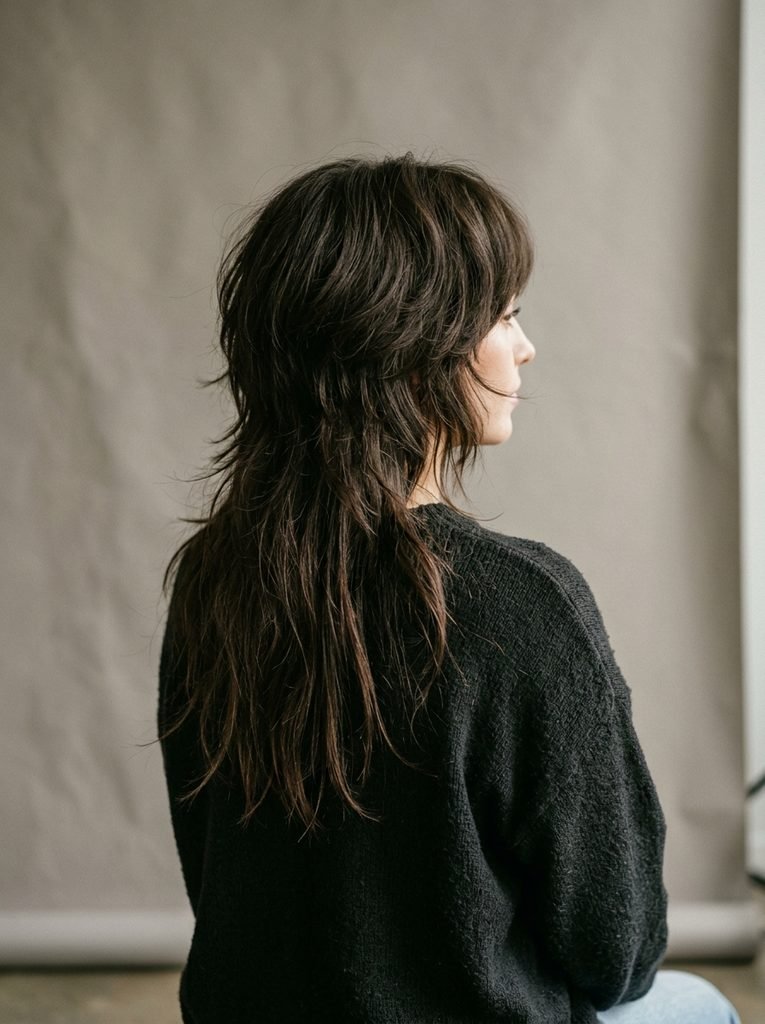
Look at a wolf cut photo from three angles and you could describe it three different ways. From the front, it reads as a shaggy, layered cut with soft bangs. From the side, it looks like a mullet that has been given a gentler edit. From behind, it looks like a deliberate mess, with ends that taper into uneven, wispy points. All three descriptions are accurate, and that mix is exactly why so many people save wolf cut images and then wonder whether the cut would work on their own hair.
That second question is what this guide is for. A wolf cut for women behaves very differently on straight, wavy, curly, fine and thick hair, and the details of length, bangs and daily styling change the result just as much. Below you will find who the cut tends to suit, who might find it frustrating, and how to style it without a long morning routine.
What a Wolf Cut Looks Like, and How It Differs From Its Relatives
The wolf cut is usually described as a blend of a shag and a mullet. Short, choppy layers sit around the crown and top of the head, where they build volume. Longer, thinner lengths continue through the back and finish in tapered, slightly ragged ends. The key detail is the blend. Instead of a sharp step between short and long sections, the layers melt into one another, which keeps the shape wearable rather than costume-like. A celebrity hairstylist quoted by Fox News described it as a shag and a mullet fused together, and said the cut can be adjusted to suit different face shapes.
Online, these terms get used loosely, so a quick comparison helps when you are collecting reference photos.
| Cut | Where the volume sits | The back | Overall feel |
|---|---|---|---|
| Wolf cut | Crown and top, with movement throughout | Longer, tapered and wispy | Textured, blended, deliberately undone |
| Shag | Layers all over, often at the crown | Shorter, feathered ends | Soft and retro |
| Mullet | Short top and sides | Clearly longer, with strong contrast | Bold and graphic |
| Butterfly | Face framing and crown | Long and smooth | Bouncy and polished |
The butterfly cut is the closest neighbour in photos, because both rely on layers around the face. The difference lies at the crown and the back. A butterfly keeps its length smooth and polished, while a wolf cut leans into disorder. If the cleaner option appeals more, these butterfly haircut ideas show how it looks across different textures.
Who a Wolf Cut Suits: Start With Hair Texture
Hair texture and density change the outcome of this cut more than almost any other factor, so they make a better starting point than age or personal style. The notes below are general observations, and a stylist who can see your hair in person will always have the final word.
Straight Hair
Straight hair shows every layer, for better and worse. When the cut is precise, the separation between pieces looks crisp and graphic. When the hair is very fine or the ends are too thin, the same layers can look stringy. Medium-thickness straight hair tends to give the clearest wolf cut shape, with a defined crown and distinct wispy ends. It does need a little encouragement, because straight strands often fall flat at the roots without lift from a blow-dry or a light texture spray.
Wavy Hair
Wavy hair is often the easiest match. Layers give waves somewhere to go, and the waves give the cut the tousled finish that straight hair has to be coaxed into. Many people with natural waves can work in a light cream, scrunch, and let the hair air-dry into a shape that already looks styled. If your waves vary from one section to another, the layers can also make those differences look intentional instead of uneven.
Curly and Coily Hair
Curls can look striking with a wolf cut, but the cutting details matter more here. Shorter layers on top make curls spring upward and create a rounded, voluminous crown. Layers that are too short, on the other hand, can leave the shape wider than expected. Because curls shrink as they dry, it helps to find a stylist with experience cutting curly textures and to talk through how much length you are comfortable losing. Reference photos of curly wolf cuts will serve you better than straight-haired ones.
Fine Hair
Fine hair can wear the cut, but it usually works best when the layers stay conservative. Heavy layering removes weight from the ends, and thin strands can end up looking sparse at the perimeter. A fuller bottom edge, with shorter layers concentrated near the crown, gives lift without giving up density. If low volume is your main concern, these hairstyles that make thin hair look thicker show other shapes worth comparing before you decide.
Thick Hair
Thick hair has the most to gain. Layers remove bulk, and a wolf cut breaks up the triangle shape that dense hair often forms when it is cut to one length. The trade-off is growth. Thick hair can turn puffy as the layers lengthen, so the outline may need attention more often than it would on finer hair.
Face Shape and Layer Placement
Face shape matters less than most guides suggest, because the position of the shortest layers and the style of the bangs can be moved around. As a general styling observation, layers that begin near the cheekbones add width at that point, which can balance a narrower face but may emphasize a rounder one. Layers that start at the chin or lower add length and a softer line. None of this is a rule. It is only a way to think about where you want the eye to land.
Who Might Want to Think Twice
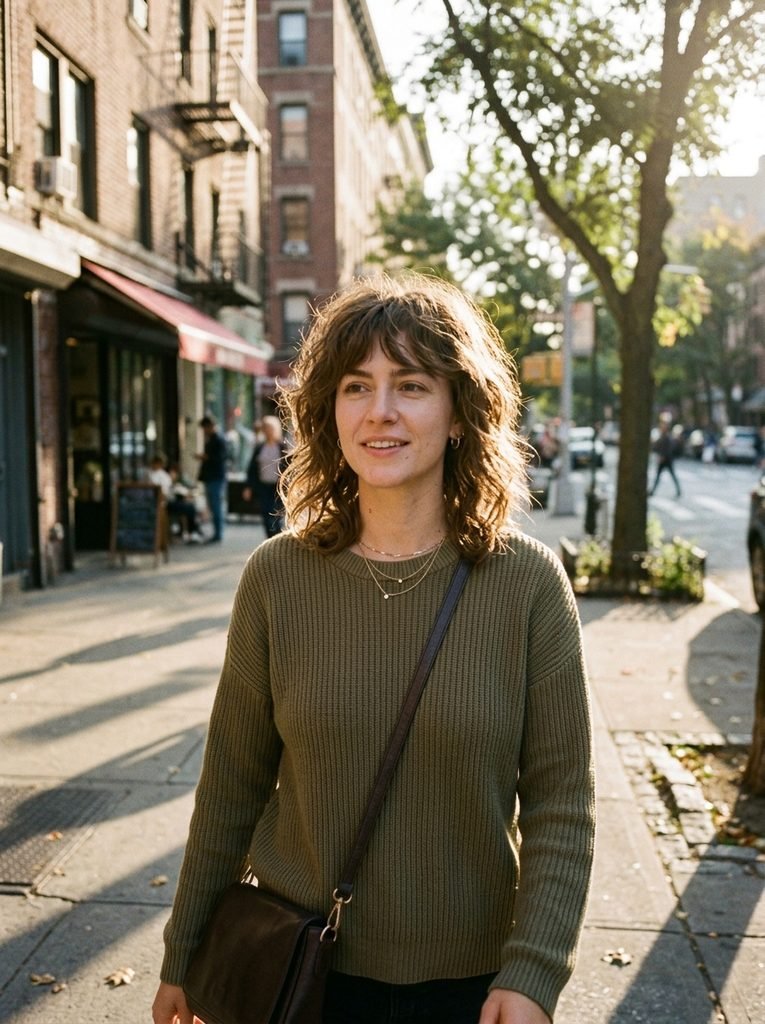
A wolf cut is honest about what it needs, and that list is worth reading before you book. People who like sleek, smooth hair every day may find the cut works against them, because it looks best with texture and a little disorder. It can be styled smooth, but the shorter layers tend to flip and separate. Anyone who wears a tight low bun for work will notice the crown layers slipping out within the hour. A dress code that favors very traditional hair may also be worth considering, since the cut carries a mullet association that some workplaces read as bold.
Hair history matters too. If you are halfway through growing out a different cut, adding short layers can reset the clock on length. And if you dislike seeing shorter pieces near your face or nape, a smoother option such as a classic long layered shape may feel more comfortable.
Choosing a Length: Short, Medium or Long
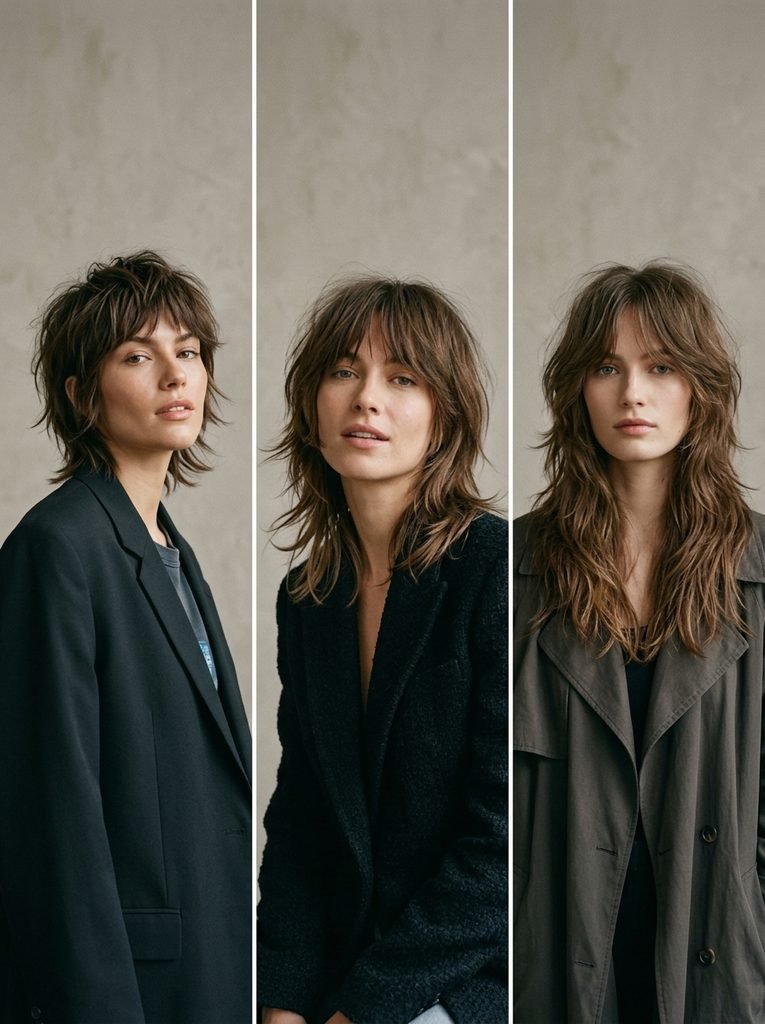
Short Wolf Cut
A short wolf cut sits around the jaw or chin, with the back tapering just below the nape. It looks like a hybrid of a pixie and a bob, with plenty of visible texture and more of the neck on show than usual. It dries quickly and needs little styling, but it loses its outline sooner as it grows.
Medium Wolf Cut
The medium version, falling somewhere between the collarbone and the shoulders, is the most balanced. There is enough length for the layers to show, and enough room to pull the hair half up. It is also the most forgiving choice for people who feel unsure about committing.
Long Wolf Cut
On long hair, the contrast between a voluminous crown and thin, trailing ends becomes more dramatic. Weight can pull the layers flat, so long wolf cuts often need a bit more styling to keep their lift. When the layering is subtle, a long wolf cut can read as ordinary layers, which is why reference photos matter.
Bangs for a Wolf Cut: Four Options
Bangs come close to defining the cut, and the choice changes the whole mood.
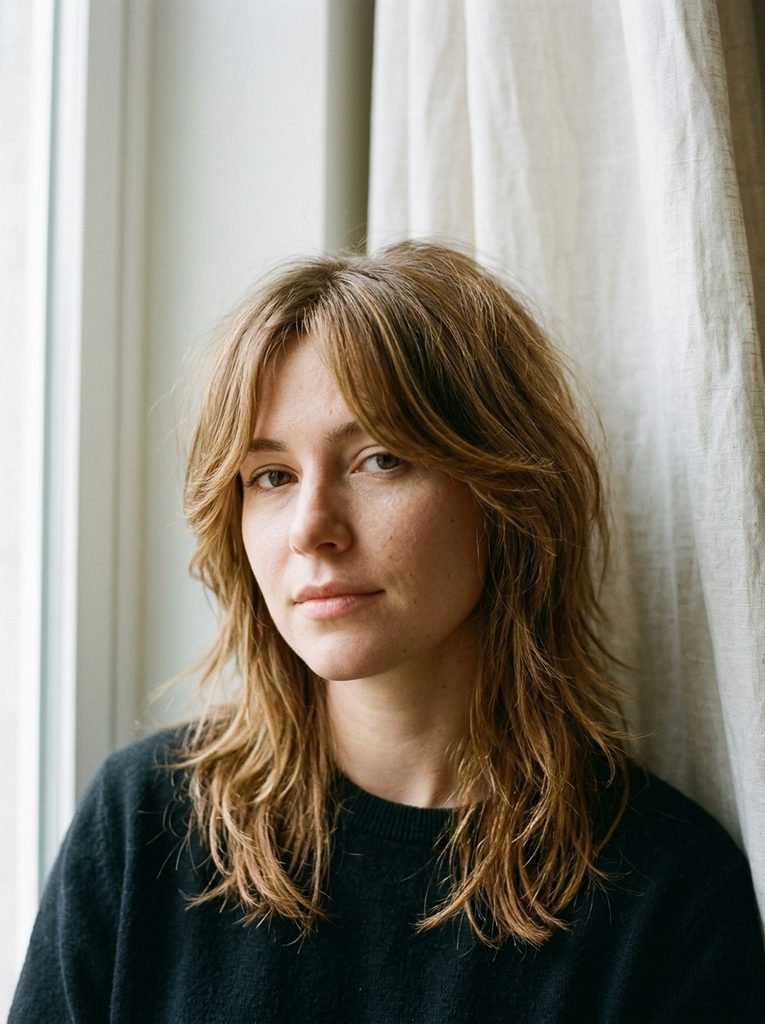
Curtain Bangs
Parted in the middle and sweeping toward the sides, curtain bangs blend into the face-framing layers and give the softest result. They are also the most common pairing. For more on asking for them and growing them out, see this guide to curtain bangs.
Wispy Bangs
Thin and see-through, wispy bangs let a little forehead show through the strands. They look light and low commitment, though they tend to separate with oil or humidity.
Short Choppy Fringe
Cut above the brows, a choppy fringe adds attitude and leans closest to the mullet side of the family. It needs more regular trims and some daily styling to keep its direction.
No Bangs
Skipping bangs and relying on face-framing layers is the lowest-commitment path, and it grows out without an awkward phase.
How to Style a Wolf Cut Day to Day
The cut is designed to look lived in, so styling is mostly about encouraging texture rather than controlling it. Start with towel-dried hair that is damp, not dripping, and choose a product that matches your texture. The table gives a starting point.
| Hair type | Product idea | Drying | Finishing touch |
|---|---|---|---|
| Straight | Light mousse or root spray | Rough blow-dry, head flipped upside down | Texture spray through the ends |
| Wavy | Light cream, scrunched in | Air-dry or diffuse on low | Shake the roots with your fingers |
| Curly | Curl cream or gel on very wet hair | Diffuse, then leave it alone until fully dry | Loosen the roots with fingers or a pick |
| Fine | Weightless mousse | Dry the roots first | Dry shampoo at the crown for grip |
If you use heat, towel-dry first, keep the dryer on a medium setting, hold it about six inches from your hair, and apply a heat protectant.
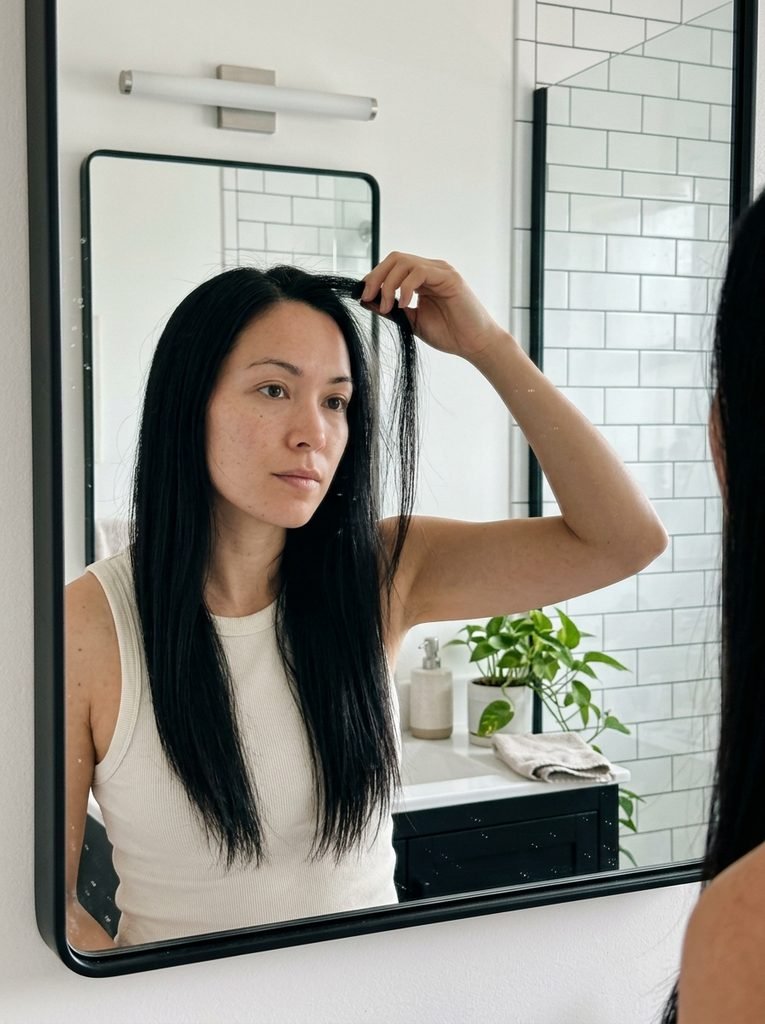
A reliable five-minute sequence goes like this. Dry the roots first, because that is where the shape comes from. Leave the lengths mostly alone. Then twist small pieces around the face and ends with your fingers. Over-brushing breaks up the layers, so a wide-tooth comb or your hands usually does the job.
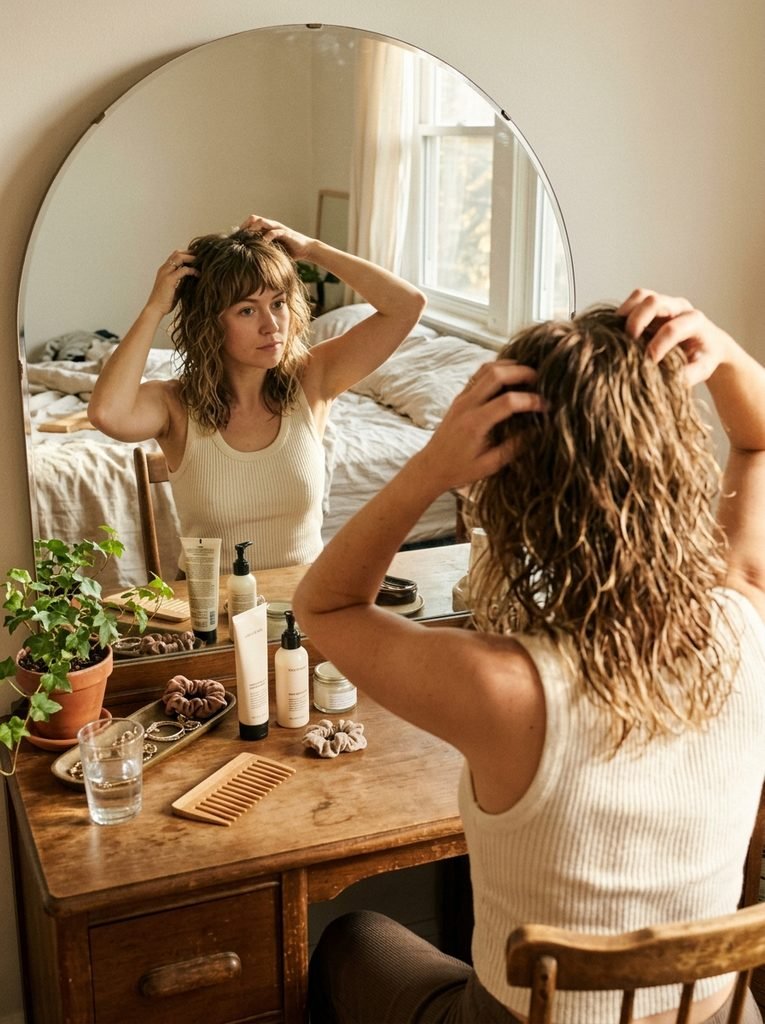
Ways to Wear It Beyond the Basic Tousle
The messy version is only one of several looks. A brushed-out finish, made with a round brush and a little smoothing cream, softens the shape enough for a client meeting or a dressier dinner. Pinned behind the ears, the face-framing pieces show off cheekbones and earrings. A wide headband or folded bandana tames the crown and lets the ends flick out below it.
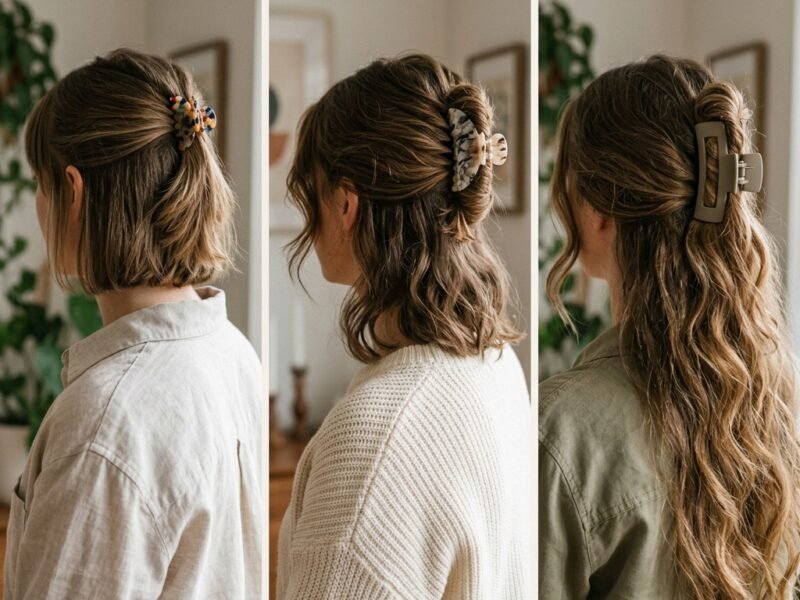
Tying hair up takes some flexibility. A low ponytail works if you accept that the shorter layers will fall around the face, which often looks pretty. A half-up style with a small claw clip handles the crown neatly. Fully gathered buns rarely stay put. For an evening out, a slightly wet look, with a little gel run through the lengths, gives a sharper, editorial finish.
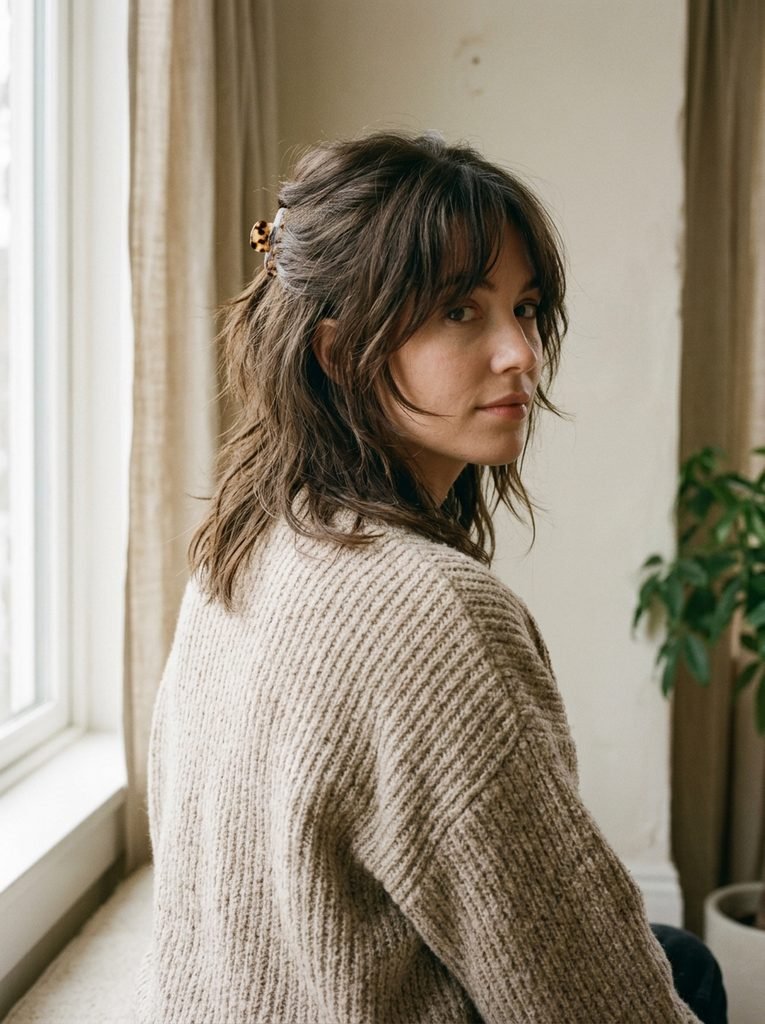
Color and Finish: What Shows Up Best
Layers show up differently depending on color. Soft dimension through the lengths, such as a few lighter strands near the face or gentle highlights, makes the separation easier to see. A single flat shade puts the focus on the silhouette itself. Both work, so it comes down to whether you want the haircut or the color to lead.
Timing is worth a thought. A stylist cited by Luxy Hair points out that because the cut depends so heavily on layering, color is best done after the cut. A shine product on the ends also helps, since wispy, tapered ends can look dry quickly.
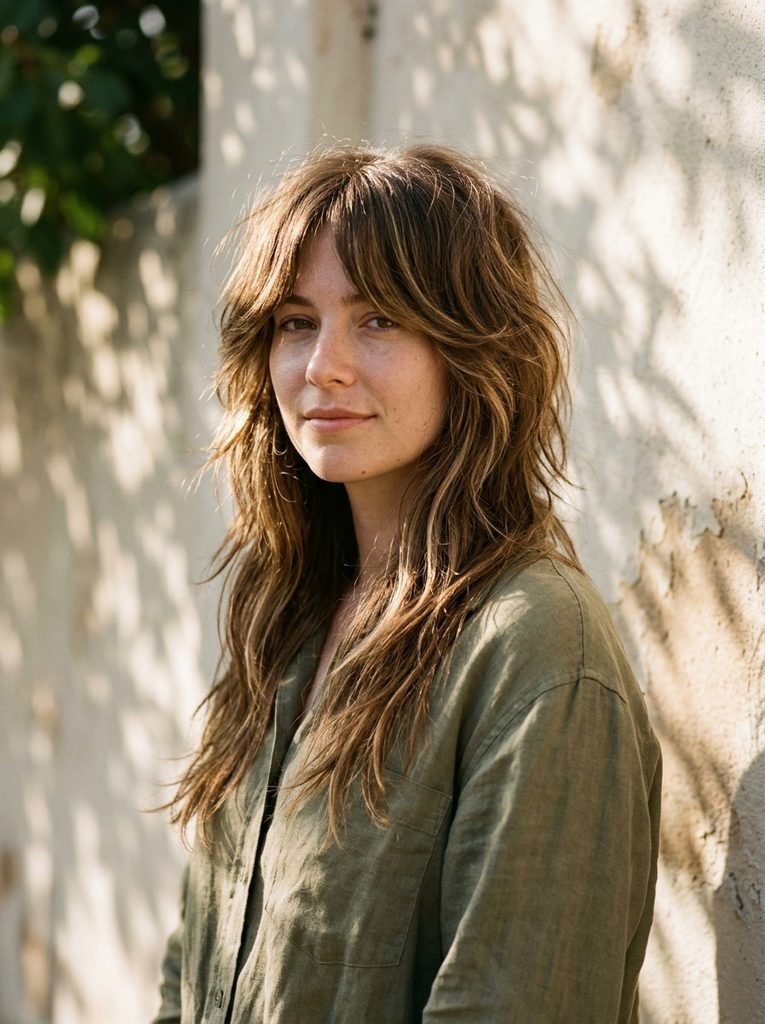
Upkeep and Growing It Out
Shorter versions lose their outline sooner, so trims tend to come more often, while longer versions can stretch the gap between appointments. The tapered ends also show frizz quickly, so a lightweight smoothing product helps. This routine for controlling frizzy hair in humid weather has more detail.
Growing the cut out is generally straightforward. The crown layers gradually catch up with the length, and the shape softens into a longer layered cut or a shag. Asking your stylist at the end of each appointment how they would shape the next stage makes the whole process less of a guessing game.
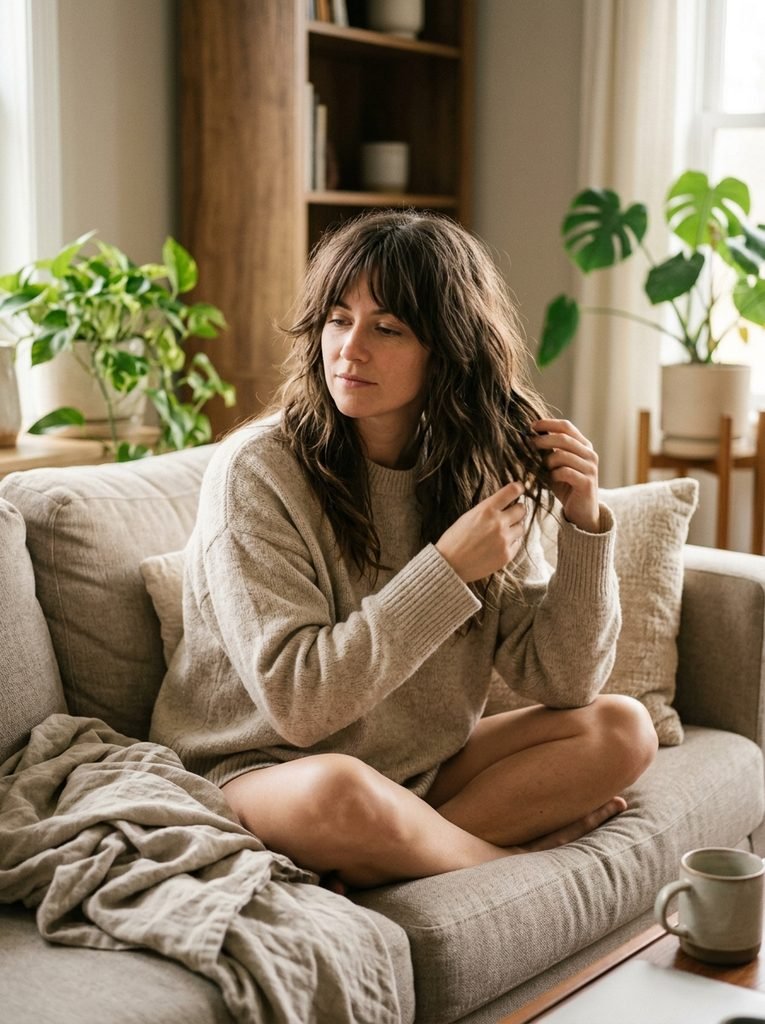
How to Ask for a Wolf Cut at Your Appointment
Because the cut has no fixed definition, a clear description saves time. Bring two or three photos, ideally including one from the back, and note what you like in each. Hair that matches your texture makes the most useful reference.
A few points are worth covering out loud:
- Where the shortest layer should sit
- How much contrast you want between the crown and the back
- Which bangs you prefer, or none at all
- Whether you usually air-dry or blow-dry
- Any cowlicks or growth patterns that affect the crown
Asking how the cut will behave on your own texture is also reasonable, and a good consultation should leave you with a realistic picture rather than a photo-perfect promise.
Quick Answers Before You Book
Is a wolf cut just a mullet?
No. A mullet keeps a sharp contrast between a short front and a long back. A wolf cut blends the two with layers, so the transition looks gradual rather than abrupt.
Can a wolf cut be tied back?
Partly. Longer versions can go into a low ponytail or a half-up style, though the shorter layers will fall out around the face. Short versions are better left down or held back with a headband.
Does a wolf cut work on short hair?
Yes. On short hair it reads as a textured pixie-bob with a tapered nape. The effect is subtler than on long hair, so choose a stylist who has worked with shorter lengths.
So, Is a Wolf Cut Right for You?
A wolf cut rewards people who like texture and do not mind a little unpredictability. If your hair has some natural movement, you want volume at the crown, and you are comfortable with a shape that looks slightly undone, it is a strong candidate. If you want polished, tidy hair every morning, a softer layered cut will probably feel easier. Pick your length, decide on bangs, and bring photos that match your own texture. Then let the cut do what it was designed to do, which is to look good on a day when you did very little to it.


Leave a Reply