
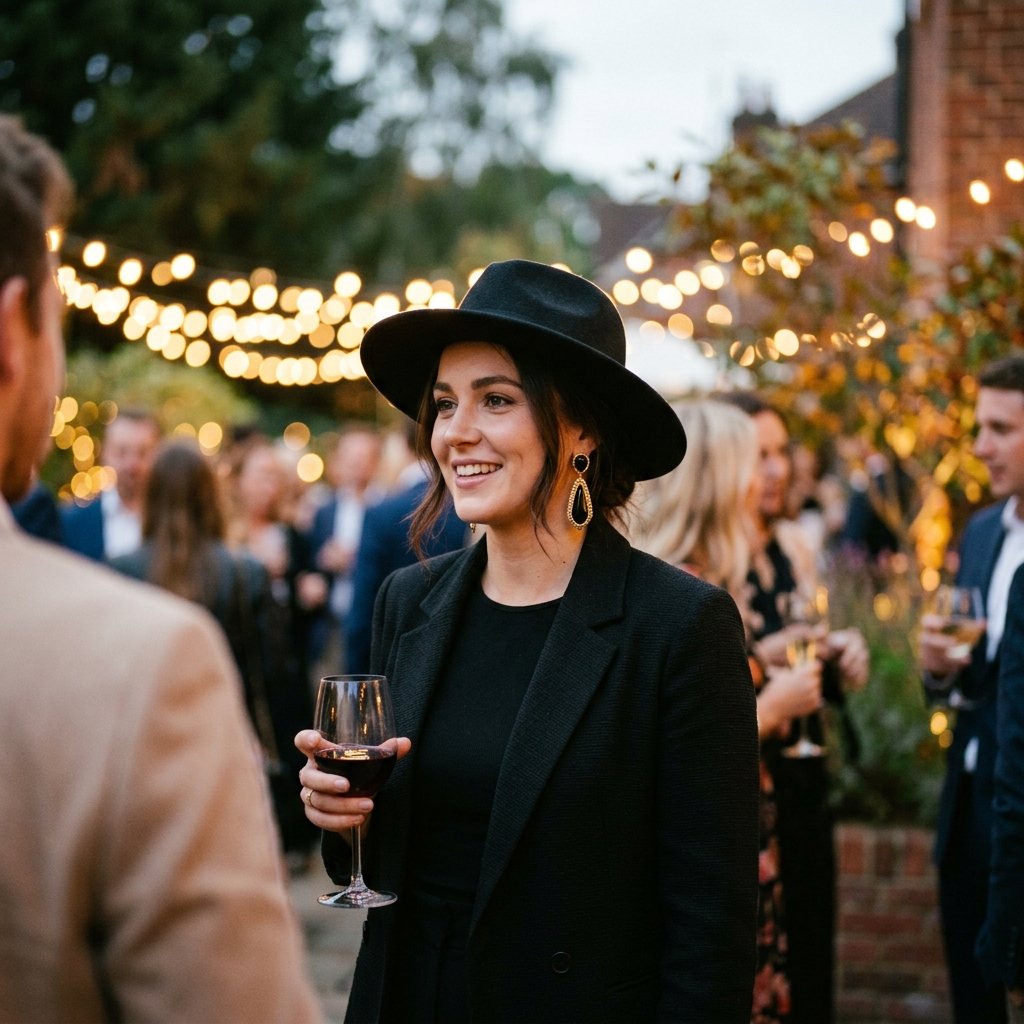
Halloween invitations rarely spell out what “dress up” actually means. Some hosts want a full costume, wig and all. Others just want the room to feel festive. Most people find out which one they’re dealing with only after they’ve already arrived, which is exactly the kind of guessing game that makes Halloween dressing more stressful than it needs to be.
There’s a real middle ground between showing up in a full costume and showing up looking like you forgot what day it was, and it’s a much bigger space than most people give it credit for. An outfit can nod to the occasion through color, texture, and a few deliberate styling choices without a single element of it being a literal costume piece.
This guide is built entirely around that middle ground. Not a costume, not a plain outfit that happens to be worn on October 31st, but something in between that reads as considered and seasonally appropriate wherever the night ends up going.
Why “No Costume” Doesn’t Mean “No Effort”
The instinct to skip a costume often comes from a reasonable place: not everyone enjoys full costume dressing, and not every event actually calls for one. But skipping the costume and skipping the effort entirely are two different decisions, and conflating them is where most non-costume Halloween outfits go wrong.
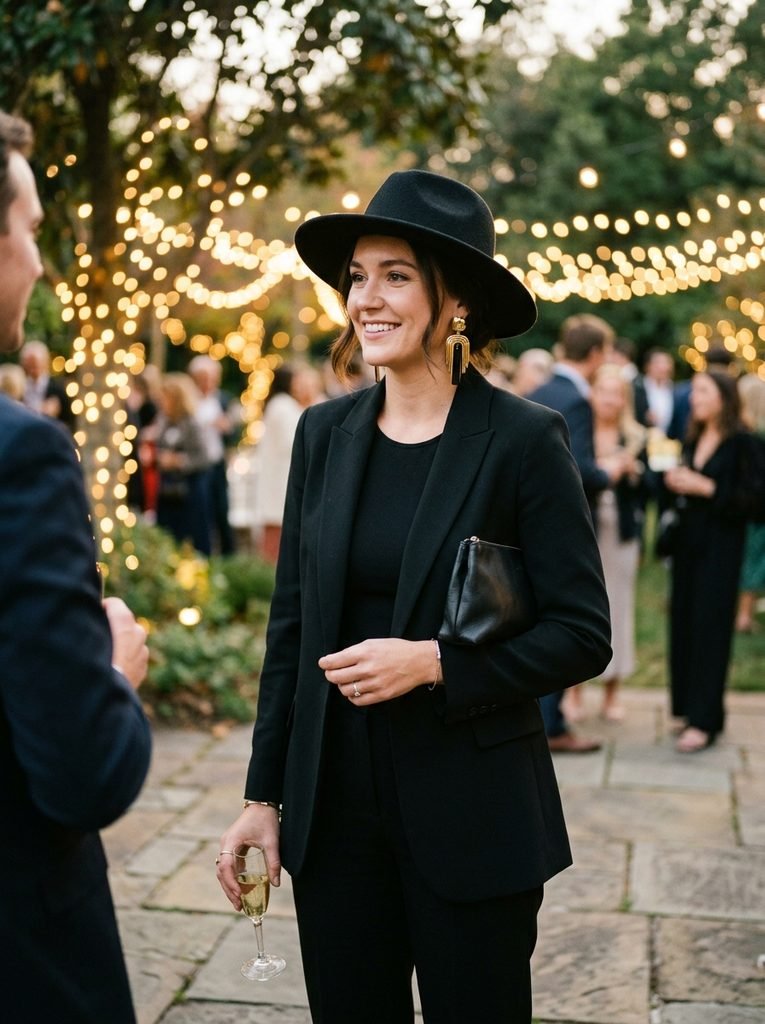
A festive, non-costume Halloween look works through suggestion rather than literal representation. Dark colors, a bit more drama than usual, a texture or print that carries some seasonal association, these are all ways of participating in the night without putting on a specific character. The goal is an outfit that clearly belongs at a Halloween gathering, just not one that’s trying to be anyone or anything in particular.
This distinction matters most in group settings, where showing up looking completely unrelated to the occasion can read as disengaged even when that’s not the intent at all. A well-considered non-costume outfit avoids that impression entirely while still keeping things simple.
Reading the Invitation Correctly
Before building the outfit, it’s worth figuring out what kind of event is actually being attended, since that changes how much of a nod to Halloween is appropriate.
A costume-mandatory event, one with a costume contest, a specific theme, or hosts who are visibly costumed themselves, calls for more commitment than this guide covers. If there’s real ambiguity about whether costumes are required, a quick message to the host clears it up faster than guessing.
A casual party, a bar night, or a low-key gathering with friends is where the non-costume approach works best. Most hosts in this category genuinely mean “wear something fun” rather than “arrive in character,” and a dark, dramatic, seasonally appropriate outfit satisfies that instruction without requiring a costume shop.
A workplace Halloween event sits somewhere in between and usually calls for a more restrained version of the same principle: seasonal color and one subtle detail, rather than anything with real drama to it.
Black as the Default Base
Black is the single most reliable starting point for a non-costume Halloween outfit, and it earns that reputation honestly. It’s already associated with the holiday, it works across nearly every body type and personal style, and it requires zero explanation.
A simple black dress, a black jumpsuit, or black separates with a bit more polish than an average weeknight outfit all read as intentional the moment Halloween decorations are involved. The trick is choosing a black piece with some structure or interesting detail, a slit, an asymmetric hem, a corset seam, rather than the most basic option in the closet, since the goal is dramatic and considered rather than simply dark.
One useful habit: treat black as the canvas and let a single other choice, an accessory, a lip color, a texture, do the actual work of tying the outfit to the occasion. An all-black base with nothing else added can look like it’s dressed for any evening rather than specifically this one.

Leaning Into Color Without Going Full Costume
Color is one of the most efficient ways to nod to Halloween without a single literal costume element, because certain shades carry the association on their own.
Deep, saturated orange, worn as a single statement piece rather than head to toe, reads unmistakably seasonal without requiring anything else in the outfit to match it. A burnt orange blazer over all black, or a single orange accessory against a dark outfit, does more work than most people expect from one piece.
Rich purple and deep wine red carry a similar, slightly subtler seasonal association, particularly in velvet or satin, and both pair easily with black for an outfit that feels dramatic and appropriate without referencing anything specific.
The line to watch for is saturation and pairing. A bright, cartoonish orange paired with black can start to look literal rather than suggestive, closer to a pumpkin costume than a styled outfit. A deeper, dustier version of the same color avoids that effect while keeping the seasonal nod intact.

Texture and Print as a Subtle Nod
Beyond color, certain textures and prints carry enough seasonal association to do quiet work in an outfit without becoming a costume element on their own.
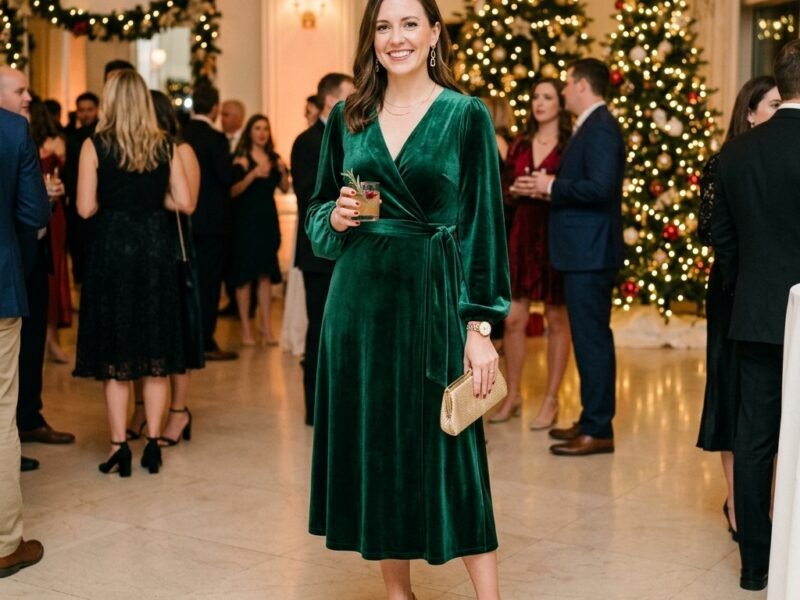
Velvet is one of the most effective choices here. It’s already an autumn and evening fabric on its own merits, and in a deep jewel tone or black, it adds richness and drama that reads as festive without referencing anything specific.
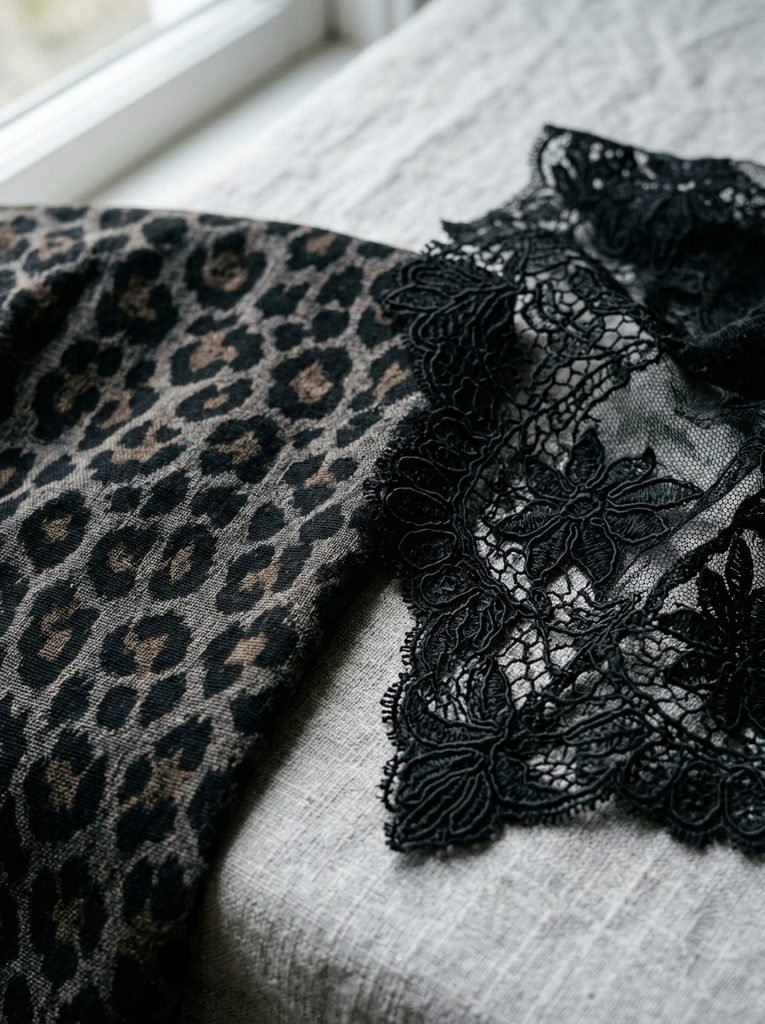
Animal print, leopard in particular, has a long-standing association with a bit of Halloween-adjacent drama and works well as a single piece, a top, a skirt, or a pair of shoes, against an otherwise simple black outfit.
Lace, particularly a darker lace layered over a slip or fitted base, adds a slightly gothic, romantic quality that leans into the season without being literal. A lace-trimmed slip dress or a sheer lace top layered over a black cami both do this well.
One Statement Accessory Instead of a Full Look
For anyone who wants to keep the outfit itself simple, a single strong accessory is often the most efficient way to bring a Halloween-appropriate mood into an otherwise everyday outfit.
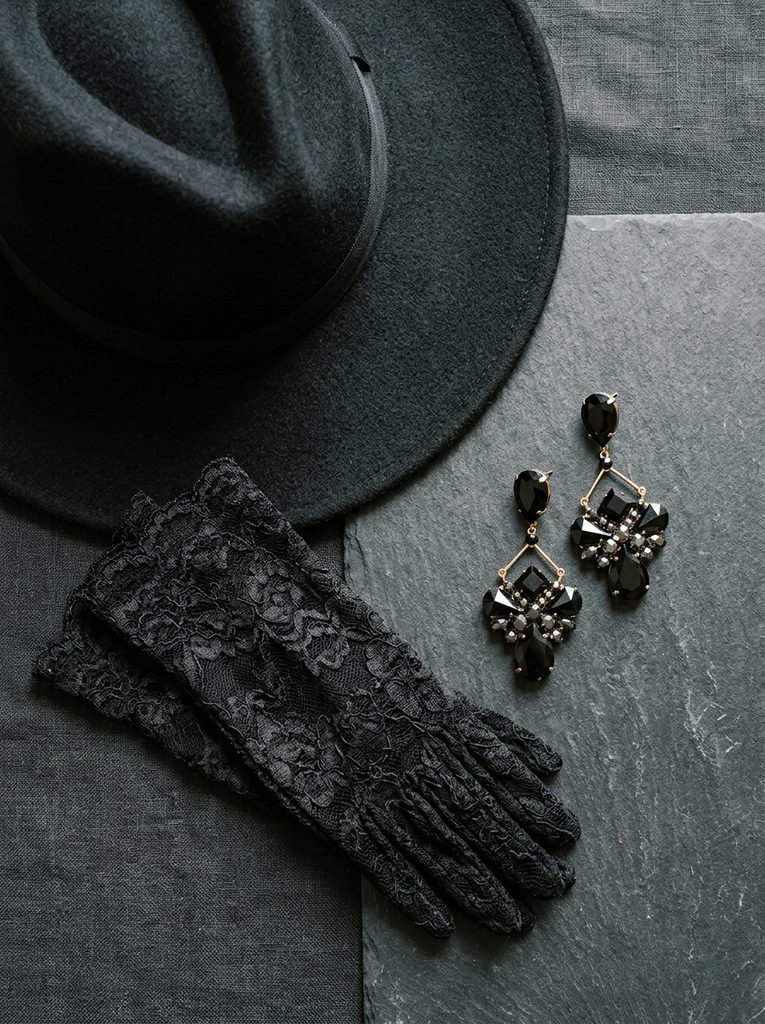
A dramatic pair of earrings, oversized hoops, a bold drop earring, or something with a slightly gothic edge, can carry a surprising amount of the outfit’s personality on its own. A structured black hat, a wide-brim style in particular, adds instant drama with almost no additional effort.
A pair of statement gloves, opera-length or fingerless in black lace or leather, is another effective single-piece option that reads as considered without requiring the rest of the outfit to change at all.
The principle across all of these: pick one accessory to be the statement, and let everything else in the outfit stay simple enough to support it rather than compete with it.
Makeup and Beauty as the Costume Substitute
For people who enjoy getting ready but don’t want to commit to a full costume, makeup and beauty choices are one of the most flexible ways to bring Halloween energy into the outfit without touching the clothing at all.
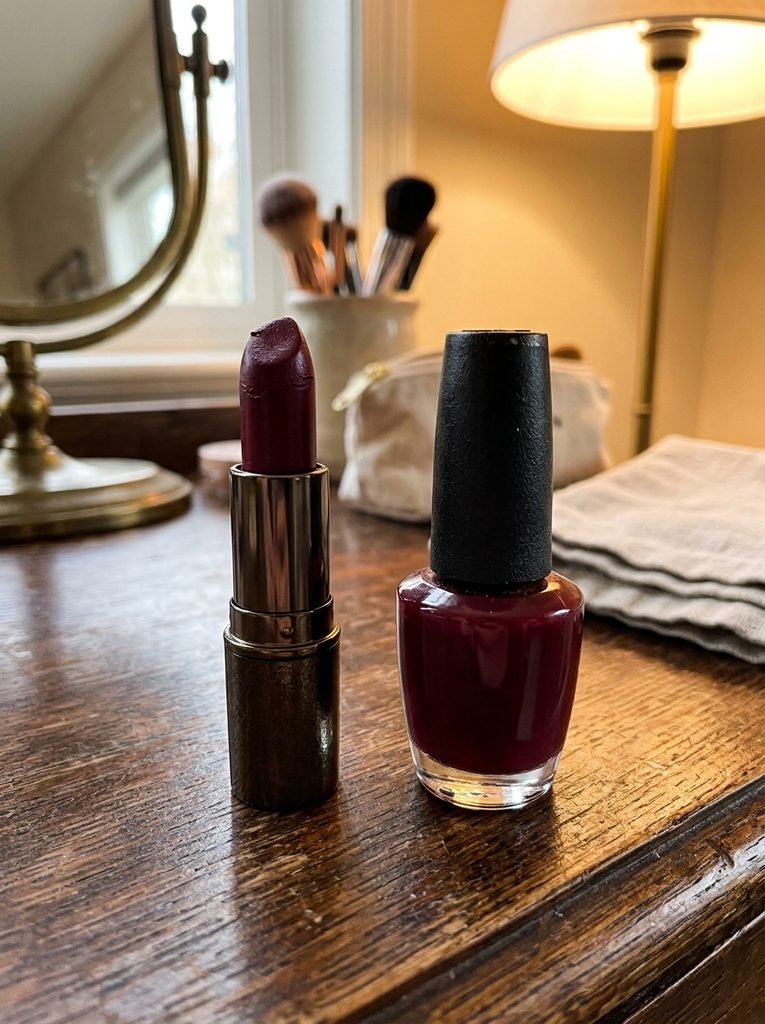
A dark, dramatic lip, a deep burgundy, a near-black wine, or a rich plum, does a remarkable amount of work here and pairs with almost any outfit already in the closet. A smoky eye taken slightly further than usual, with a bit more black liner or a deeper shadow than an average night out, has a similar effect.
Nails are another low-effort, high-impact option. A dark manicure, black, deep burgundy, or a metallic bronze, ties into the season without requiring any change to the rest of the look.
For anyone who wants to go slightly further without a full costume, a single graphic element, a subtle spiderweb liner detail at the outer eye, a few rhinestones along the lash line, can add just enough seasonal specificity without tipping into face paint or prosthetics territory.
Dressing for Different Halloween Settings
The right version of a non-costume outfit shifts somewhat depending on where the night is actually happening, and it helps to think through the specific setting rather than building one outfit for every possible version of the night.
For a bar or a night out with friends, the black-base-plus-one-statement-piece formula works particularly well, since the setting rewards a bit more drama and the outfit needs to hold up through several hours of movement and low lighting.
For a house party or a more casual gathering, a slightly softer version, a rich color in a comfortable silhouette, a single seasonal accessory, tends to fit the more relaxed setting without feeling underdressed relative to a room full of costumes.
For a workplace event, the most restrained version of this approach works best: one seasonal color choice or a single subtle accessory, paired with an otherwise normal, professional outfit, rather than anything with real drama to it.
For trick-or-treating with kids, comfort and warmth take priority over drama, and a simple black or deep-toned outfit with practical shoes and a light jacket covers the occasion without requiring anything elaborate at all.
What to Avoid When Skipping the Costume
A handful of specific missteps come up often with non-costume Halloween outfits, and most of them are easy to sidestep once they’re named clearly.
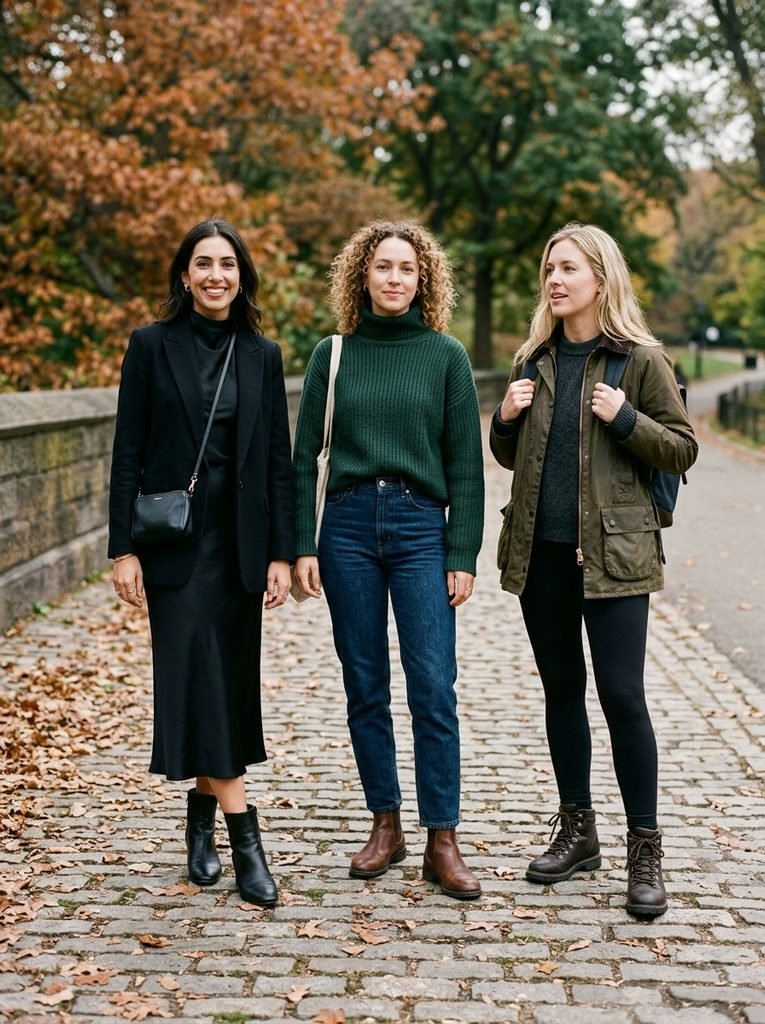
Adding a single literal costume piece to an otherwise normal outfit, a pair of cat ears with a regular outfit, for example, tends to look like a half-finished costume rather than an intentional non-costume choice. It’s worth committing fully to one direction or the other rather than landing in between.
Underestimating the room. Arriving in an outfit with zero seasonal reference at an event where most people have made an effort can read as disengaged, even when the intent was simply personal preference rather than indifference.
Overcomplicating the formula. The strongest non-costume Halloween outfits tend to rely on one or two deliberate choices, a color, a texture, an accessory, rather than trying to reference the holiday from every angle at once.
Choosing drama over practicality for a night that requires neither. Not every Halloween event calls for a full black-and-velvet moment, and matching the actual formality and energy of the specific gathering matters more than defaulting to the most dramatic version of the outfit available.
A Simple Formula to Build the Whole Outfit
- Start with a black or deep-toned base as the outfit’s foundation
- Choose exactly one additional element to carry the Halloween nod: a color, a texture, or an accessory
- Keep everything else in the outfit simple enough to support that one choice rather than compete with it
- Match the drama level to the actual event, bar night, house party, or office gathering
- Let makeup or a manicure do extra seasonal work if the clothing itself stays simple
Retailers like Free People and Anthropologie tend to carry black and jewel-toned pieces with enough texture and detail, lace, velvet, structured silhouettes, to work well within this formula without veering into costume territory. For statement accessories specifically, Etsy is worth a look for independent sellers making the kind of dramatic, slightly gothic jewelry and hair pieces that carry an outfit’s seasonal mood on their own.
For anyone building the rest of an autumn wardrobe alongside a Halloween outfit, ideas for dressing well through the fall season generally is a useful companion piece, since many of the same rich colors and textures that work for Halloween carry through the rest of the season too. The same logic used for dressing for a specific occasion without leaning on a single obvious choice applies here as well: a seasonal outfit doesn’t need to be literal to feel appropriate for the night.
Frequently Asked Questions
Is it rude to skip the costume at a Halloween party? Not inherently, particularly at a casual gathering where costumes aren’t explicitly required. What tends to read poorly is arriving with zero acknowledgment of the occasion at all. A dark, considered outfit with even one seasonal detail generally reads as respectful of the event without requiring a full costume.
What colors work best for a non-costume Halloween outfit? Black is the most versatile base, and deep, saturated tones, burnt orange, wine red, rich purple, work well as single accent pieces against it. Very bright, cartoonish versions of these colors tend to read as more literal and costume-adjacent than their deeper, dustier counterparts.
Can you wear all black to a costume party? Yes, particularly with one or two deliberate details, a dramatic accessory, an interesting texture, a bolder makeup choice, that signal the outfit was chosen with the occasion in mind. All black with no additional consideration can read as simply an evening outfit rather than a Halloween one, so it’s worth adding at least one seasonal touch.
What’s a good last-minute Halloween accessory? A dramatic pair of earrings, a wide-brim black hat, or a pair of black lace gloves all add instant seasonal drama to an outfit that’s otherwise already in the closet. These tend to be faster and more affordable than assembling any part of an actual costume.
How should you dress for Halloween at work without a costume? A single restrained nod, a deep jewel-toned top, one seasonal accessory, or a dark manicure, paired with an otherwise normal professional outfit tends to strike the right balance for most workplace Halloween events, which usually call for far less drama than a night out.
You Don’t Need a Costume to Look Like You Showed Up
Halloween dressing doesn’t have to be a choice between a full costume and an outfit that could have been worn on any other day of the year. The space between those two options is wide enough to fit almost any personal style, and it rewards a few deliberate choices far more than it rewards elaborate effort.
A dark base, one strong color or texture, a single considered accessory. That combination does more to signal that an outfit belongs at a Halloween gathering than most people expect, and it does it without a single costume piece involved.
The best non-costume Halloween outfit isn’t the one that avoids the holiday. It’s the one that acknowledges it clearly enough that nobody has to ask what you’re supposed to be.



Leave a Reply