
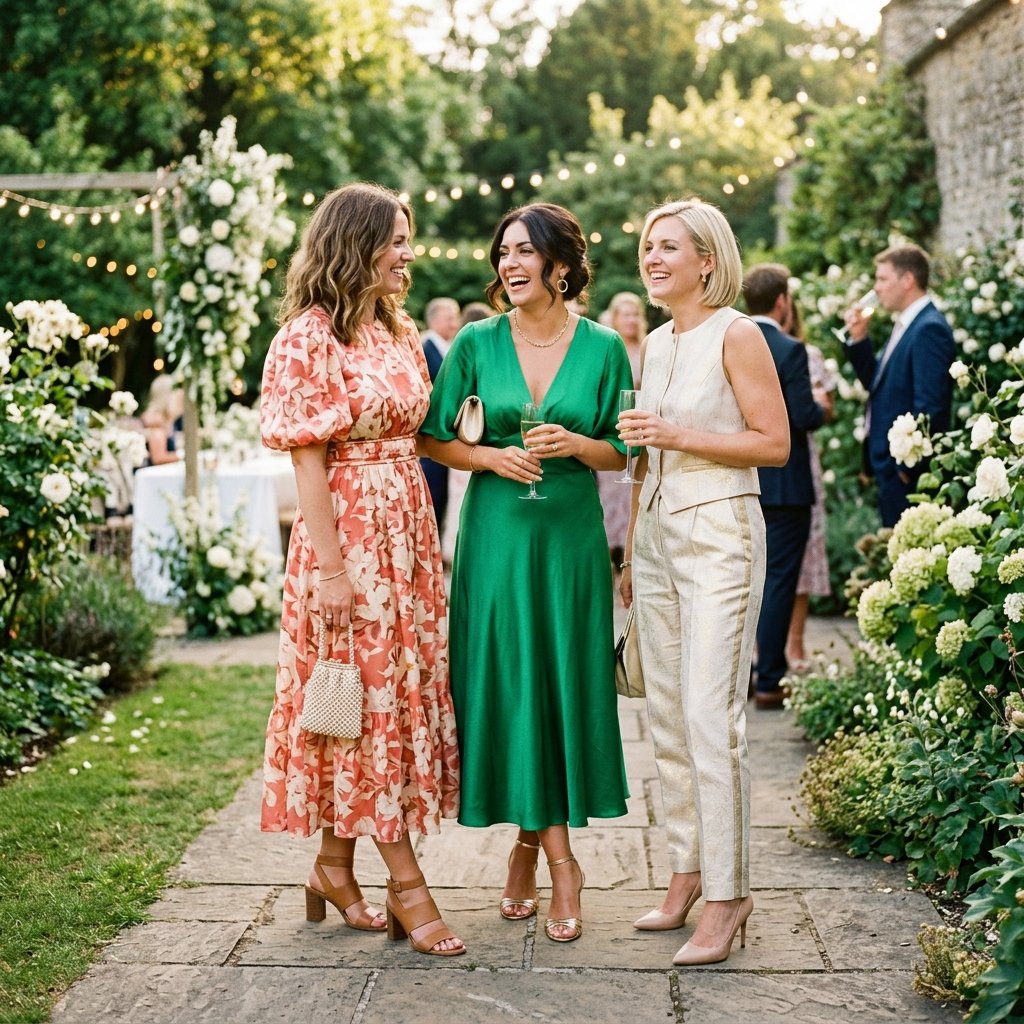
Getting dressed for a wedding sounds simple until the closet doors are open three days before the event. Is the favourite floral dress garden-party appropriate, or accidentally too casual? Will the beloved heels sink into the lawn during an outdoor ceremony? Does that deep plum colour count as too dark for a summer celebration?
Wedding guest dressing ranks among the trickier style challenges most people face. Unwritten rules layer on top of dress codes, dress codes sometimes contradict themselves, and photographs from the day will exist forever. The goal is to look polished without upstaging anyone, without underdressing, and without becoming the person everyone quietly notices for the wrong reason.
The good news: once the actual logic behind what works becomes clear, decisions get much simpler. Not every rule applies to every wedding, but knowing which ones matter — and why — makes any invitation far easier to navigate. This guide covers what it takes to show up dressed appropriately, confidently, and genuinely well.
Start With the Dress Code, Not the Wardrobe
This sounds obvious, but most people get it backwards. They think about what they already own, or what they want to wear, and then look for permission in the dress code. The better approach works in reverse. Reading the dress code first lets it set the parameters before opening a closet or a browser tab.
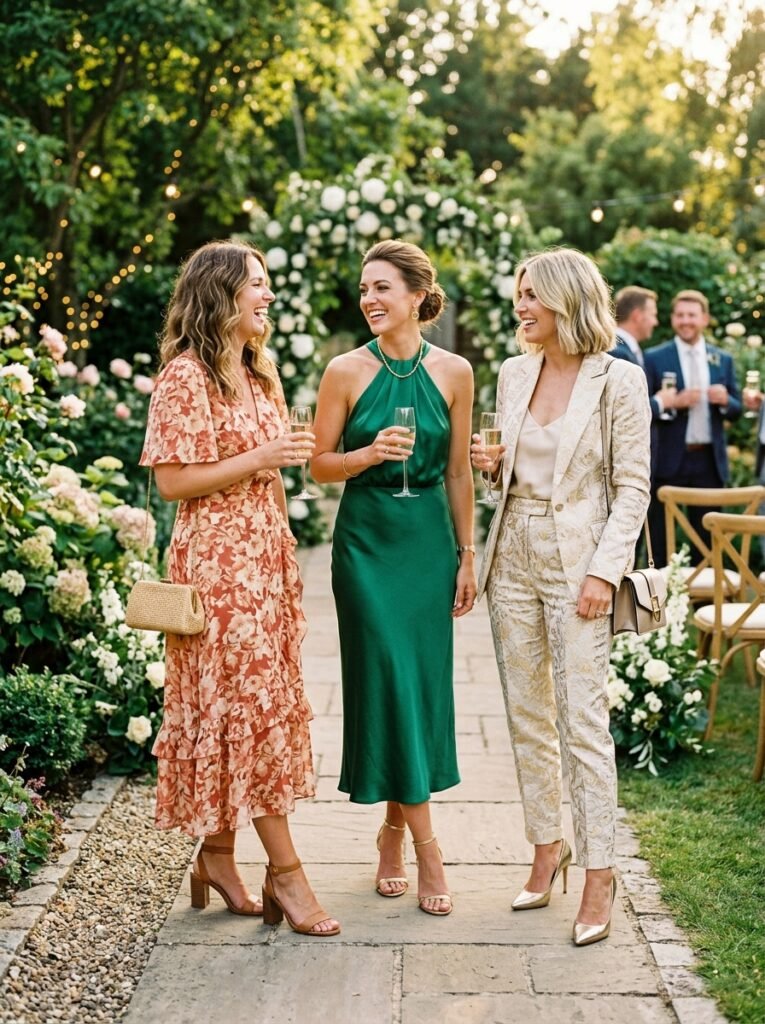
According to the Emily Post Institute, the invitation and the time of the wedding offer the best guide to formality, alongside a few other factors: whether the ceremony is secular or religious, whether the couple’s culture calls for head coverings, and whether bare shoulders or open-toed shoes might read as offensive in that setting. Local custom matters too — some regions read the same dress code more conservatively than others.
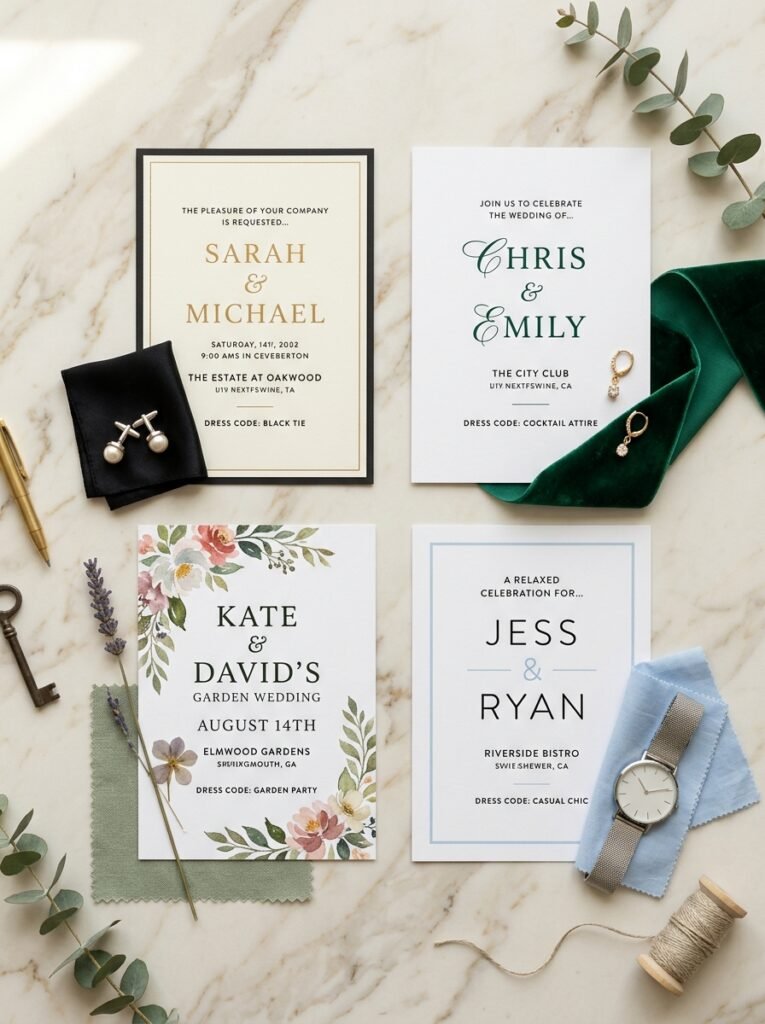
Wedding dress codes exist on a spectrum, from the most formal down to the most casual. Understanding where each one sits prevents two common mistakes: reading black tie as merely “something nice,” or mistaking garden party for an invitation to wear a sundress better suited to brunch.
Black tie and black tie optional sit at the most formal end and deserve their own careful reading — the distinction matters enough to warrant a dedicated breakdown, covered step by step in What to Wear to a Black-Tie Wedding: A Complete Guest Guide.
Cocktail or formal attire means knee-length to midi dresses, tailored jumpsuits, or dressy separates. This is the most common dress code on invitations and allows the widest creative range without veering casual.
Smart casual or garden party trips up many guests because the words sound relaxed. They are not casual. They call for polished and pretty without formal weight — a floral midi dress, a linen set, a printed wrap dress. Still intentional, just not floor-length.
Casual or beach dress codes allow more relaxation, but casual for a wedding differs from casual for a Saturday afternoon. It still means looking considered and put together.
When a dress code feels ambiguous, dressing one level up from the first interpretation is the safer bet. Toning down elegance is always easier than recovering from underdressing at someone else’s wedding.
What to Wear to a Wedding: Outfit Ideas That Actually Work
Once the formality level is clear, the real decision-making begins. These approaches consistently work across wedding contexts, body types, and personal styles.
The Midi Dress: The Most Reliable Option
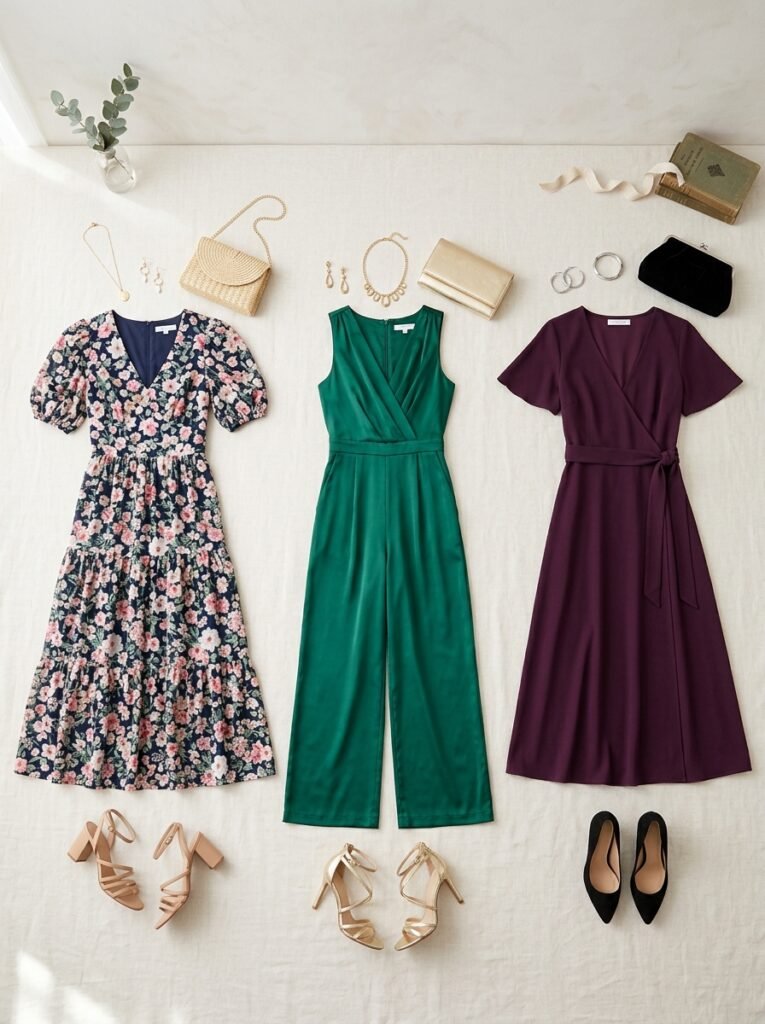
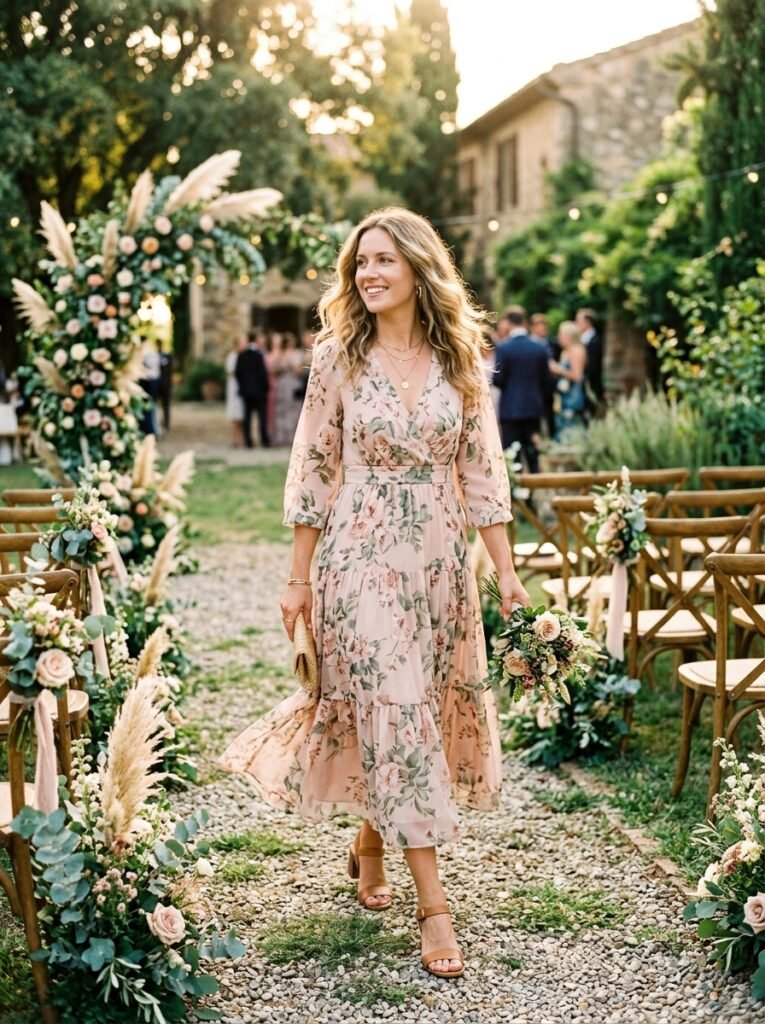
If one silhouette almost never fails as a wedding guest outfit, it’s the midi dress. Hitting between the knee and ankle, it flatters virtually every height and body type. It reads as intentionally dressed without tipping into overly formal, and it works from smart casual through cocktail and into black tie optional territory, depending on fabric and styling.
A floral midi in a lightweight fabric suits garden, outdoor, and summer weddings. A satin or silk midi in a rich solid colour reads elegant for evening or formal ceremonies. A structured crepe midi carries a guest from a winter city ceremony straight through to the reception.
The midi dress also sidesteps the most common anxieties of wedding guest dressing. It isn’t too short. It moves beautifully in photographs. It works with everything from block heels to strappy sandals to ballet flats.
Elegant Jumpsuits and Trouser Sets
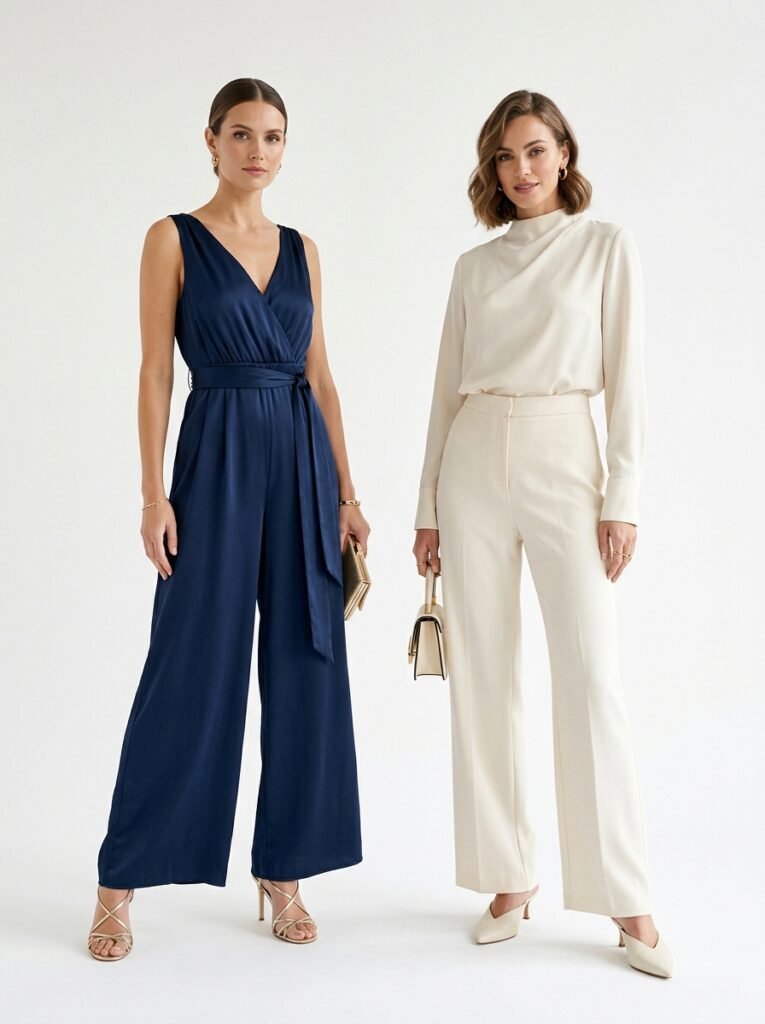
Jumpsuits and wide-leg trouser sets with a matching or coordinating top have become genuinely appropriate for most wedding dress codes. They suit guests who feel less comfortable in dresses or skirts.
The key for a jumpsuit is fabric and tailoring. A well-fitted jumpsuit in silk, satin, crepe, or structured linen reads beautifully at a wedding. A loose, relaxed-fit jumpsuit in a casual fabric does not, regardless of colour. The silhouette needs to feel deliberate and polished.
Wide-leg trousers in a fluid fabric, paired with an elegant blouse or a structured top, photograph well and work across a range of formality levels. Adding a heel and the right accessories carries this combination through most dress codes comfortably.
A Classic Wrap Dress
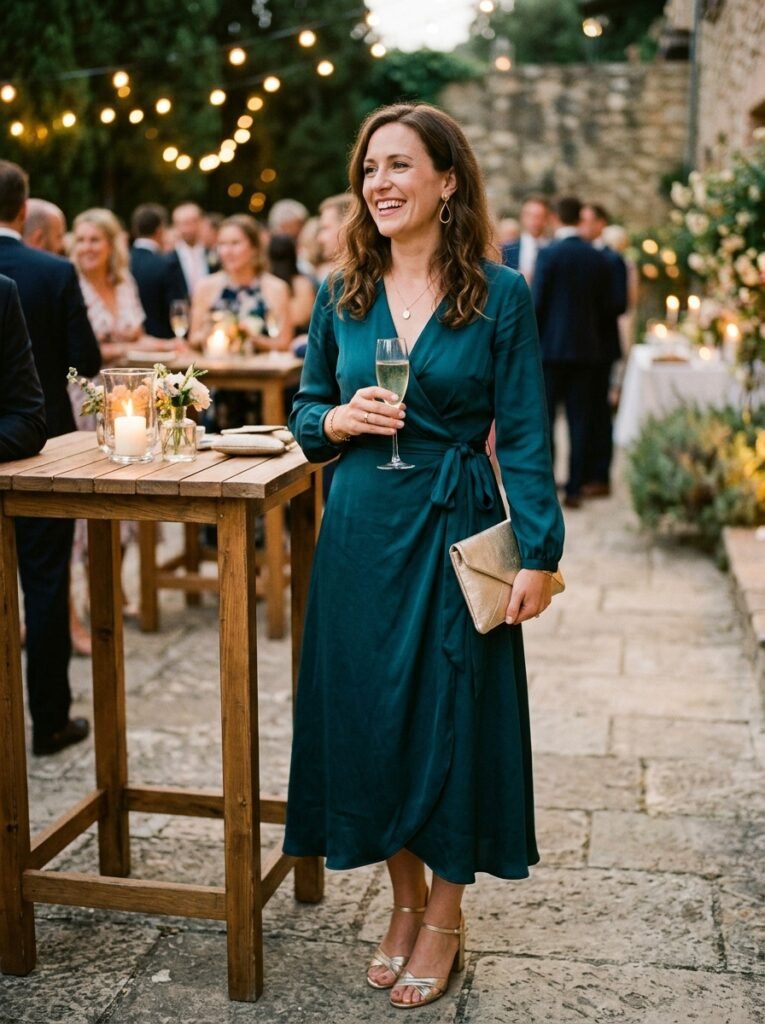
The wrap dress remains a perennial wardrobe solution for good reason. It’s adjustable, universally flattering, and reads as both feminine and polished without competing with the bridal party. A wrap dress in a rich jewel tone, a sophisticated print, or a clean solid works for the vast majority of weddings and requires very little styling effort to look complete.
Statement Separates Done Right
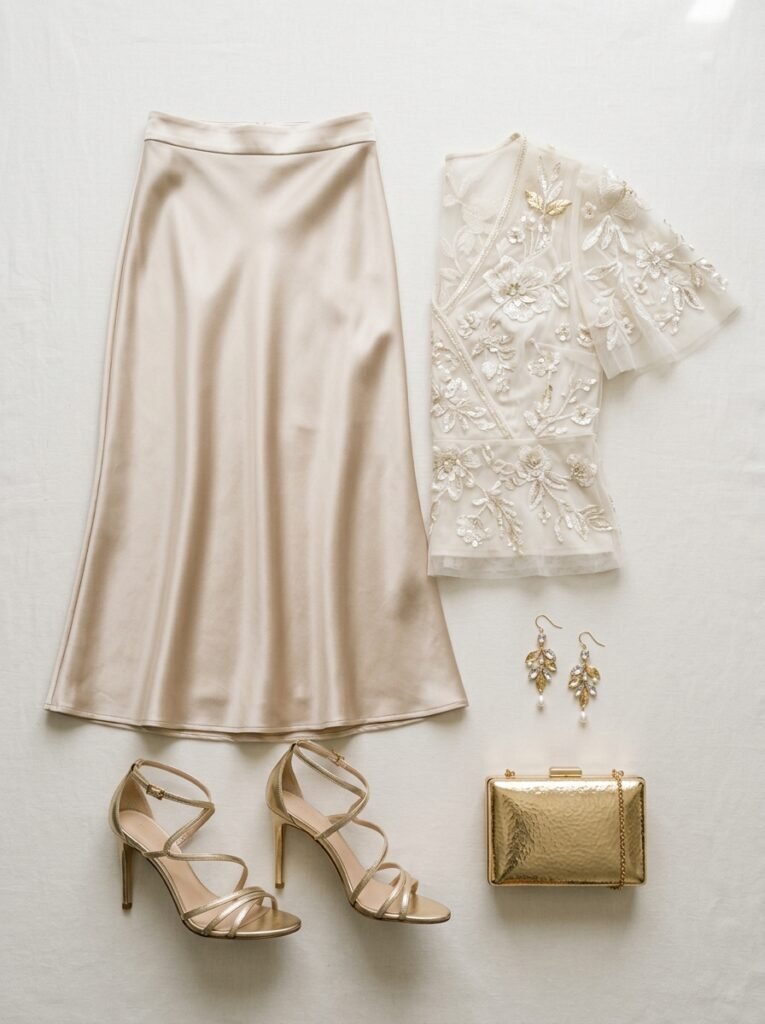
A beautifully cut skirt paired with a refined top has grown increasingly popular as a wedding guest approach, since it allows more personalisation than a dress while still reading as intentional. A satin midi skirt with a fitted silk top. A tailored high-waisted skirt with an embellished blouse. A pleated crepe skirt with a structured knit.
The key is that both pieces need to feel dressed and cohesive rather than assembled from two separate outfits. When separates work at a wedding, they look like they were always meant to be worn together.
Colours That Work and Colours to Consider Carefully
Colour carries the most anxiety in wedding guest dressing, along with the most misinformation. Here’s what actually matters.
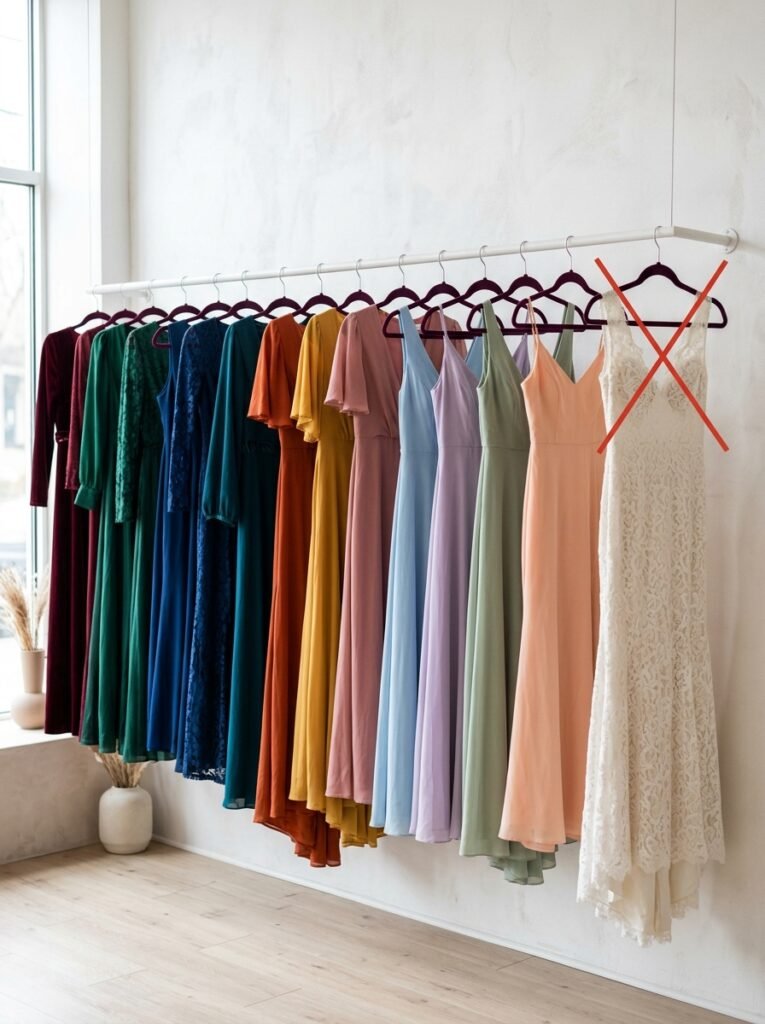
White, ivory, and cream remain the most consistent colours to avoid across nearly every wedding. The tradition against guests wearing white exists to avoid visually competing with the bride, and while it’s observed less rigidly than it once was, erring toward avoidance stays the safest and most considerate choice. This includes off-white, champagne that reads as cream, and anything that could photograph as white.
All-black used to be considered inappropriate for weddings, but that convention has largely faded for modern couples and guests. A well-styled black outfit suits most weddings, particularly evening or formal ones. The exception arrives when a couple specifically requests guests avoid black, which invitations occasionally note.
Red and other bold statement colours aren’t off-limits but deserve some consideration. The real question is whether an outfit will draw significant attention away from the couple — not because a guest should fade into the background, but because a loudly photographed look at someone else’s wedding can feel inconsiderate in hindsight.
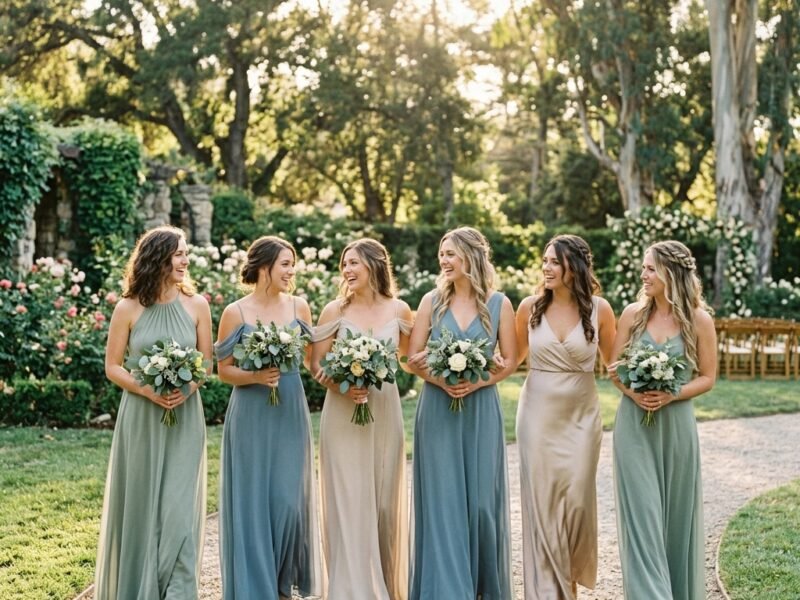
Blush and light pink are technically safe from a colour standpoint but can photograph similarly to some bridesmaid dresses, so checking what the bridal party is wearing is worth the effort when that information is available.
Jewel tones, rich midtones, florals, and prints remain consistently flattering choices for wedding guests. They read as celebratory, photograph beautifully, and carry none of the complications noted above.
Shoes That Work for Every Wedding Scenario
Shoes are the practical and aesthetic detail that can make or break a wedding guest outfit, and a few scenarios are worth thinking through before the day.
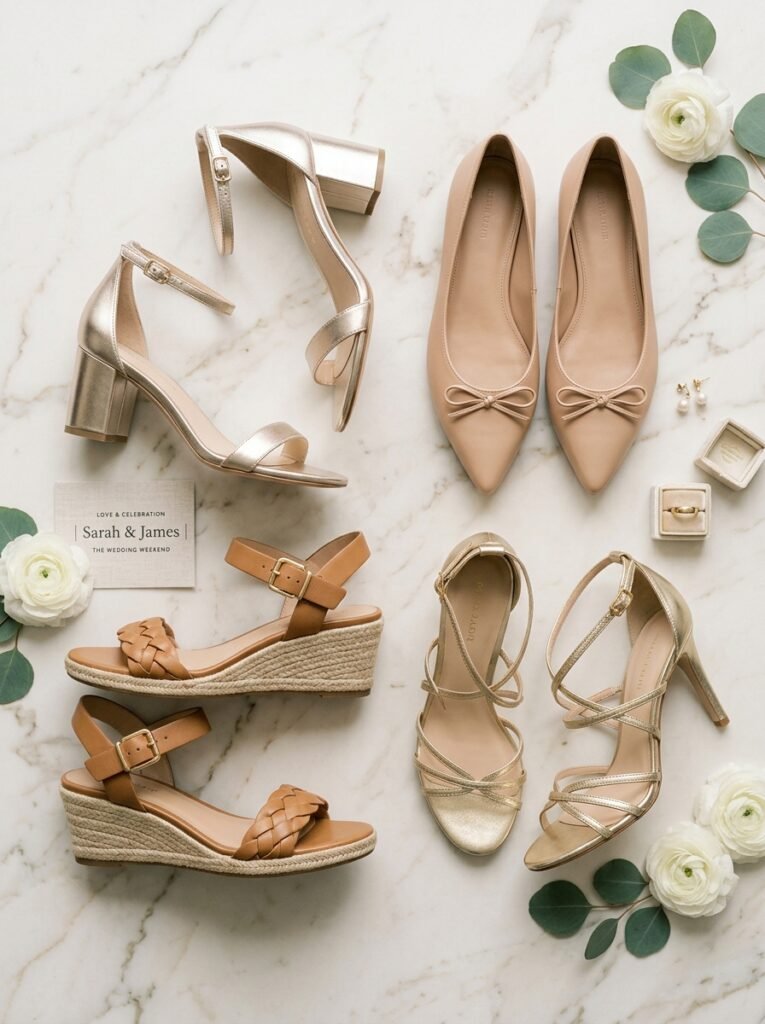
For outdoor weddings on grass or unpaved surfaces, stiletto heels create a genuine problem beyond aesthetics. They sink. They get stuck. They damage grass and create discomfort within the first ten minutes. Block heels, kitten heels, wedges, or elegant flats work better for any outdoor ceremony, particularly where a lawn is involved.
For beach weddings, flat sandals or going barefoot where the environment allows is entirely appropriate and often more elegant than attempting heels on sand.
For indoor formal weddings, heels in any style work well. Flat shoes and low heels suit the occasion equally, as long as the material and construction feel refined enough to match the look’s formality.
Block heels earn a special mention as the all-purpose wedding shoe, since they offer the elevated look of a heel with enough stability for dancing, walking across cobblestones, and standing through photographs without agony.
Metallic shoes — gold, silver, and bronze especially — function as neutrals in a wedding guest context and pair with an enormous range of outfit colours and styles. A quality pair of metallic block heels or strappy metallic sandals ranks among the most practical wedding guest wardrobe investments available. For a deeper look at how time of day should factor into shoe and outfit choices, 20 Day vs Night Wedding Outfit Ideas breaks down the light-driven logic behind daytime versus evening dressing.
What to Absolutely Avoid Wearing to a Wedding
Being direct helps here. These choices most consistently create problems, whether practically, aesthetically, or socially.
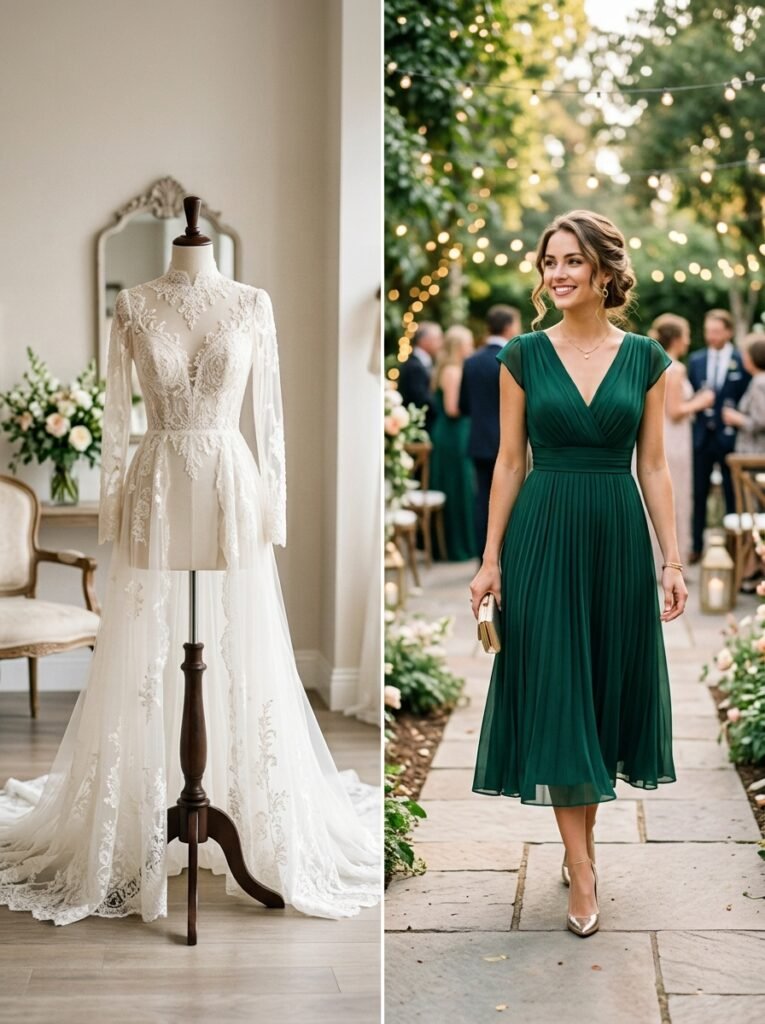
Anything that reads as white or bridal. This includes white lace, embellished white fabrics, all-over ivory, and dresses with significant white base tones. Intention matters less than how the outfit photographs.
Anything too casual for the venue and formality level. Sundresses better suited to a grocery run, denim in any form unless explicitly requested, t-shirts, shorts, or anything belonging to a completely different occasion. The bar for a wedding guest always sits higher than everyday dressed.
Extremely short hemlines, particularly at religious or traditional ceremonies. A dress requiring constant adjustment, too short to sit comfortably, or likely to attract attention for being revealing isn’t the right choice for someone else’s wedding day.
Overly loud or attention-seeking outfits clearly dressed to be noticed over the couple. There’s a difference between looking beautiful and looking like competition. An outfit designed to be the most dramatic thing in the room is a social misstep at someone else’s event.
Uncomfortable shoes that haven’t been broken in. This is practical rather than aesthetic — blisters appear by cocktail hour. New shoes worn for the first time to a wedding are a gamble that rarely pays off.
Anything that needs constant attention. Strapless styles requiring repeated adjustment, wrap dresses tied too loosely, hats too wide for an indoor seated ceremony, or bags too small to carry actual essentials. The best wedding guest outfit is one that gets forgotten because it fits and functions perfectly.
Practical Tips for Getting the Outfit Right
Beyond the big decisions, a few practical considerations separate an outfit that works in theory from one that works on the actual day.
Checking the weather forecast for the specific ceremony and reception times — not just the general day — pays off. A beautiful summer morning can turn into a cold evening reception. A spring outdoor ceremony might run warmer than expected. Planning for the full day beats planning for the best-case scenario.
Travel and venue factor in too. A beautiful silk dress can look exhausted after a long car journey or flight. When significant travel is involved, choosing a fabric that recovers from sitting, or bringing the look in a garment bag to change on arrival, solves the problem.
Dressing for the full duration matters. The ceremony, the cocktail hour, the seated dinner, and the dancing all place different demands on an outfit. Some looks stay beautiful for a few hours and grow uncomfortable or impractical as the night continues. A dress that allows dancing without incident almost always beats one that looks stunning but limits movement.
Bringing a layer helps too. Evening wedding receptions almost always involve air conditioning, outdoor cooling, or both. A light wrap, a tailored jacket, or a beautiful pashmina in a complementary tone can save the evening and often adds to the overall look rather than detracting from it.
Steaming or pressing the outfit the day before, rather than the morning of, avoids a common last-minute scramble. Wedding mornings tend to move faster than anticipated, and wrestling with a steamer thirty minutes before departure rarely goes well.

Common Wedding Guest Outfit Mistakes
A few specific mistakes come up repeatedly and are worth naming directly.
Buying something brand new that hasn’t been tested. A new outfit that fits differently once worn with the right undergarments, or shoes that felt fine in the shop but grow unbearable after an hour, creates a specific kind of miserable wedding experience. Wearing or at least trying the full look before the day prevents this.
Ignoring the venue when choosing heels. The number of guests who show up to outdoor weddings in spike heels stays remarkable given how consistently it ends badly. Reading the venue description carefully solves this in advance.
Choosing an outfit based on one loved element rather than the whole picture. A dress adored in the wrong colour for the occasion. Shoes loved but incompatible with everything else in the look. A bag too casual for everything else. Assessing the full outfit as a system, rather than a collection of individual pieces, produces better results.
Waiting too long to shop. Wedding invitations often arrive months in advance, but many guests leave outfit sourcing to the last few weeks and then feel pressured into choices they wouldn’t otherwise make. Starting early means finding something genuinely loved rather than something that will simply do.
Frequently Asked Questions
- Can black be worn to a wedding? In most modern contexts, yes. All-black outfits suit the majority of weddings, particularly evening or formal ones. The old convention against wearing black to weddings has largely faded. The exception arrives when a couple specifically requests guests avoid black, occasionally noted on the invitation, or when the ceremony follows a very traditional religious service where the convention may still hold.
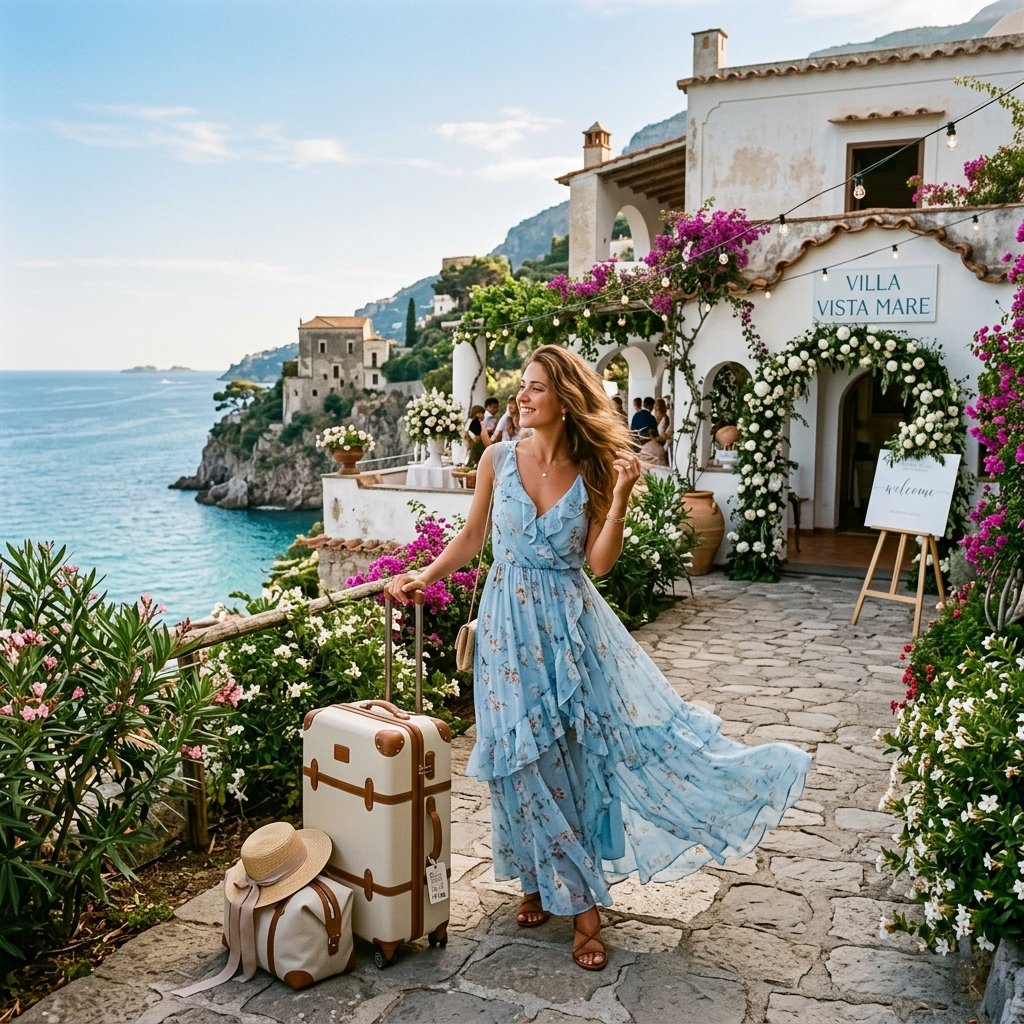
- What works for a beach or destination wedding? Lightweight, breathable fabrics in colours suited to an outdoor setting. Floral or tropical prints, solid jewel tones, or soft neutral shades all work well. Flat sandals or low wedges handle sand or uneven surfaces better than heels. Anything likely to be ruined by wind, humidity, or unexpected splashes is worth avoiding. A flowing midi or maxi dress is often the most practical and beautiful choice for a beach setting.
- Is a floral print acceptable at a wedding? Absolutely, and florals rank among the most consistently appropriate choices for wedding guests, particularly for spring, summer, and outdoor weddings. Scale and tone matter most. Very small, quiet florals read refined. Large, bold prints read more casual. Florals that lean predominantly white are worth avoiding.
- What does cocktail attire actually call for? Knee-length to midi dresses, elegant jumpsuits, or polished separates in dressy fabrics — think silk, satin, chiffon, structured crepe, or velvet depending on the season. Sundresses, casual linen, or anything that could work for a daytime casual occasion without adjustment don’t belong here.
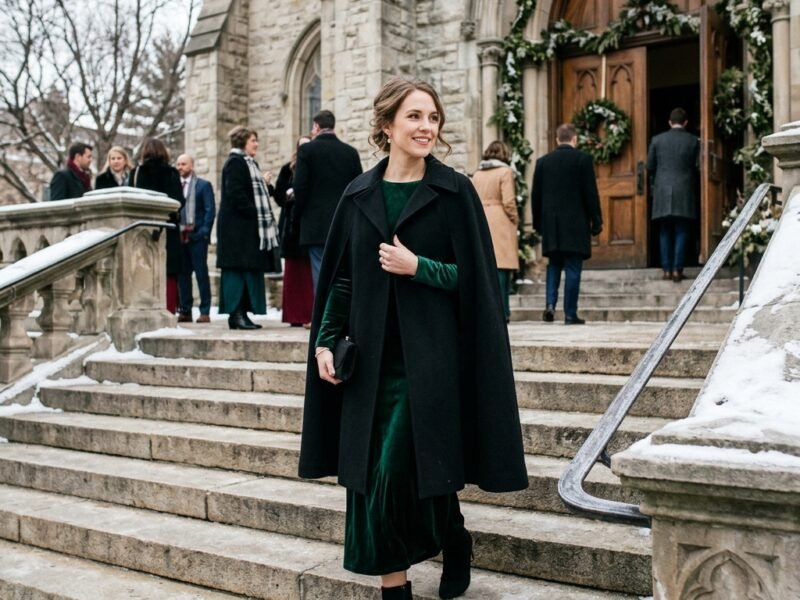
- How does dressing change for a winter wedding? Rich fabrics and deeper tones suit winter weddings beautifully. Velvet, structured satin, heavy crepe, and luxe knits all read appropriately formal for a colder season. Jewel tones like emerald, burgundy, sapphire, and plum fit particularly well. Layering with an elegant coat or wrap eases the transition between spaces, and opaque tights double as both a warmth and styling solution.

The Real Goal of Wedding Guest Dressing
Getting dressed for a wedding well ultimately comes down to one thing: showing up in a way that honours the occasion and the people at its centre, without the outfit becoming the story.
That means looking genuinely beautiful and intentional, in clothes that fit and suit the setting. It means not standing out for the wrong reasons. It means feeling comfortable enough to actually enjoy the day, rather than managing an outfit through it.
The guidance here isn’t about restriction — it’s about clarity. Understanding what actually matters, and why, makes the decision-making far simpler and the outcome almost always better. Showing up dressed well and feeling confident makes it easier to celebrate someone else’s extraordinary day. That’s the whole point.

[…] to a cooler evening reception. For guests weighing whether to dress up or dress down further, this wedding guest dress code guide breaks down formality levels in more […]
[…] and are worth naming. Anyone building a full wedding wardrobe, from the bridal party through the wedding guest outfits worn by extended family, tends to hit similar fit and fabric […]
[…] satin, velvet and fine wool. If a refresher on reading each level of formality is useful, the wedding guest outfits guide on this site covers it, so this article stays focused on what the cold […]