
Many closets feel impossibly full and somehow still empty every morning. This is rarely a space problem or a budget problem. It is usually a strategy problem. Overfull closets tend to hold clothes that do not work together. They often contain impulse purchases that looked good alone but paired with nothing else already owned. They hold items kept out of guilt, plus duplicates of pieces that were never quite right.
The capsule wardrobe concept fixes all of that. It does not ask anyone to own less simply for the sake of owning less. Instead, it helps a wardrobe function better. The pieces are chosen to work with each other, reflect daily life, and generate an unreasonable number of outfit combinations from a small number of garments.
Ten pieces, thirty outfits is not a marketing gimmick. It is math. When every item connects with every other item, combinations multiply fast. When each piece fits well, uses quality fabric, and suits the wearer’s coloring, the wardrobe feels effortless every morning, regardless of the occasion.
This guide walks through how to build that wardrobe from the ground up.
What a Capsule Wardrobe Actually Is
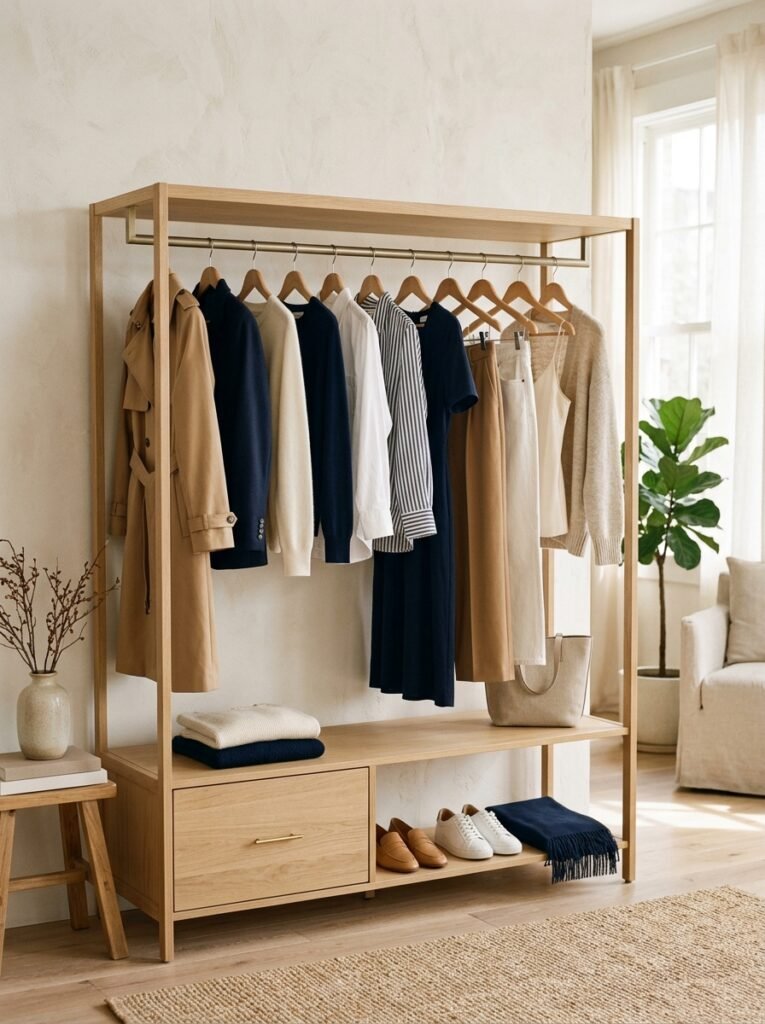
The term gets used loosely, so precision matters. A capsule wardrobe is a small, intentional collection of versatile clothing pieces that combine to create multiple outfits. London boutique owner Susie Faux introduced the concept in the 1970s. American designer Donna Karan popularized it in the United States. Her 1985 Seven Easy Pieces collection showed what a minimal wardrobe could look like in practice.
The core idea has not changed since. Versatile pieces beat novelty-driven ones. Quality wins over quantity. A cohesive color palette lets everything mix freely. Fit matters more than almost anything else. The whole becomes greater than the sum of its parts.
A ten-piece capsule strips the concept down and forces real intentionality. Every piece has to earn its place by connecting with at least three or four others in the collection. A piece that only works with one other item does not belong in a small capsule.
The resulting outfit count comes directly from those connections. With ten pieces chosen strategically, thirty unique combinations is not an aspirational number. It is closer to a conservative estimate.
The Case for a Neutral Color Palette
Before any single piece gets chosen, the color palette needs deciding first. This is the structural decision that makes everything else work. Most wardrobe-building attempts stall right here.
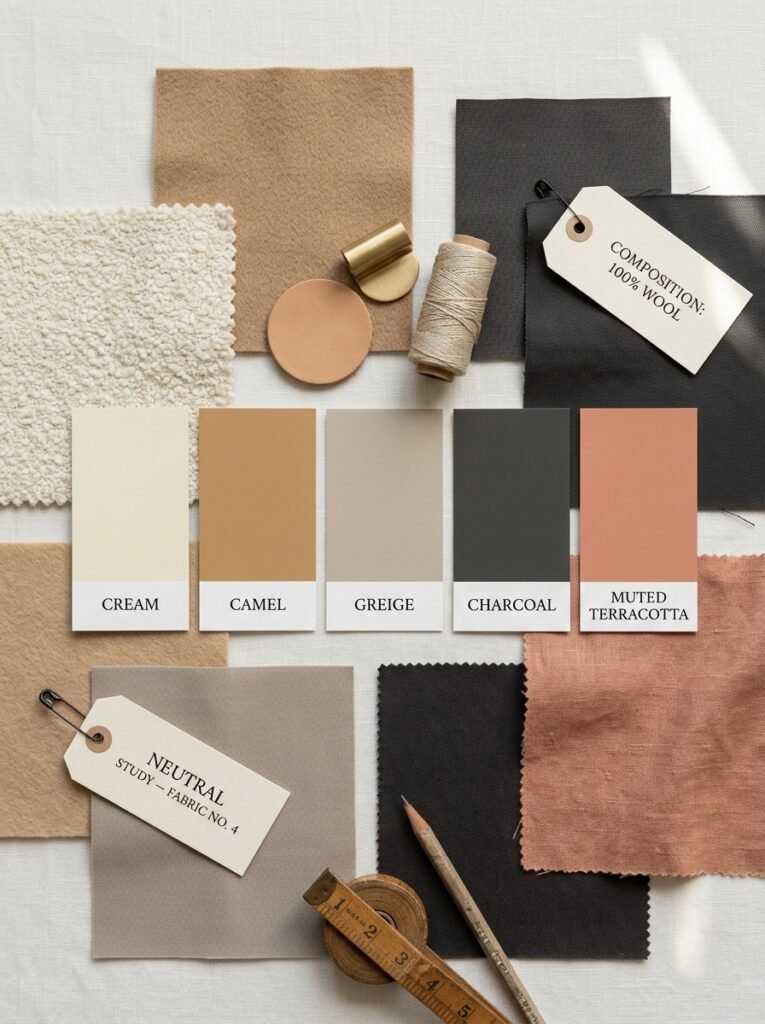
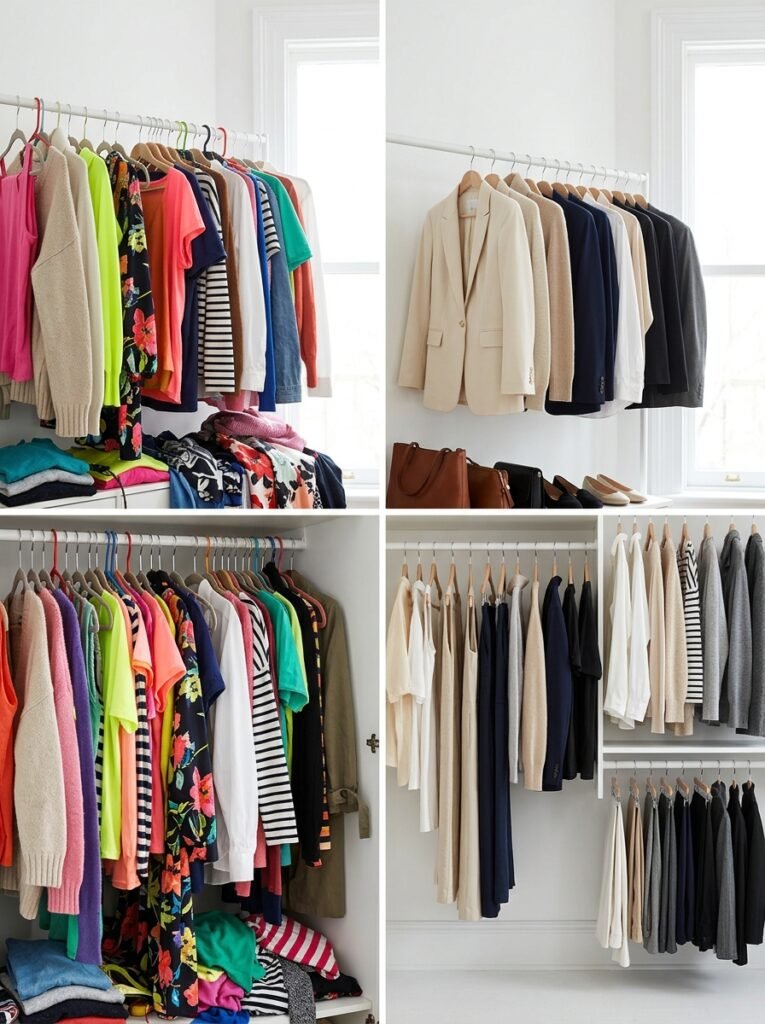
A neutral foundation palette works best for a capsule because neutrals mix freely without conflict. Classic options include cream, white, navy, grey, tan, camel, black, and warm brown. Not all of them are necessary. Two or three that suit skin tone and personal taste can anchor an entire collection.
From that neutral base, one accent color can enter through one or two pieces. Soft terracotta, dusty blue, olive, burgundy, and sage all work well. They read as near-neutrals themselves, so they connect with the base tones without limiting combinations.
A simple rule of thumb helps here. Any two pieces held side by side should look intentional together. If they look accidental instead, the palette needs adjusting.
Warm skin tones tend to be flattered by camel, cream, warm brown, and olive. Cool skin tones lean toward navy, grey, true white, and burgundy. These remain guidelines rather than rules. Personal experience of what looks and feels good is always the better guide.
The Essential Pieces
Here is the actual wardrobe. These pieces were chosen for maximum cross-compatibility. They suit a lifestyle that moves between casual, smart-casual, and polished occasions. A neutral palette grounds the whole set and makes mixing automatic.
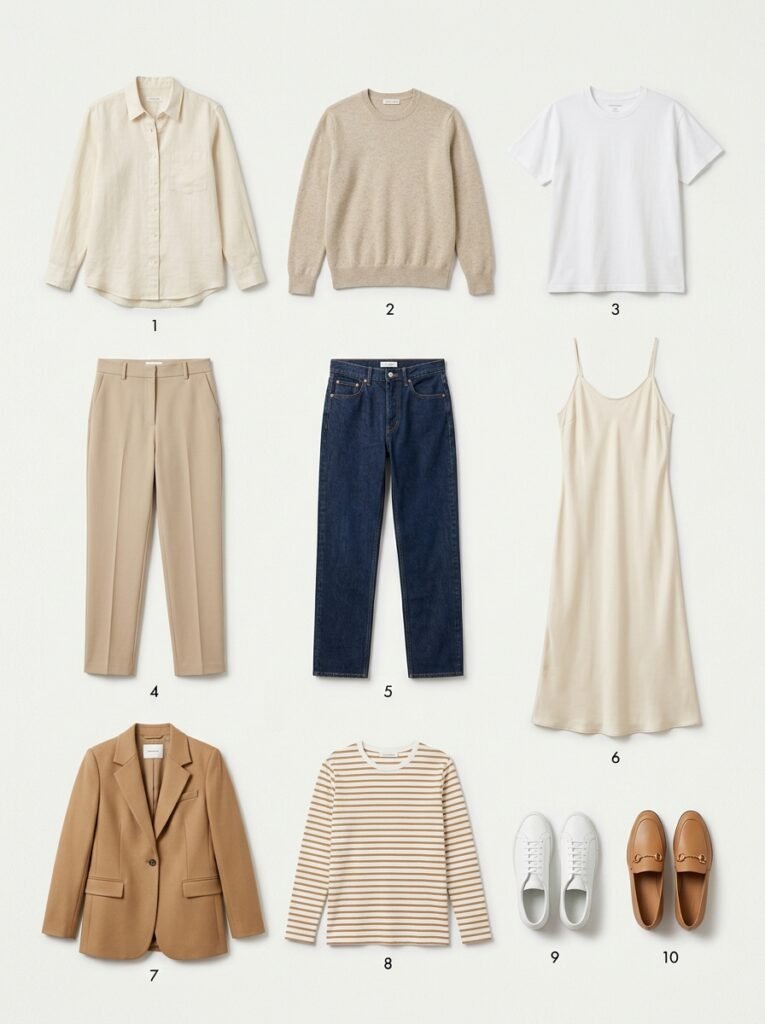
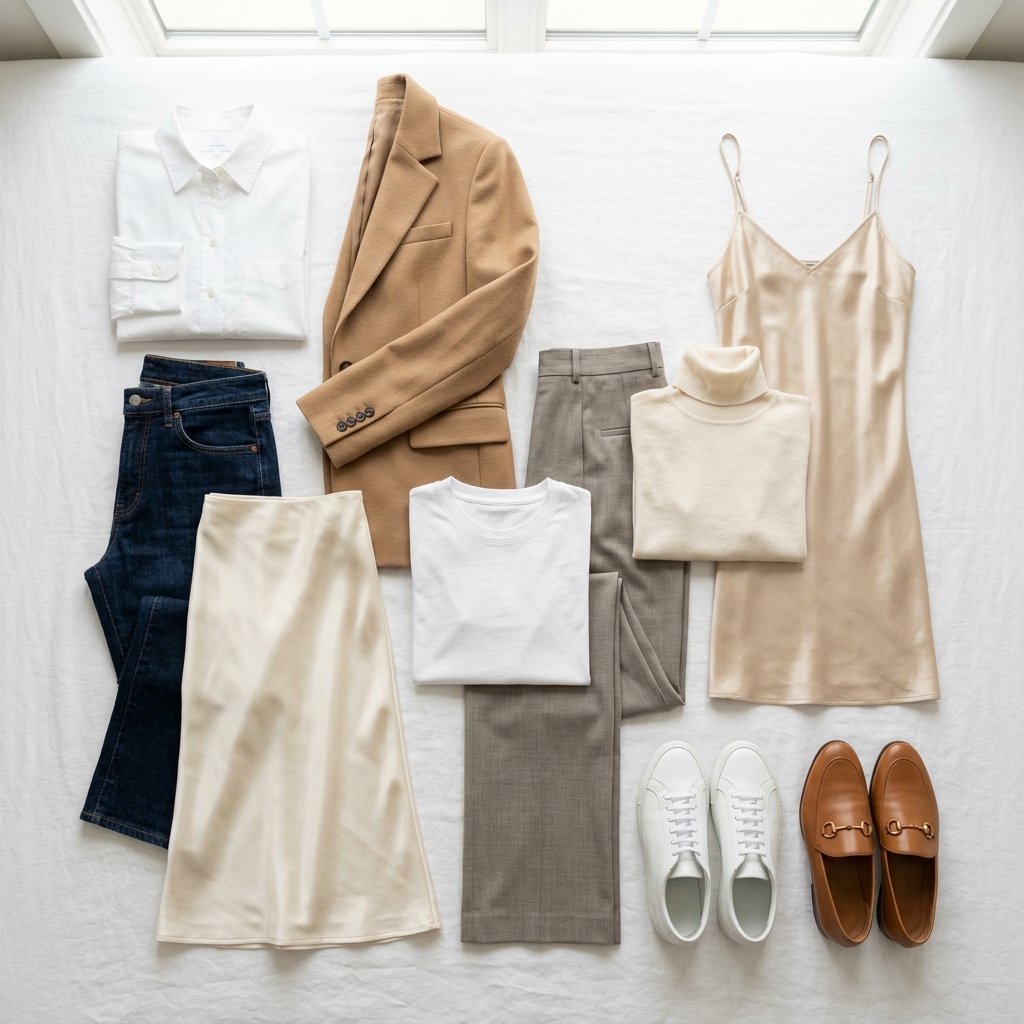
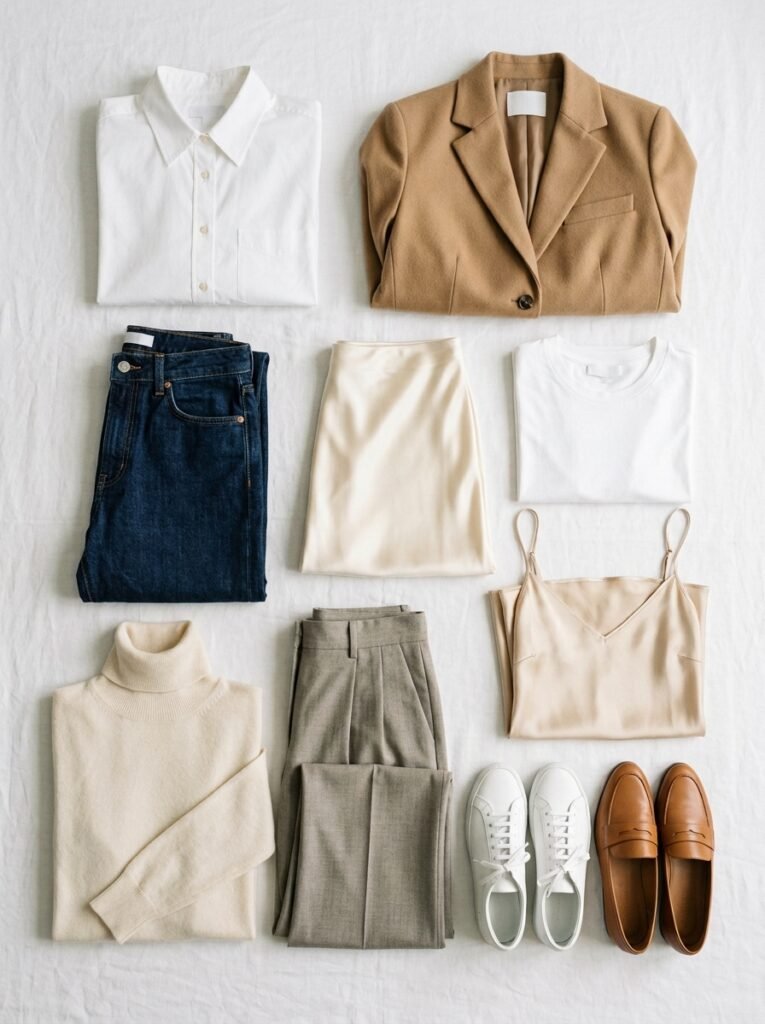
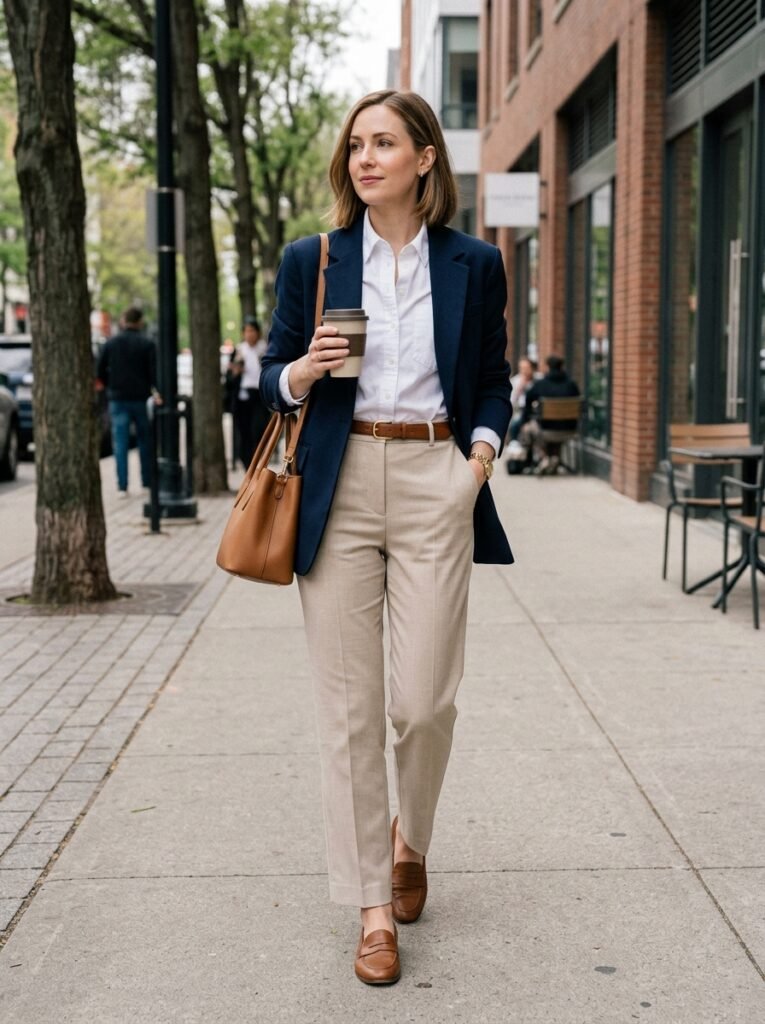
A well-fitted white or cream button-down shirt. It ranks as the single most versatile piece in any wardrobe. It works tucked into trousers, half-tucked with jeans, or worn open over a camisole as a light layer. It can be knotted at the waist with a midi skirt. It reads professional under a blazer and casual under a rolled-sleeve weekend look. Choosing the best quality affordable in a fabric that resists wrinkling pays off long-term.

A tailored blazer in a neutral tone. Navy, camel, grey, or black all work depending on the palette. A blazer acts as a transformation piece. It takes a casual outfit and makes it polished in under thirty seconds. It layers over the button-down for formal occasions, over a t-shirt for smart-casual, or open with jeans for an intentional weekend look.

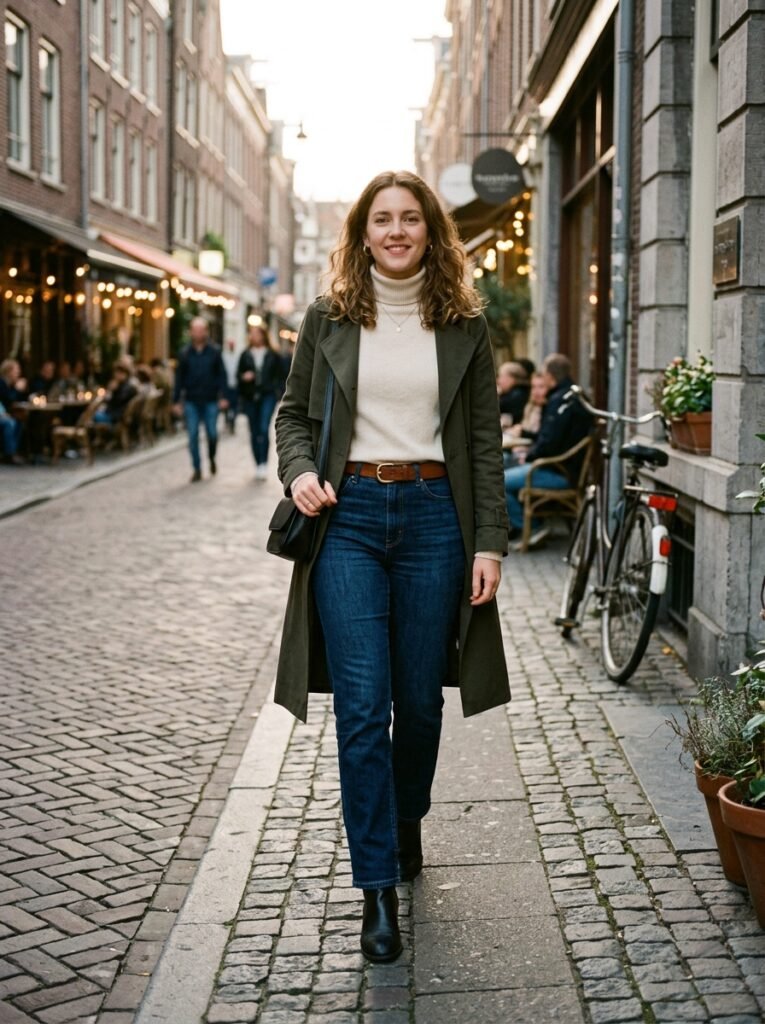
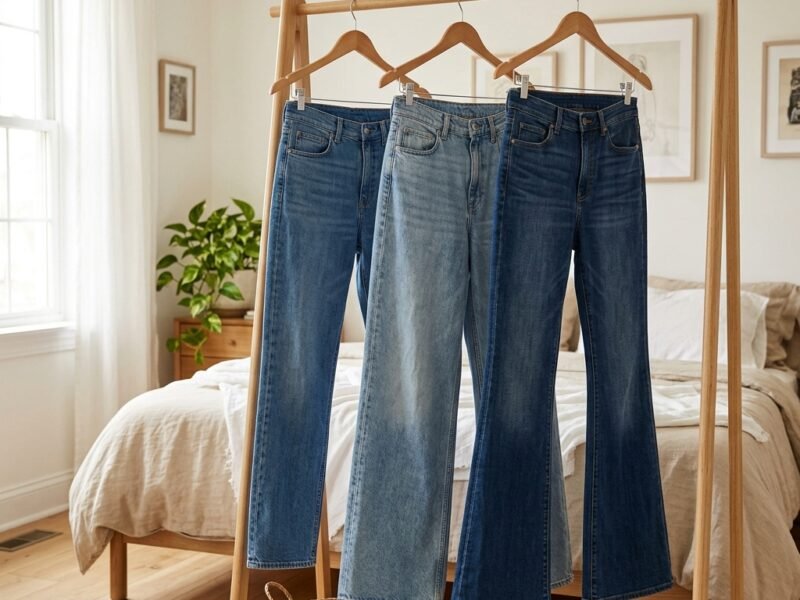
Dark wash straight-leg jeans. These avoid the extremes of skinny, wide-leg, and distressed styles. A clean, straight-leg dark denim works across more contexts than any other cut. It reads almost formal paired with a blazer and heels, and fully casual with a t-shirt and trainers. This is the workhorse of the capsule.
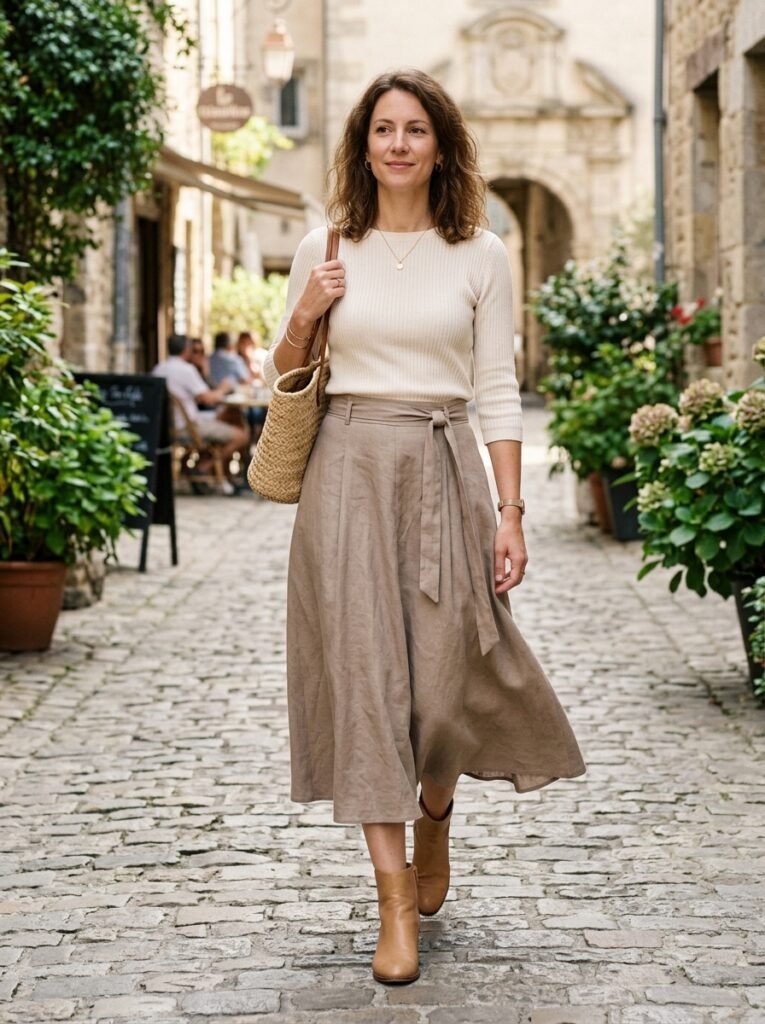
A neutral-toned midi skirt. Satin, crepe, or a quality woven fabric in cream, camel, or a muted tone earns its place as the unexpected workhorse. It pairs with the button-down and blazer for a polished look, with a simple t-shirt for weekend ease, and with the knit for cozy elegance. A simple A-line or wrap silhouette flatters most shapes.
A quality white or neutral t-shirt. It should have real substance, not thin, floppy fabric. A clean cut that fits properly through the shoulders and chest forms the base layer for many combinations. Quality here matters more than most people realize, since a cheap t-shirt undermines everything layered on top of it.

Tailored trousers in a neutral tone. Cream, grey, camel, or black trousers elevate this capsule into genuinely polished territory. High-waisted, straight or slightly wide-leg styles in a fabric that drapes well work best. Paired with the button-down and blazer, they read office-ready. With just a knit tucked in, they turn effortlessly chic for evening.
A fine-knit sweater or turtleneck. It stays lightweight enough to layer and substantial enough to wear alone. The knit provides the comfort piece of the capsule without sacrificing versatility. It layers over the button-down collar for a preppy-elegant combination, sits under the blazer as an alternative to the shirt, or pairs alone with trousers for a minimal, sophisticated look.

A slip dress or simple dress in a neutral tone. A midi-length slip dress in satin or matte crepe transforms character depending on what accompanies it. Alone, it reads evening or summer. Layered with a t-shirt underneath, it turns immediately casual. Topped with the blazer, it reads polished and interesting. Belted with the knit over it, it becomes an entirely different outfit again.
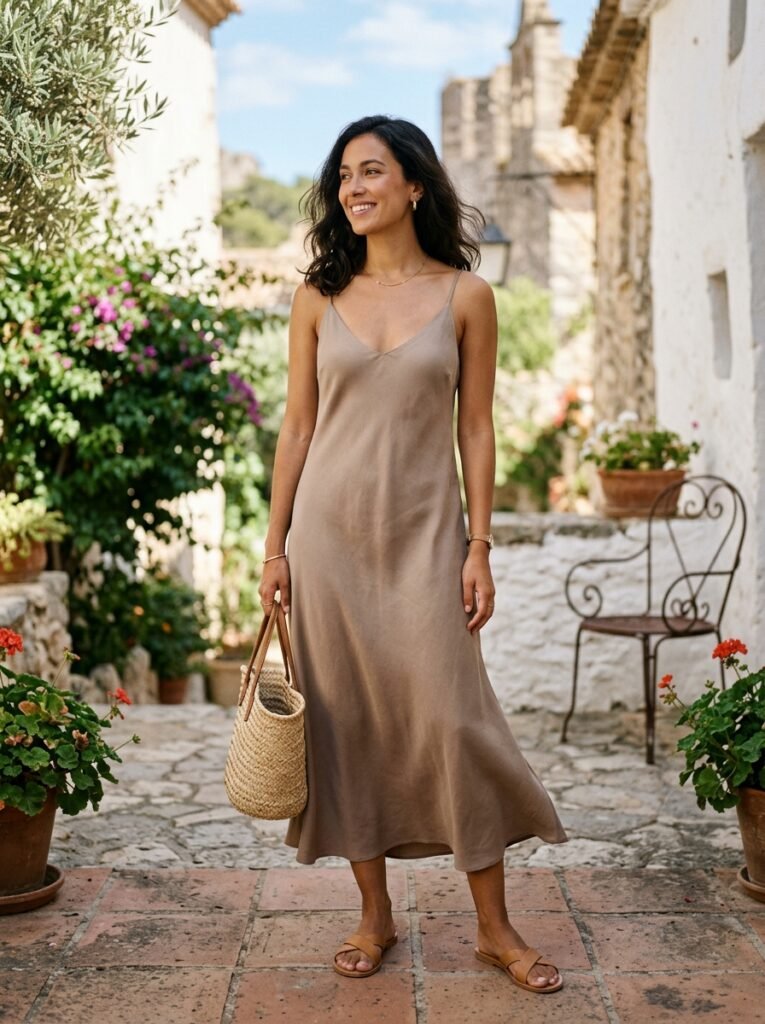
White or clean leather sneakers. These connect the relaxed end of the capsule. They pair with jeans and a t-shirt, contrast fashionably with a midi skirt, and bring contemporary smart-casual energy to tailored trousers. A simple silhouette without logos or heavy design detail wears best.

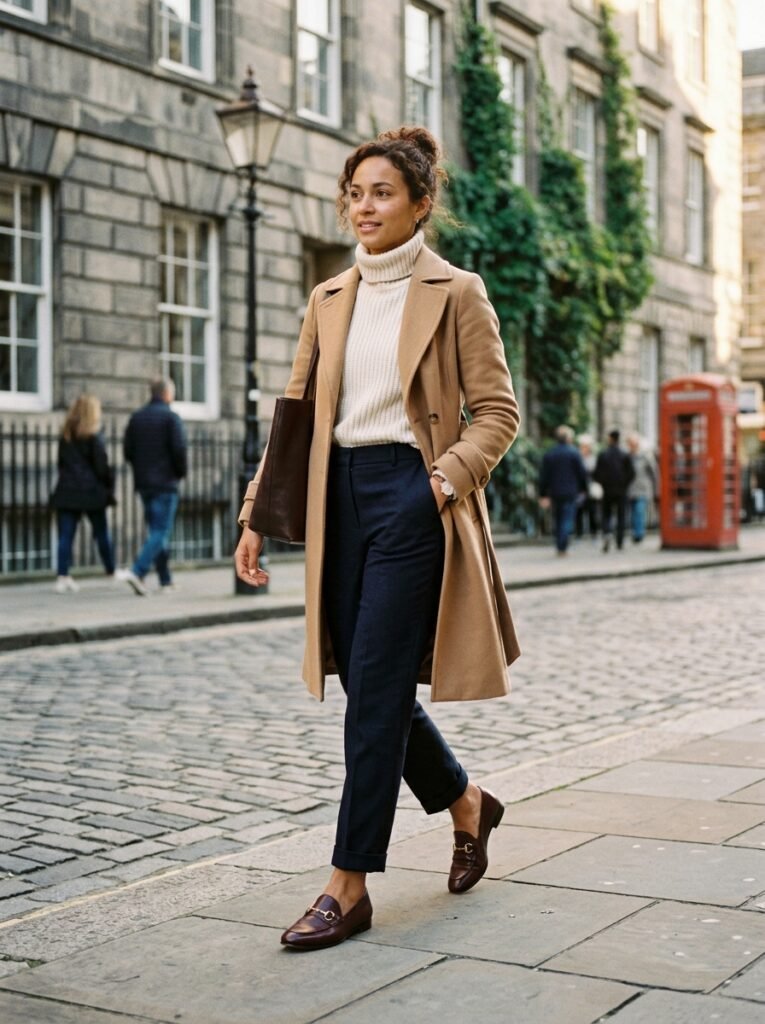
A classic heel or loafer. This dresses the capsule up the way the sneaker takes it casual. A low block heel in nude, black, or tan, or a leather loafer in a complementary neutral, shifts the same outfits into polished territory. Trousers and a button-down read completely differently with loafers than with sneakers.
How the Outfit Combinations Multiply
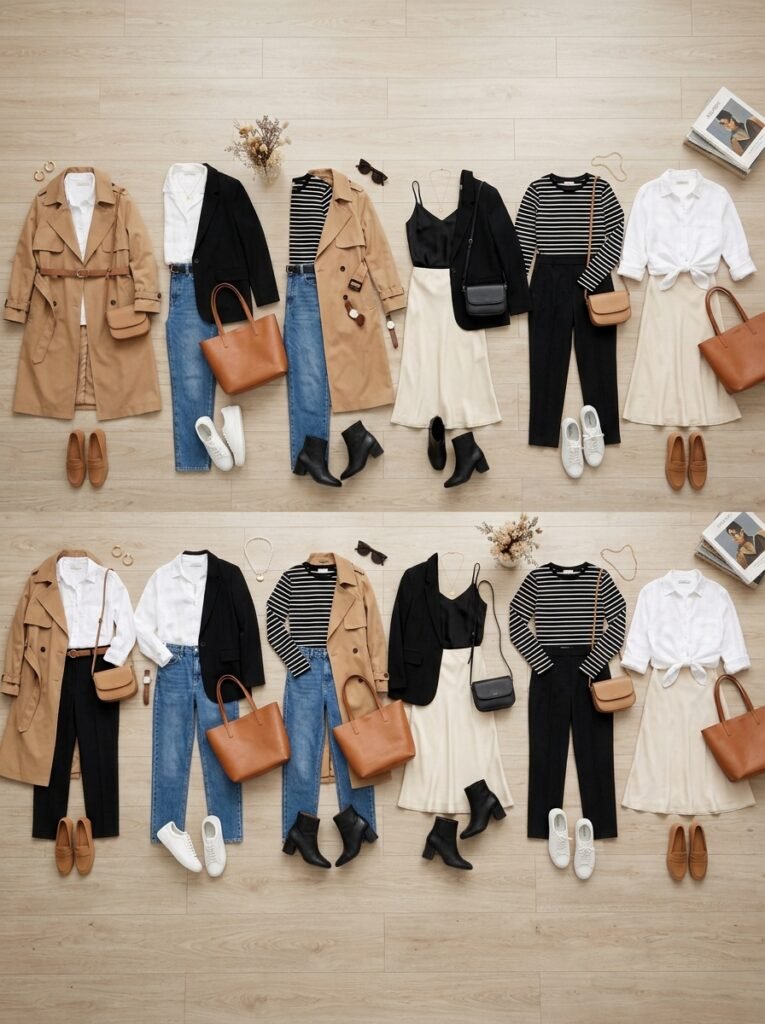
Rather than listing every combination individually, understanding the underlying logic proves more useful. Readers can then generate combinations naturally on their own.
The layering principle forms the foundation. Starting with a base piece—the t-shirt, button-down, slip dress, or knit—layers and bottom-half choices build outward from there.
A t-shirt with dark jeans and sneakers makes one outfit. Adding the blazer and swapping sneakers for loafers creates a completely different one. Keeping the blazer but swapping jeans for tailored trousers produces a third. Removing the blazer and adding the midi skirt instead of trousers makes a fourth. Each swapped variable—top layer, bottom, or shoe—generates a new outfit from the same starting point.
The dress functions as its own outfit engine. Worn alone with heels, it reads as one look. Layered with a t-shirt underneath and sneakers, it becomes a second. Topped with the blazer and loafers, a third. Belted with the knit on top, a fourth. Tied at the waist over it, the button-down creates a fifth combination from a single piece.
The button-down moves through the wardrobe as both a top and a layer. Fully buttoned and tucked into trousers with the blazer, it reads formal. Half-tucked into jeans with sneakers, it reads weekend. Worn open over the t-shirt and midi skirt, it looks layered and interesting. Knotted at the waist over the slip dress, it creates something entirely new.
Working through every logical combination systematically pushes past thirty outfits easily. Thirty becomes closer to the floor than the ceiling.
Choosing Quality Over Quantity
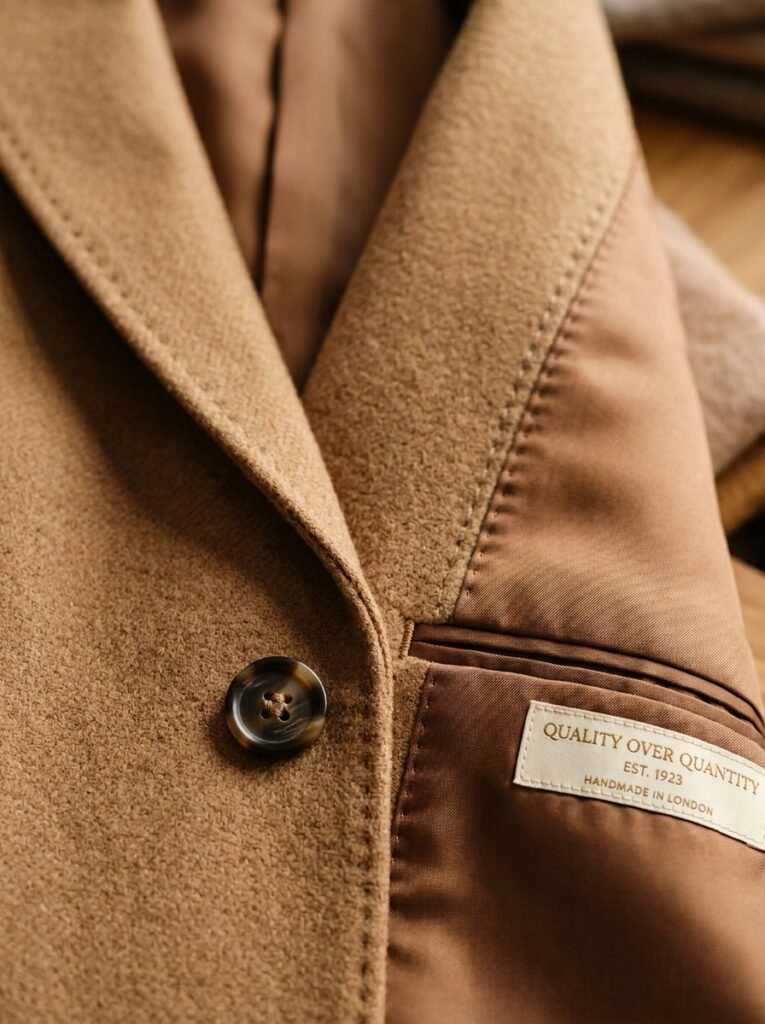
The capsule wardrobe philosophy only delivers on its promise when the pieces are genuinely good. Ten cheap items that pill, lose shape, or fade after a few washes do not make a capsule wardrobe. They make a small, disappointing one.
This does not require every piece to be expensive. It requires every piece to be evaluated on quality rather than price. Fabric should feel substantial and hold its shape. Seams should sit even and flat. Buttons and closures should feel sturdy. Natural fibers like cotton, wool, silk, and linen tend to age better than synthetics and respond better to repeated laundering.
A 2022 study published in the peer-reviewed journal Sustainability examined seven women who built and lived with capsule wardrobes over eight weeks. Researchers Haeun Bang and Marilyn DeLong found that the practice helped participants recognize what to purchase, how to wear and care for items, and how to discard clothes thoughtfully, cutting down on overspending on clothing. Participants who prioritized versatility, price, and fabric quality when shopping reported the strongest satisfaction with their reduced wardrobes.
Thrift stores, consignment shops, and resale platforms like Depop, ThredUp, and Poshmark offer excellent sources for high-quality pieces at lower prices. A well-made secondhand blazer from a quality brand will typically outperform a new blazer from a fast-fashion retailer at the same price point.
Buying one excellent piece when budget allows beats buying three adequate ones. Over time, a wardrobe built from genuinely good pieces costs less than one constantly refreshed with cheap items that wear out quickly.
The Role of Fit in Making a Capsule Work
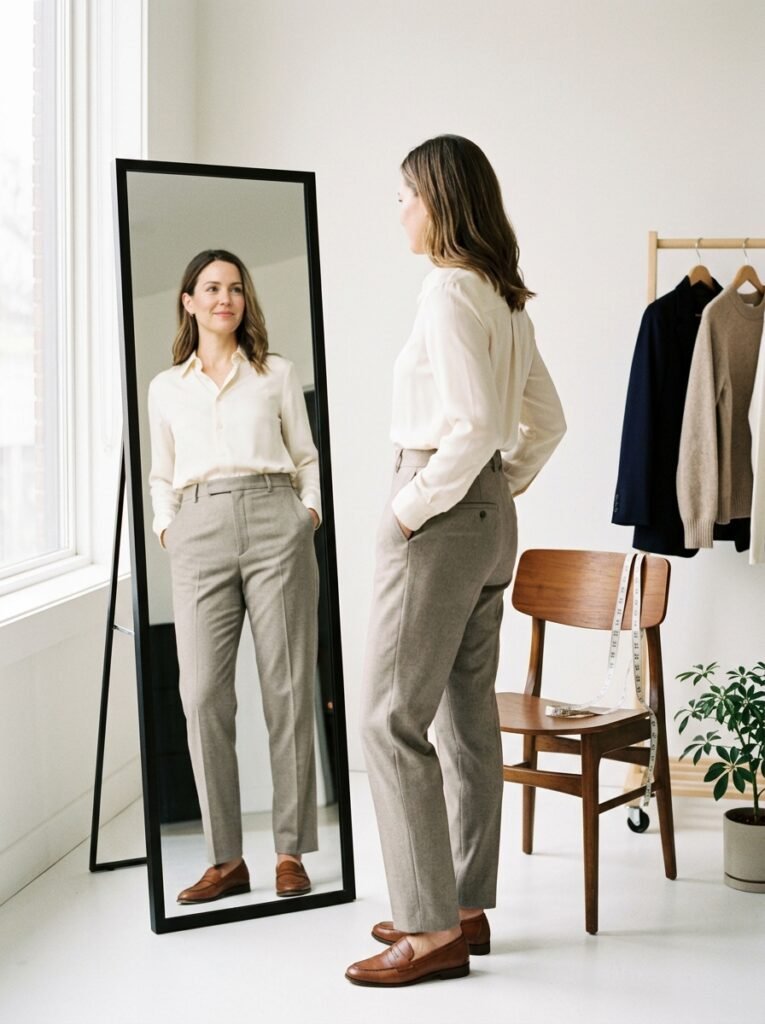
Fit separates a capsule wardrobe that looks effortlessly chic from one that just looks sparse. Pieces that fit poorly do not mix well. They make every outfit look unresolved.
Fit priorities differ by garment. For shirts and blazers, the shoulder seam needs to sit exactly at the end of the shoulder. Nothing else compensates for a shoulder seam that runs too wide or too narrow. For trousers and skirts, waist and hip fit determines everything, while a tailor adjusts length. For t-shirts, chest fit and torso-relative length matter most.
Building a relationship with a local tailor or seamstress pays off quickly. Adjusting a few pieces to fit precisely costs far less than most people assume, and it transforms even an inexpensive piece into something that looks exceptional. A well-fitted thirty-dollar t-shirt often looks better than a poorly fitted two-hundred-dollar one.
Fit also means understanding one’s own body, not critically but practically. Knowing which silhouettes flatter, which waistlines feel comfortable, and which hemlines suit individual proportions all matter here. For a deeper breakdown by shape, Outfits for Every Body Type: Apple, Pear, and Hourglass covers specific styling strategies. A capsule built around pieces that consistently work with the wearer’s body becomes a capsule reached for every morning.
Common Capsule Wardrobe Mistakes to Avoid
Understanding what goes wrong helps build a capsule that actually holds together.
Choosing pieces that are loved individually but do not connect with each other ranks as the most common mistake. Before adding any piece, it helps to ask how many other pieces it will work with. If the honest answer is one or two, the piece does not belong in a ten-piece capsule.
Building a capsule for an aspirational lifestyle rather than an actual one comes in a close second. A capsule built around office wear and cocktail dresses will sit unworn if the wearer works from home and rarely attends formal events. The capsule should reflect the life actually lived, not the one sometimes wished for.
Skipping the color palette step and buying individually liked pieces results in a wardrobe where nothing connects. The palette needs deciding before the pieces get chosen.
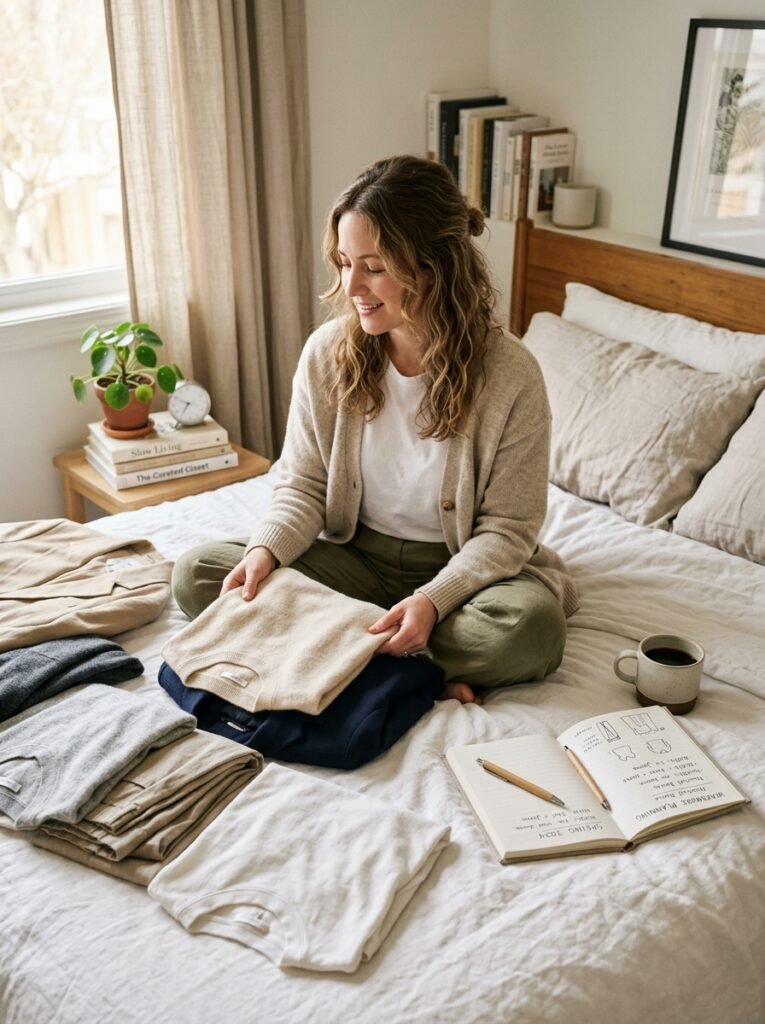
Buying everything at once is tempting but usually leads to regret. Building gradually works better. Starting with the most certain pieces, living with them for a season, and identifying gaps before adding more thoughtfully tends to produce better results.
Ignoring shoes undermines otherwise good decisions. Two shoe options—one casual, one elevated—represent the minimum for a capsule to function across occasions. More than four starts to edge beyond the capsule concept entirely.
What Research Reveals About Capsule Wardrobes
Academic interest in capsule wardrobes has grown alongside consumer interest. A 2022 case study published in the journal Sustainability examined how creating and managing a capsule wardrobe affects individual creativity and contributes to sustainability through what researchers call a circular fashion economy.
The study followed seven female volunteers through an eight-week capsule wardrobe project involving surveys, creativity tests, journals, and interviews. Participants who felt satisfied with their pared-down wardrobes reported stronger creativity scores by the project’s end. Those who felt limited or dissatisfied reported the opposite.
Researchers found that participants who used a wider range of items per outfit—averaging four to six pieces rather than three to four—showed increased or stable creativity scores. This suggests a well-planned capsule with enough cross-compatible pieces can support more creative daily styling, not less.
The sustainability angle carried through clearly too. None of the study’s participants purchased new clothing during the eight-week project, and several reported that the experience made them more conscious about future purchases. The concept of cost per wear helps explain why. A well-made blazer worn three times a week for five years gets worn more than seven hundred times. Divided by cost, it becomes one of the cheapest garments in a wardrobe. A cheap trendy piece worn twice and discarded costs far more per wear, regardless of its original price tag.
Decision fatigue plays a role as well. When every option in a wardrobe works, choosing what to wear takes far less mental energy. Over the course of a year, that cumulative relief adds up to something meaningful.

Frequently Asked Questions
- How many pieces should a capsule wardrobe have? Common frameworks range from ten to thirty-seven pieces. Smaller numbers represent a core capsule, while larger numbers account for seasonal additions and occasion-specific pieces. A ten-piece capsule works best as a starting point or a travel wardrobe—useful for anyone packing light, as covered in Vacation Outfit Ideas Packed for Any Destination—with additional pieces added over time for full seasonal coverage.
- Can a capsule wardrobe work for all seasons? A core capsule of neutral, layerable pieces can transition through most seasons with small additions rather than complete overhauls. The ten pieces described here work across spring through autumn with minimal adjustment. Winter requires heavier outerwear and knits. Many practitioners add three to five seasonal pieces rather than rebuilding from scratch.
- How does someone start a capsule wardrobe when nothing in the closet feels right? An audit works better than a shopping trip. Pulling everything out, trying it on, and being honest about fit, feel, and actual wear helps separate what stays from what goes. What remains reveals both the capsule seed and the gaps that need filling. Shopping should target gaps only, not general interest.
- Is a capsule wardrobe more expensive to build? The initial investment in quality pieces can feel higher than filling a wardrobe with inexpensive fast fashion. Over time, a capsule wardrobe almost always costs less. Pieces last longer, purchases happen less frequently, and expensive impulse buys that never get worn stop happening. Secondhand sourcing makes it possible to build a quality capsule at a low upfront cost.
- What if a lifestyle requires very different types of clothing? A capsule can be segmented. Some people maintain a small work capsule, a casual capsule, and a few formal pieces, with some crossover between segments. The principle of intentional, cross-compatible pieces still applies within each segment, even when the segments themselves stay distinct.
The Wardrobe Actually Worth Using
The best wardrobe is not the biggest one. It is the one reached for confidently every morning—the one where getting dressed feels like a natural extension of self-knowledge rather than a daily negotiation with a closet full of mistakes.
Ten pieces, thirty outfits delivers exactly that. Not through some magical formula, but because the underlying logic holds up. Versatile pieces in a cohesive palette, chosen for real life and real body shape, bought for quality rather than novelty, get maintained and worn until they genuinely wear out.
Building slowly and honestly works best. Editing ruthlessly and regularly keeps the system working. Resisting the impulse to add disconnected pieces protects the whole structure. A small wardrobe built with real intention will outperform a large one built without it.
That is the whole idea. Once experienced, going back becomes genuinely difficult to imagine.



[…] complete the look. For anyone building out a full wardrobe rotation around versatile basics, the capsule wardrobe guide covers how a handful of core pieces can multiply into dozens of outfit […]
[…] the colour block. For readers building out a full seasonal rotation from a small set of pieces, the capsule wardrobe guide covers how a handful of core items can multiply into dozens of […]
[…] is the same logic behind building a capsule wardrobe, where a handful of pieces are chosen specifically because they combine well with each other. Fall […]
[…] of pieces chosen specifically to combine well together, which is the same underlying logic behind a well-planned capsule wardrobe. A handful of slim, cross-compatible layers does more for a petite frame across a full season than […]