
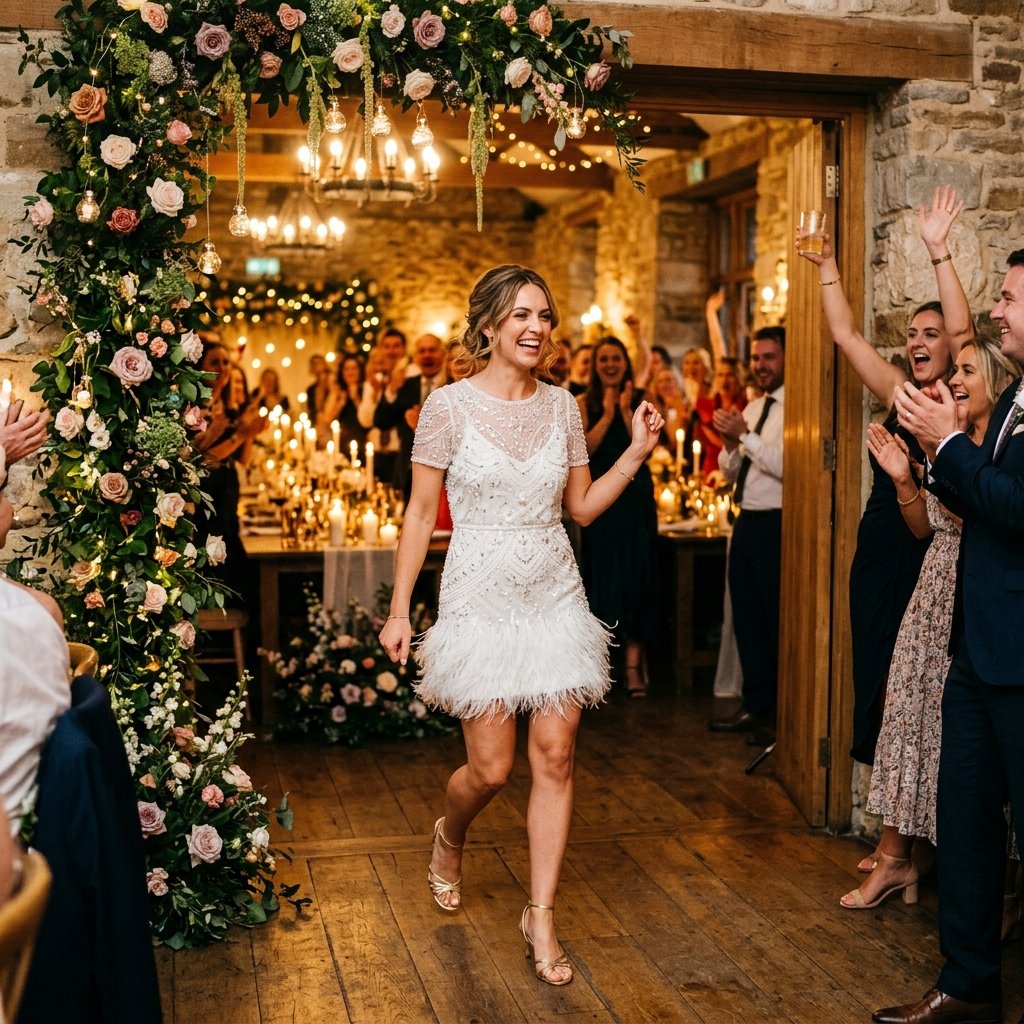
The reception outfit has quietly become one of the most exciting decisions in modern wedding planning. For decades, brides wore their ceremony gown from the processional through the last dance, changing only into a going-away outfit if budget and tradition allowed. A deliberate, distinct reception look was once reserved for royal weddings and the very wealthy.
That has changed completely. The reception change is now a widely embraced part of modern wedding planning. The looks brides choose for the second half of their day are as considered as their ceremony gowns. The ceremony gown represents tradition and the photograph. The reception look is where a bride gets to exhale and enjoy the party.
Wedding-planning platform Zola’s trend data found that 63 percent of couples now consider more than one wedding-day look to be a genuine trend, not an occasional novelty. That shift is why reception dressing has grown into its own category of bridal fashion.
This guide covers twenty-five of the most loved modern bridal reception outfits, arranged from classic through to contemporary. Every look here has been genuinely embraced by real brides across a range of venue types and personal styles.
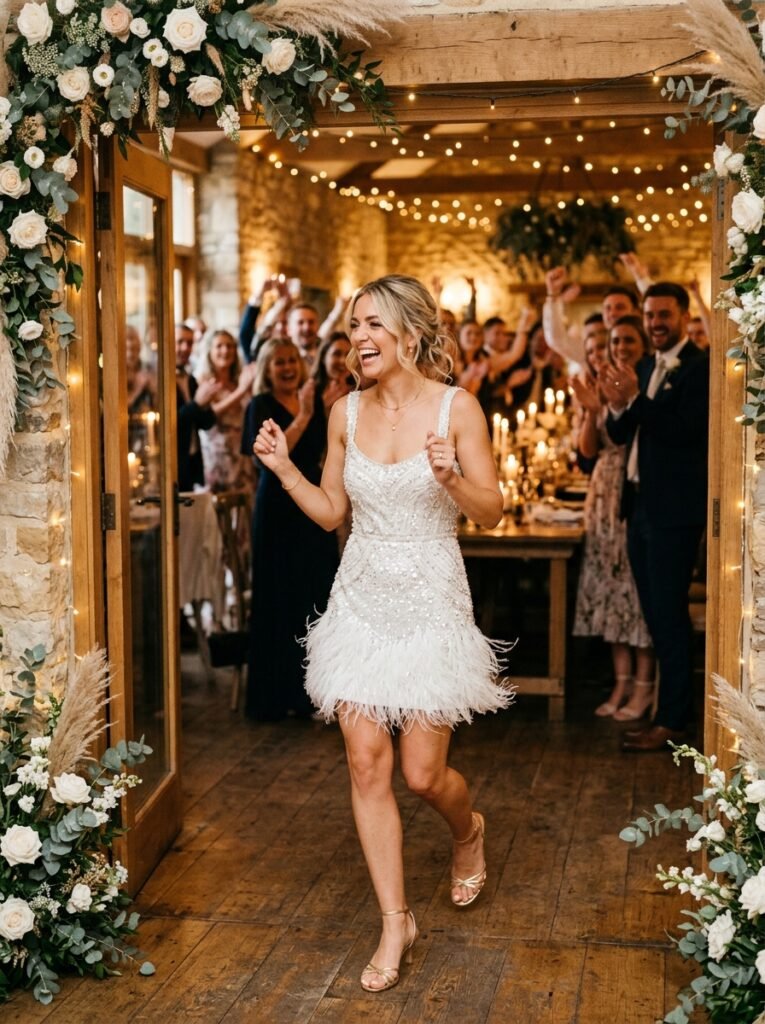
Why a Reception Outfit Change Makes Sense
Most ceremony gowns are not built for dancing. A cathedral train, a corseted bodice, or a heavily layered ball gown skirt is made for walking down an aisle, not the electric slide at eleven o’clock at night.
The change also creates a natural, memorable moment. Guests who stay for the duration experience a genuine reveal when the bride reappears in a new look, and the room reacts with real energy.
Finally, a reception outfit lets a bride whose ceremony gown answered to tradition or a formal venue wear something entirely in her own style once the ceremony’s obligations are behind her.
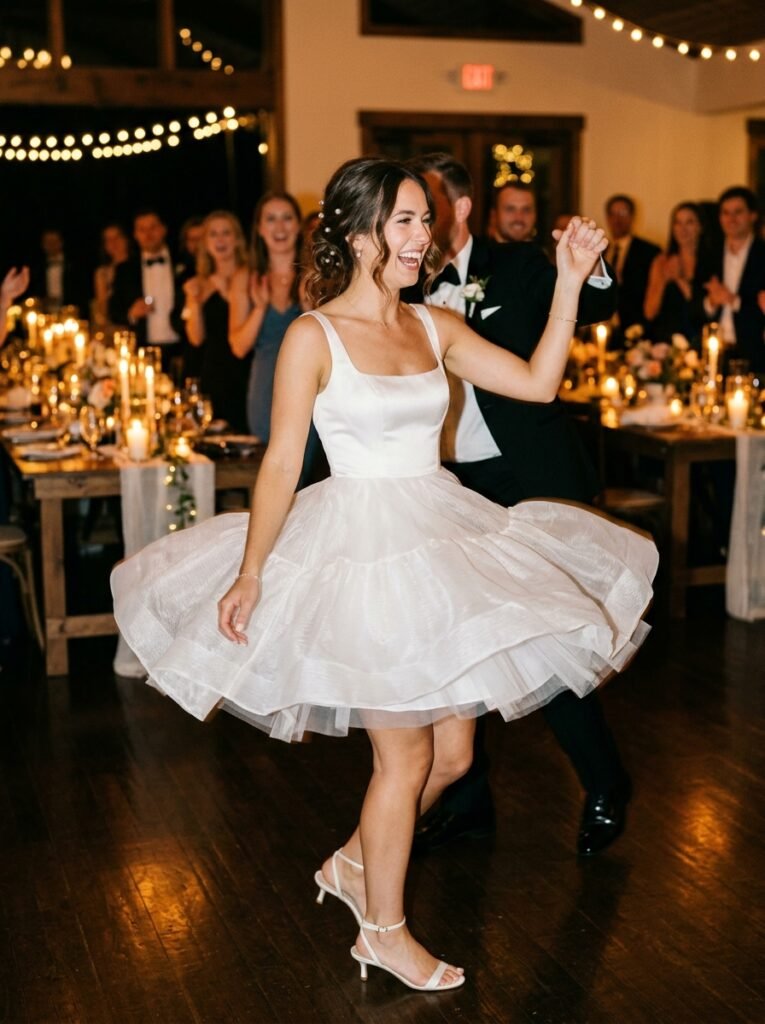
A Classic Mini Dress With a Full Skirt
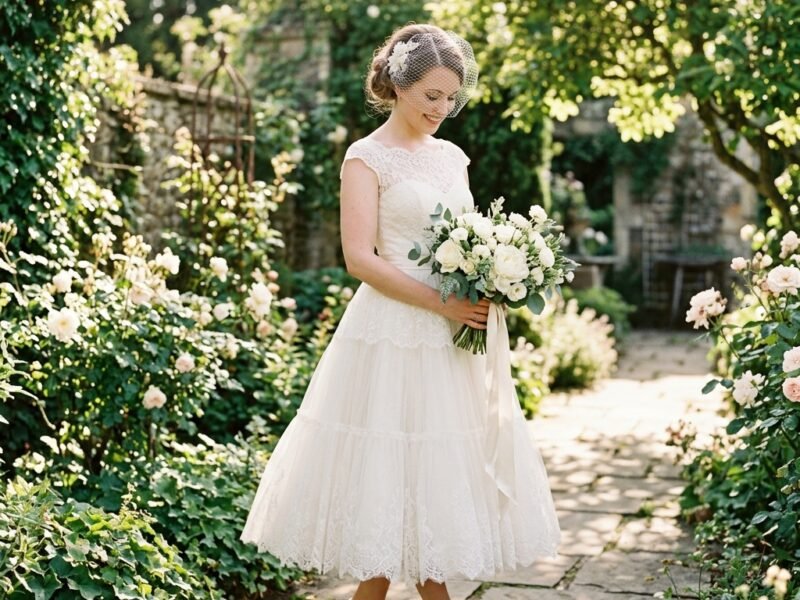
The bridal mini with a full, slightly poufy skirt is the most consistently popular reception category. It’s short enough for freedom of movement yet full enough to keep a bridal quality. A structured strapless mini in white or ivory organza reads as unmistakably bridal while staying suited to dancing. Heeled sandals and simple jewellery let the dress do the work.
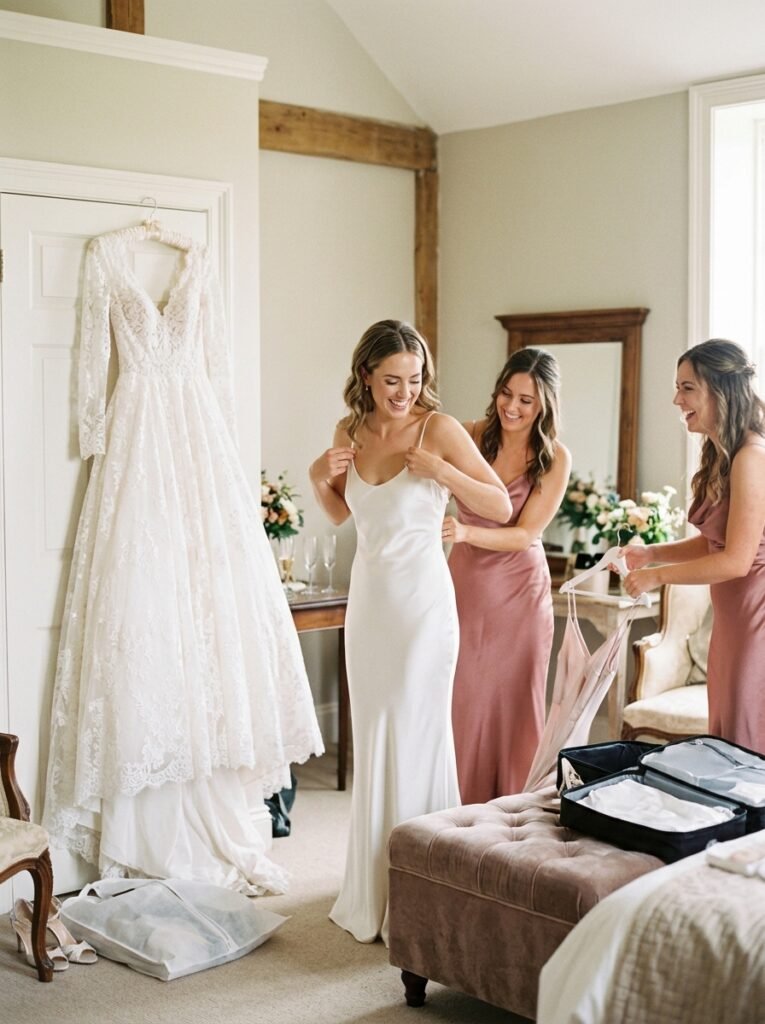
A Sleek Satin Slip Dress
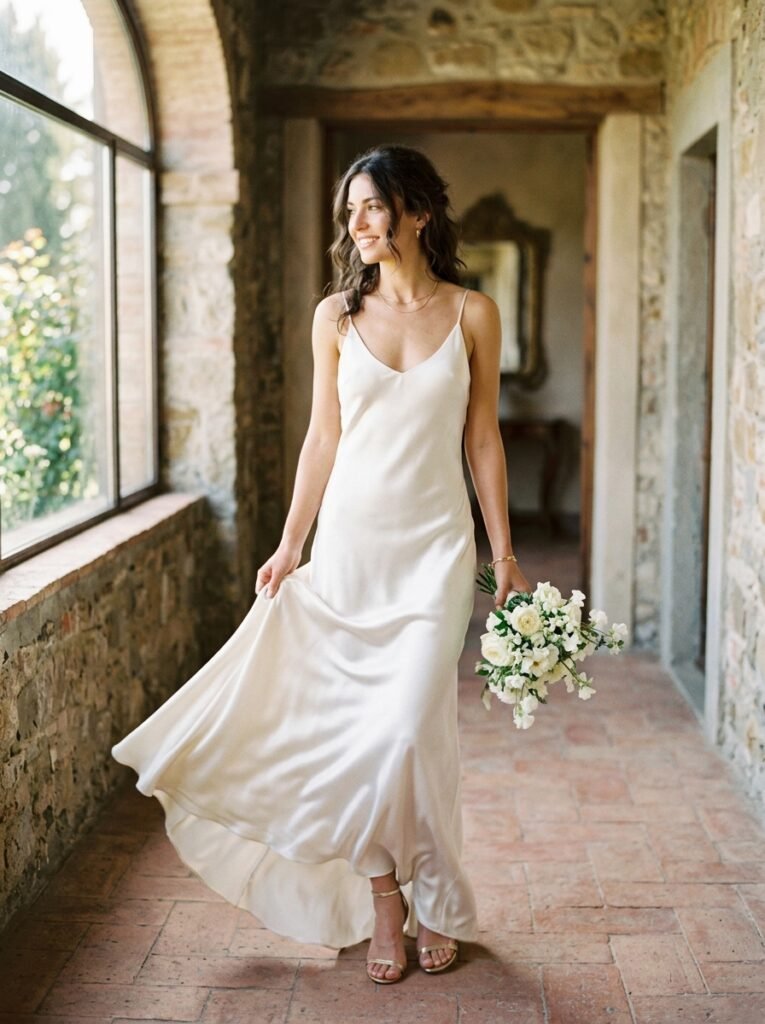
The slip dress suits the bride whose ceremony gown was elaborate and who wants her second look to feel like an exhale into something minimal. A bias-cut satin slip in white, ivory, or champagne catches light beautifully in motion, and the drape accommodates a wide range of body types without imposing structure on them.
A Structured Blazer Dress
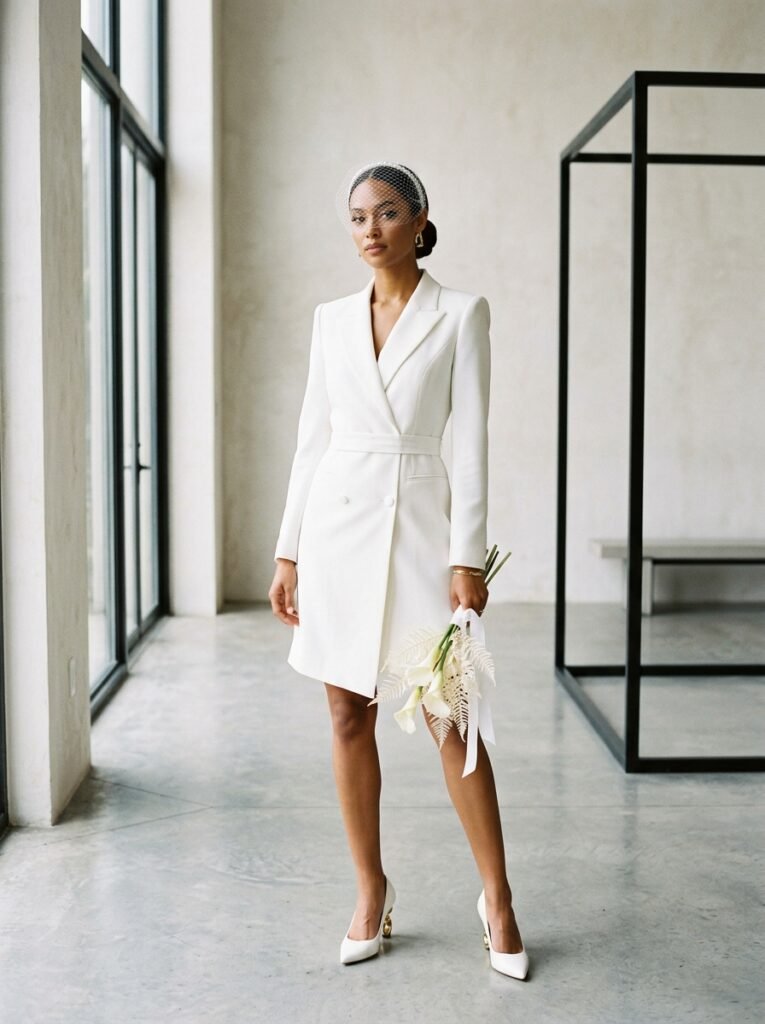
The bridal blazer dress, a fitted blazer cut long enough to function as a dress, is one of the most fashion-forward reception looks available. In white or cream with clean tailoring, it reads as bridal through colour while the silhouette stays entirely contemporary. Pointed-toe heels and sleek hair complete the look.
A Fully Embellished Mini Dress
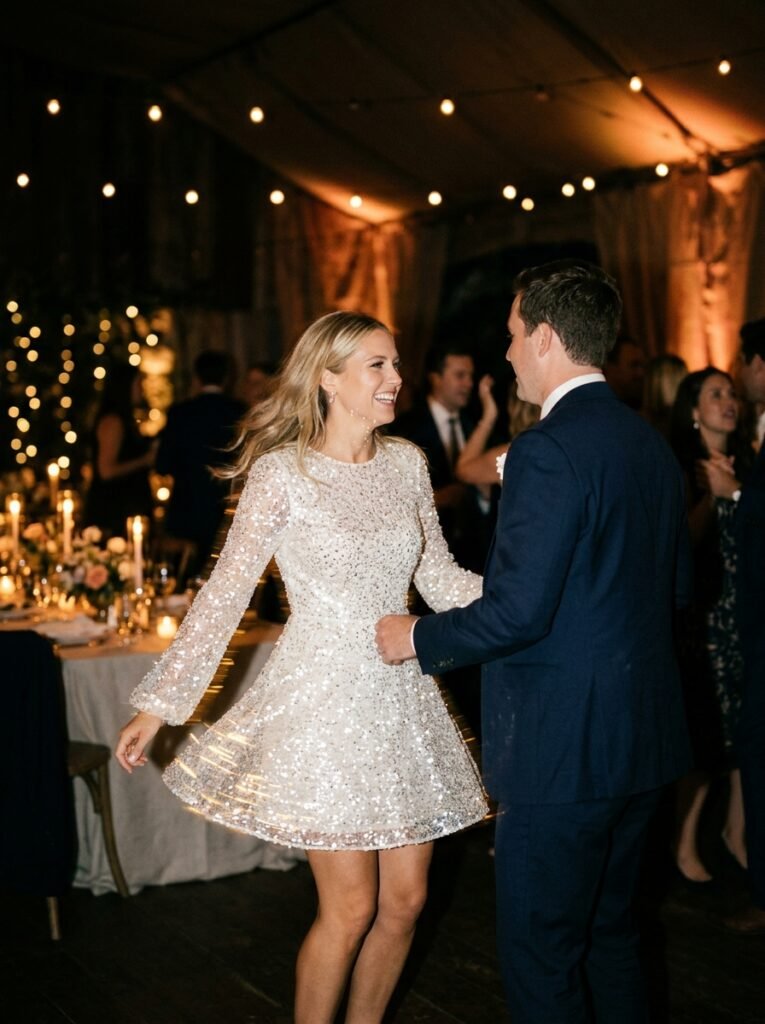
A short mini covered in sequins or beading is one of the most dramatic reception categories. Under the moving light of a reception venue, a fully embellished mini in white or ivory catches every movement differently, creating one of the most memorable transformations in modern bridal styling. Dance shoes make practical sense underneath.
A Feather-Trimmed Midi
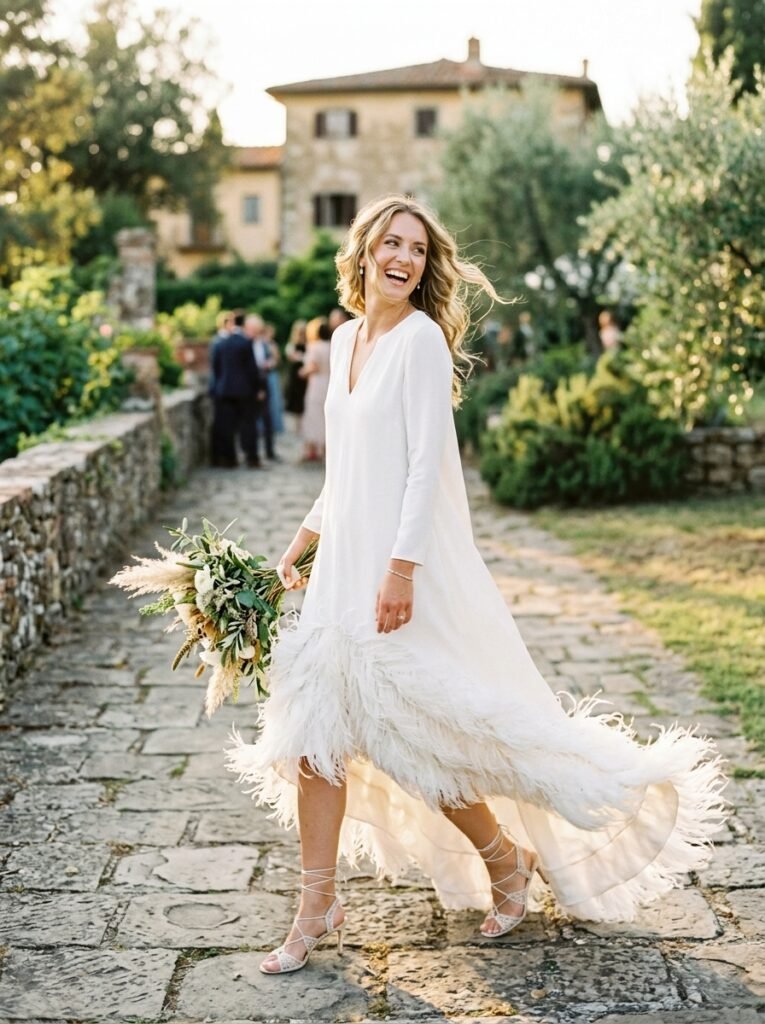
Feather detailing at the hem or cuffs has become a defining bridal reception detail, because feathers in motion catch air and light in a way static fabric never does. A fluid midi with feather trim in white or ivory balances romance with a playful, contemporary edge.
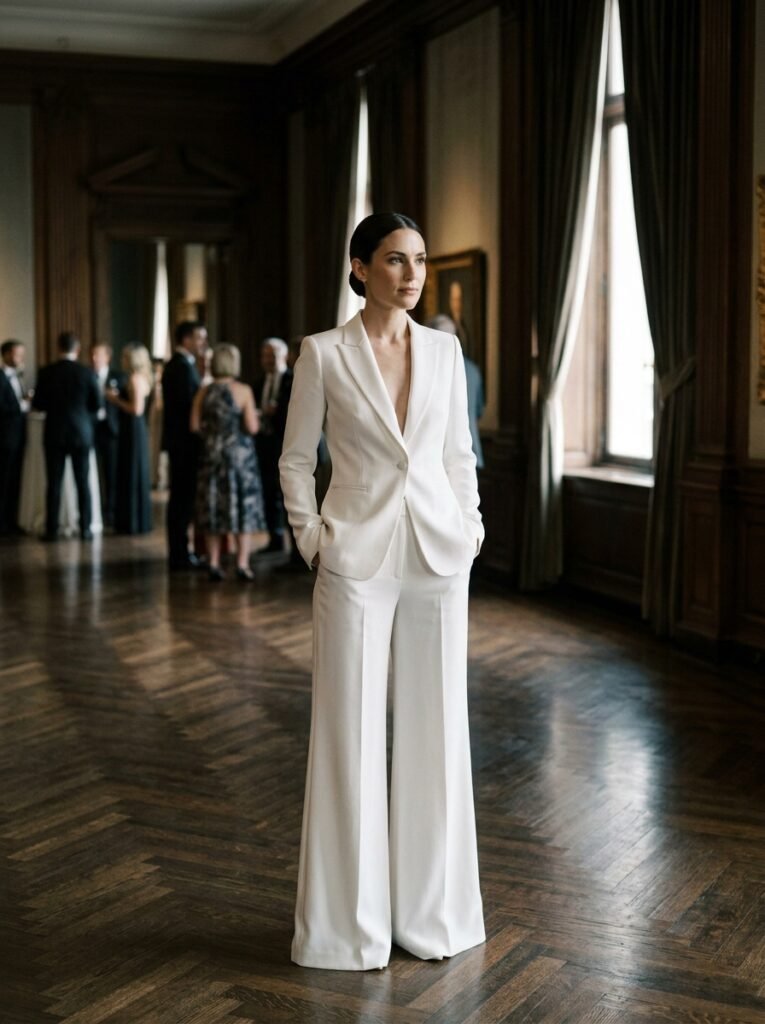
A White Suit With Wide-Leg Trousers
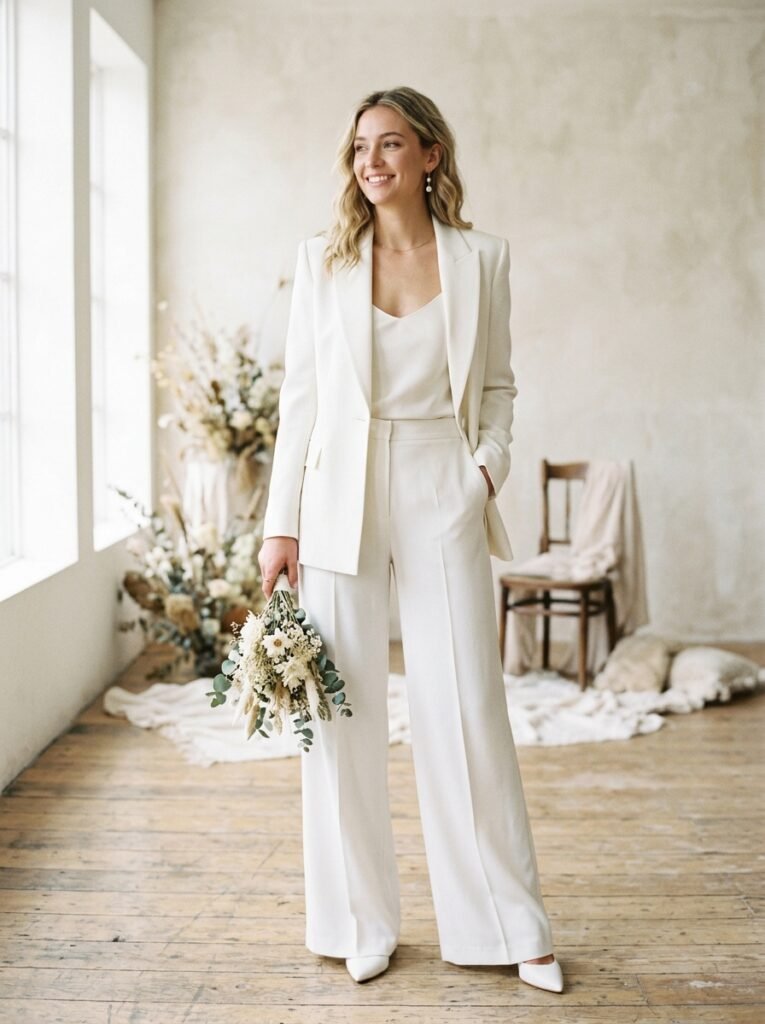
The bridal suit has become a fully accepted option for brides whose personal style sits in the tailored, androgynous space. A white wide-leg trouser suit in crepe or heavy silk, worn with a simple cami, solves every practical reception problem: no hem, no bodice, and full freedom to dance.
A Two-Piece Crop Top and Skirt Set
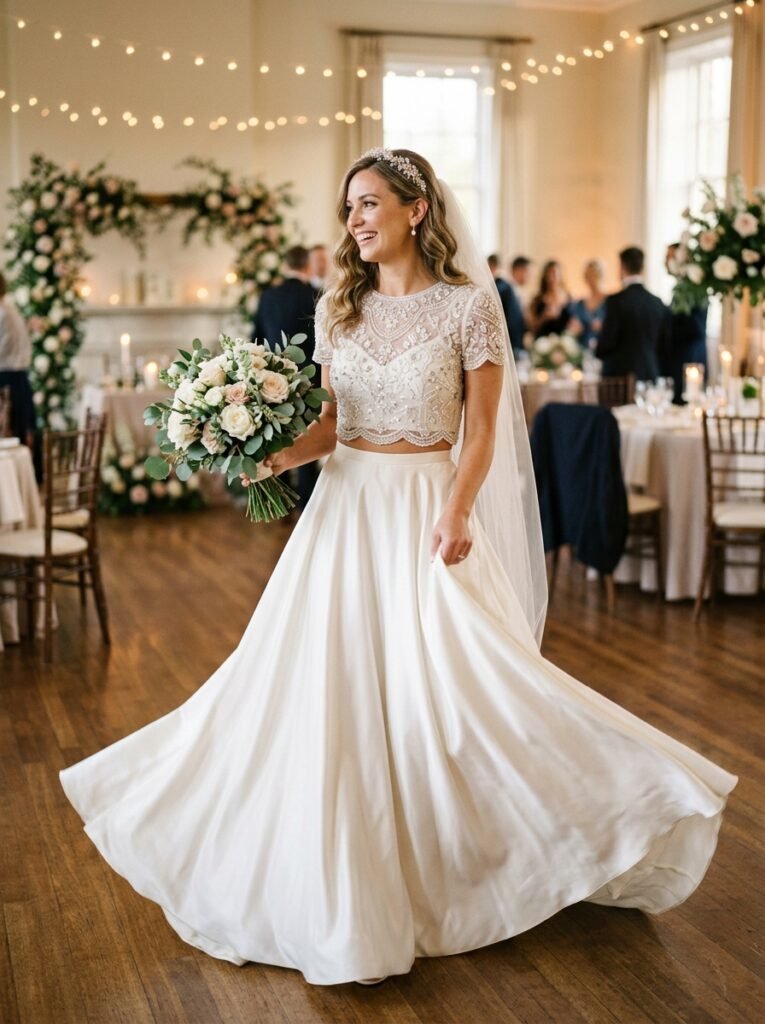
A bridal two-piece, a fitted crop top with a flowing midi or maxi skirt, is popular for its creative range. The top can be heavily embellished while the skirt stays clean, or vice versa. A lace crop with a fluid crepe skirt reads as romantic and elongating, while a corset crop with a column skirt leans structured. Each piece can also be altered independently, which simplifies fitting.
A Mini With Dramatic Sleeves
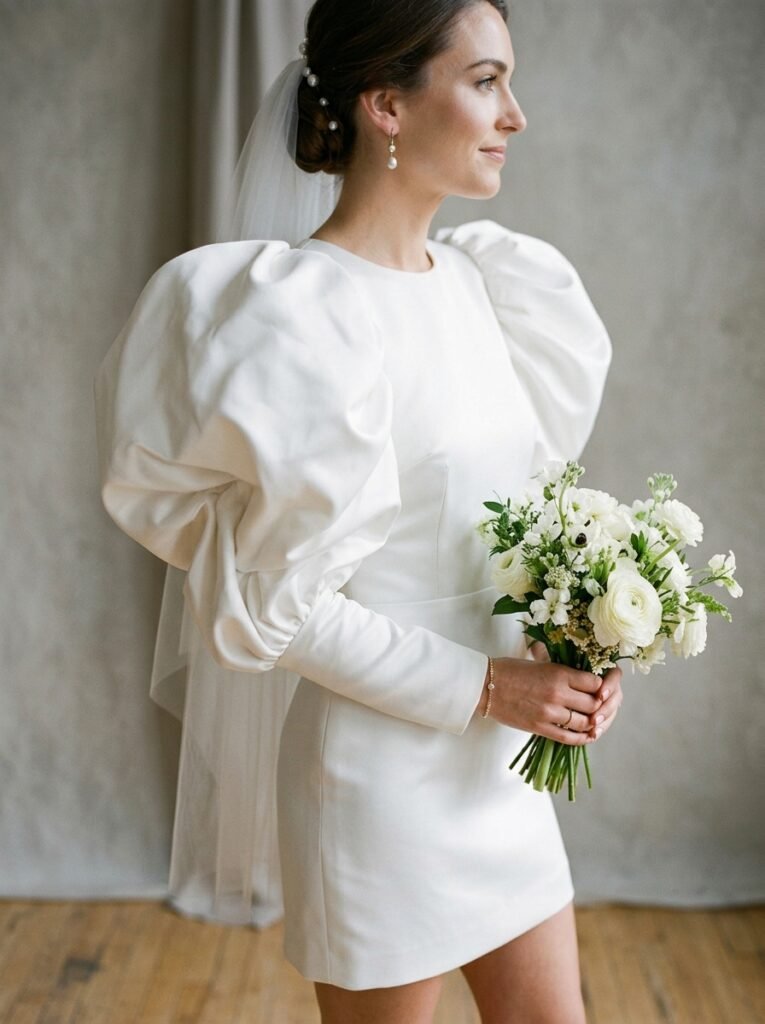
A simple mini with statement sleeves, whether a puffed shoulder, a bell sleeve, or a dramatic flutter, is one of the most fashion-influenced reception looks available. The sleeve carries the statement, so the rest of the dress can stay clean, and the movement photographs extraordinarily well even in still images.
A Backless Mini or Midi Dress
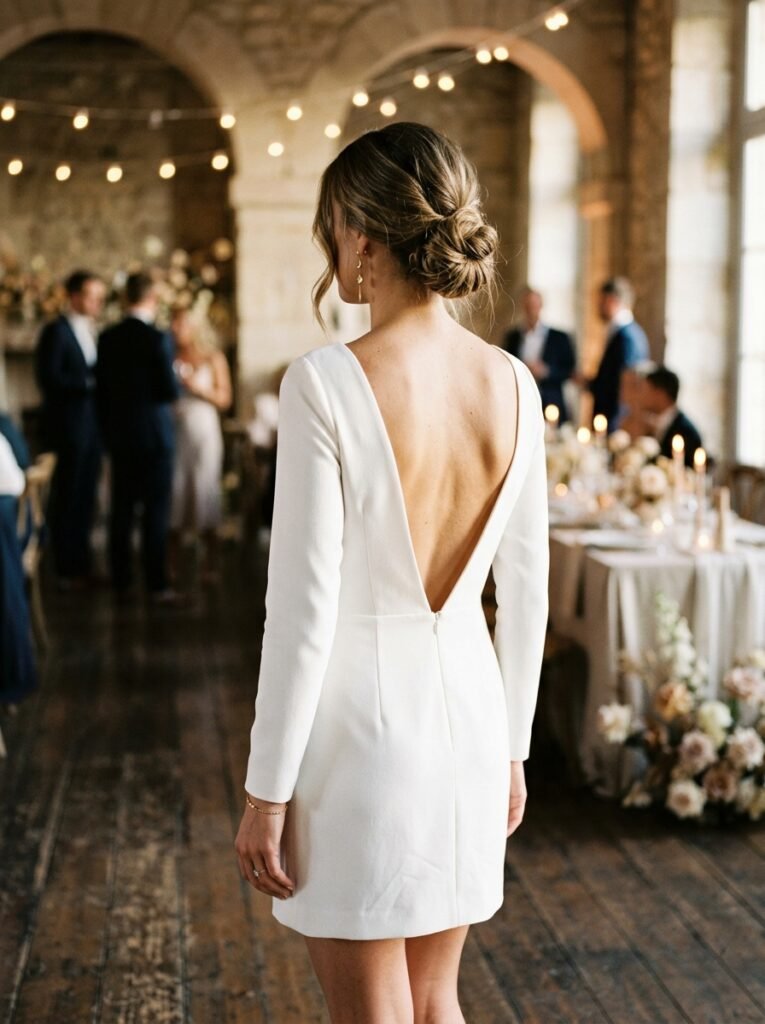
A reception outfit with a dramatic low back prioritises the view from behind, which is where a dancing bride is seen most. The front can stay simple while the drama is reserved for the moment she turns away, creating a reveal that works throughout the entire evening.
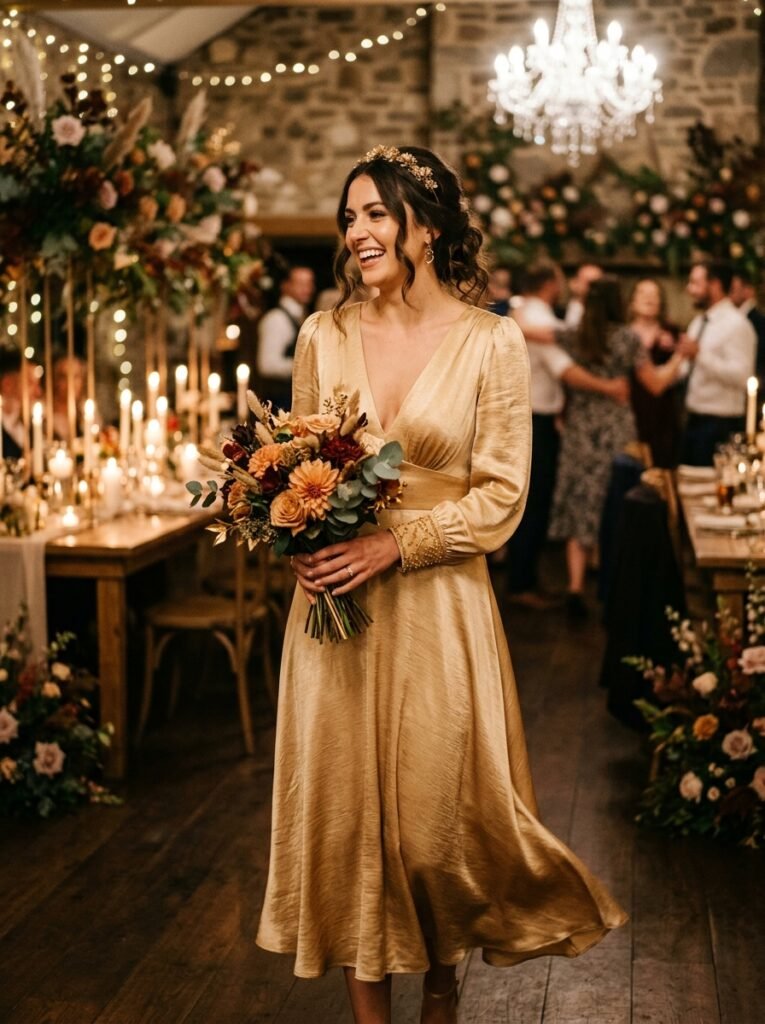
A Rich Coloured Reception Dress
Not every reception dress needs to be white. A deep champagne, warm blush, rich gold, or sage green feels more true to a bride’s personal aesthetic than bridal white in a second-outfit context. The colour shift signals clearly that a new chapter of the day has begun.
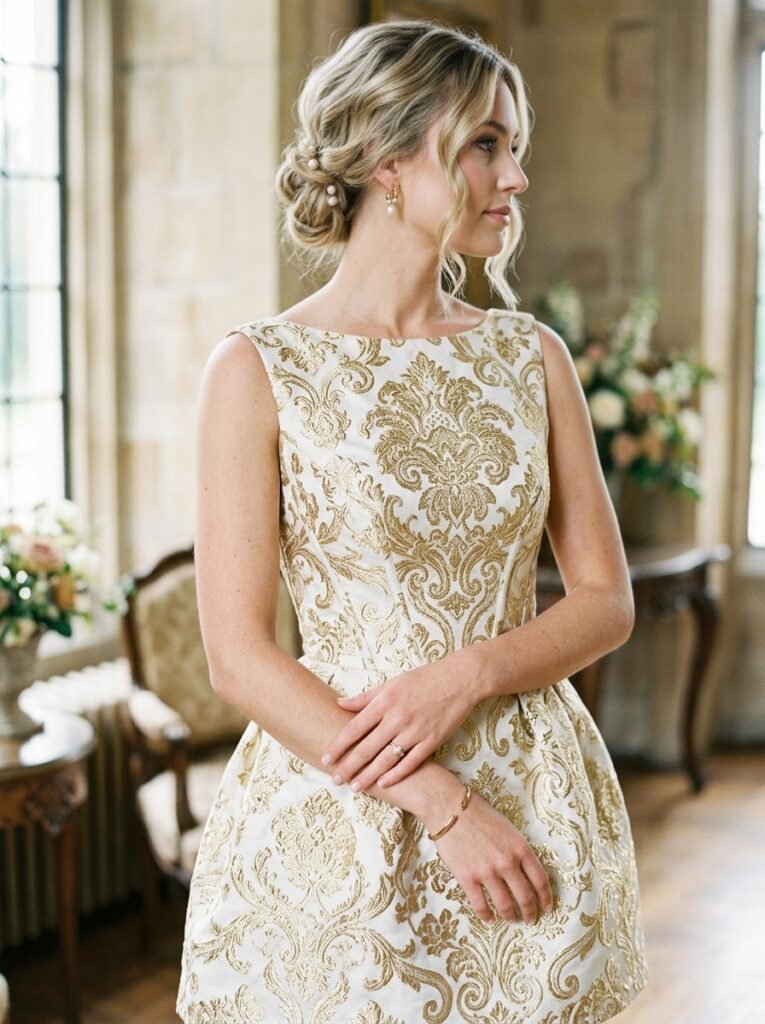
A Brocade or Jacquard Mini Dress
A short dress in a luxury-looking brocade or jacquard fabric reads as more expensive and elaborate than plain satin, because the fabric itself carries the design. It bridges traditional bridal and contemporary fashion for brides who want classical elegance without a dramatic departure from tradition.
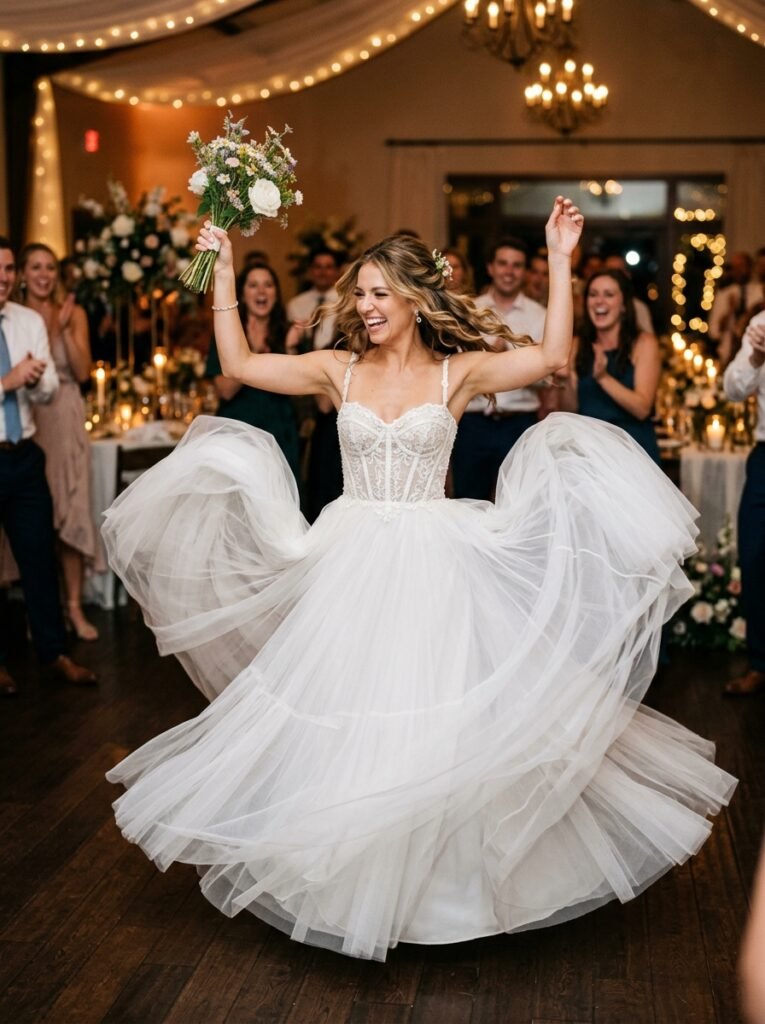
A Corset Bodice With a Full Tulle Skirt
A corset-style boned bodice with a full tulle skirt combines genuine support above the waist with complete freedom below it. The corset holds everything in place through hours of dancing, while the tulle skirt puffs and swirls with the bride’s movement in a way that is both photogenic and genuinely joyful.
A Long Silk Gown in an Alternative Silhouette
For brides who still want floor-length formality but something distinct from the ceremony dress, a long silk gown in a different silhouette creates a complete transformation. If the ceremony gown was an A-line, a column reception gown creates maximum contrast, and it suits an indoor evening favouring elegance over high-energy dancing.
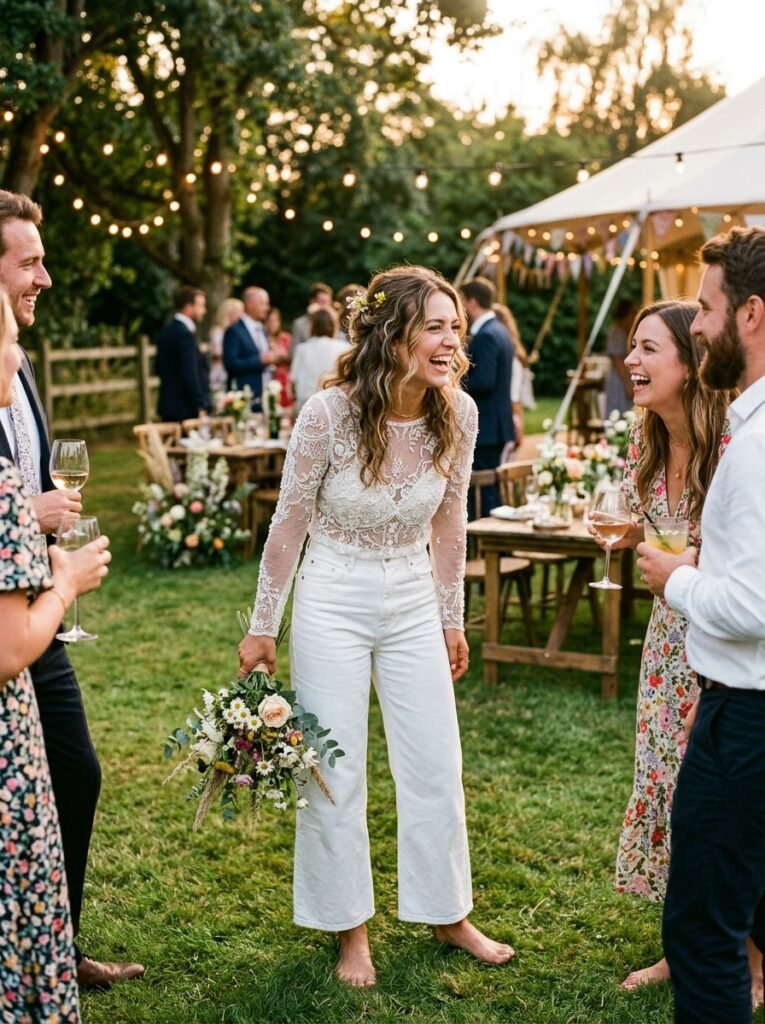
A White Denim Look
For a genuinely casual or outdoor reception, a white denim look stands entirely on its own terms. White wide-leg jeans or a denim midi skirt paired with a silk cami or fitted lace top creates a polished but relaxed reception look that skips bridal convention altogether.
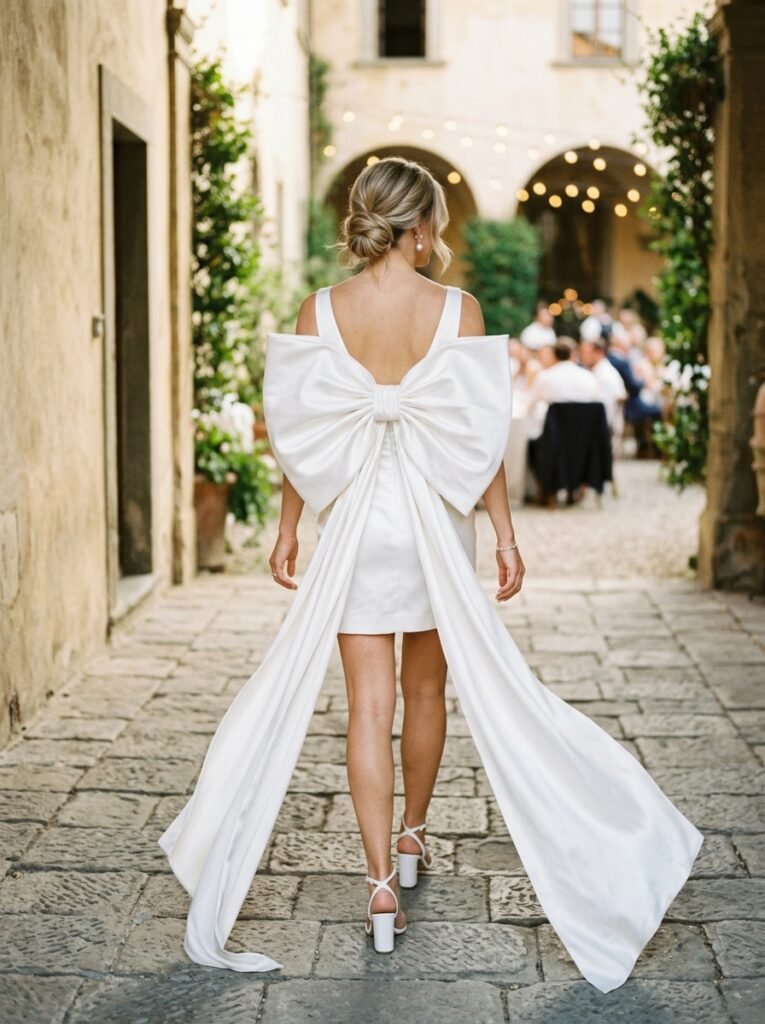
A Bow-Detailed Mini Dress
Bow details have defined bridal fashion in recent years. A mini with a significant bow, whether an architectural back bow, statement bow straps, or a large waist bow, photographs beautifully and reads as playful yet deliberately fashion-forward. A white satin mini with a large back bow is among the most recognisable modern reception looks.
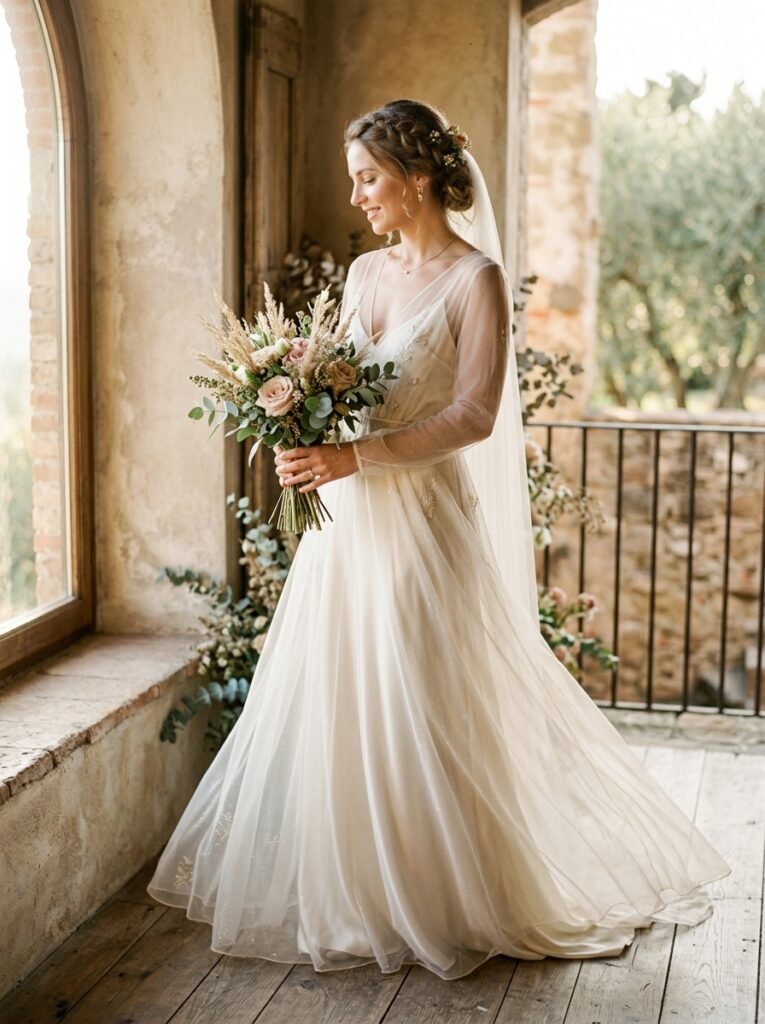
A Sheer Overlay Dress
A dress with a sheer overlay, whether fully sheer over an opaque slip or partially sheer to reveal glimpses of the lining beneath, creates a visual lightness. It reads as expensive and considered. A sheer chiffon layer over a satin slip in the same tone moves with extraordinary fluidity and a subtle shimmer.
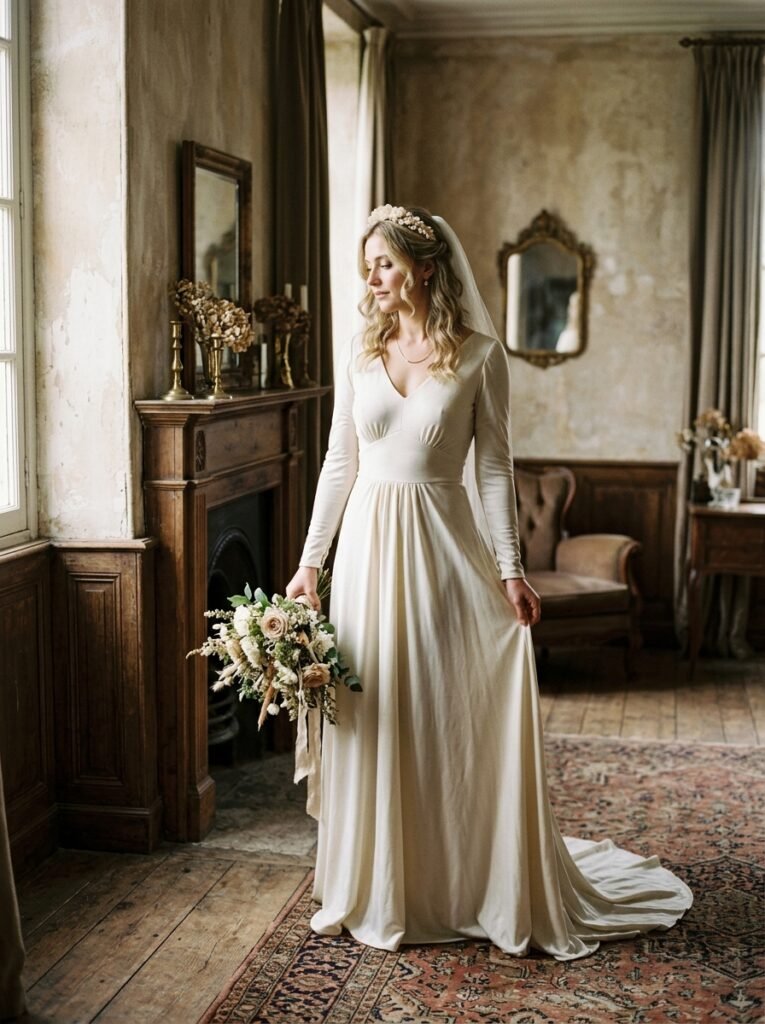
A Vintage or Vintage-Inspired Gown
A vintage bridal gown, whether a genuine piece from a previous decade or a contemporary gown with a deliberate vintage aesthetic, is one of the most personal reception choices available. A 1970s bias-cut jersey gown, a 1950s tea-length, or a 1920s beaded drop-waist each draw on a distinctive era. These can be sourced through vintage shops or period-focused designers, producing a look unlikely to be repeated elsewhere.
A Bridal Jumpsuit in a Dramatic Cut
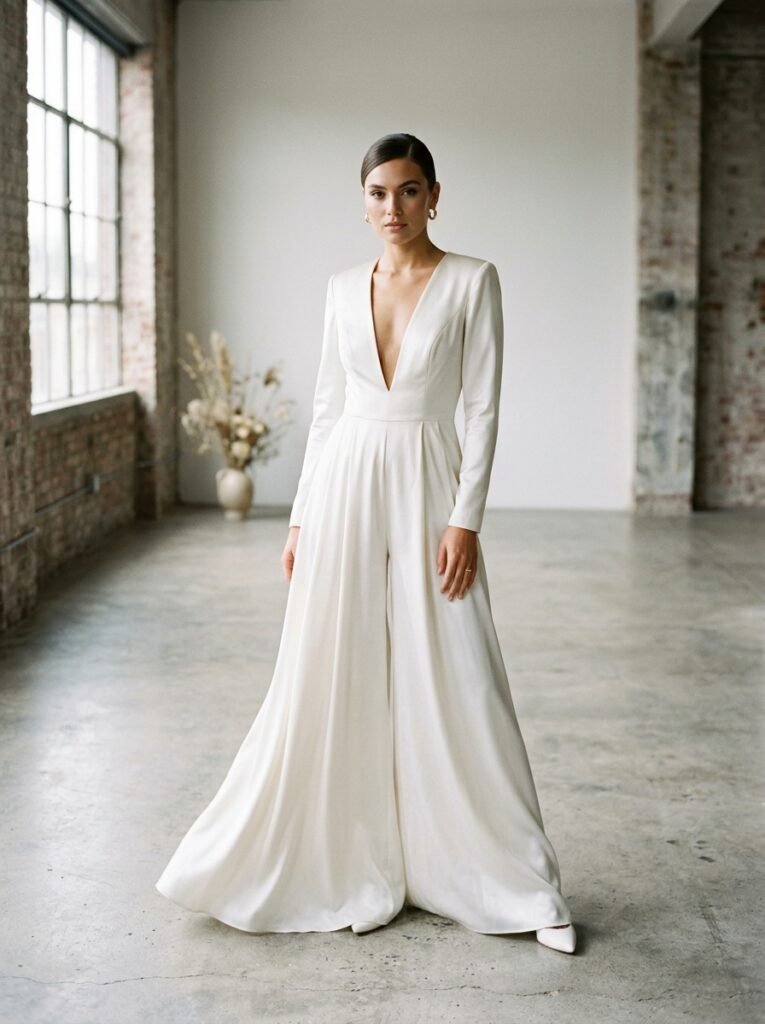
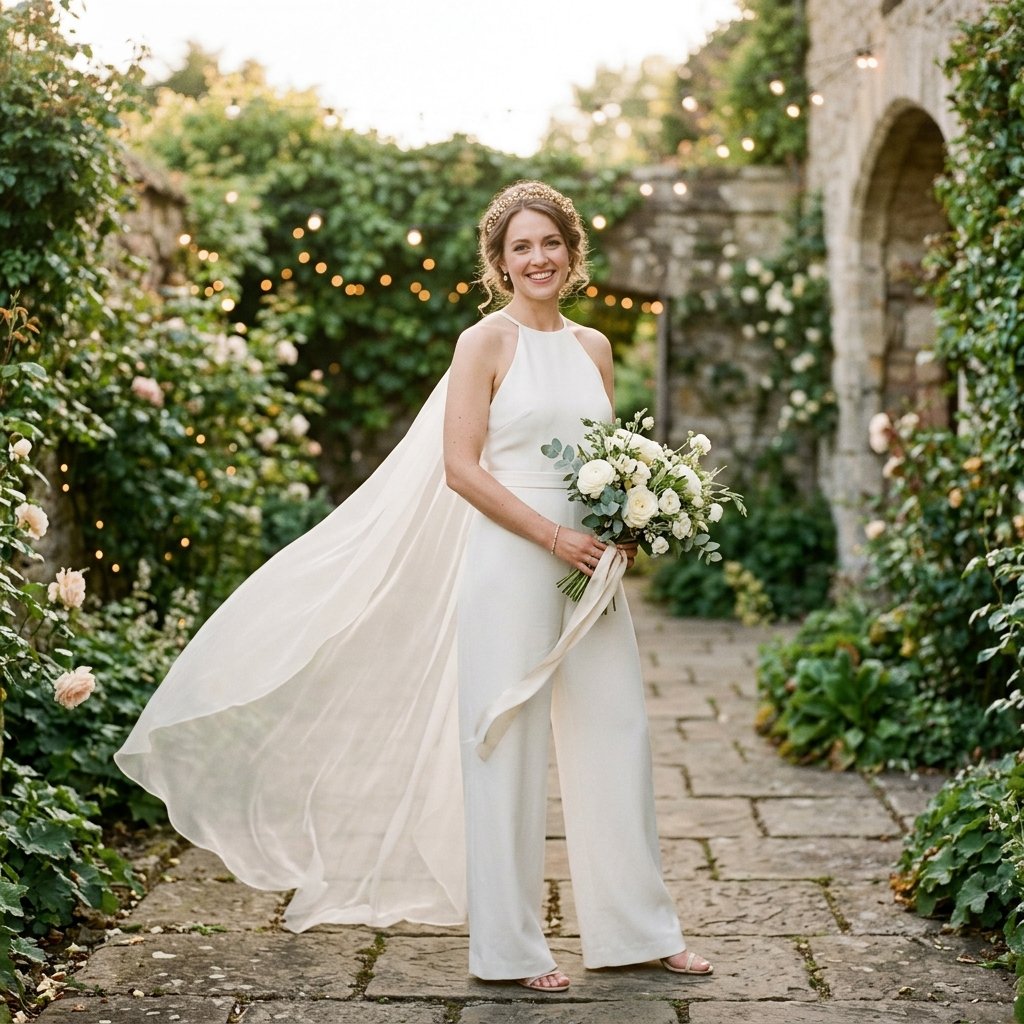
The bridal jumpsuit differs from the suit in construction: a single continuous garment creates a fluid, unbroken silhouette from shoulder to floor. It is one of the most practical reception outfits for active dancing, since there’s no skirt to manage. Brides considering a jumpsuit for the whole day, not just the reception, can find more depth in bridal jumpsuit ideas for the bride who skips the gown.
A Fringe Dress
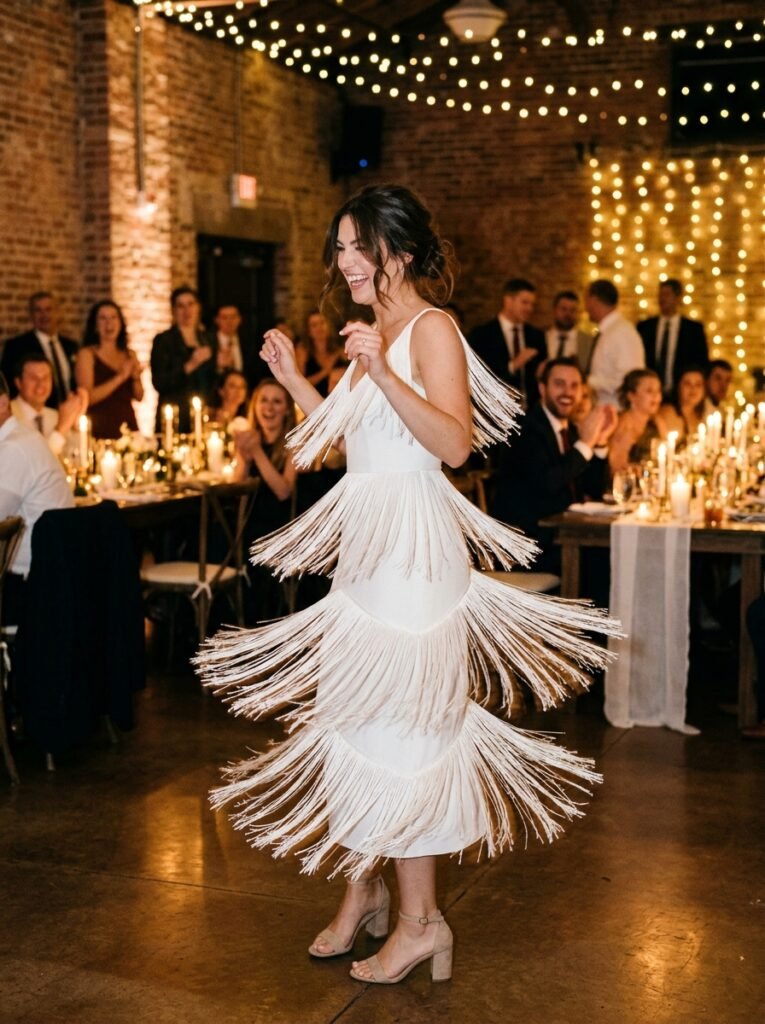
A fringe dress, with movement concentrated at the hem, body, or waist, is one of the most dynamic reception looks available. Every step catches light and creates a live, animated quality that makes photographs from across the room genuinely spectacular. Standing still, fringe looks interesting; moving, it looks extraordinary.
An Asymmetric or High-Low Hemline Dress
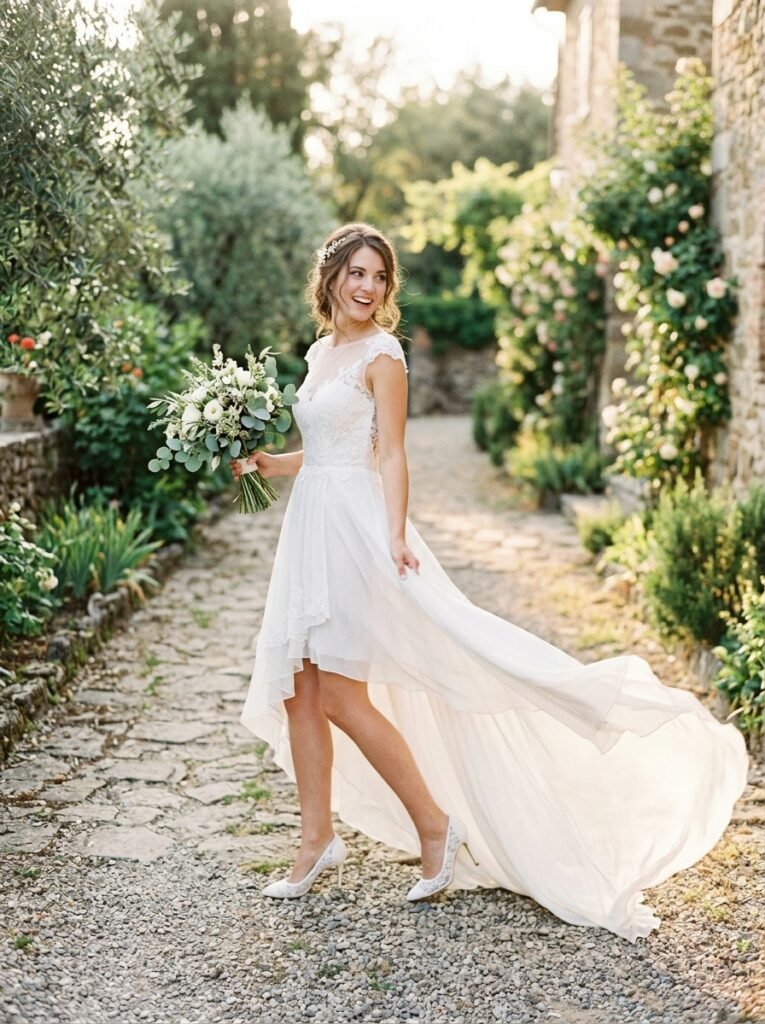
An asymmetric hemline, higher at the front and lower at the back, creates a distinctive silhouette that standard hemlines don’t offer. A high-low shows leg on one side while keeping sweep and flow on the other, which reads as both photogenic and practical for dancing.
A Statement Bridal Robe for the Late Hours
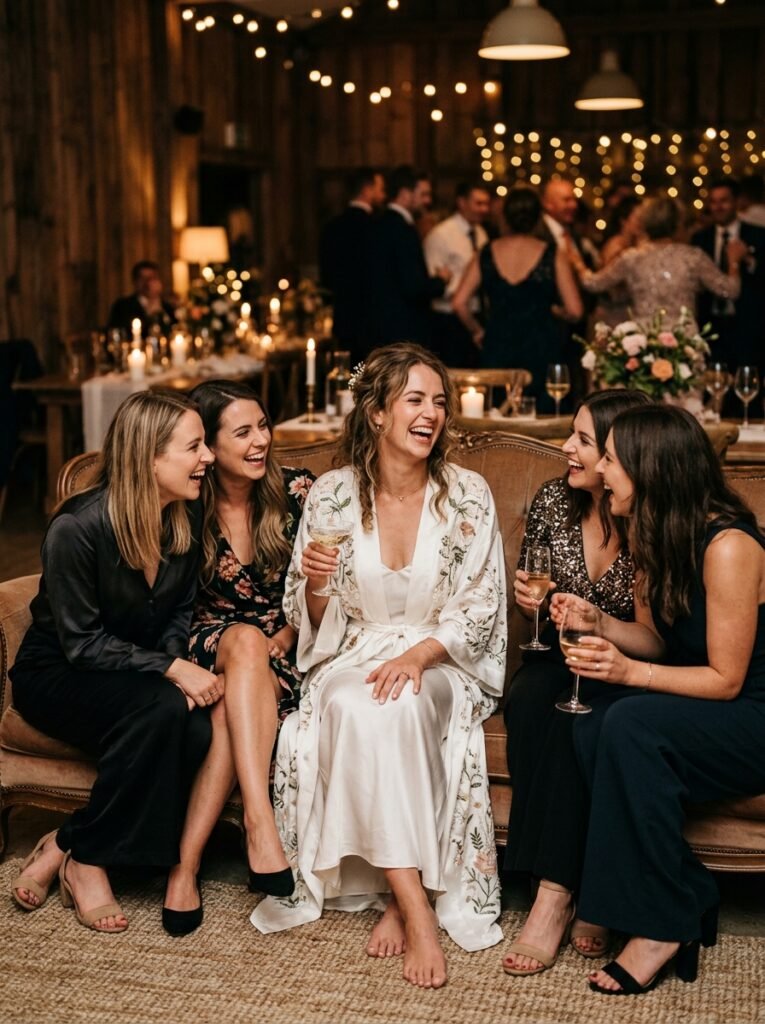
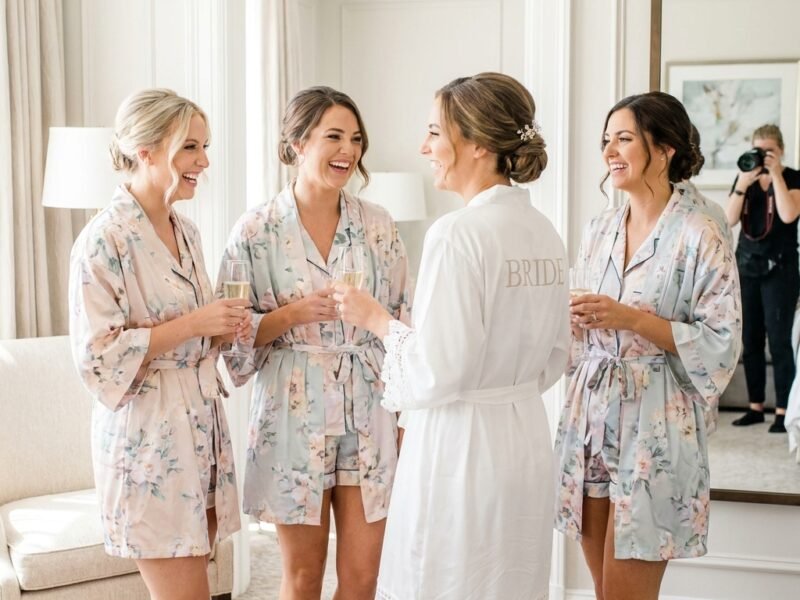
For very late-night receptions that shift into a private after-party, a beautifully chosen silk robe worn over a simple cami and shorts prioritises comfort without sacrificing elegance. A heavily embroidered robe in white or ivory is even worn as the actual outer garment at the most relaxed, intimate celebrations.
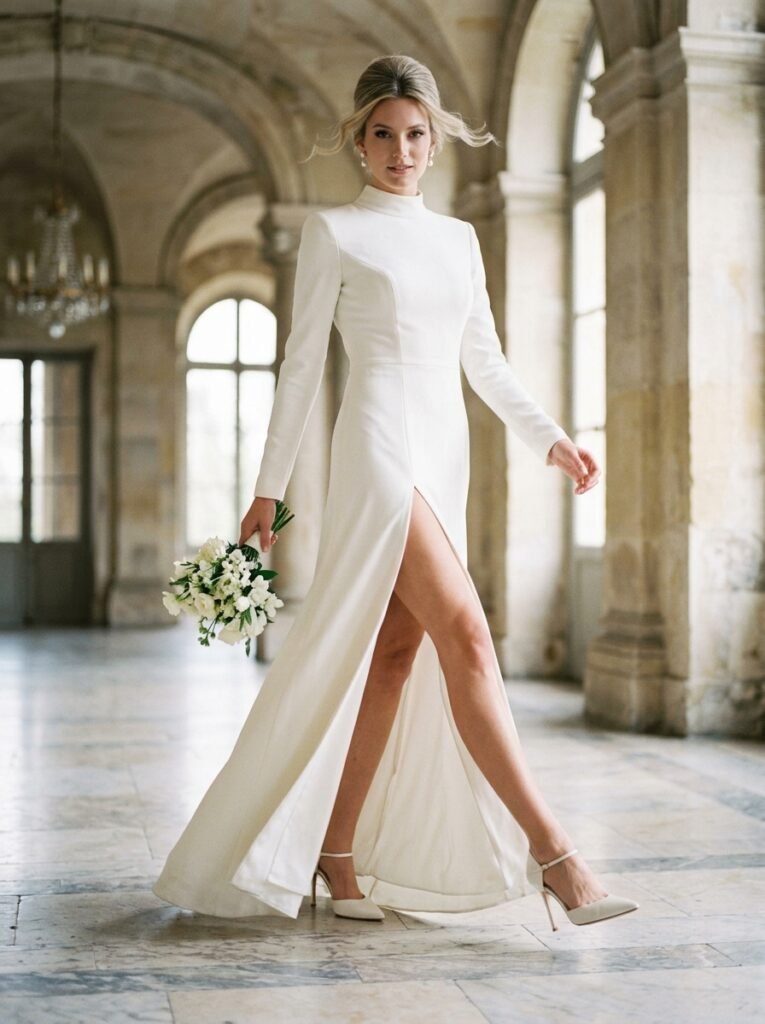
A Column Gown With a Dramatic Slit
A sleek column gown with a high front slit combines floor-length formality with the freedom of movement a shorter hemline would otherwise require. A column in stretch satin with a thigh-high slit is one of the most glamorous options for a bride who wants to stay in gown territory while dancing freely.
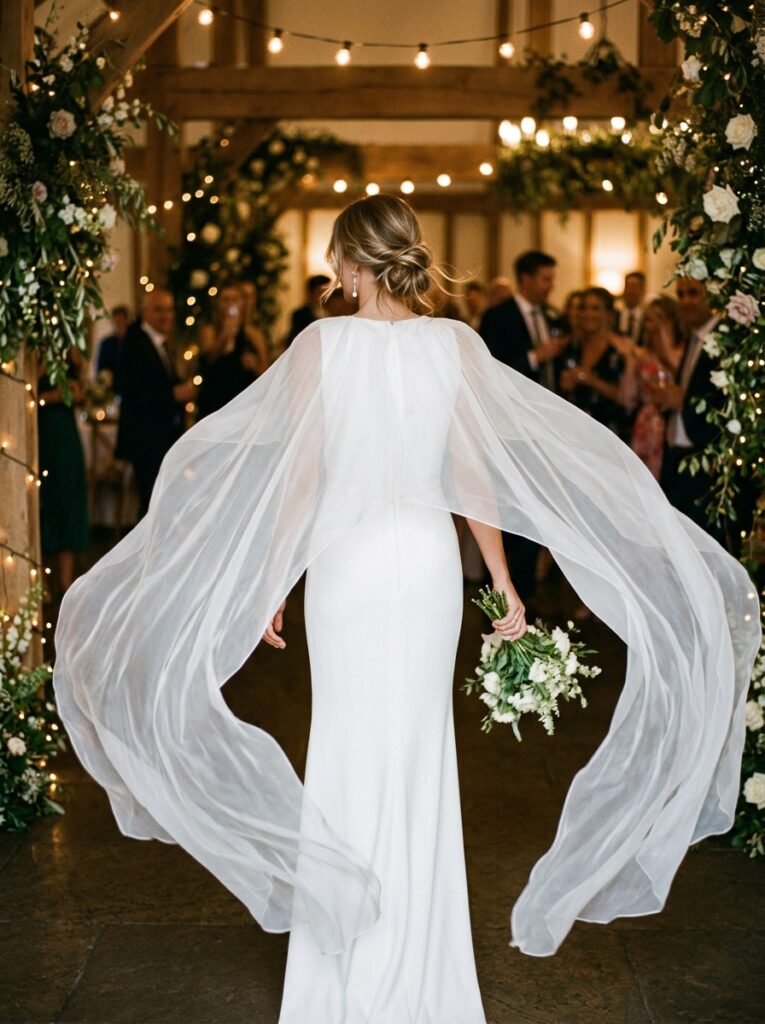
A Cape or Wing-Detail Reception Dress
A dress with an attached cape or wing-like sleeve panels produces a reception look with extraordinary photographic impact. As the bride walks or dances, the cape trails and floats behind her, creating the most dramatic imagery of any reception option and the most theatrical choice in this guide.
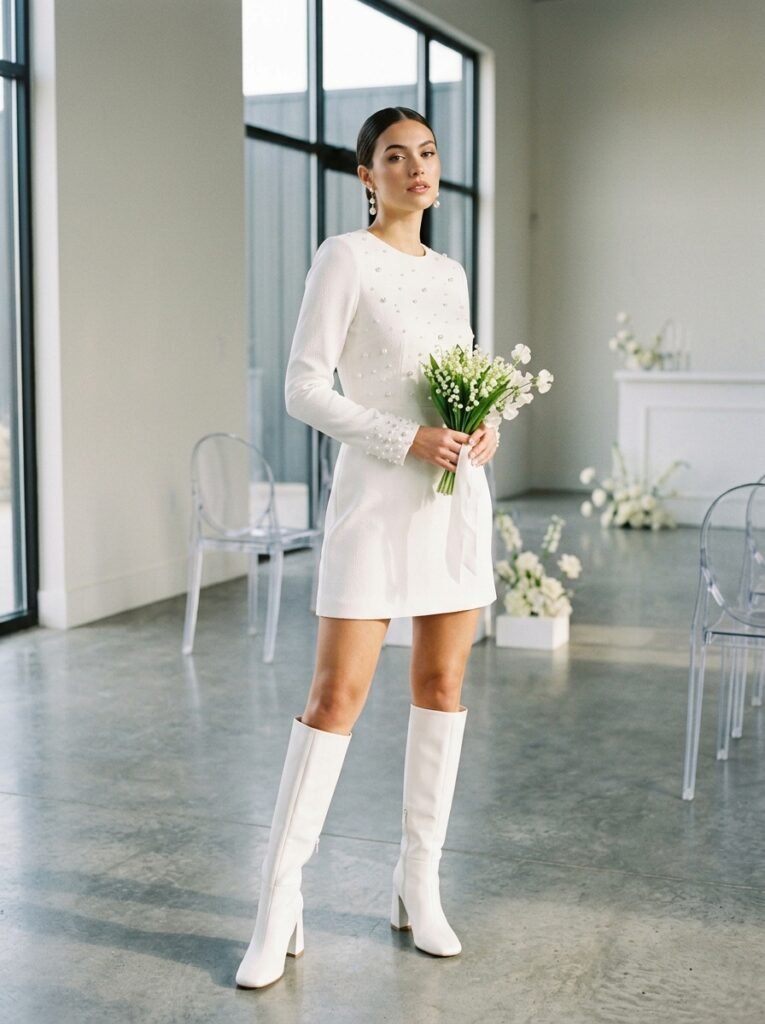
A Bridal Mini With Knee-High Boots
A white mini paired with knee-high or thigh-high boots suits brides whose personal style sits in the fashion-forward, directional space. The boots change the look’s proportions entirely, creating a continuous line from hem to floor that reads as intentional rather than simply short.
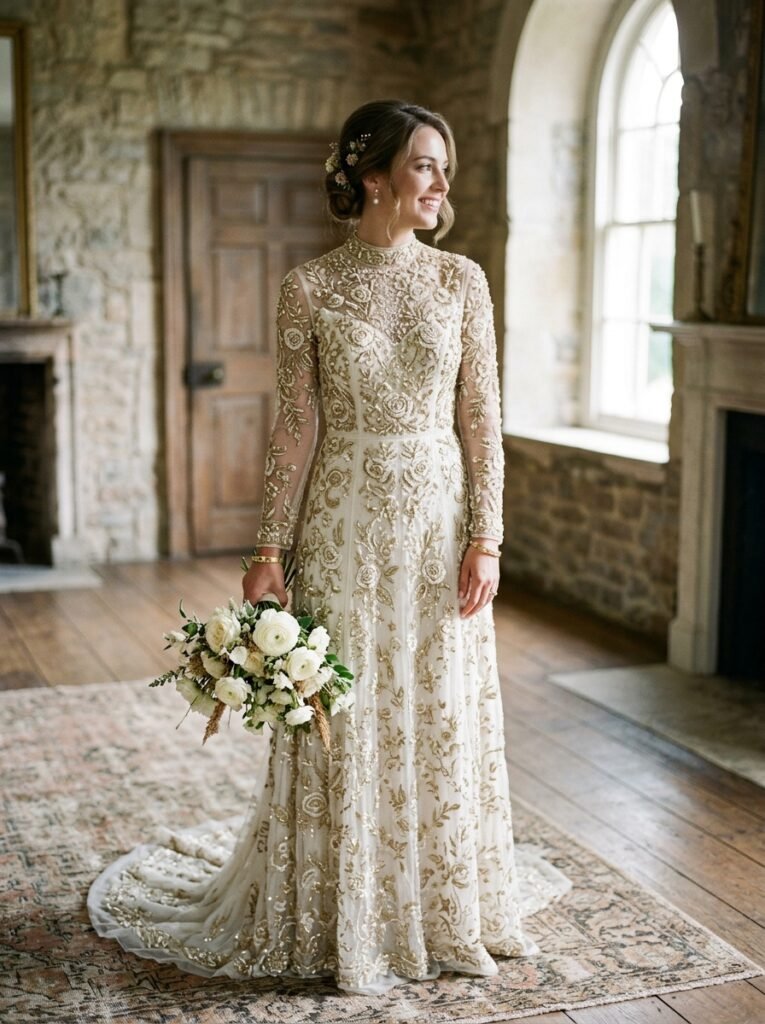
A Fully Hand-Embroidered Second Gown
For maximum reception impact, a fully hand-embroidered second gown in a different silhouette from the ceremony dress creates the most dramatic possible reveal. A minimal ceremony silk followed by a heavily embroidered gown with botanical or geometric beadwork produces a second set of photographs completely distinct from the ceremony images. It’s the high-effort option for brides who want both looks to be extraordinary.
How to Choose Between Ceremony Gown and Reception Outfit
The twenty-five looks above cover a wide range of aesthetics and formality levels. Narrowing the choice comes down to a few honest questions.
How physically active will the reception actually be? A high-energy dance floor calls for freedom of movement, while a formal dinner reception allows for something more structured. How different should the two looks feel: a dramatic gasp-inducing transformation, or a natural evolution of the ceremony look? Both are valid but call for different choices.
What does personal style look like outside bridal convention? A bride whose wardrobe is minimal and tailored might choose a blazer dress or suit, while one with a romantic, textured wardrobe might lean toward feathers or embroidery. Finally, how much time can realistically go toward the change? A full re-dress and touch-up can take fifteen to twenty minutes, and that needs a specific slot on the wedding-day timeline.
Frequently Asked Questions
When during the reception should the outfit change happen? The most common timing is after the first dance and before dinner, or right after dinner and before the main dancing begins. Both preserve the formal ceremony-gown photographs while giving the bride a fresh look for the active, social part of the evening. Communicating the timing to the photographer in advance ensures the reveal gets captured properly.
Does the reception look need to match the ceremony gown? There is no requirement to match, and many brides deliberately choose something as different as possible. Others prefer continuity of colour or fabric, or repeat a detail from the ceremony gown. Both approaches work as long as the overall photo story feels coherent.
Should the reception outfit be more or less formal than the ceremony gown? Almost universally, the reception outfit runs less formal, since the ceremony is the most formal moment of the day. That creates a natural arc from formal to relaxed as the day progresses, though some brides with simple ceremony looks reverse that pattern on purpose.
How much should a bridal reception outfit cost? Prices span an enormous range, from budget-friendly options under a few hundred dollars to fully custom second gowns running into the thousands. Most brides spend less here than on their ceremony gown. Brides working with a tighter overall budget may also find the strategies in this guide to stunning bridal outfit ideas on a budget useful for planning both looks together.
Can the wedding band and engagement ring be worn with any reception outfit? Yes. The rings are the only accessories that belong with both looks. Everything else, earrings, necklace, hairpiece, can change entirely, and many brides use that swap to shift from traditional bridal jewellery toward something more personal.
The Look That Belongs on the Dance Floor
There is something liberating about a reception outfit chosen specifically for that moment. Not the processional, not the formal photographs, but the dancing, the toasts, and the late-night hours when the wedding stops being an event and becomes a party.
Twenty-five looks, every aesthetic covered from classic to contemporary. The right one is the one that keeps a bride on the dance floor until the very last song.

[…] Save Your Favorites on Pinterest ↗ […]
[…] above already do that, and if a distinct celebration look is part of the plan, this roundup of modern bridal reception outfits is worth a look. And check the weather that morning — courthouse lobbies run warmer or cooler […]
[…] or a deep-colored gown with a bit of sparkle. If the day includes a ceremony and a dinner, the reception outfits guide shows how a second look can change the mood without a full change of […]