
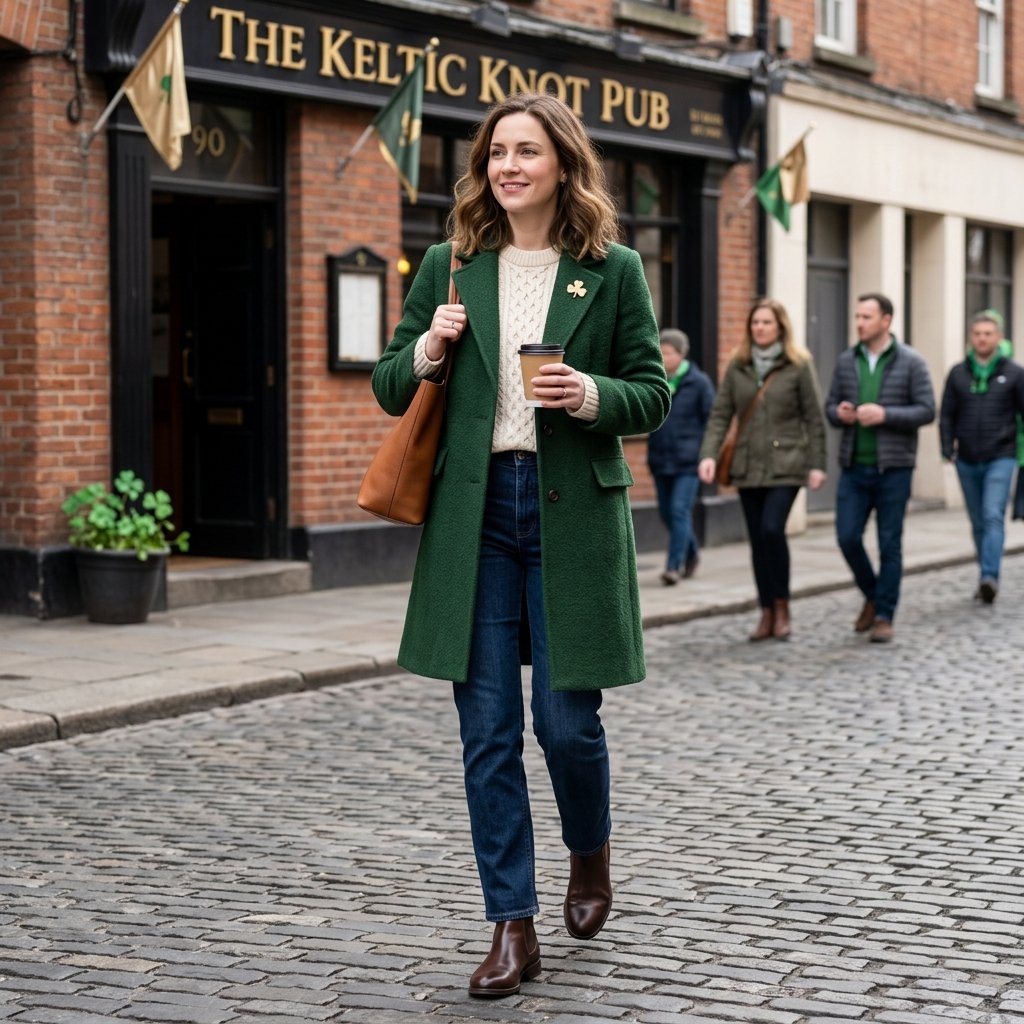
There is a specific kind of green that announces itself from across a room. It is bright, flat, and very loud, and when it appears on a hat, a shirt, and a pair of novelty socks at the same time, the whole outfit starts to look like a uniform for a holiday that hasn’t checked in with you.
Green itself is not the problem. It is one of the most wearable colors in a wardrobe once it moves away from that single saturated shade, and plenty of people already own a sage sweater, an olive jacket, or a forest-green skirt that would pass any style test in April. March 17th just gives those pieces a reason to come out together.
This guide focuses on the difference between wearing green and wearing a theme. You will find how to choose the right shade, how much green an outfit really needs, which neutrals make it look deliberate, and how to build looks for a parade walk, a workday, a pub night, or a family table.
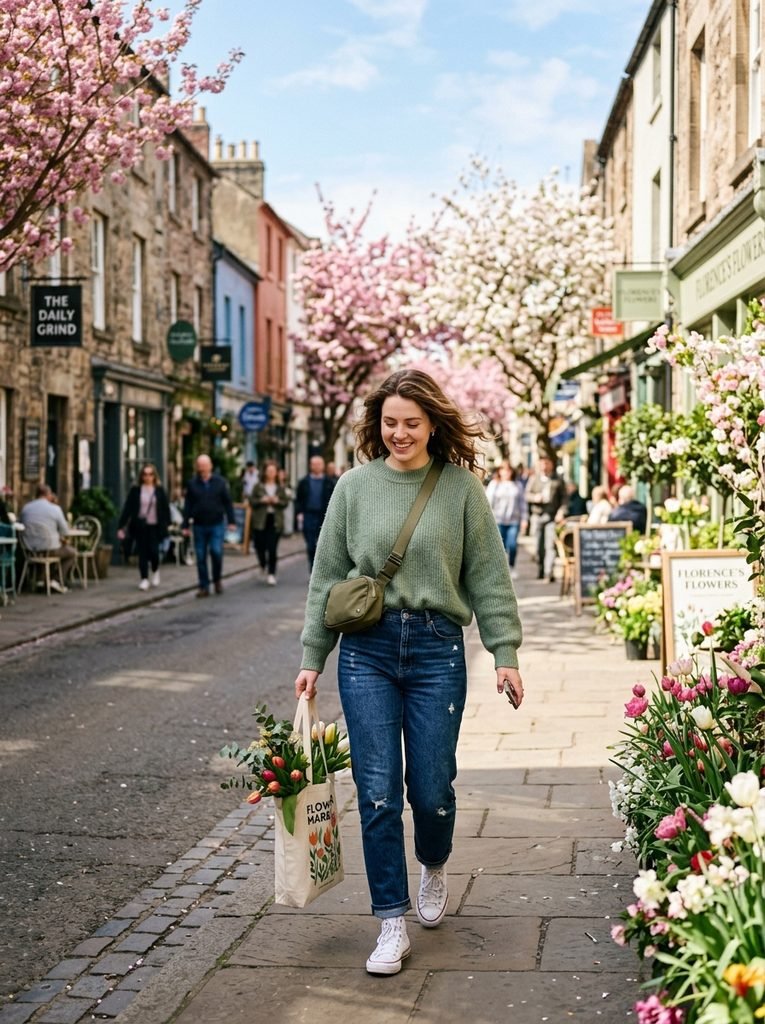
What Actually Makes Green Look Like a Costume
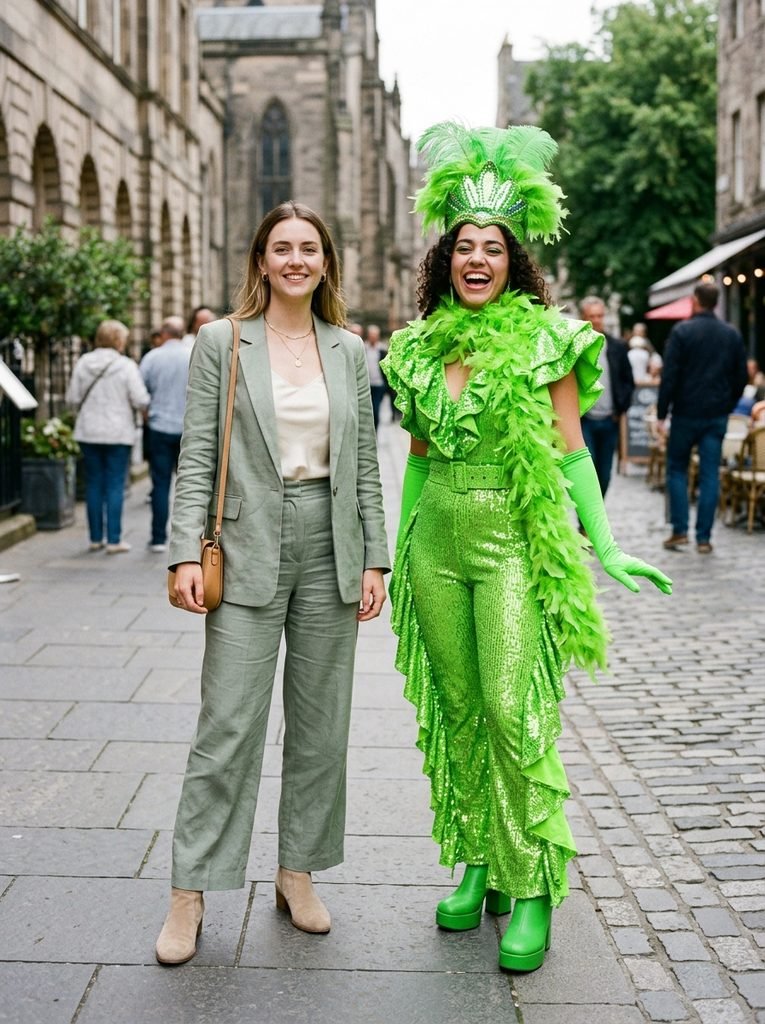
Most costume-y looks come from stacking signals. A bright kelly-green top, a shamrock headband, glittery face details, and a novelty print all say “holiday” at the same time, and together they leave no room for personal style to show through. Any one of them, worn alone, can be fun. All of them together tends to read as dress-up.
Saturation plays a large role. The pure, high-intensity greens associated with holiday merchandise are the hardest to style, because they compete with everything around them, including skin tone, jewelry, and other colors. Shades with a little gray, brown, or blue mixed in behave more like neutrals and blend into an outfit far more easily.
Context matters too. Green has a long and layered history with the day. According to History.com, the color links to the shamrock and to Irish national pride, and St. Patrick himself was originally shown in blue. That backstory is a good reason to treat green with a little respect: it works best as a thoughtful accent instead of a joke.
A quick test helps. If the outfit only makes sense on March 17th, it has probably crossed the line. If you could wear the same clothes on March 18th without anyone asking why you are so green, the balance is right.
Choosing the Shade Before You Choose the Outfit
The single most useful decision is the shade. Once that is right, the rest of the outfit gets much easier. Below is a rough guide to how different greens tend to behave in clothes, listed from the easiest to the trickiest.
Sage and Pistachio
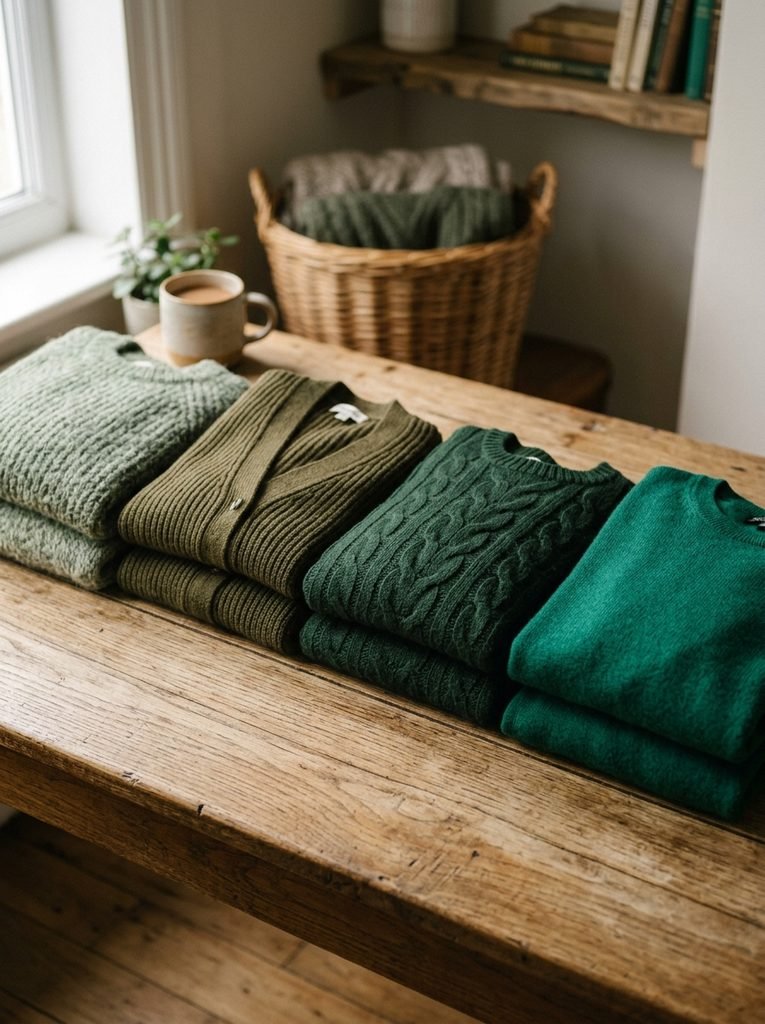
Sage is a soft, gray-leaning green that behaves almost like a neutral. It sits comfortably beside cream, white, denim, and camel, and it feels calm rather than festive. A sage knit sweater with light-wash jeans and white sneakers is the sort of outfit that happens to be green, instead of being about green.
Pistachio is slightly brighter and warmer, which makes it a good option for spring. It looks fresh with white and soft neutrals, and it suits lightweight fabrics like cotton, linen, and satin.
Olive and Moss
Olive is one of the most versatile greens in a wardrobe. It has enough yellow and brown in it to feel earthy, and it works well in outerwear, trousers, and utility-style jackets. An olive trench over a white tee and jeans is nearly indistinguishable from a regular spring outfit, which is exactly the point.
Moss is a deeper, mossy version that suits knitwear and textured fabrics. It pairs well with cream, chocolate brown, and black.
Forest and Bottle Green
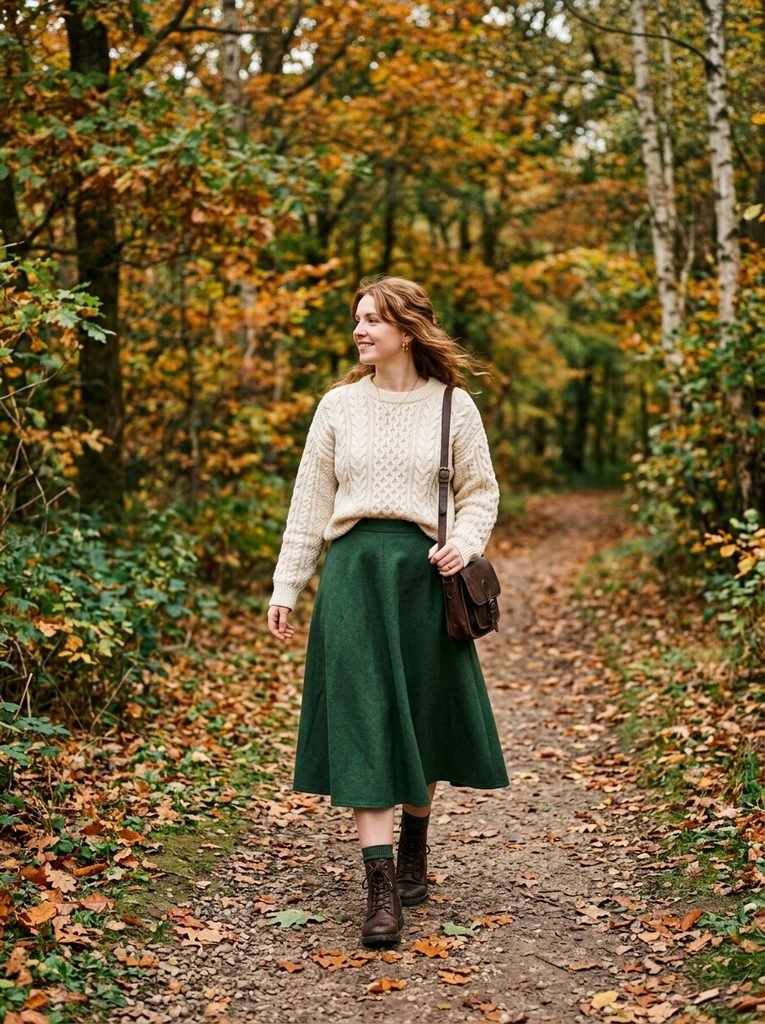
These deep greens look rich and quietly formal. A forest-green midi skirt with a cream cable-knit sweater and brown leather boots is one of the more popular “soft Irish girl” combinations described in recent style roundups, and it works because the color reads as classic rather than thematic.
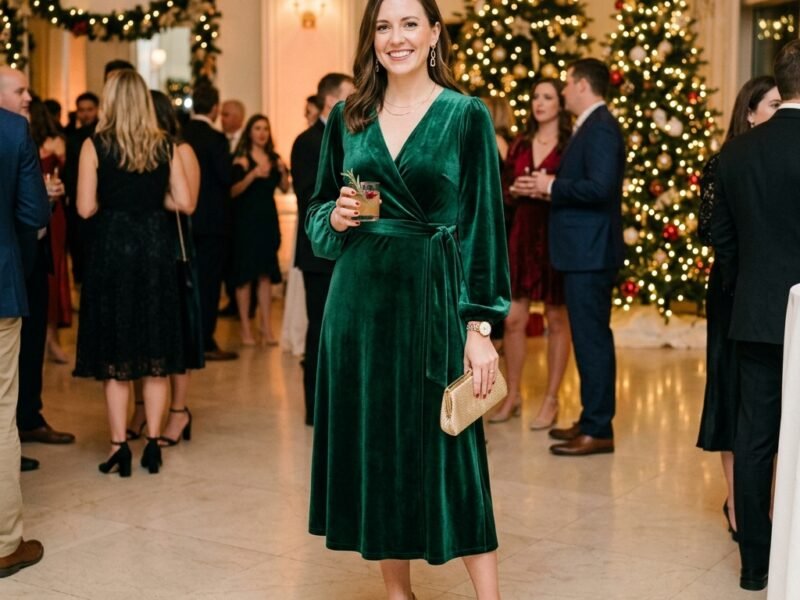
Bottle green also suits evening. In velvet or satin, it has a jewel-like depth that looks intentional at dinner and needs very little accessorizing.
Emerald
Emerald is more saturated but still refined, thanks to its blue undertone. It looks best in fabrics with some sheen, such as silk blouses and satin skirts, and it suits tailored pieces like trousers or blazers. Because it is stronger, it usually works best as the single feature of the outfit, balanced with black, white, or camel.
Kelly and Bright Green
Kelly green is the shade most associated with holiday costumes, which is why it needs the most care. It can absolutely look stylish, particularly in a tailored piece or a bold accessory, but it is best used in small amounts and paired with very plain neutrals. A kelly-green bag with an all-black outfit looks chosen. A kelly-green top, skirt, and tights looks like a team uniform.
The Small Dose Rule
Once the shade is chosen, the next question is quantity. A helpful guideline is to let green take up roughly a quarter to a third of the visual space in an outfit, with the rest in neutrals. This is a styling observation, not a strict formula, but it explains why so many well-known “subtle St. Patrick’s Day” looks follow a similar pattern.
One approach is a single green statement piece. That could be a sage blazer, a forest-green skirt, or a pair of olive trousers, surrounded by white, cream, denim, or black. Style Zuri’s collection of stylish rather than themed St. Patrick’s Day looks leans on this idea repeatedly, using a crisp white top and classic jeans to balance a green jacket or trousers.
The second approach is accents only. A green scarf, handbag, or pair of shoes adds a nod to the holiday without changing the outfit’s core. Fashion roundups often describe this as an easy option for people who do not want to commit to a full green look, for example a green bag with an all-black outfit or green flats with denim.
The third approach is tone on tone, where several shades of green are layered together. An olive trouser, a forest turtleneck, and a moss jacket can look sophisticated because the colors are related and muted. This works only when the shades stay in the same family and none of them is bright.
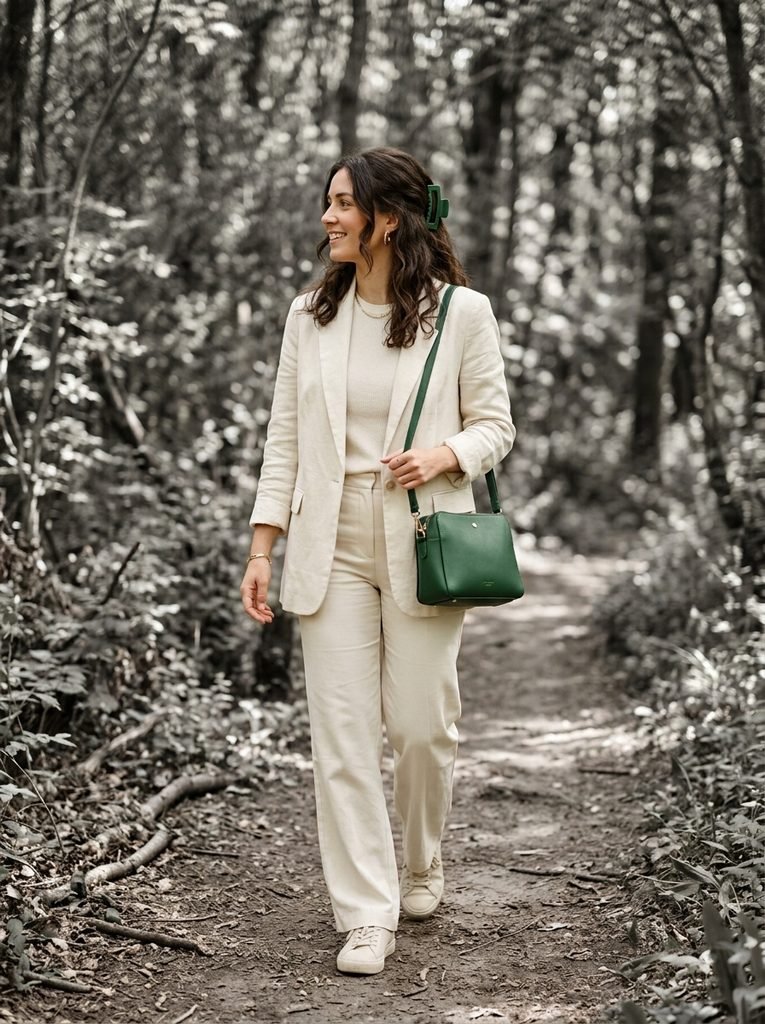
Whichever route you take, one detail tends to help: repeat the green once elsewhere, in a small way. A green pattern in a scarf, a hair clip, or an earring echoes the main piece and makes the outfit feel planned.
Neutral Bases That Make Green Look Deliberate
Green looks best when it has something calm to stand against. Neutrals give the eye somewhere to rest, and different neutrals change the mood of the whole outfit. The table below shows how a few common pairings tend to read.
| Neutral Partner | Effect on Green | Good Green Shades | Example Outfit |
|---|---|---|---|
| Cream or ivory | Soft and warm | Forest, sage, moss | Cream cable-knit with a forest midi skirt |
| White | Fresh and crisp | Emerald, olive, kelly | White tee with olive trousers |
| Denim | Casual and easy | Sage, pistachio, olive | Sage sweater with light-wash jeans |
| Black | Sharp and modern | Emerald, kelly, bottle | Black top with emerald satin skirt |
| Camel or tan | Earthy and classic | Olive, forest, moss | Camel coat over a forest-green knit |
| Gray | Understated and cool | Sage, emerald | Gray blazer with a sage silk blouse |
Cream and green deserve special mention. They look calm, slightly rustic, and easy to wear in early spring, when the weather can still be cold. If you are unsure where to start, a cream knit with any deep green bottom is a nearly reliable combination.
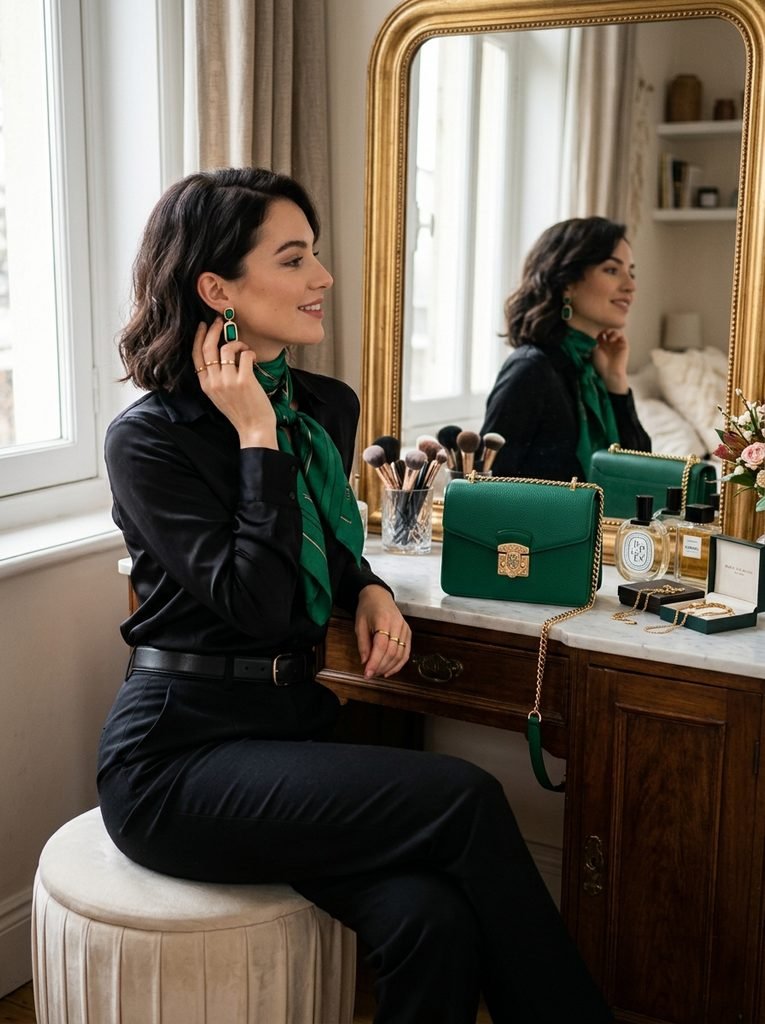
Black and green feels sharper. It suits evening plans and looks especially strong with a touch of gold jewelry. The contrast makes green stand out without needing the shade to be bright, so an emerald or bottle-green piece can carry the outfit on its own.
Denim is the easiest partner for casual days. Blue and green sit close together on the color wheel, so they rarely clash, and a green jacket or sweater over jeans looks natural at any time of year.
Outfits by Occasion
St. Patrick’s Day can mean very different things depending on your plans. A parade walk, a workday, and a night at a pub each call for a different balance of comfort and polish. These outfit ideas adjust for each.
For a Daytime Walk or Parade
Comfort and weather matter most here. An olive trench over a white tee and jeans works well, as does a sage knit with straight-leg denim and white sneakers. Add a green scarf if you want a clear nod without committing further.
Layers help, since March weather is unpredictable. A cardigan, a light jacket, or a quilted vest gives you options as the temperature changes. Shoes should be ready for standing and walking, so clean sneakers, loafers, or low boots are more sensible than heels.
For the Office
A workday leaves less room for playfulness, which makes muted greens especially useful. A sage blazer over a silk camisole with cream trousers is a good example of a look that feels festive without leaving professional territory. A dark green pencil skirt with a white button-down is another polished option, and adding a delicate piece of jewelry keeps it subtle.
If you prefer a smaller signal, a green scarf or a pair of green flats is enough. Coworkers may notice, but the outfit still reads as your own.
For a Pub Night or Dinner
Evening plans allow richer fabrics and stronger shades. A bottle-green satin skirt with a black knit top and ankle boots looks polished and warm. An emerald blouse tucked into black tailored trousers suits a restaurant table just as well.
Because pubs can be crowded and warm, breathable layers are worth choosing. A blazer or leather jacket you can remove easily suits a long evening better than a heavy coat.
For a Family Gathering or Brunch
A soft, relaxed look suits a family table. A cream cardigan layered over a dress with green trim or a green pattern shows the theme without effort, and sneakers or flats keep it comfortable. Champagne & Savings suggests looks like a cream cardigan over a mini dress with green accents, a plain base that leaves the color to small details.

Green Through Texture and Pattern
Texture is another way to make green look deliberate instead of thematic. A solid, flat, bright green looks like a costume partly because it has no depth. The same shade in tweed, corduroy, or knit picks up light differently and looks more refined.
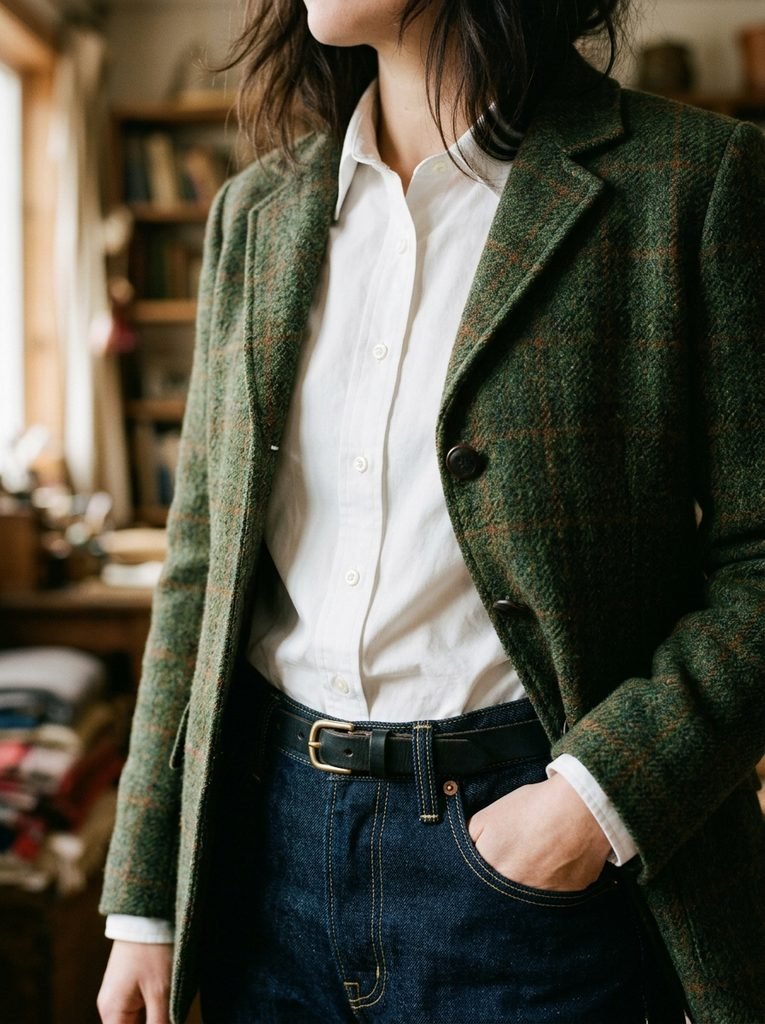
Tweed is a natural fit. A green tweed jacket or skirt has a slightly heathered look, since the weave includes several tones. It reads as classic tailoring rather than a holiday color, and it pairs easily with white, cream, or denim.
Corduroy and suede add warmth. Olive corduroy trousers or a moss suede jacket carry green in a way that feels seasonal but not festive, which suits cooler March days. Knits, including cable-knit sweaters and ribbed cardigans, add soft dimension and work well with simple bottoms.
Patterns can help too, as long as green is only part of the print. A green floral dress, a plaid skirt with green in the mix, or a striped top with green stripes all bring color in more gently than a solid block. Some roundups also suggest mixing a small plaid with a larger floral in related greens, as long as the silhouettes stay simple and the accessories stay neutral.
Satin and silk work at the other end of the spectrum. A satin skirt in emerald or bottle green has a sheen that suits evening, and because the fabric is fluid, it looks more elegant than a stiff cotton in the same shade.
Accessories-Only Green
Sometimes the best answer is to keep the outfit entirely neutral and let one accessory do the work. It is the least risky option and one of the easiest to repeat later in the year.
A handbag is the most visible choice. A green leather shoulder bag with an all-black or all-neutral outfit looks purposeful, and because bags are worn year-round, it will not feel like a one-day purchase. A small baguette-style bag in a rich green suits evening, while a structured tote suits daytime.
Shoes bring green closer to the ground. Green flats, kitten heels, or even sneakers with green details can link the color to the holiday while keeping the rest of the outfit quiet. This is a particularly good option if you prefer denim and knit tops but still want a nod.
Scarves and hair accessories add softness. A silk scarf tied at the neck or on a bag handle, a green hair clip, or a scrunchie in a muted shade are easy ways to include color. Jewelry offers the smallest option: a pair of emerald-toned earrings or a pendant with a green stone gives a hint that only people looking closely will notice.
To finish the look, keep your hair simple and polished. Our easy hairstyle ideas include quick options like a half-up twist that pair well with a scarf, and the soft waves and layers in our 2026 hairstyle roundup suit a cream knit and green skirt combination.
Details That Tip an Outfit Into Costume Territory
Sometimes a look is close to right and one detail pushes it too far. Knowing what those details are makes it easier to edit on the way out the door.
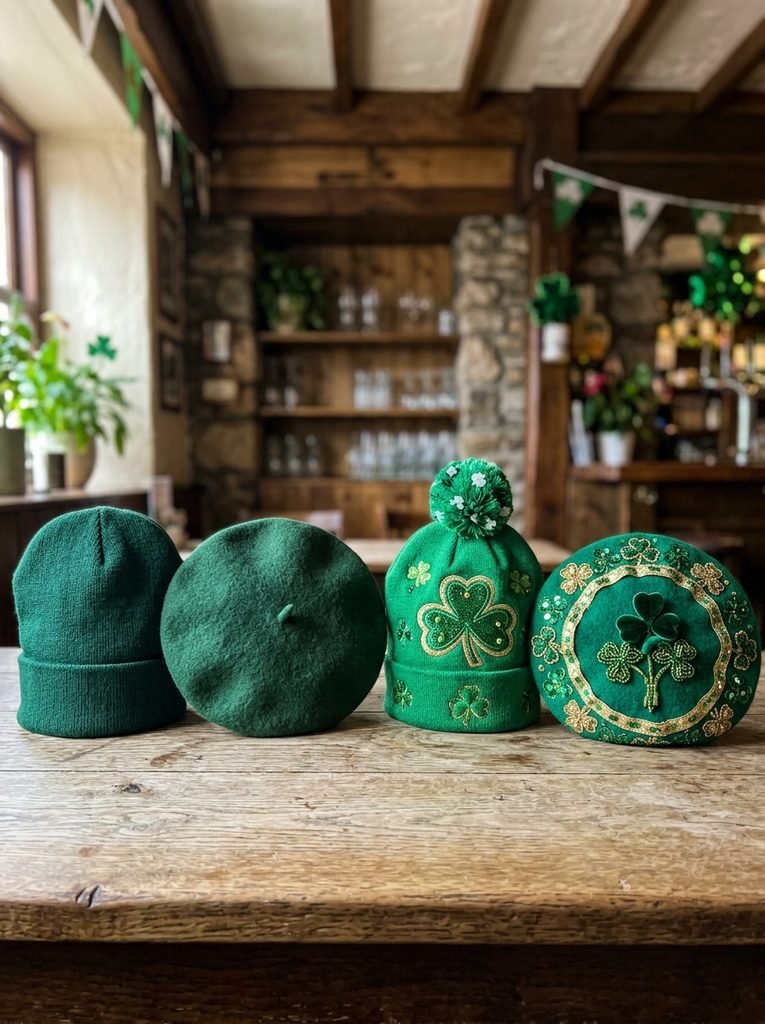
- Novelty headwear. Hats with shamrocks or top-hat shapes are the fastest way to change the mood of an outfit. If you want a hat, a plain green beanie or beret is far more wearable.
- Multiple bright greens. Two or three saturated shades in the same outfit compete with each other. Stick to one bright green at most.
- Literal prints. Shamrock or leprechaun graphics can be fun with friends, but they make an outfit look themed regardless of how the rest is styled.
- Glitter everywhere. A little shimmer can be festive, yet glitter on clothes, makeup, and accessories together tends to look heavy.
- Head-to-toe matching. Wearing the same shade on top, bottom, and shoes reads like a uniform unless the fabrics and tones vary noticeably.
None of these is forbidden, especially at a party where costumes are part of the fun. They just work against the polished, wearable look this guide is about.
Wear It Again on March 18th
The most useful way to plan a St. Patrick’s Day outfit is to start with something you would wear anyway. A sage sweater, an olive jacket, a forest skirt, or an emerald blouse all have a life beyond the holiday, and treating them as regular pieces keeps the outfit from looking staged.
If you are buying something new, choose the shade you would happily wear in April and June. Muted greens with gray or brown in them tend to last longest in a wardrobe, and they mix easily with other colors, which makes them worth the money.
On the day itself, keep it simple. One green piece, a neutral base, and a small repeat of the color is enough. The best version of this outfit is the one where a friend says they love your jacket, and only later realizes what the date was.


Leave a Reply